Your Microsoft EA renewal is a year-long project. Here is the map.
The Enterprise Agreement renewal is the largest software negotiation most companies ever run, and Microsoft prepares for it longer than you do. The number that actually matters, the E5 and Copilot pressure you should expect, and the timeline that keeps the leverage on your side of the table.
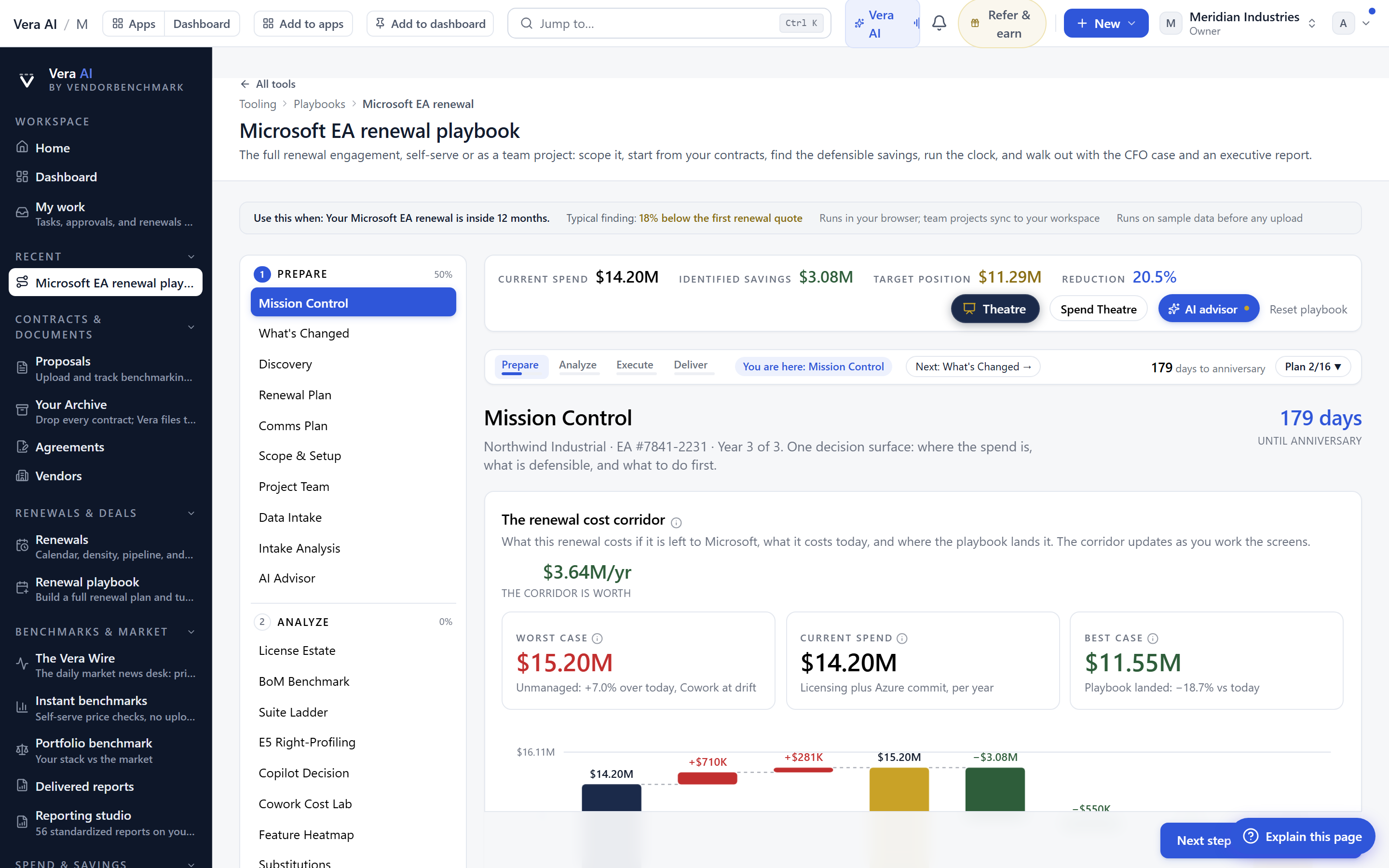
Nothing else in your software budget behaves like the Microsoft Enterprise Agreement. It is usually the single largest line, it touches every employee, it bundles a dozen decisions into one signature, and it renews on a three year cycle that Microsoft's account team starts working a year before you do. By the time the first "renewal planning" invite lands in your calendar, the vendor side has a target number, a product mix it intends to sell you, and a forecast that assumes you will take it.
Most EA renewals are lost before the negotiation starts, in three familiar ways. The estate was never measured, so the renewal quote is priced against last cycle's counts plus growth. The product conversation, E5, Copilot, security add-ons, is allowed to replace the price conversation. And the timeline collapses, so the signature deadline does the negotiating. All three are avoidable, and all three are about preparation rather than bargaining skill.
The only number that matters: net value per seat
Microsoft's proposal will speak in discounts, programmatic levels, and bundle savings. Ignore all of it and compute one figure: the total net annual cost of the agreement divided by the seats it covers. That is the number you can benchmark, because it survives every packaging trick. Two companies with the same seat count and the same product mix can sit hundreds of dollars per seat apart, and neither of them knows it until they look.
VendorBenchmark's Microsoft EA benchmark places your net value per seat against real Enterprise Agreements, normalized for seat count, product mix, and term. The percentile does two jobs at once. It tells you whether you are negotiating for crumbs or for real money, and it gives you a defensible answer when Microsoft says the price is "already very aggressive." Aggressive against what is now a question you can answer.
Want to be updated when major licensing and pricing changes land? One analyst brief a week: the price rises, metric changes and audit campaigns that move software costs. Work email only.
The E5 push and the Copilot question
Expect the renewal conversation to be steered toward product, because product is where the account team's growth target lives. The standard move is the E5 story: consolidate your security and compliance spend into the suite and the bundle "pays for itself." Sometimes it genuinely does. The only way to know is to price the E5 uplift against the tools it would actually retire, on your real usage, not on the slide's assumptions.
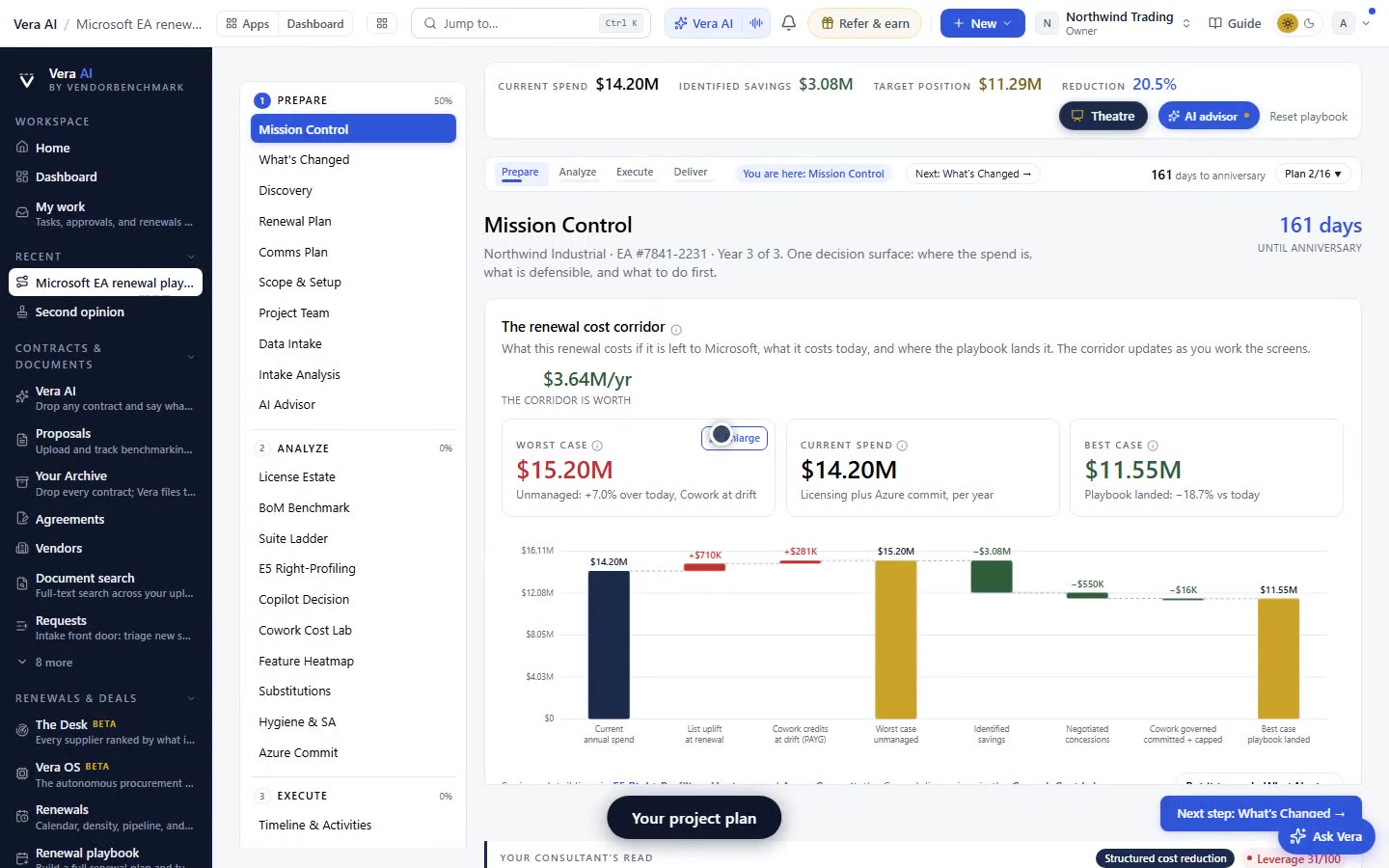
Copilot is the newer version of the same conversation, with a twist: the vendor wants a company-wide commitment while usage evidence is still thin. The buyer-side answer is measurement. Right-size before you commit, pilot with a measurable cohort, and price the expansion into the agreement as an option you can exercise, not a commitment you carry. An AI add-on priced per seat per month across your whole employee base is a material fraction of the EA itself. It deserves the same benchmarking discipline as the EA, not a checkbox on the order form.
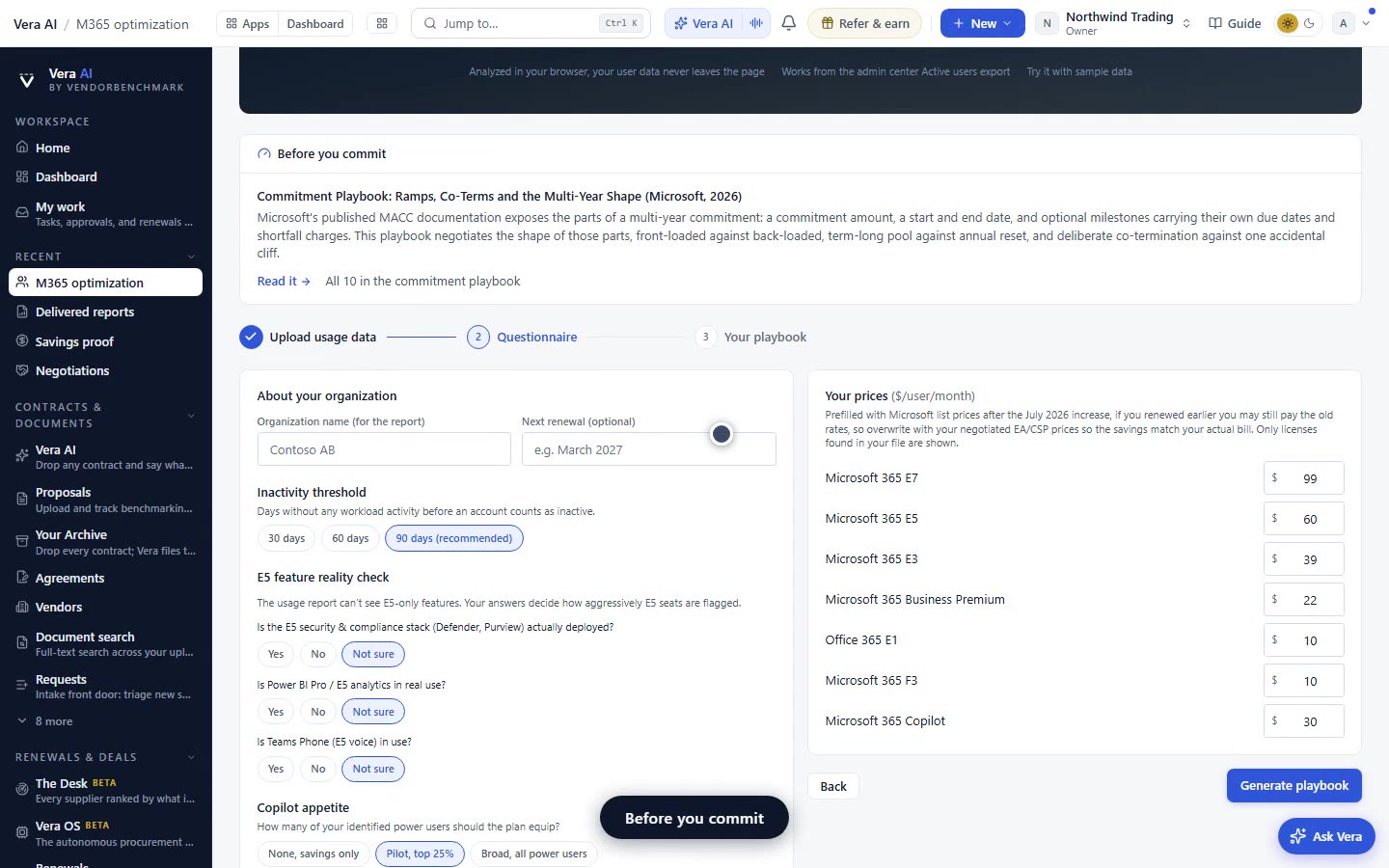
This is where right-sizing earns its keep. The M365 license optimizer reads your usage export and names the specifics: the inactive accounts still consuming licenses, the users on E5 whose activity profile is an E3, and the realistic Copilot population based on who actually lives in the tools it augments. Walking in with that analysis changes the renewal from "how much more" to "for exactly what."
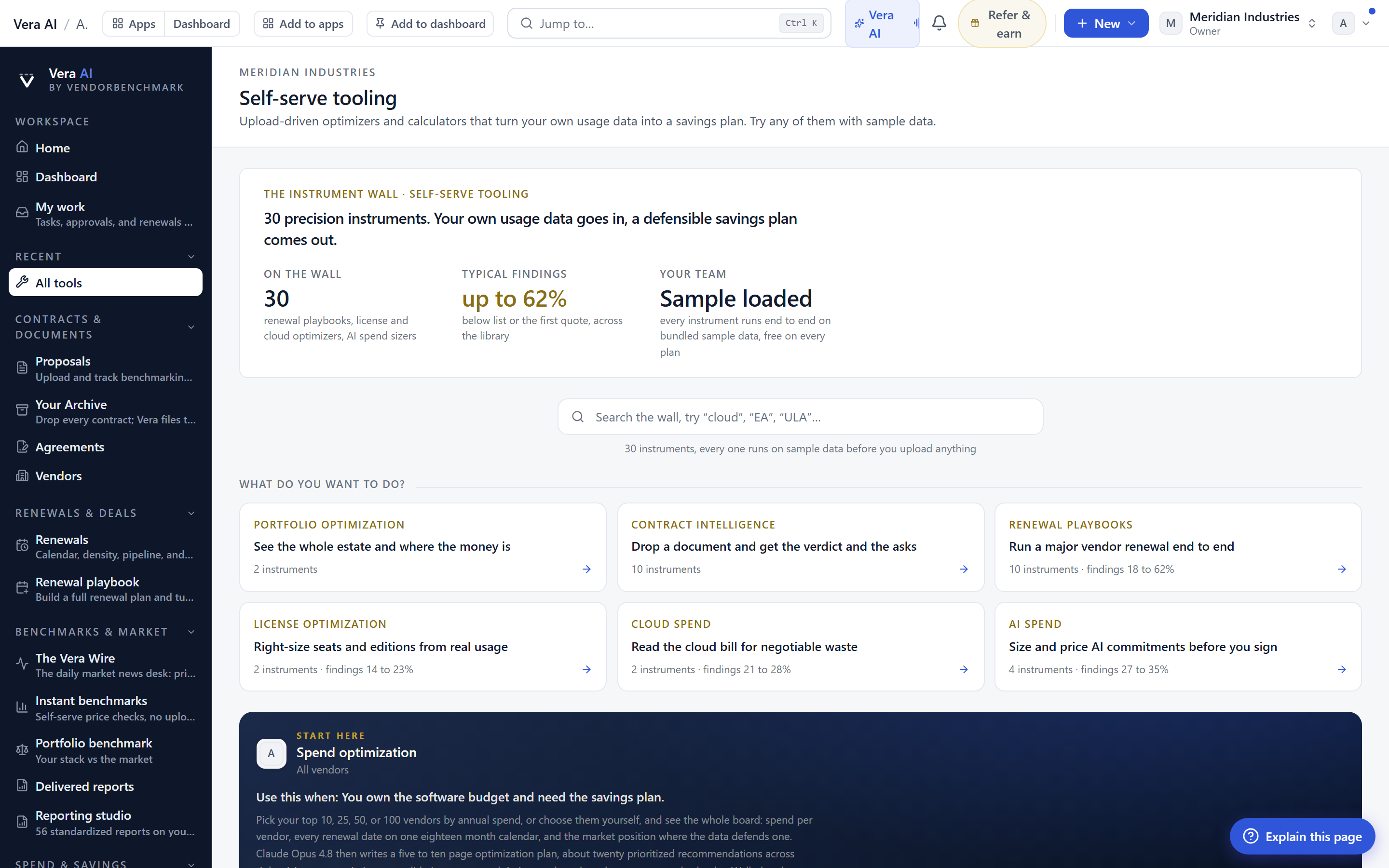
The timeline: T minus 12 to signature
The playbook desk runs this timeline for you: the benchmark, the lever ranking, the talking points, and the negotiation workspace with a concession ledger, plus an AI advisor grounded in how thousands of these renewals actually settled. The brief it produces is the one you hand the CFO before the first Microsoft meeting.
One honest caveat. No playbook makes an EA renewal small. It is still a year of work, executive attention, and internal alignment. What the desk changes is who does the reading, the counting, and the drafting, and whether the person doing the negotiating walks in with the market in their pocket.
Morten brings two decades of enterprise and software procurement, with stints across Oracle, IBM, SAP, and Salesforce shaping how he reads a deal. He has led sourcing through hundreds of renewals, from mid market order forms to nine figure global agreements, and learned that the buyers who win are the ones who walk in knowing the market. He built VendorBenchmark to make that pattern recognition repeatable.
The week in enterprise software buying, in one email.
What shipped on the platform, and the pricing and licensing moves worth knowing before your next renewal. One email a week, to your work address. Unsubscribe any time.