The seat count nobody verified, and the quote built on top of it
An estimate typed into an intake form becomes the anchor for tier, discount and term. By the time anyone checks it, the quantity is already a commitment.
The number nobody checked
Someone in the business raised an intake request in the second week of the month. The form had a field for user count. They typed a figure from memory, call it 1,400, because that is roughly what the last purchase order said and nothing obvious had changed. The request went to the vendor. The vendor sized the proposal to 1,400 users, placed it in a volume tier, applied the discount that tier carries, and quoted a three year term with a modest ramp. Three weeks later you are reviewing commercial terms in which every material number descends from a quantity that no system produced and no one verified.
This is not a procurement failure in the dramatic sense. Nobody lied, nobody skipped a control, and the requester was doing their best with the information in their head. It is a quieter failure: the sizing question was answered at the moment it was least answerable, by the person least equipped with data, and then it hardened. Once a quote exists at 1,400, moving to 1,210 is no longer an act of arithmetic. It is a negotiation, against a discount tier you would drop out of and a proposal the account team has already socialised internally.
Where the number actually came from
Trace an intake quantity backwards and it almost always lands in one of four places. It came from the previous purchase order, which recorded what was bought rather than what was used. It came from the admin console on a day someone happened to look, before the last reorganisation moved a department onto a different tool. It came from a headcount plan that assumed hiring which did not happen at the pace forecast. Or it came from the vendor, who supplied a number in a QBR deck and had every reason to present the generous version.
None of those are usage. They are proxies for usage, each with a known bias, and the bias points the same direction in three of the four cases. Contracted quantity drifts above active quantity over time because seats are added mid term more easily than they are removed, because leavers are deprovisioned late, and because nobody is scored on reclaiming a licence. The estimate typed from memory inherits all of that drift and then rounds up, because rounding down feels like the risk. So the intake figure is not a neutral guess. It is a systematically high one.
Why the guess survives every control you have
Most intake processes validate the requester, the budget line and the security review. Very few validate the quantity, because quantity looks like a business input rather than a commercial one. The requester owns the department, so the requester owns the seat count. Procurement's remit is understood to begin at price per unit. That division of labour is exactly backwards. Unit price is the number the vendor will concede on and the number benchmarks discipline most easily. Quantity is the number that compounds silently across the term, and it is the number nobody is formally assigned to challenge.
The second reason it survives is timing. The evidence needed to challenge a quantity lives in three systems that do not talk to each other: the invoice history in AP, the entitlement record in the contract, and the activity data in the vendor's own admin console. Assembling those by hand takes most of a working week, and the request usually arrives with four weeks of runway against a hard expiry. So the analyst makes a rational choice and spends that week on discount and on terms, where the effort visibly returns something, rather than on a quantity audit that might return nothing.
The over commit is punished twice
An inflated quantity does not just cost the difference. It costs on both sides of the contract. On the downside, the unused portion is shelfware you have already paid for and cannot recover, and it is worse than dead money because it sets the floor for the next renewal. The vendor will anchor the following term on 1,400, and you will be arguing for a reduction from a number you signed. We have written before about how to put a price on this in Shelfware radar: pricing the licenses nobody opens, and the pattern is consistent: the licences nobody opens are rarely a rounding error.
On the upside, the same weak estimate exposes you to true-up. If the real trajectory was higher than the guess rather than lower, you buy the overage mid term at list or near list, without the leverage of a competitive event and without a tier break to argue for. A quantity that is wrong in either direction is expensive. It is only the direction of the loss that changes. This is the same discipline we argue for in Sizing AI commits from your usage, not the vendor's growth story, applied to the least glamorous line item in the estate.
Grounding the quantity in two kinds of evidence
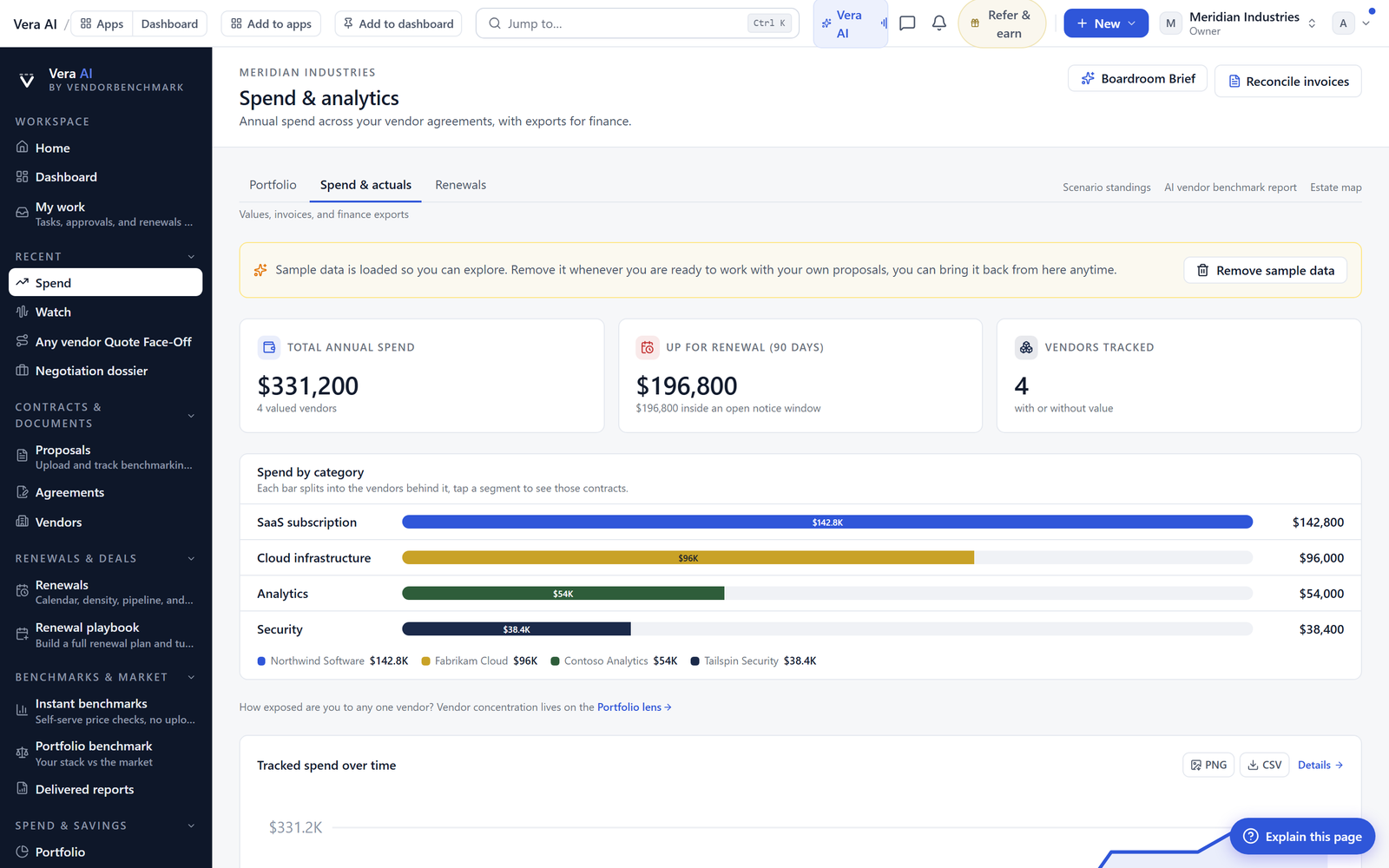
There are only two credible sources for a sizing decision, and both are available before the quote is drafted. The first is internal: what you have actually been invoiced for, period by period, reconciled against what the contract entitles you to and what the estate shows as active. That comparison is where phantom quantity surfaces. Seats billed against a cost centre that closed. A tier upgrade applied to the whole population when only one team needed it. A quantity that stepped up at a mid term amendment and never stepped back down when the pilot ended.
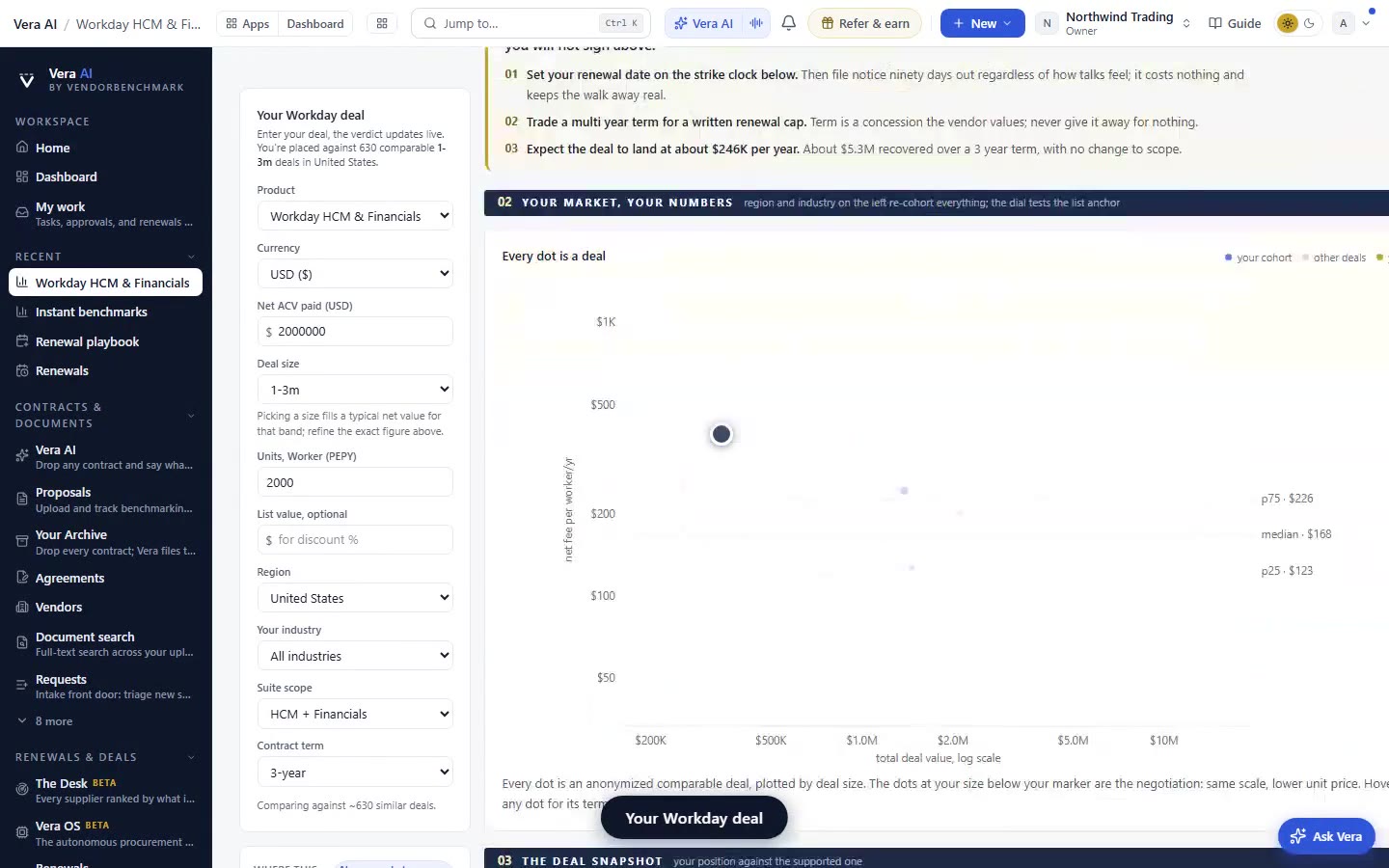
The second source is external: what comparable buyers actually committed to. A benchmark on quantity is a different instrument from a benchmark on price. It tells you whether organisations of your headcount and profile bought at one seat per employee, or at 0.7, or at 1.3, and it tells you the spread rather than a single figure. That range converts the sizing conversation from opinion into position. You are no longer saying the number feels high. You are saying comparable buyers landed in a band, and our estimate sits above it, and here is what our own invoices show.
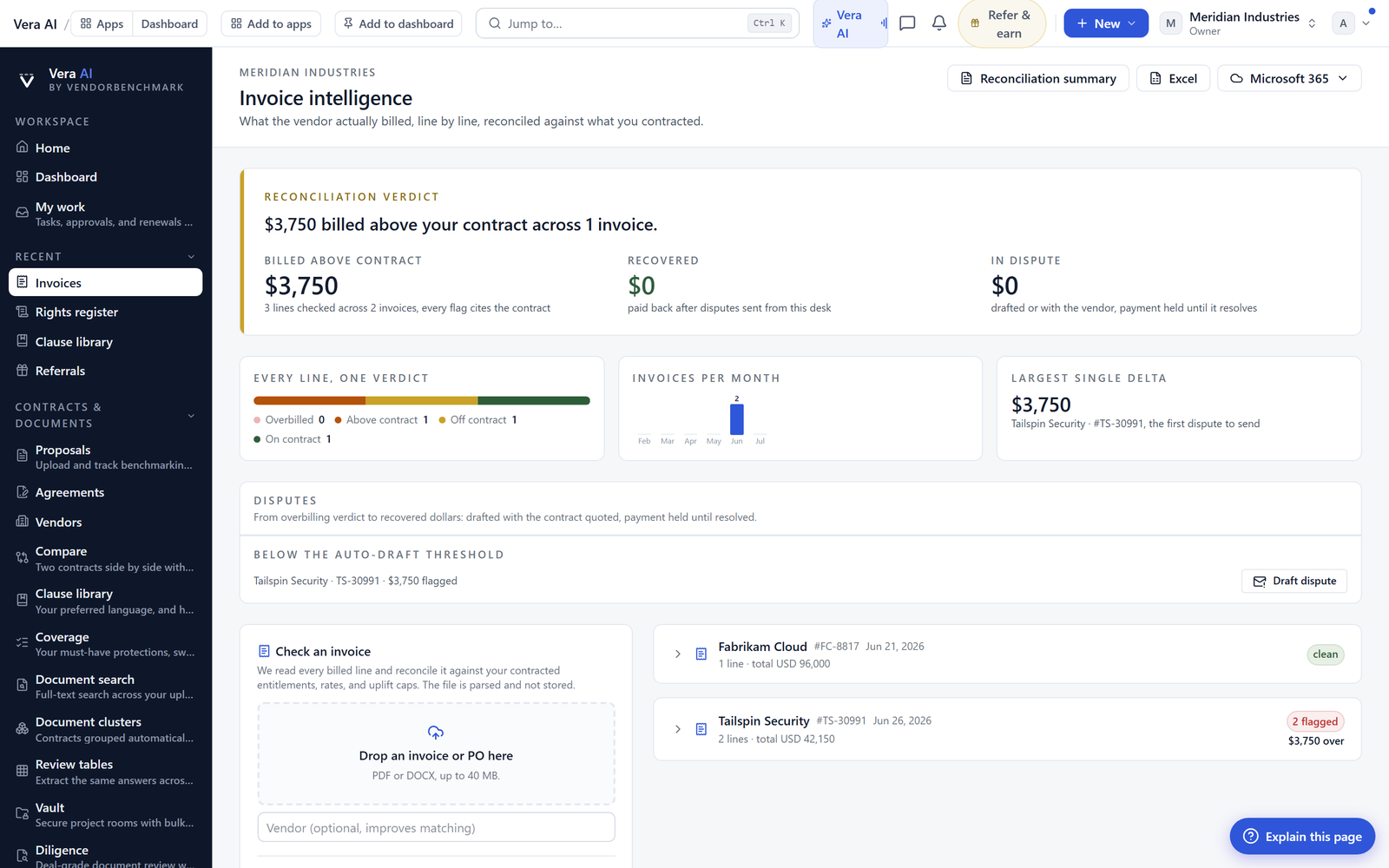
The motion is deliberately small. Reconciliation runs continuously in the background rather than as a renewal fire drill, so by the time an intake request appears the variance between contracted, invoiced and active is already computed. The benchmark lookup takes a minute. What you attach to the intake request is a short sizing note with three figures and their sources, which is enough to change the number before it reaches the vendor. Changing it before the quote costs nothing. Changing it after the quote costs a discount tier and two weeks.
What this does not solve
Reconciliation is only as good as the invoice detail you receive. Some vendors bill at a summary level that cannot be decomposed into line items, and for those the estate view will narrow the question without closing it. You will still need the admin export, and you will still need someone to interpret it. Where there is no admin API and no itemised invoice, the platform can tell you what you committed to and what you paid, and not much more about who used it.
Benchmarks describe what comparable buyers committed to. They do not know your roadmap. If the business is genuinely acquiring a company next quarter, or genuinely retiring a product line, the peer band is context rather than an answer, and the honest move is to size to the known population and negotiate the mechanism for the unknown one. A benchmark that says you are above the band is a prompt to explain why, not a verdict that you are wrong.
And the platform does not have the conversation for you. Telling a business owner that the number they supplied was 15 percent high is a political act, however good the evidence. What changes is that you arrive with three sourced figures instead of an instinct, early enough that nobody has to lose face in front of the vendor. If you would rather that conversation and the timeline around it were handled end to end, that is the premise of managed renewals. Either way, the fix is the same and it is unglamorous: verify the quantity before it becomes a commitment, because after that it is no longer a number, it is a position.
Morten brings two decades of enterprise and software procurement, with stints across Oracle, IBM, SAP, and Salesforce shaping how he reads a deal. He has led sourcing through hundreds of renewals, from mid market order forms to nine figure global agreements, and learned that the buyers who win are the ones who walk in knowing the market. He built VendorBenchmark to make that pattern recognition repeatable.