Shelfware radar: pricing the licenses nobody opens.
Shelfware is the most boring waste in the software budget and the most reliable: licenses bought for a project that changed, seats provisioned for people who left, suites renewed at last year's count because nobody checked. It survives because it is invisible. The radar makes it a number, and a number with a renewal date attached gets fixed.
Every other kind of software waste eventually announces itself. An overpriced renewal shows up in a budget review. A billing error shows up when someone reconciles an invoice. Shelfware announces nothing, because the invoice is correct: you are being accurately billed for exactly what you agreed to buy. The waste lives one level down, in the gap between what was bought and what is used, and no document in the normal flow of procurement ever states that gap.
The mechanics of how it accumulates are mundane. A project scopes 500 seats and ships with 300 users. A department reorganizes and the tool of the old structure keeps its licenses. Leavers outpace license reclaim. A suite gets bought for one module and renews as a suite forever. None of these is a scandal, each is a rounding error in the month it happens, and together they compound into one of the largest recoverable numbers in the estate, renewing loyally every year because the renewal quote starts from last year's count.
Three numbers per vendor: entitled, deployed, active
The radar reduces shelfware to a comparison the whole company can read. Entitled is what the contracts say you own, extracted from the agreements already in your workspace. Deployed is what has been assigned or installed. Active is what the usage data says anyone touched in the last 90 days. Waste lives in the two gaps: entitled to deployed is provisioning debt, seats you pay for that were never handed out, and deployed to active is adoption debt, seats handed to people who do not use them.
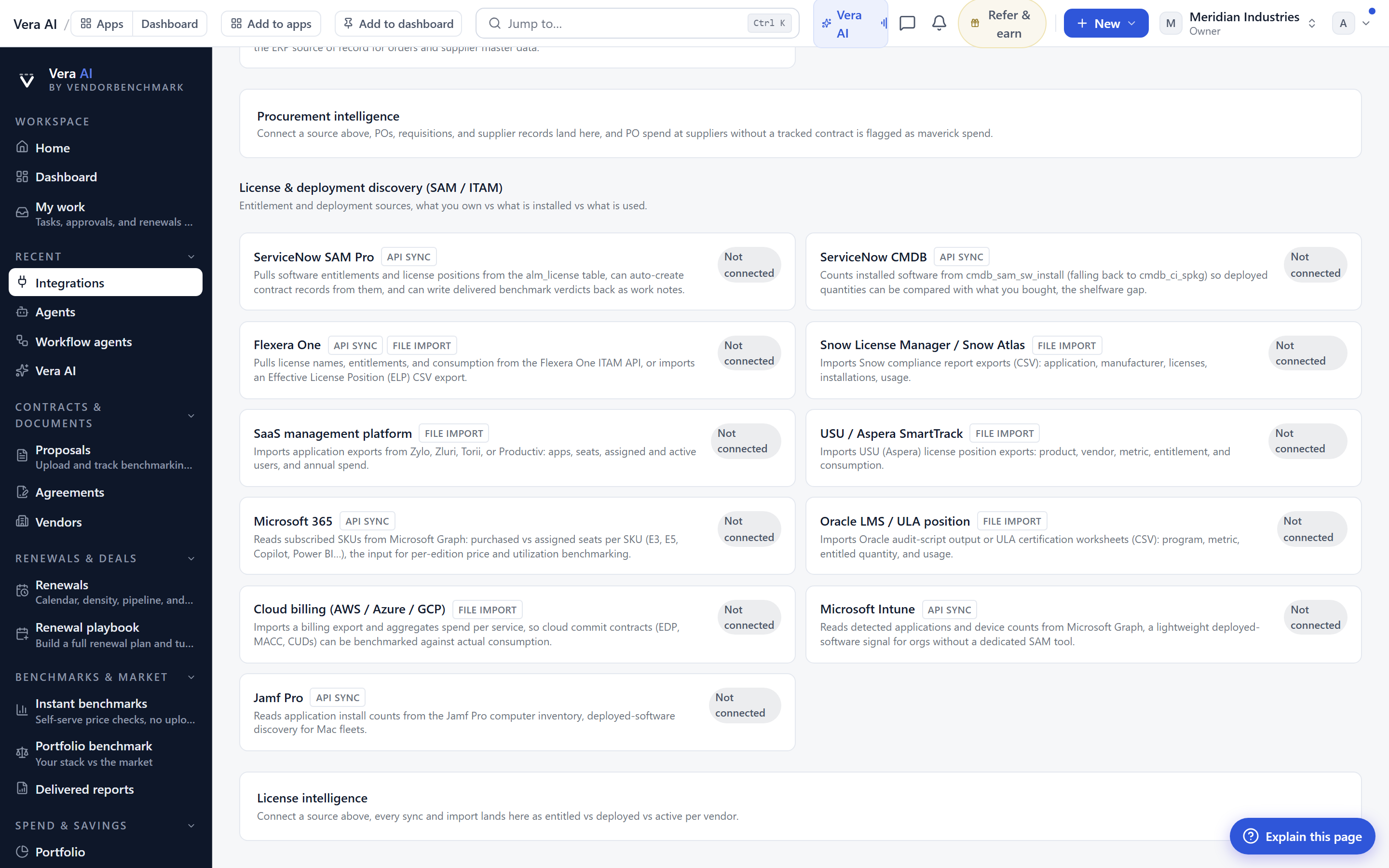
The counts come from where they already live. Eleven SAM and ITAM connectors, from ServiceNow SAM Pro and Flexera to the SaaS management tools and the Microsoft 365 usage graph, sync entitlements, deployments, and activity, so the radar reads your existing sources of truth rather than asking anyone to build a new one. Where no tool exists for a vendor, a usage export does the same job.
Want to be updated when major licensing and pricing changes land? One analyst brief a week: the price rises, metric changes and audit campaigns that move software costs. Work email only.
A gap in seats is trivia. A gap in dollars is a decision.
Counting idle licenses is where most SAM projects stop, and it is why most SAM findings die in a spreadsheet. The radar's second step is the one that moves budgets: each gap is priced using your real contract data, the actual net unit price from the agreement, not a list price guess, and stamped with the renewal date that makes it actionable. "1,240 idle seats" is an observation. "Roughly $410K a year, recoverable at the March renewal, notice due January 15" is an agenda item with an owner.
Priced findings flow into the rest of the desk automatically: the savings opportunities ranked by size and reachability, the portfolio view the CFO reads, and the renewal brief for each affected vendor, so the true-down case arrives at the negotiation already argued. The weekly anomaly watchdog keeps the radar current in the background, which matters because shelfware regrows: the estate that was clean at last renewal will not be clean at the next one unless something is watching.
Four plays for the gap, in order of preference
Two honest caveats keep the radar credible. Some idle capacity is deliberate, the seasonal workforce, the deal-contingent headroom, the disaster reserve, and the radar lets you mark it as such so the same explained surplus does not re-alert forever. And usage data has edges: a license consumed by a service account or an occasional-but-critical user looks idle and is not, which is why every cut list gets a human pass before it goes near a vendor. The radar's job is to make the gap undeniable and priced. Deciding which parts of it are truly waste stays a judgment, made once, with the evidence on the table.
Morten brings two decades of enterprise and software procurement, with stints across Oracle, IBM, SAP, and Salesforce shaping how he reads a deal. He has led sourcing through hundreds of renewals, from mid market order forms to nine figure global agreements, and learned that the buyers who win are the ones who walk in knowing the market. He built VendorBenchmark to make that pattern recognition repeatable.
The week in enterprise software buying, in one email.
What shipped on the platform, and the pricing and licensing moves worth knowing before your next renewal. One email a week, to your work address. Unsubscribe any time.