Tenant isolation, explained for the buyer who asks about it.
Every serious buyer of a multi-tenant platform asks the same question: how is my data kept separate from every other customer's? Most answers are marketing. Here is the actual mechanism, in plain terms, and why where the isolation is enforced matters more than that it exists.
When a buyer evaluates a platform that holds their contracts and their pricing, one question outranks all the others on the security questionnaire: how is my data isolated from every other customer on this system? It is the right question, because a multi-tenant platform by definition stores many companies' data in the same place, and the entire trust model rests on the guarantee that one tenant can never see another's. The answers buyers usually get are vague reassurances. The answer that should satisfy them is a specific mechanism, and a statement of where that mechanism runs.
The distinction that matters is not whether isolation exists, every vendor will say it does, but where it is enforced. Isolation that lives in application code is isolation that depends on every developer, on every screen, remembering to filter by your organization, forever, without a single mistake. Isolation enforced at the database is a rule the data itself obeys regardless of what the application above it does. The first is a promise. The second is an architecture. It is worth understanding the difference before you trust anyone with your estate.
The rule lives in the database, not the app
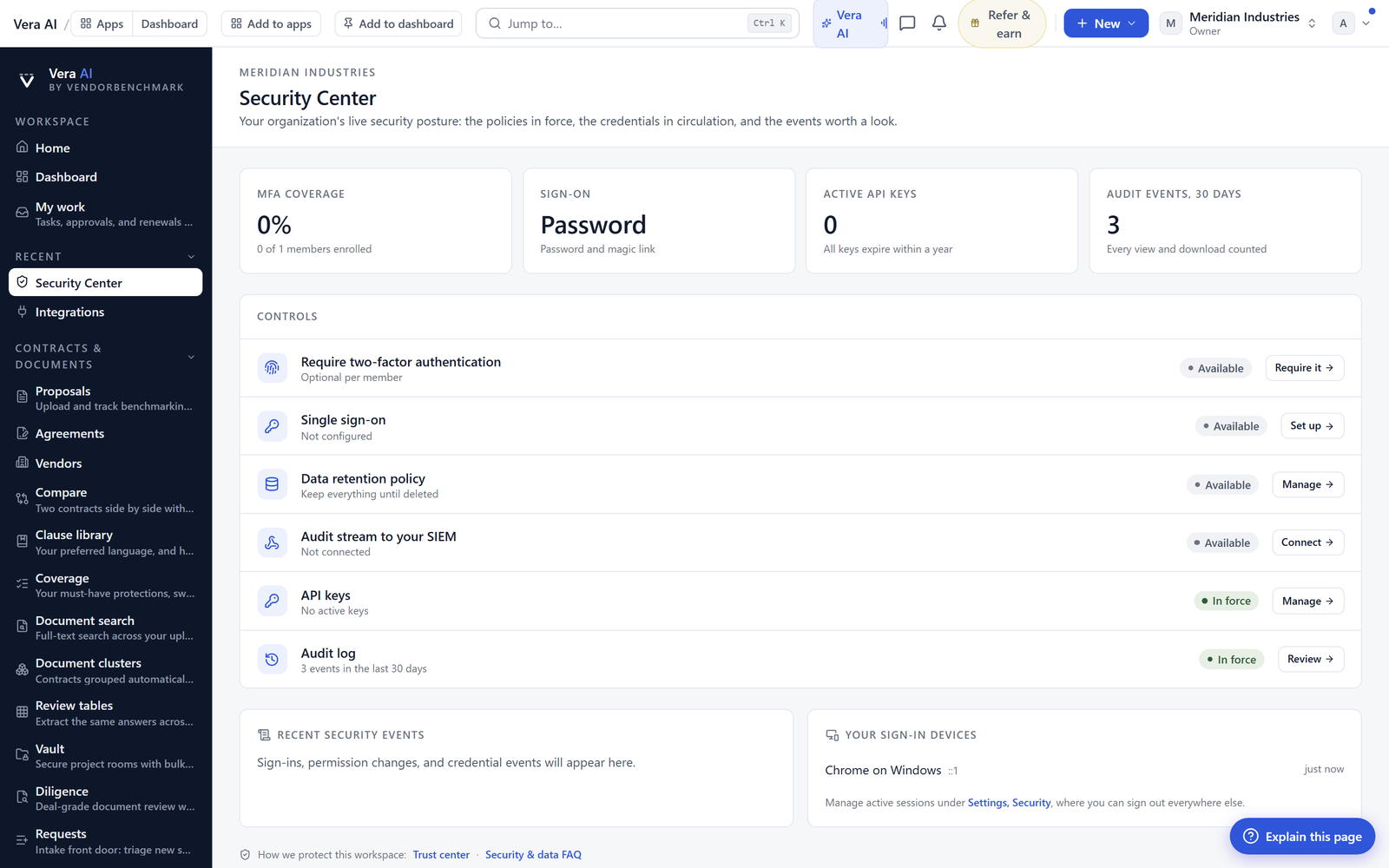
The mechanism is row-level security. Every table that holds customer data carries an organization identifier, and the database enforces a policy that a user may only read or write rows belonging to an organization they are a member of. This is not a filter the application adds to its queries and hopes never to forget. It is a rule the database applies to every query automatically, so that even a query with no filter of its own returns only the rows the current user is permitted to see. The isolation is a property of the data layer, underneath the application, where a forgotten filter or a bug in a new feature cannot switch it off.
This is the single most important control in a multi-tenant system, and it is deliberately placed at the lowest level. An engineer building a new screen does not have to remember to scope it to your organization, because the database will not hand back another organization's rows no matter how the query is written. The safe behaviour is the default behaviour, which is the only way isolation survives a codebase that grows and changes for years.
Admin access is a separate table, not a flag
A related question a careful buyer asks is about the platform operator's own staff: who on the vendor's side can see my data, and could that access be granted by accident or malice? The honest design keeps that power in its own place. Platform administrator status, the ability to see across organizations for support and operations, lives in a separate, dedicated table, not as a flag on a customer's own user record. A customer, or a bug in customer facing code, cannot elevate anyone to that role, because the role does not live anywhere a customer's data path can reach.
Separating the two is a deliberate boundary. Customer roles, owner and member, are managed within each organization and govern access to that organization only. Cross tenant access is a distinct kind of privilege, held apart, so the blast radius of any single mistake is contained. It means the answer to who can see everything is short, specific, and not something that can be turned on by the ordinary operation of the app.
Want to be updated when major licensing and pricing changes land? One analyst brief a week: the price rises, metric changes and audit campaigns that move software costs. Work email only.
The same rule reaches the files and the log
Isolation is only as strong as its weakest surface, so the rule cannot stop at the database tables. The files themselves, the actual contract documents, live in private storage governed by the same organization rule, never in a public location, and reachable only through short lived signed links rather than durable URLs that could leak. A document is subject to the same membership check as the row that references it, so there is no side door where a file is less protected than its metadata.
And every consequential action, including views and downloads of contract files, is written to an audit trail: who did what, to which record, when. Isolation prevents the access that should not happen, and the audit trail records the access that does, so the guarantee is not only enforced but observable. For a buyer, that combination, a rule the data obeys, a boundary around cross tenant access, storage held to the same rule, and a log of what happened, is what a real answer to the isolation question looks like.
How your data stays yours
No architecture is a substitute for scrutiny
A sound isolation model is necessary, not sufficient, and no honest vendor should claim otherwise. Controls have to be implemented correctly, tested against real cross tenant attempts, and kept working as the system changes, and the right response to a buyer's isolation question includes the testing and the audits, not just the design. A good architecture makes isolation the default; disciplined engineering keeps it that way.
What a buyer should demand is exactly this level of specificity. Not a promise that data is secure, which every vendor offers, but a description of where isolation is enforced and why a mistake in ordinary development cannot break it. When the answer is row-level security at the database, cross tenant access held in its own place, storage under the same rule, and an audit trail over the top, you are being told how, not just that, and how is the only answer that should earn your trust.
Morten brings two decades of enterprise and software procurement, with stints across Oracle, IBM, SAP, and Salesforce shaping how he reads a deal. He has led sourcing through hundreds of renewals, from mid market order forms to nine figure global agreements, and learned that the buyers who win are the ones who walk in knowing the market. He built VendorBenchmark to make that pattern recognition repeatable.
The week in enterprise software buying, in one email.
What shipped on the platform, and the pricing and licensing moves worth knowing before your next renewal. One email a week, to your work address. Unsubscribe any time.