A quick tool request became a three year commitment, and nobody asked for the three years
Commitment length is a requirement in its own right. Leave it undefined and the vendor sets it for you. Benchmarks turn duration back into a deliberate choice.
You asked for one tool. A team needed a scheduling utility, or a log viewer, or a seat count for a design app, and the ask was small enough that nobody convened a committee. Six weeks later the paper on your desk is a 36 month enterprise agreement with an annual commitment, an auto renewal clause, and a termination window that closes ninety days before a date you have not diarised. Nowhere in the original request did anyone write down how long the commitment should last. The scope was a feature. The term was a surprise. This is the problem that arrives as a product name instead of a need, but with a second failure stacked on top: the clock got set by the counterparty.
The requirement you forgot to write is the one the vendor writes for you
Every requirements document has a list. Number of seats. Data residency. SSO. Uptime. Integrations. What that list almost never contains is a line that reads: commitment length, target 12 months, ceiling 24 months, with an out. Because it is missing, the term is not evaluated. It is accepted. And an unevaluated requirement does not vanish. It gets filled in by whoever cares most about the answer, which is the party that gets paid across the whole of it.
Term length is not administrative trim around the edges of a deal. It is the single variable that multiplies everything else. A price that looks fair per year is a very different number when you multiply it by three and lock the exit. A quick tool at a modest monthly rate becomes a material line on the 24 month forecast finance budgets from the moment the term stretches. The scope stayed small. The exposure did not.
Why short asks turn into long agreements
The drift is structural, not accidental. Three forces push a small request toward a long term, and none of them announce themselves.
First, the discount is dangled against duration. A one year price and a three year price appear side by side, the multi-year number looks lower per unit, and the conversation quietly becomes about savings rather than about commitment. The buyer starts defending a shorter term as if it were the expensive option. Second, the paper defaults are long. Order forms arrive pre-filled with the vendor's standard term, and a pre-filled field carries the gravity of a decision already made. Changing it feels like negotiation. Leaving it feels like agreement. Third, the person who raised the ask is not the person who signs the term. The requester wanted a tool this quarter. The signature commits the organisation for years. That gap is where the length slips through unexamined.
What comparable deals actually commit to
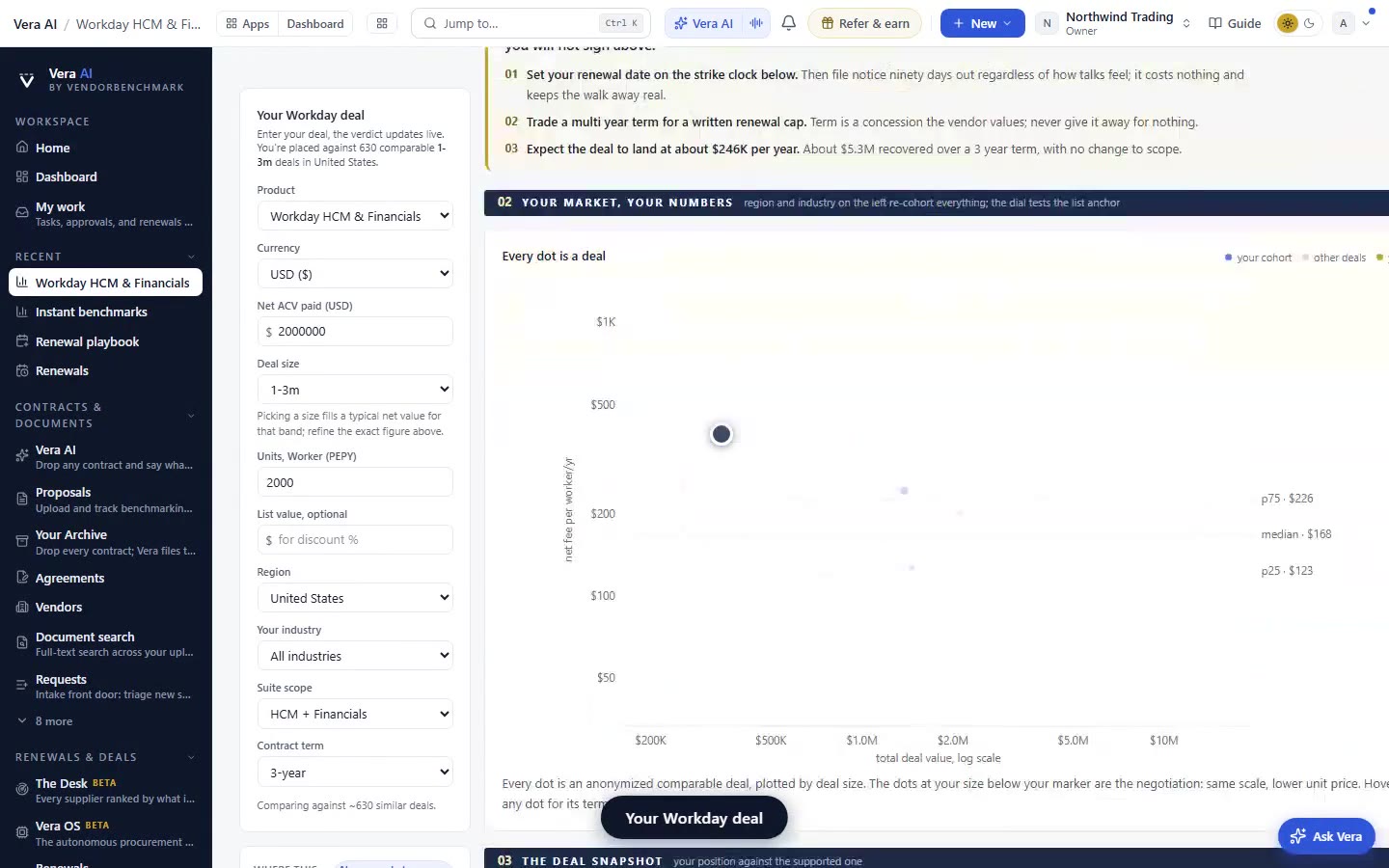
The fix is not to refuse every multi-year deal. Sometimes a longer term genuinely earns its discount, and a stable tool with predictable usage is a reasonable candidate for a commitment. The fix is to make term length a deliberate number, chosen against evidence, before the paper arrives. That requires knowing what comparable deals in the same category actually commit to: the typical term, the shape of the annual commitment, whether peers took auto renewal or negotiated it out, and where the price sits at 12, 24, and 36 months.
The platform motion that removes the default
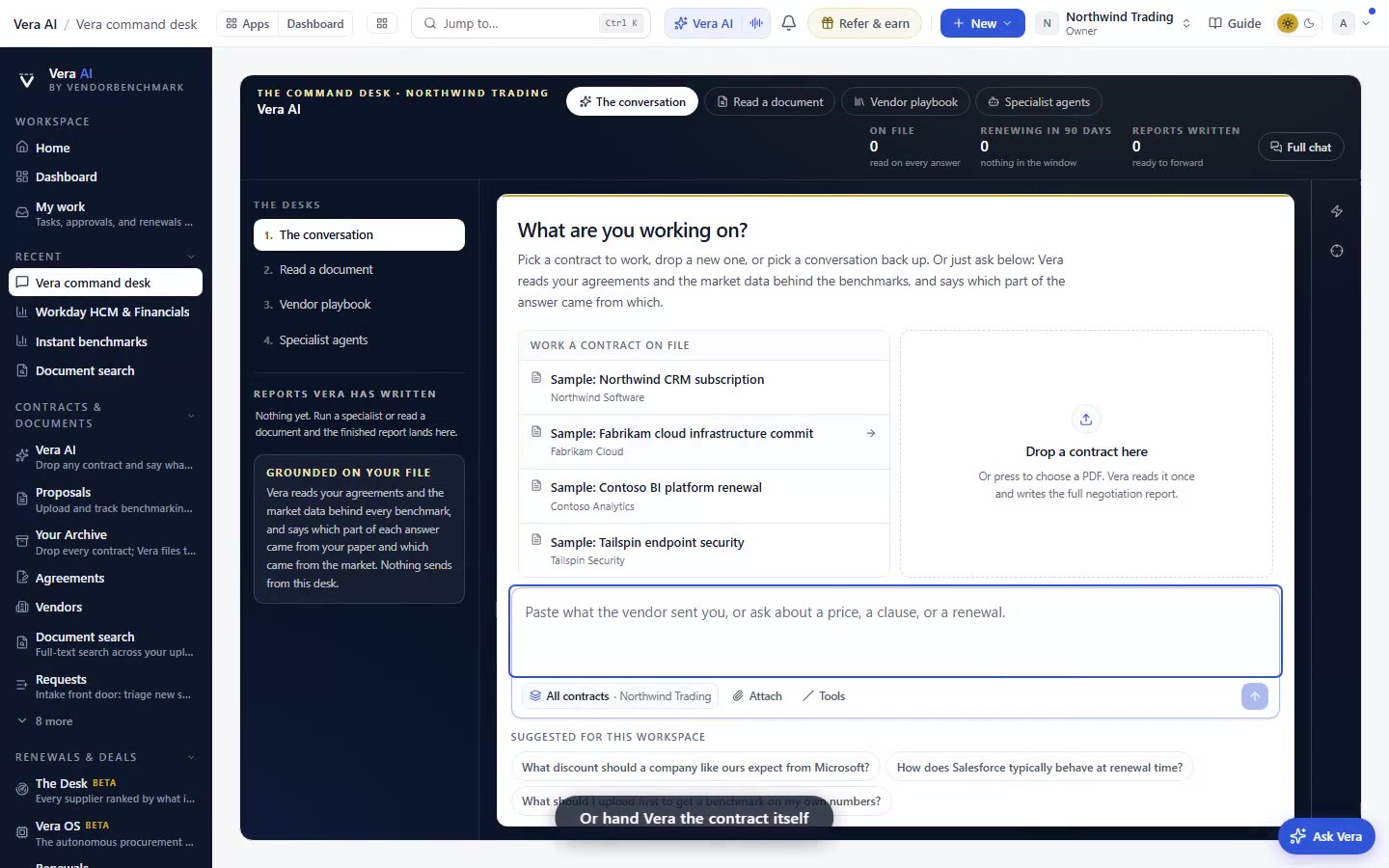
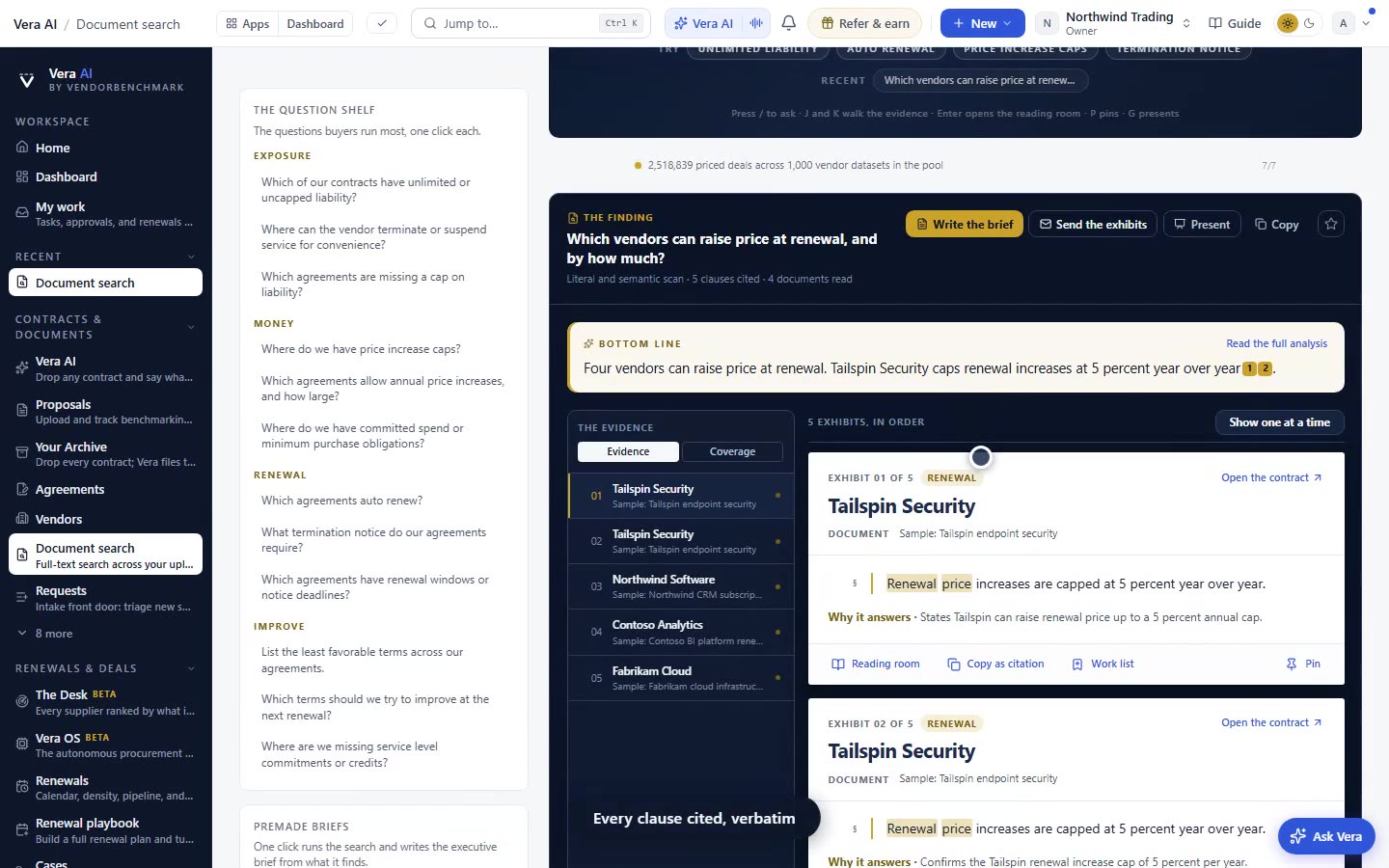
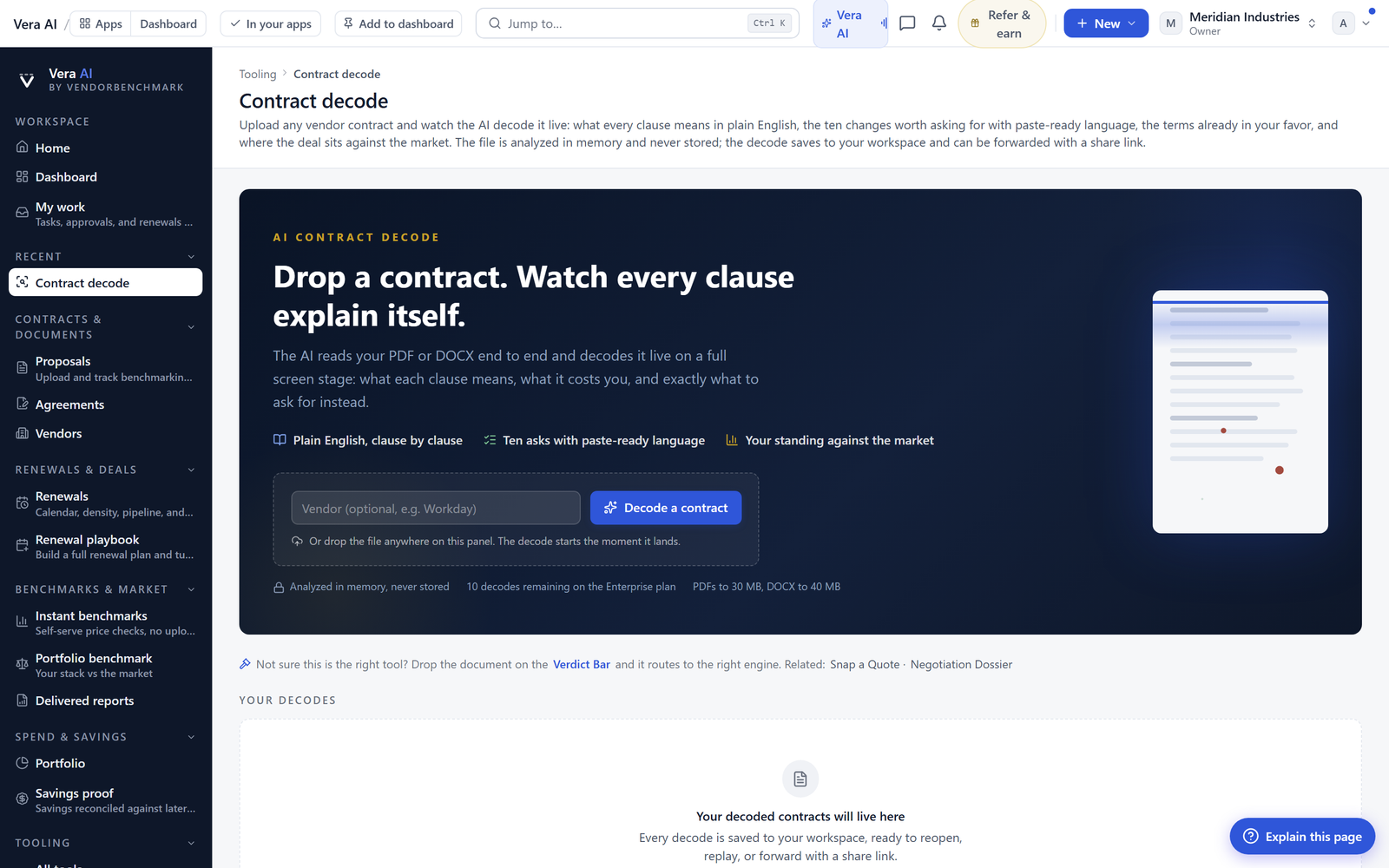
Two moves put term length back in your hands. The first is decoding. Contract decoding reads the agreement and lifts the term, the annual commitment, the auto renewal trigger, and the termination window out of the legalese and into plain fields you can see and question. What was buried on page fourteen becomes a line you evaluate on purpose. The second is comparison against documented market evidence. The benchmark hub shows what comparable deals in the same category actually committed to, so the vendor's pre-filled term stops being the reference point and the market becomes the reference point instead.
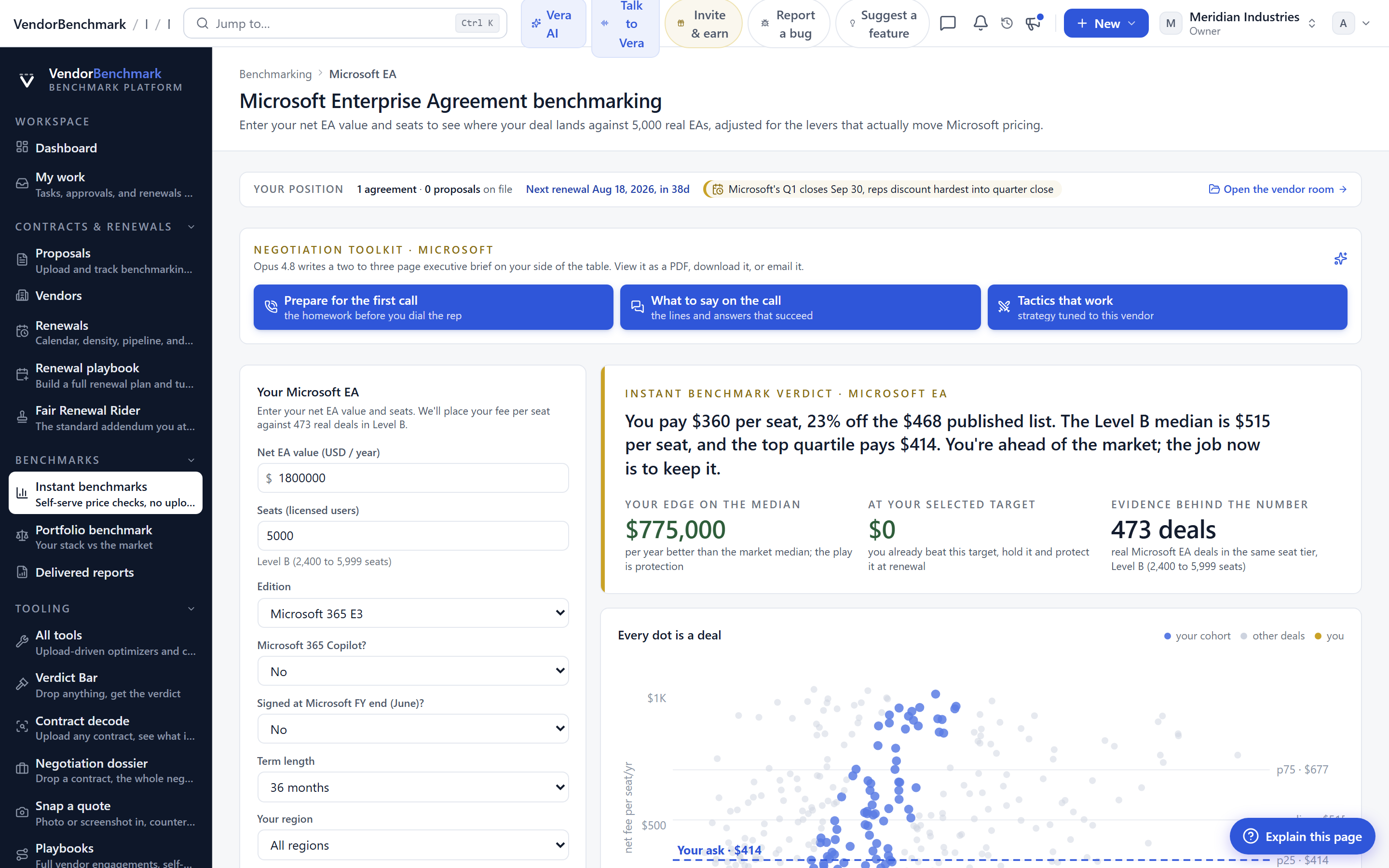
From there the term becomes a negotiable line like price or seat count. When the vendor argues the discount only exists at 36 months, you can ask what comparable buyers paid at 12 and 24, and cite it. This is the same discipline that governs commitment sizing on the large cloud agreements, where the question is never just the price but how much you are obliged to spend across how long. See it applied to an AWS EDP commit sized from your usage rather than their growth story, and the logic scales down to the quick tool ask just as cleanly.
What this does not solve
Benchmarks tell you what comparable deals committed to. They do not tell you what your organisation should commit to, because that depends on facts no dataset holds: how stable your usage is, how confident you are the tool survives the next reorg, and how much you value the option to walk. A 36 month term can be the right call for a genuinely load bearing platform, and a benchmark showing 12 months as typical does not override that judgement. It informs it.
Nor does any of this remove the internal work. If the requester wants the tool live this quarter and the term negotiation adds two weeks, someone has to hold that line, and the platform cannot have that conversation for you. What it can do is make sure the term was a decision you made with evidence rather than a default you inherited from the paper. The commitment length was always a requirement. The only question was who got to write it. Do that, then walk the same benchmarked term into the room and it reads as a position, not a preference, the way a counter offer becomes a document rather than an opinion.
Want to be updated when major licensing and pricing changes land? One analyst brief a week: the price rises, metric changes and audit campaigns that move software costs. Work email only.
Morten brings two decades of enterprise and software procurement, with stints across Oracle, IBM, SAP, and Salesforce shaping how he reads a deal. He has led sourcing through hundreds of renewals, from mid market order forms to nine figure global agreements, and learned that the buyers who win are the ones who walk in knowing the market. He built VendorBenchmark to make that pattern recognition repeatable.