The spec already picked the winner, and it was the vendor you have
Familiarity bias in requirements produces a single-source outcome dressed up as a competitive process. The fix is neutral criteria and priced alternatives, not more diligence.
Look at the requirements document you circulated last month. Line 14 asks for a specific export format. Line 22 names an integration pattern. Line 31 describes a dashboard layout in a level of detail no committee ever agreed to. Read those three lines back to back and you will notice something uncomfortable: they are not descriptions of what your business needs. They are descriptions of what your current vendor already does. The spec was written by people who use the incumbent every day, and it quietly encodes the incumbent's feature set as the definition of a working product. By the time the document reaches procurement, the evaluation is decided. Every alternative will score badly against criteria that were reverse engineered from the tool you are supposedly replacing.
This is the most polite form of single sourcing there is. Nobody chose the incumbent. Nobody skipped the process. There were three bidders, a scoring matrix, a signed evaluation. And the outcome was locked before the first alternative was contacted, because the ruler was cut to the incumbent's exact length. This post is about how that happens, why it survives audit, and how to rebuild a baseline that a real competitor can actually bid against.
Why the incumbent writes your spec without meaning to
The people who know the requirement best are the people who use the current tool. That is not a flaw, it is how organisations work. But it means the mental model of what the product should do is the current product. When a requirements author writes "the system must support tag based cost allocation with inherited tags across resource groups," they are not stating a business need. They are describing a feature they saw yesterday. The business need underneath is "we need to attribute cloud spend to teams accurately." Those are not the same sentence, and only one of them is competable.
This overlaps with a problem we have written about before, where the requirements list is really a demo transcript. The incumbent version is quieter and harder to catch, because there is no demo to point at. The bias is baked into vocabulary. Once the spec uses the incumbent's terms for things, alternatives lose points for using different words to do the identical job.
Why it survives every review you throw at it
Familiarity bias is invulnerable to the usual controls. A governance review checks that the process was followed, not that the criteria were neutral. It confirms three vendors were invited, scores were recorded, and the highest scorer won. It cannot see that criterion 17 was unwinnable for anyone but the incumbent, because criterion 17 looks like a reasonable technical requirement to anyone reading it cold. The rigging is invisible precisely because it is written in the language of diligence.
It gets worse when the author leaves. We covered what happens when the spec becomes folklore after its author rolls off. Nobody remaining can explain why line 31 specifies that dashboard layout, so nobody dares remove it. The incumbent shaped requirement calcifies into a mandatory item that no one can defend and no one will cut. And when everything is mandatory, as we argued in the flat list problem, your shortlist collapses to one before negotiation even begins.
The motion that rebuilds a real baseline
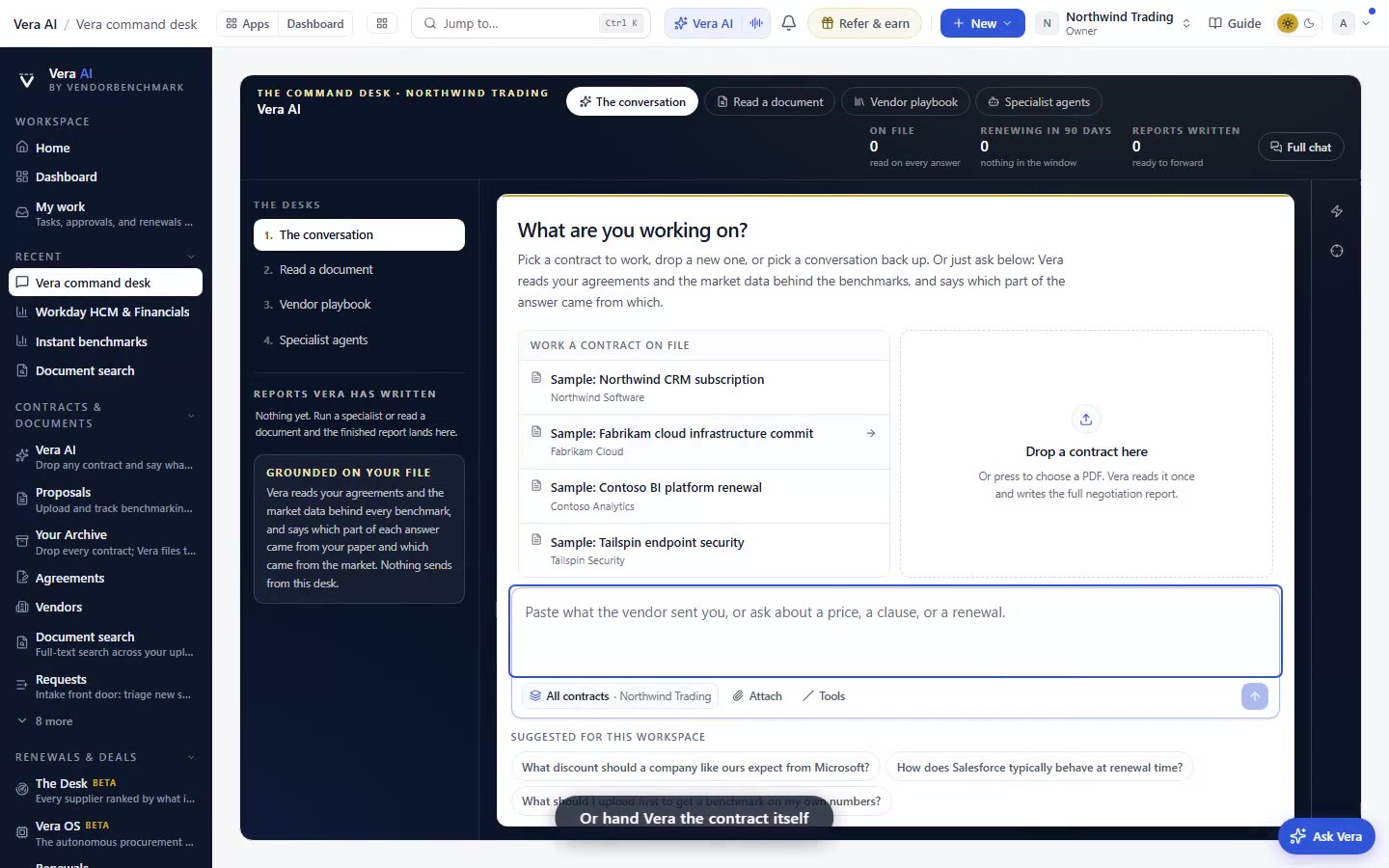
Removing incumbent bias is two jobs, not one. First, the requirements have to be rewritten in neutral, outcome based language so any credible vendor can bid the same thing. Second, credible alternatives have to actually exist as priced, benchmarked options, because a neutral spec with no comparators is just a nicer looking single source. Vera does both. It reads your spec, identifies the lines that describe a feature instead of a need, and rewrites them as outcomes. "Tag based cost allocation with inherited tags" becomes "attribute spend to teams with X percent accuracy," which three vendors can answer honestly instead of one.
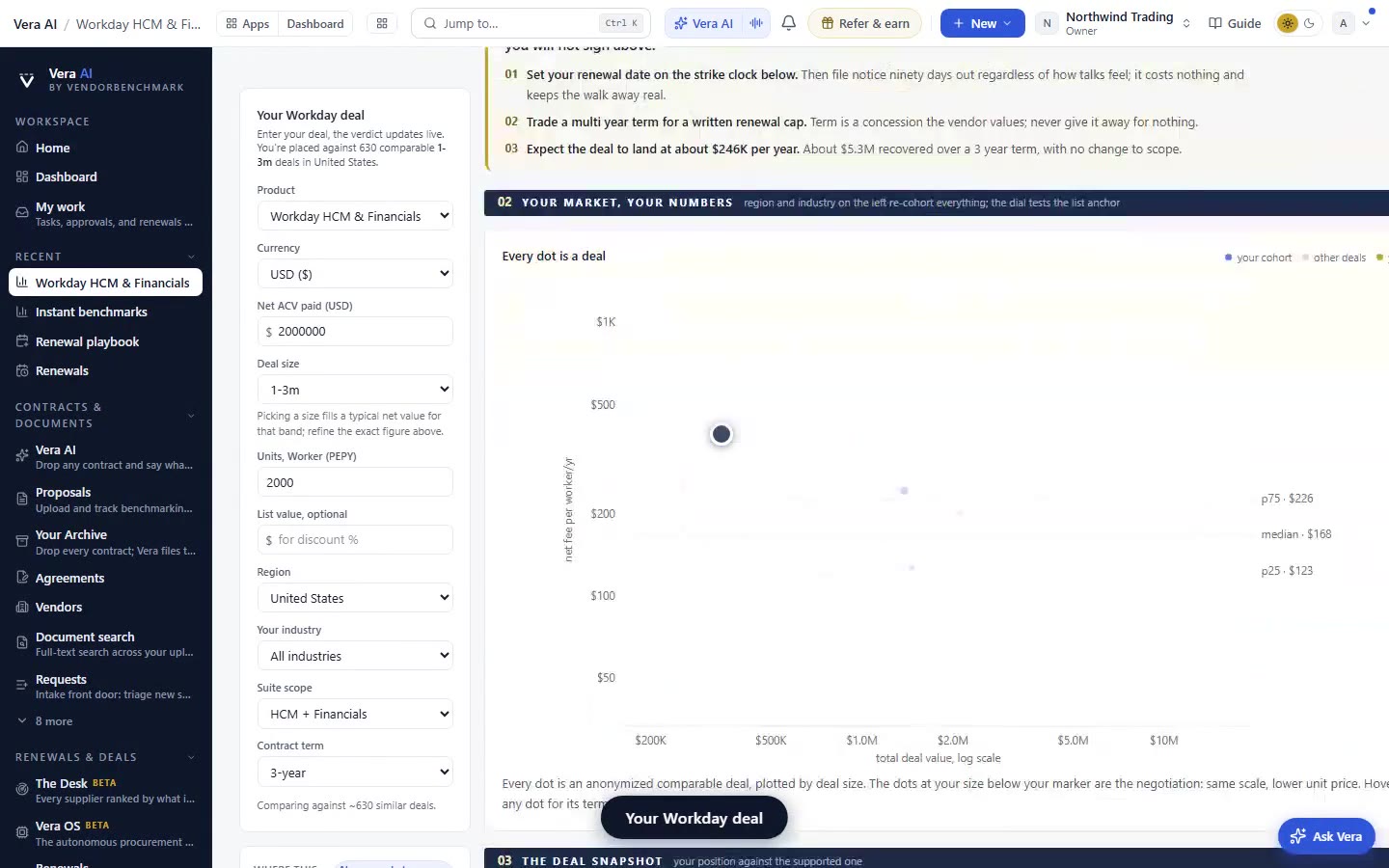
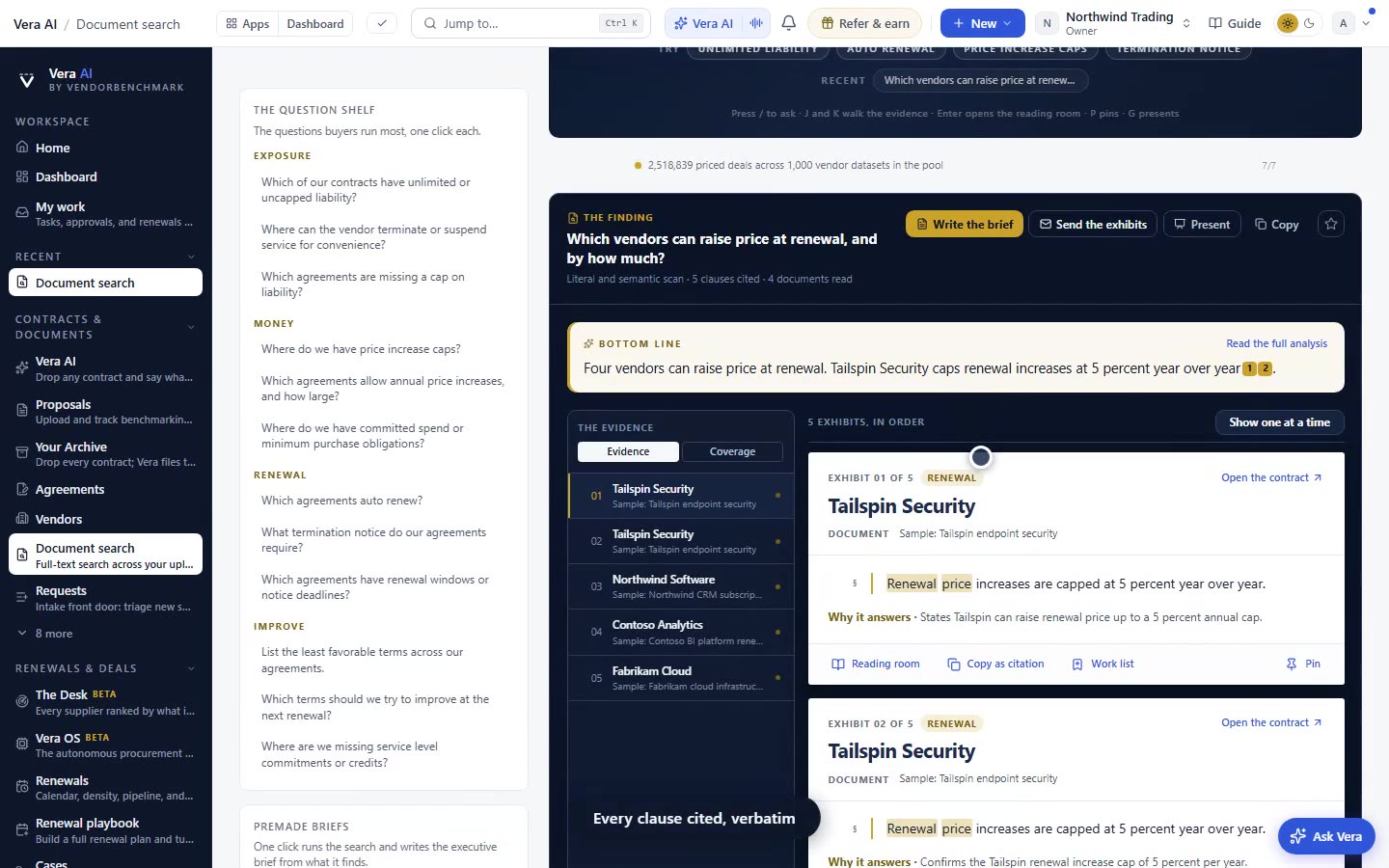
Then it benchmarks the field so a competitive baseline is real rather than rhetorical. This is where a credible, priced alternative changes the whole conversation. When the incumbent knows you have a neutral spec and two comparably priced alternatives that meet it, the renewal negotiation stops being a formality. The comparison is drawn from benchmarks across 1,483 vendors and grounded in documented market evidence, so the alternative is not a threat you are bluffing, it is a number you can name.
What a clean evaluation actually contains
When the spec is neutral and the alternatives are real, the negotiation war room changes shape. You walk in with a requirement any vendor can meet and a market range for meeting it. The incumbent can no longer rely on criterion 17 to win by default. If you want to see the discipline behind this, our Negotiation Craft method works ten of these disciplines on real 2026 vendors. Here is the checklist that turns a rigged process into a real one.
What this does not fix
Be honest about the limits. Vera can make your spec neutral and put priced alternatives on the table, but it cannot make you willing to switch. If the organisation has already decided emotionally that it is staying with the incumbent, a clean baseline will simply document that decision more honestly. That is still worth having, because even a genuine incumbent renewal negotiates better when the vendor knows a real alternative was priced. But do not mistake a neutral spec for a mandate to move.
It also cannot measure switching cost for you at the moment of decision. A reframed spec tells you an alternative can meet the requirement. It does not tell you what migration, retraining, and integration rework will cost, and those numbers can legitimately keep the incumbent in place. Do that work separately, using something like our approach to measuring lock in before the vendor prices it for you. And finally, Vera reframes what you give it. If a requirement is missing entirely, it cannot invent it. The neutral spec is only as complete as the needs you brought to the table. What Vera guarantees is that the needs you did bring are stated in language every credible vendor can answer, and that the alternatives are real. The rest is your decision, made with the bias removed.
Fredrik has spent more than twenty years in enterprise software, with time at Oracle, IBM, SAP, and Salesforce before moving to the buy side. He structured and priced the kind of large agreements most buyers only see once or twice in a career, which taught him where the leverage sits and how far a vendor will actually move. He started VendorBenchmark to hand that knowledge to every sourcing team.