Negotiation Craft: ten disciplines, each worked on a real 2026 vendor.
A new research series teaches how to negotiate, not just what to ask for: anchoring, concessions, the credible alternative, timing, multithreading, the information game, escalation, bundling, the walk away, and pressure defense, each worked on the vendor whose 2026 situation makes it concrete, with real benchmark figures.
The platform has always answered what to ask for: the benchmark says the price, the playbook says the sequence. Negotiation Craft answers the harder question underneath, which is how to conduct the negotiation itself. It is a ten part research series on method, one discipline per document, and every document is worked on a real vendor whose 2026 situation makes the discipline concrete rather than academic.
That grounding is the series' rule. Anchoring is not taught in the abstract: it is taught on the Salesforce scripted open, with the reset that reframes the conversation around your own usage and net cost. Concession discipline is taught on SAP RISE, where the trade structure decides whether the migration subsidizes the subscription or the reverse. Every figure in every piece is drawn from that vendor's benchmark file, so the method arrives with numbers you can actually use.
The first five: framing the deal
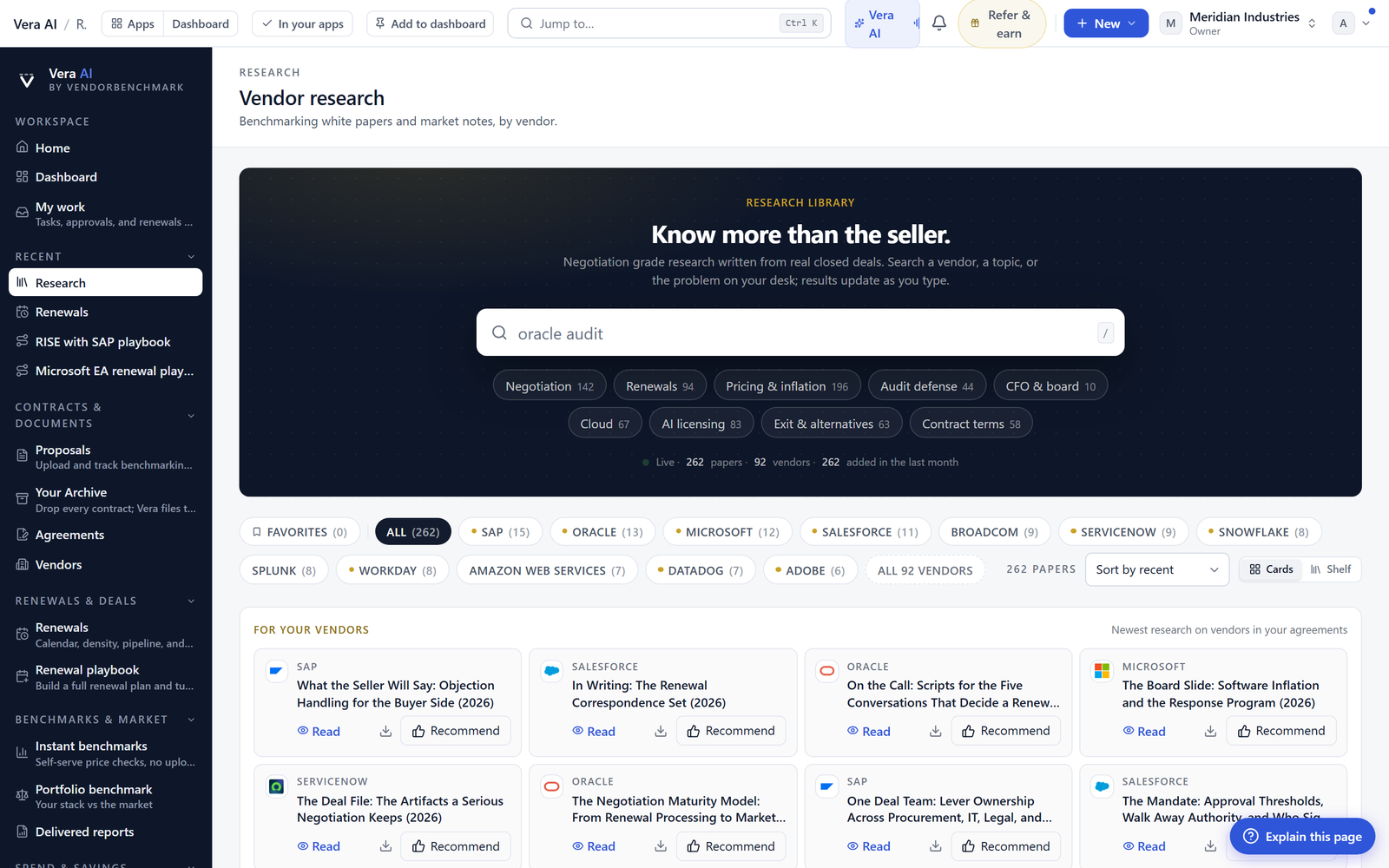
Anchoring and the Opening Number reads the Salesforce open and resets the frame before the first number sticks. The Trade builds concession discipline on RISE: nothing given without something got, and a ledger of both. The Credible Alternative builds a costed, current BATNA against Broadcom's VMware repricing, the situation where buyers most need one and most often bluff instead. Timing turns Microsoft's June 30 fiscal year end into leverage with a calendar, not a rumor. Multithreading denies the Workday account team the seam it splits buyers on, by deciding who on your side says what to whom.
Each piece ends the way an advisor would end it: with the moves to make this quarter on that vendor, not with a bibliography.
The last five: holding the line
The Information Game sets what to reveal and what to withhold against Oracle, the vendor most skilled at pricing what it learns about you. The Escalation Ladder shows when going over the IBM rep helps and when it burns the account, with the rungs named. Bundling and Unbundling prices the Adobe suite one line at a time, because a bundle you cannot decompose is a discount you cannot verify. The Walk Away makes leaving Snowflake credible instead of theatrical, which is mostly preparation and paper trail. And Defending Against Pressure Tactics names the exploding quote and the year end deadline for what they are, worked on Cisco paper.
Read together, the ten form a single argument: negotiation outcomes are mostly determined before the meeting, by what you prepared, what you can prove, and what you are genuinely willing to do. The series exists to move those three.
Ten disciplines, ten vendors
Method compounds, it does not replace leverage
Technique does not conjure leverage that does not exist. A buyer with no alternative, no timing flexibility, and no data will negotiate badly regardless of method, which is why the series keeps pointing back at the platform's tools: the benchmark that gives you the number, the playbook that gives you the sequence, the workup that gives you the evidence. Craft is a multiplier on those, not a substitute.
And the vendor pairings are illustrations, not fences. The anchoring discipline taught on Salesforce works on every scripted open in enterprise software; the vendor makes it concrete, the method travels. Read the one about the vendor on your desk this quarter, then read the other nine anyway.
Fredrik has spent more than twenty years in enterprise software, with time at Oracle, IBM, SAP, and Salesforce before moving to the buy side. He structured and priced the kind of large agreements most buyers only see once or twice in a career, which taught him where the leverage sits and how far a vendor will actually move. He started VendorBenchmark to hand that knowledge to every sourcing team.
The week in enterprise software buying, in one email.
What shipped on the platform, and the pricing and licensing moves worth knowing before your next renewal. One email a week, to your work address. Unsubscribe any time.