The Spec That Adds Up But Nobody Sells
An internally consistent requirements set can still describe a product that no vendor will sell at any sane price. Here is how comparable closed deals catch it early.
Last month you ran a requirements workshop, or three of them. Security wanted SSO, field-level encryption, and a private tenancy option. Finance wanted usage-based pricing with an annual cap. Operations wanted five named integrations, two of them to systems the market treats as legacy. Legal wanted a right to audit and a uncapped liability carve-out for data loss. Each request was reasonable on its own. Someone consolidated them into a clean, numbered spec, and it read beautifully. Then the RFP went out, and the responses came back either blank, heavily caveated, or priced at a level that turned the project into a board conversation. The spec was internally consistent. It just described a product that does not exist in the market at a price anyone budgeted.
Why a coherent spec can still be impossible
Internal consistency is a low bar. A requirements document passes it when no two lines contradict each other and every stakeholder sees their ask represented. That is a document that survives review. It is not a document the market can fill. The commercial world has its own constraints that your review meeting never sees: which features ship together in the same SKU, which get charged as premium add-ons, which are only sold at the enterprise tier, and which combinations no vendor has ever agreed to at once.
So the failure mode is quiet. You do not get a warning that requirement 14 and requirement 22 are individually common but jointly rare. You get a spec that looks finished, an RFP that goes out on the promised date, and a scope reduction three weeks later when the responses force one. That reduction happens under time pressure, with vendors already watching, which is the worst possible moment to decide what you can live without.
Why it persists even when everyone is competent
This is not a skill problem. The people writing your spec are usually good at their part of it. The gap is structural. Each stakeholder knows their own domain deeply and the market's commercial packaging not at all. Nobody in the room owns the question of whether the assembled whole is buyable, because that question does not belong to any one function. Security cannot answer it. Finance cannot answer it. And procurement, which might, often receives the spec after the timeline is already promised, when the appetite for restructuring it is gone.
There is a second reason it persists. The reference points people reach for are wrong. When a stakeholder says a requirement is standard, they usually mean a vendor demonstrated it, or a survey said most buyers have it. Neither tells you what buyers actually bought. A feature can be demoed everywhere and scoped almost nowhere, because it lives in a tier nobody purchases. This is the same trap we describe when a requirements list turns out to be a transcript of a staged demo. The evidence that would settle it, what comparable buyers closed on, is exactly the evidence the internal process does not have.
The motion that removes it: benchmark before you publish
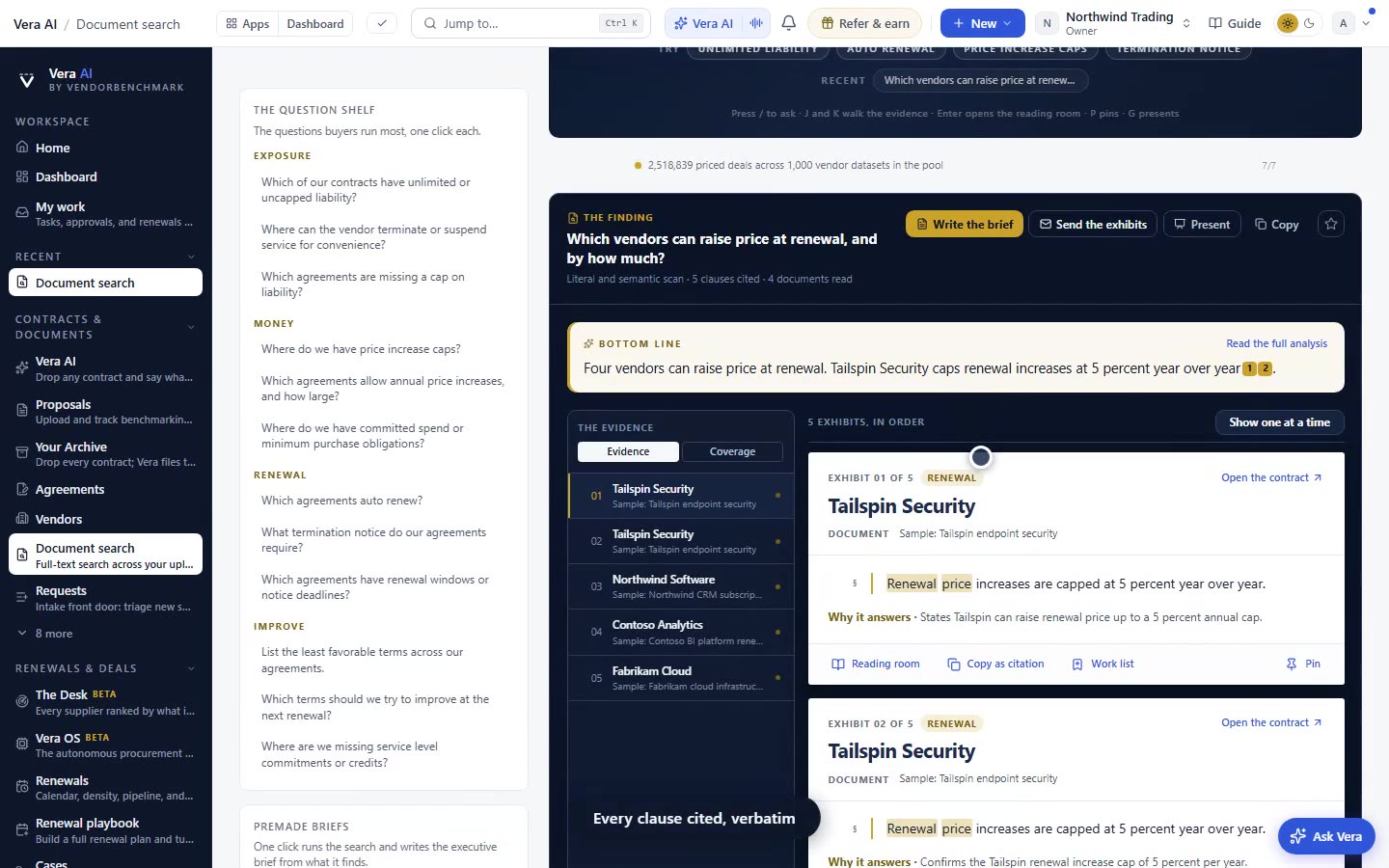
The fix is to test the assembled spec against reality before it reaches a vendor. Not against a datasheet, and not against a survey, both of which flatter the buyer, but against closed transactions from comparable buyers. We have written before about why survey benchmarks flatter everyone and researched closed pricing does not. The same distinction applies to scope. What a vendor says is possible and what buyers like you actually purchased are different data, and only one of them predicts your RFP responses.
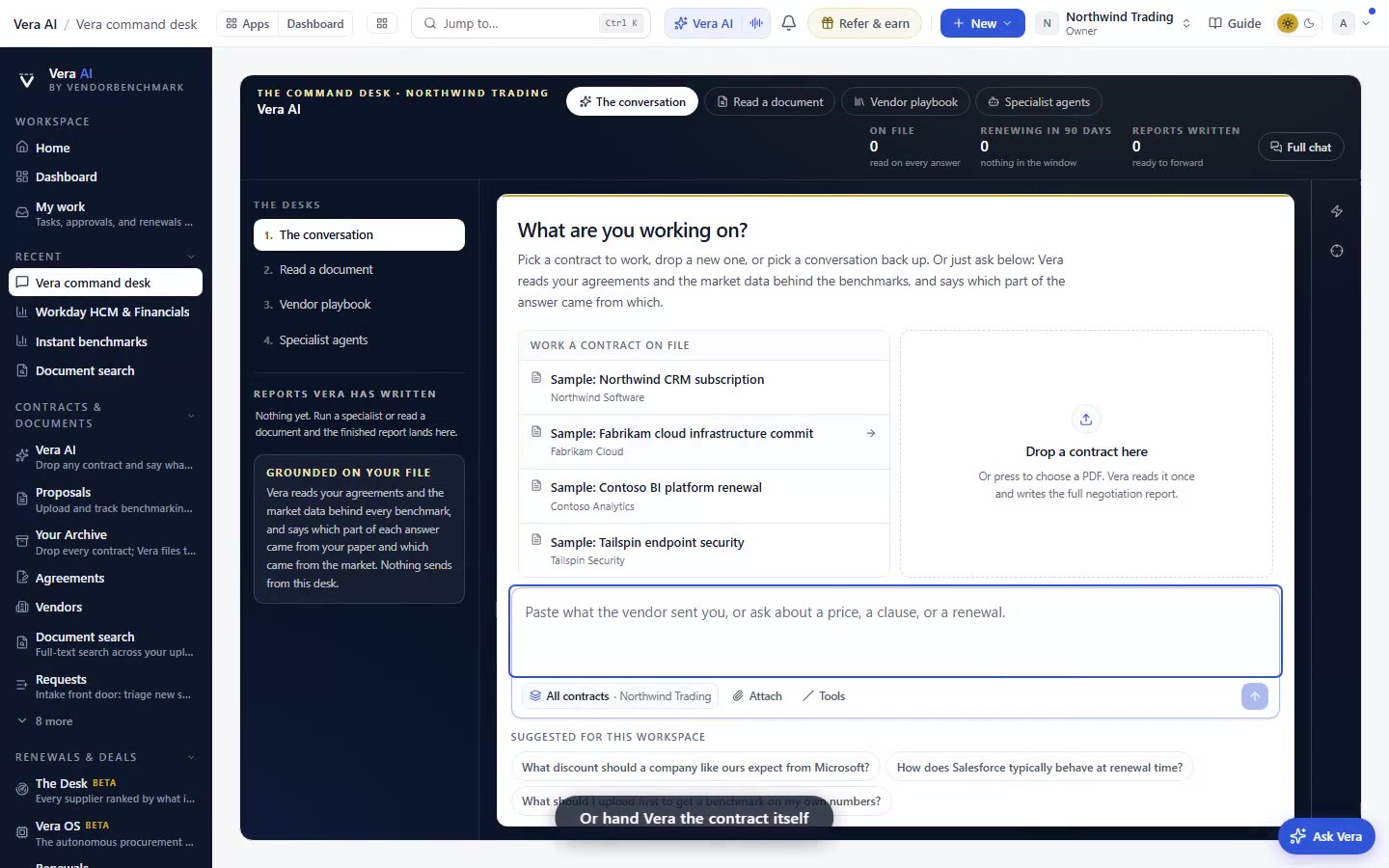
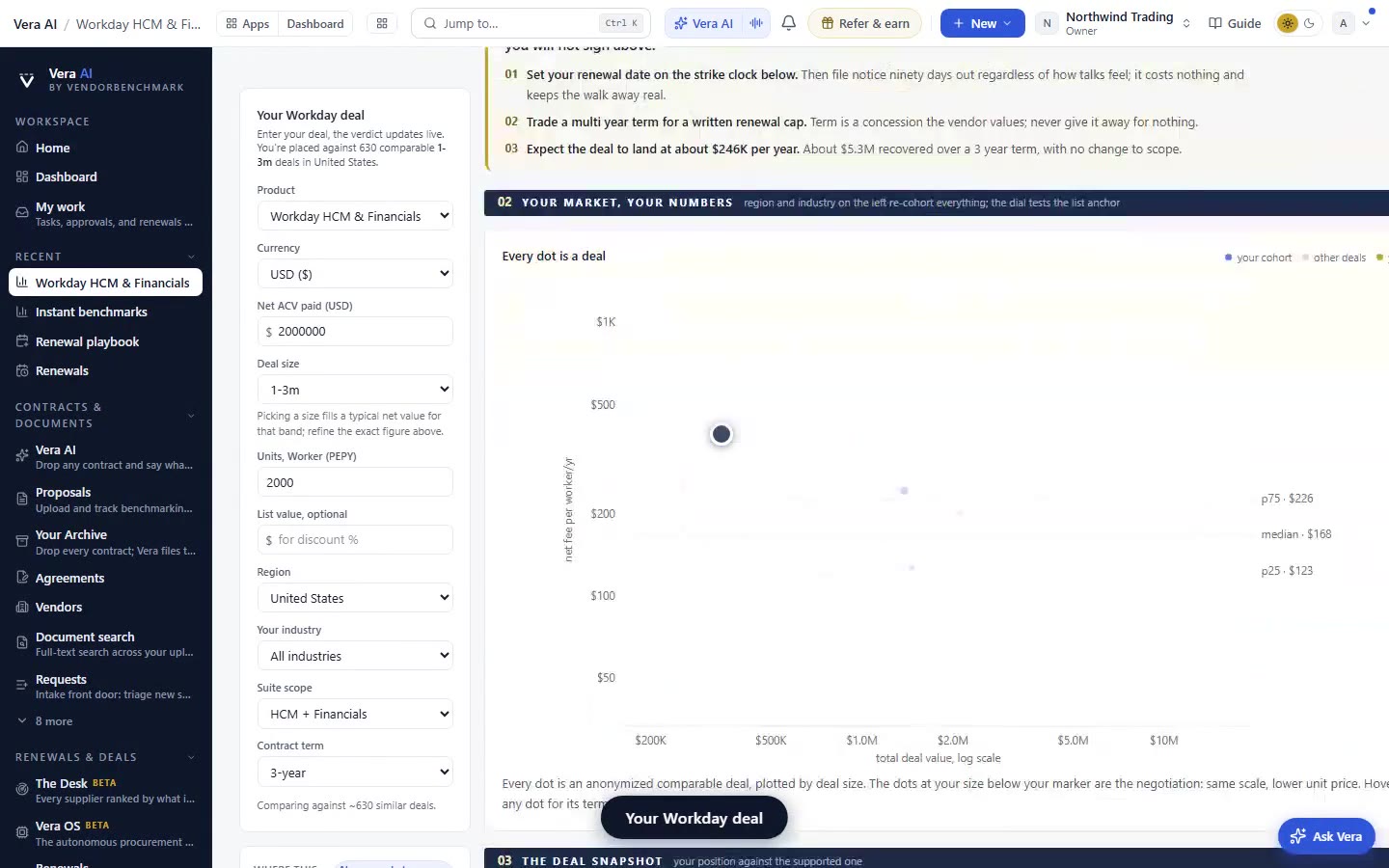
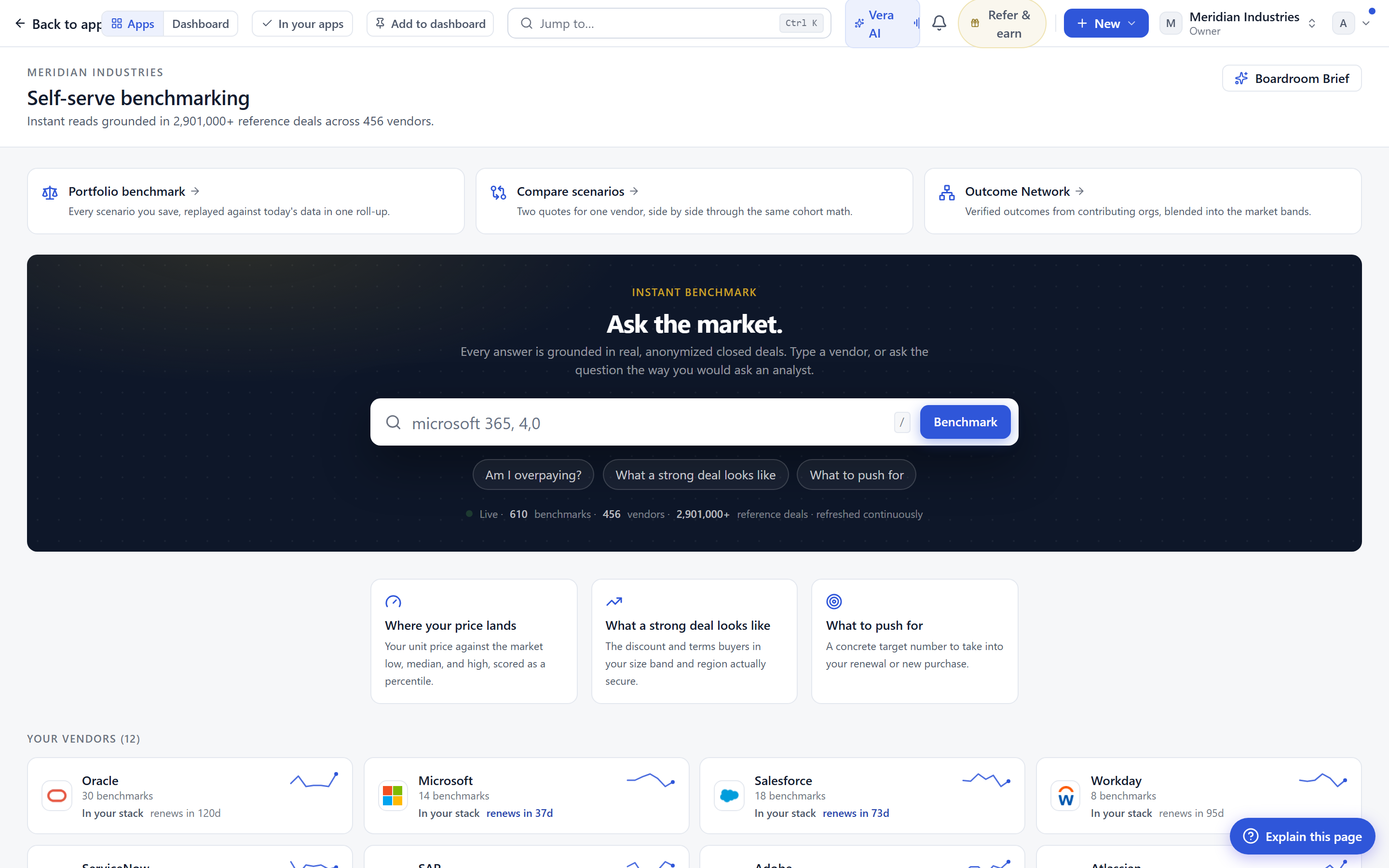
In practice you bring the consolidated requirements set into the benchmark view and match it against comparable deals filtered to your segment, size, and category. The library carries benchmarks across 1,483 vendors, calibrated to documented market evidence, and a typical query resolves against the cohort that resembles your deal. The point of interest is not the average. It is the combinations. When your spec pairs two requirements that individually appear in most deals but jointly appear in almost none, that is your impossible line item, surfaced while you can still move it.
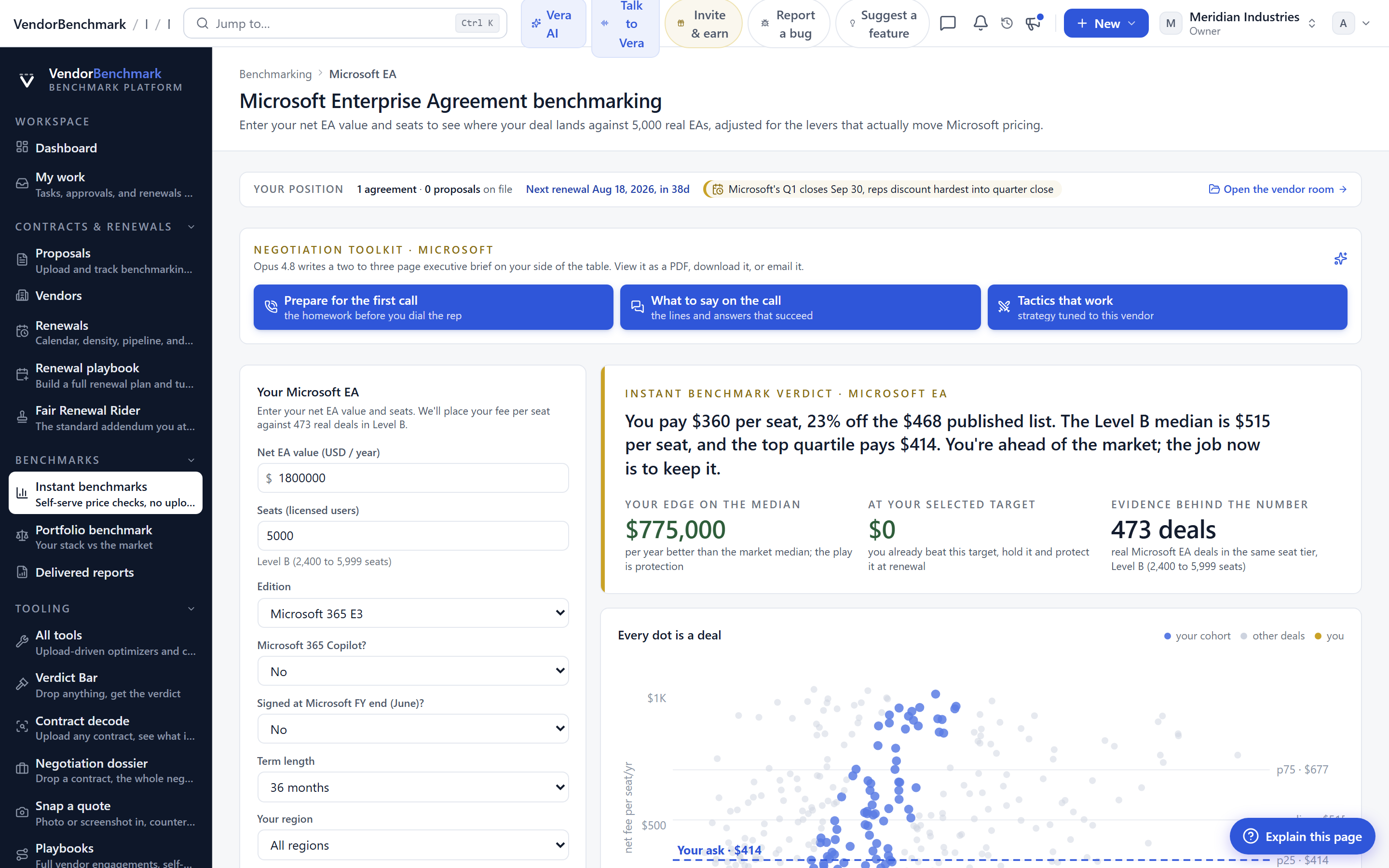
What comes back is not a verdict, it is evidence you can hand to the stakeholder who owns the requirement. Telling security that field-level encryption at your tier is scoped in a small minority of comparable deals, and only ever alongside a longer term, is a conversation with data in it. It changes the negotiation from opinion versus opinion into a shared reading of what the market does. That is a far better place to decide what stays in the spec than a war room three weeks after the RFP went out.
What changes when the spec is tested early
What this does not solve
Benchmarks tell you what comparable buyers scoped and closed. They do not tell you that your unusual requirement is wrong. Sometimes you genuinely need the combination that almost nobody buys, because your regulatory position or your risk tolerance is genuinely unusual. In that case the benchmark still helps, because it tells you the requirement is rare, which means it will cost more, take longer to source, and draw fewer bidders. That is a decision to make with eyes open, not a flag to obey.
The tool also cannot referee your internal politics. If a stakeholder insists on a requirement the evidence says is impractical, the benchmark gives you a stronger argument but not the authority to overrule them. And it does not write the spec for you. It tests the one you assembled. The judgement about which requirements are worth their rarity, and which were only ever there because someone saw them in a demo, stays with you. What the platform removes is the surprise. It does not remove the trade-offs, and any tool that claimed to would be selling you a spec that does not exist either.
Want to be updated when major licensing and pricing changes land? One analyst brief a week: the price rises, metric changes and audit campaigns that move software costs. Work email only.
Morten brings two decades of enterprise and software procurement, with stints across Oracle, IBM, SAP, and Salesforce shaping how he reads a deal. He has led sourcing through hundreds of renewals, from mid market order forms to nine figure global agreements, and learned that the buyers who win are the ones who walk in knowing the market. He built VendorBenchmark to make that pattern recognition repeatable.