Third-party support: the three golden rules.
Third-party support can halve a software maintenance bill, sometimes far more. Whether you get the half or the far more comes down to three rules that are easy to state and easy to break. Break one and you hand the saving straight back.
For a mature software estate, the annual maintenance and support bill is often the least examined large number a company pays. Twenty-two percent of a licence base you bought years ago, renewing automatically, for support you may barely use. Third-party support providers exist precisely to attack that number, and they can attack it hard: cutting the bill in half is the routine outcome, and well run tenders have gone much further than that.
But the outcome is not automatic, and the same estate can produce a fifty percent saving or a ninety percent one depending entirely on how the buyer runs the process. Three rules separate the two. They are simple, they are non negotiable, and every one of them is a way of not handing your leverage to the other side. The playbook is built around them.
Never disclose what you pay the OEM
The single most expensive mistake in a third-party support deal is telling the provider what you currently pay the original vendor. The moment they see your OEM bill, they price against it, and the standard anchor is fifty percent of that number. You have just told them exactly how little they need to offer to look like a bargain, and you will get a deal that is good relative to your OEM bill and mediocre relative to what they would have accepted.
So you publish scope, never price. The providers get a precise description of what needs supporting, the products, the versions, the environments, and nothing about what you pay for it today. Your OEM bill stays your own internal yardstick, the thing you measure their bids against, not the anchor they measure their bids from. Denying them that anchor is worth more than any clever negotiating tactic you could apply later.
Always tender every provider
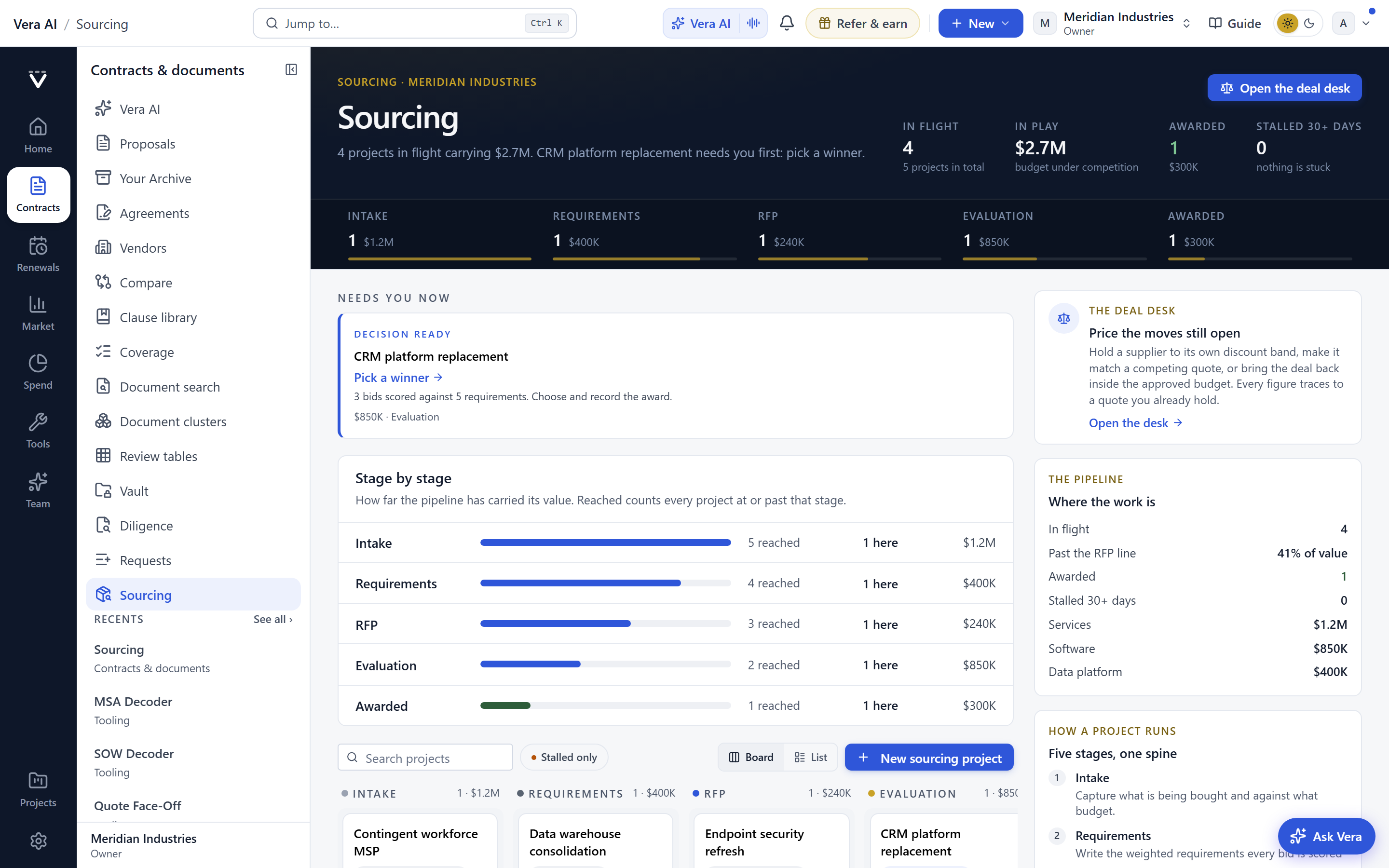
The second rule follows from the first. Third-party support providers fight over anything, and a single bid is not a negotiation, it is an acceptance of their anchor. A lone provider quoting against undisclosed scope will land near that fifty percent standard, because nothing is pushing them lower. A genuine tender, with several providers invited and each knowing the others are bidding, is what turns fifty percent into something far better, and full competitive tenders have reached reductions of ninety percent.
A real tender also opens a move a single bid never can: the split award. Different providers are strong on different products, and rather than hand the whole estate to one, you can award each product tower to the cheapest provider that covers it well. The tender desk prices that best-case split for you, and it flags the danger clearly: with fewer than two providers actually invited, the whole thing collapses back to the anchor, and a red warning says so. One bid is not a tender.
Re-tender the incumbent
The third rule catches the trap that opens once you have already switched. A company that moved to third-party support years ago and has been paying the same provider ever since is in exactly the position it escaped from: an unexamined renewal with an incumbent who knows there is no competition in the room. Loyalty to a third-party provider is repaid the same way loyalty to the OEM was, with a price that drifts.
So the incumbent gets re-tendered like anyone else. Going back out to the market on an existing third-party contract regularly recovers a further meaningful reduction, because the incumbent, faced with real competition again, sharpens a price that had quietly gone slack. The rule is not disloyalty, it is discipline: every support contract, OEM or third-party, incumbent or new, earns its price by facing the market, every cycle.
Three ways not to hand back the saving
Support is a decision, not just a price
The playbook prices the tender and enforces the rules, but third-party support is a genuine trade off, not a free saving. You give up the OEM's patches and roadmap access in exchange for the lower bill, and that trade is right for a stable, mature product and wrong for one you are actively rolling out. The readiness checks, exit hygiene, archiving what you are entitled to before support lapses, exist because the decision has real operational weight.
What the golden rules guarantee is that if the trade is right for you, you capture the full value of it rather than a fraction. Play the process well, deny the anchor, run the tender, split the award, re-tender the incumbent, and a bill you never questioned becomes one of the largest savings on the estate. Play it badly, and you sign at half and call it a win, having left the other forty percent on the table.
Morten brings two decades of enterprise and software procurement, with stints across Oracle, IBM, SAP, and Salesforce shaping how he reads a deal. He has led sourcing through hundreds of renewals, from mid market order forms to nine figure global agreements, and learned that the buyers who win are the ones who walk in knowing the market. He built VendorBenchmark to make that pattern recognition repeatable.
The week in enterprise software buying, in one email.
What shipped on the platform, and the pricing and licensing moves worth knowing before your next renewal. One email a week, to your work address. Unsubscribe any time.