Never miss a notice date. Never miss an uncapped uplift.
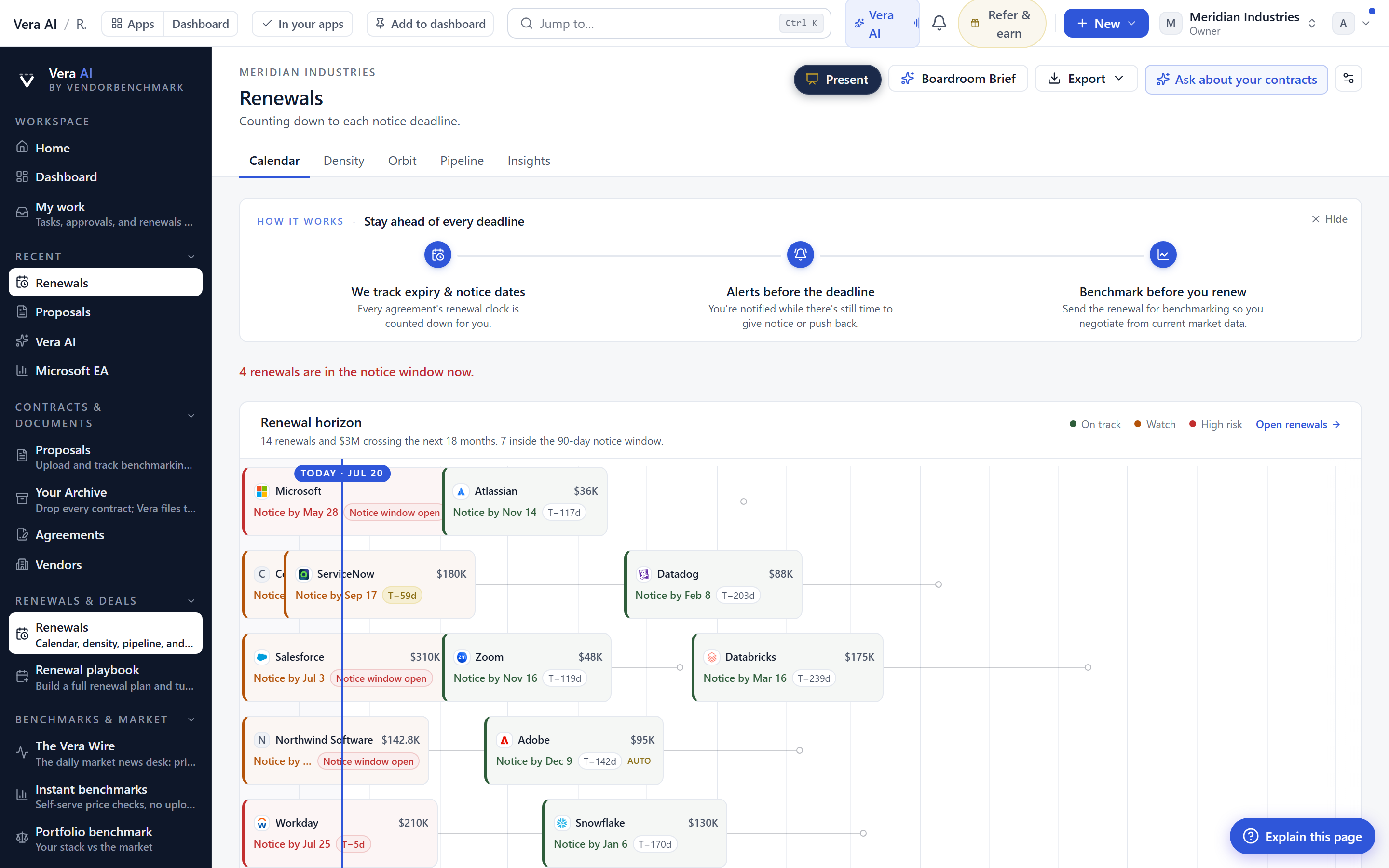
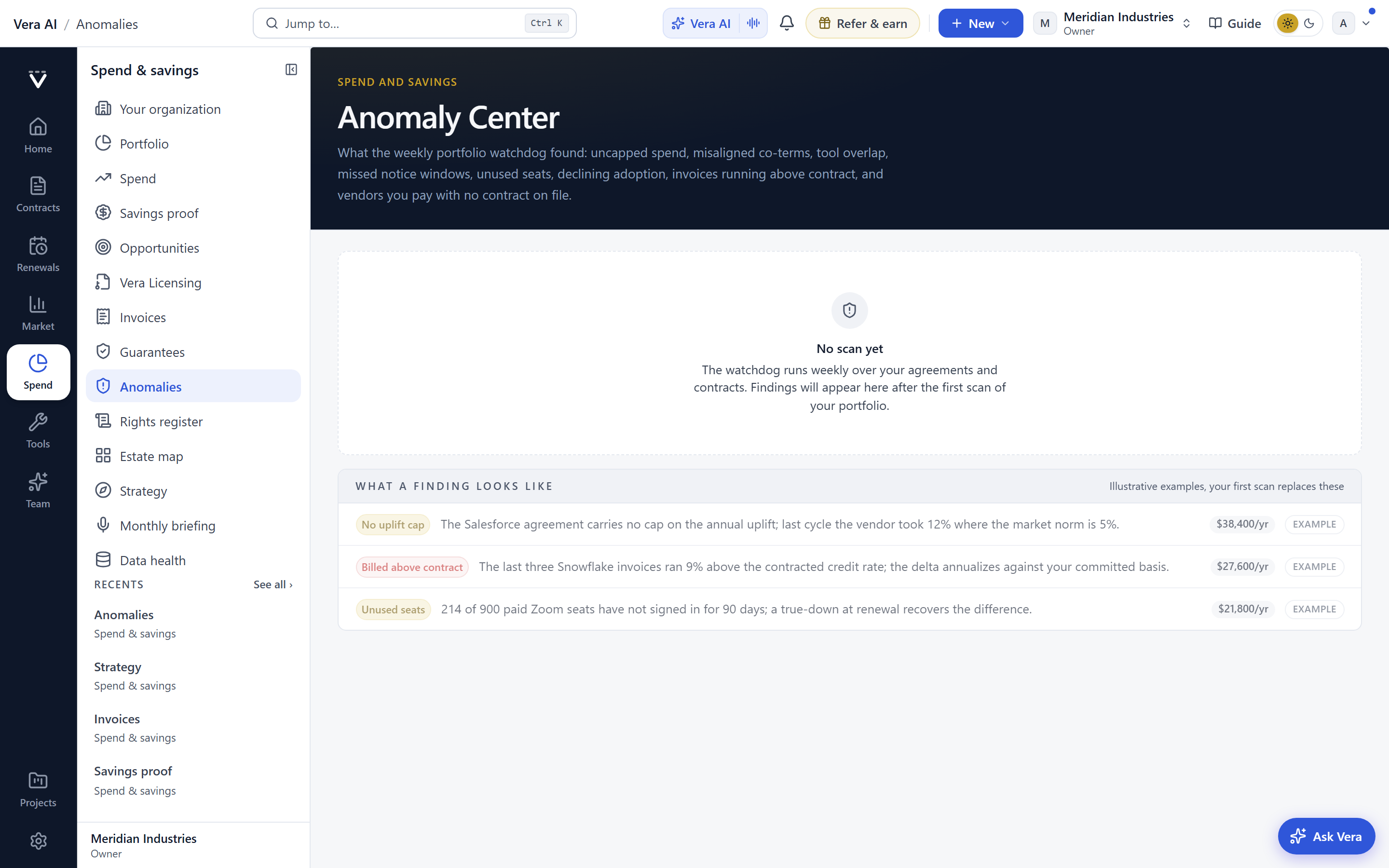
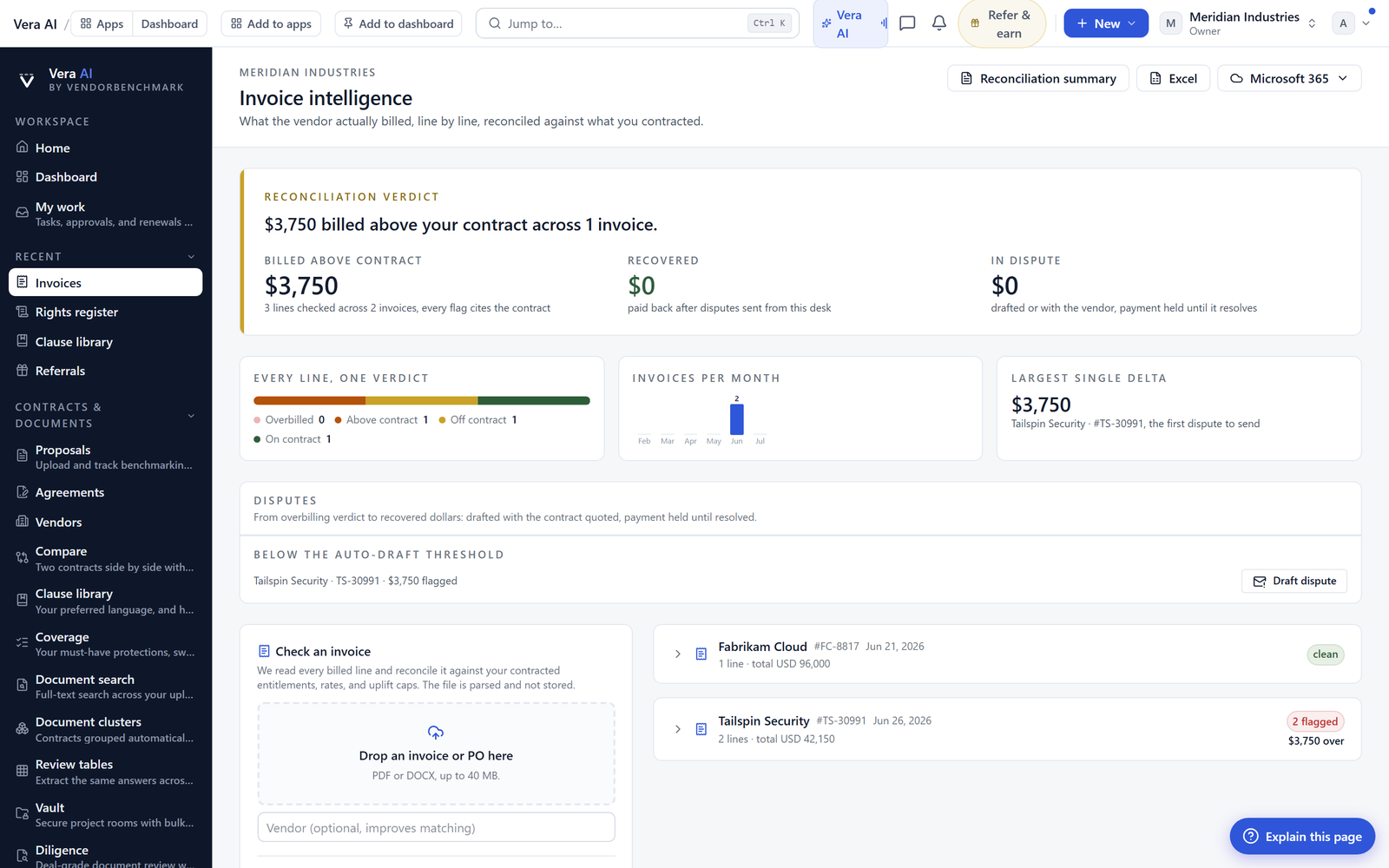
The Deal Agent’s calendar counts down every notice deadline for the next 18 months and names who owns each one. The Spend Agent’s Anomalies catch uncapped uplifts and shelfware before they compound, and its Invoices step flags the off contract charge before finance pays it.
The most expensive line in a contract is often the one that fires automatically: the auto-renewal you forgot to give notice on, the uncapped uplift that compounds for three years, the invoice with a quiet off-contract charge. None of it announces itself. The watchdog does.
Timing is leverage, and the platform keeps the clock.
See what is coming, catch what is wrong, and price what is next.
In the Deal Agent, Today puts notice dates inside 30 days first, the Board tracks every deal by stage, and the Calendar shows the next 18 months and who is on the hook for each.
In the Spend Agent: uncapped uplifts, misaligned co-terms, tool overlap, missed renewals, shelfware, spend leakage, and shadow spend, surfaced every week before they compound into a board question.
The Spend Agent’s Invoices step flags overbilling, off-contract items, and uplift-cap breaches against the agreement, so you spot the $35K of off-contract charges hiding in a $412K invoice.
Annual spend with finance exports, per-vendor renewal uplift projections over 24 months, and fiscal year-ends for 40+ vendors, so you time the ask for the vendor’s quarter close when discounts move.
It watches every week, and drafts the fix.
The anomaly engine reads your contracts, entitlements, and invoices against the market on a schedule, grounded in your own data. When something is off, it does not just flag it: it hands you the corrective draft, priced and ready to send.
Built to run quietly and never miss.
The value is in the catches, so the plumbing is built for reliability and grounding.
The watchdog, billing watch, and terms watch run as scheduled jobs, so surveillance is continuous and does not depend on anyone remembering to look.
An anomaly is not a generic alert: the uplift, the overlap, and the shelfware gap are priced using your real contract data, so the flag comes with a number.
True-downs, swap windows, price holds, and SLA credits you already paid for are tracked with expiry alerts, so you use the right before it expires.
Spend and the 24-month forecast export in the format finance budgets in, so the projection lands in the planning cycle, not a screenshot.
When the watchdog finds something, the correction is drafted from your data and your contract policy, ready to send, so the catch turns into an action.
The catch that pays for the platform, without anyone watching.
Reconciling invoices, tracking notice dates, and hunting for shelfware by hand is a full-time job nobody has. Running it as continuous background surveillance means the expensive misses stop happening.
Estimate your own hours →Priced, drafted, and grounded in your paper.
Spend tools and calendar reminders both stop at the alert. This carries the catch through to the fix.
A dashboard of what you spent is not the same as catching the uncapped uplift or the off-contract charge. The watchdog reads the contract behind the number.
A reminder that a renewal is coming does not tell you what it is worth, who owns it, or what to ask for. The calendar carries the analysis, the owner, and the next move.
By the time a person reconciles the quarter, the wrong invoice is paid. Daily automated checks catch it before finance cuts the check.
Business value, and the operational value under it.
One line for the board paper, and the day to day the team actually feels.
- The expensive automatic misses stop: no lapsed notice date, no uncapped uplift compounding for three years.
- Recovered money from invoices that were wrong and rights you already paid for and forgot.
- A 24-month renewal forecast finance can budget against, in their own format.
- A defensible record of what was caught and what it was worth.
- Continuous surveillance with nobody assigned to watch the clock.
- Every notice deadline and owner visible 18 months out, so nothing is a scramble.
- Corrective drafts ready to send the moment something is flagged.
- The ask timed to the vendor’s fiscal close, when discounts actually move.
Let the clock and the watchdog run themselves.
Every notice date owned. Every anomaly priced.