One export in. A phased savings plan the team can track, out.
Upload-driven optimizers for cloud, Microsoft, VMware, and AI commitments, each shipping with sample data. Turn a billing export or a usage file into named accounts to reassign, priced scenarios against real discount bands, and a tracked action plan, with the Microsoft estate staged as a show a CFO can follow in ten minutes.
Everyone knows there is waste in the cloud bill and the E5 estate, but proving it means a modeling exercise most teams never finish. The optimizers take the export you already have and do the modeling, so the savings stop being a suspicion and become a named, priced, trackable plan.
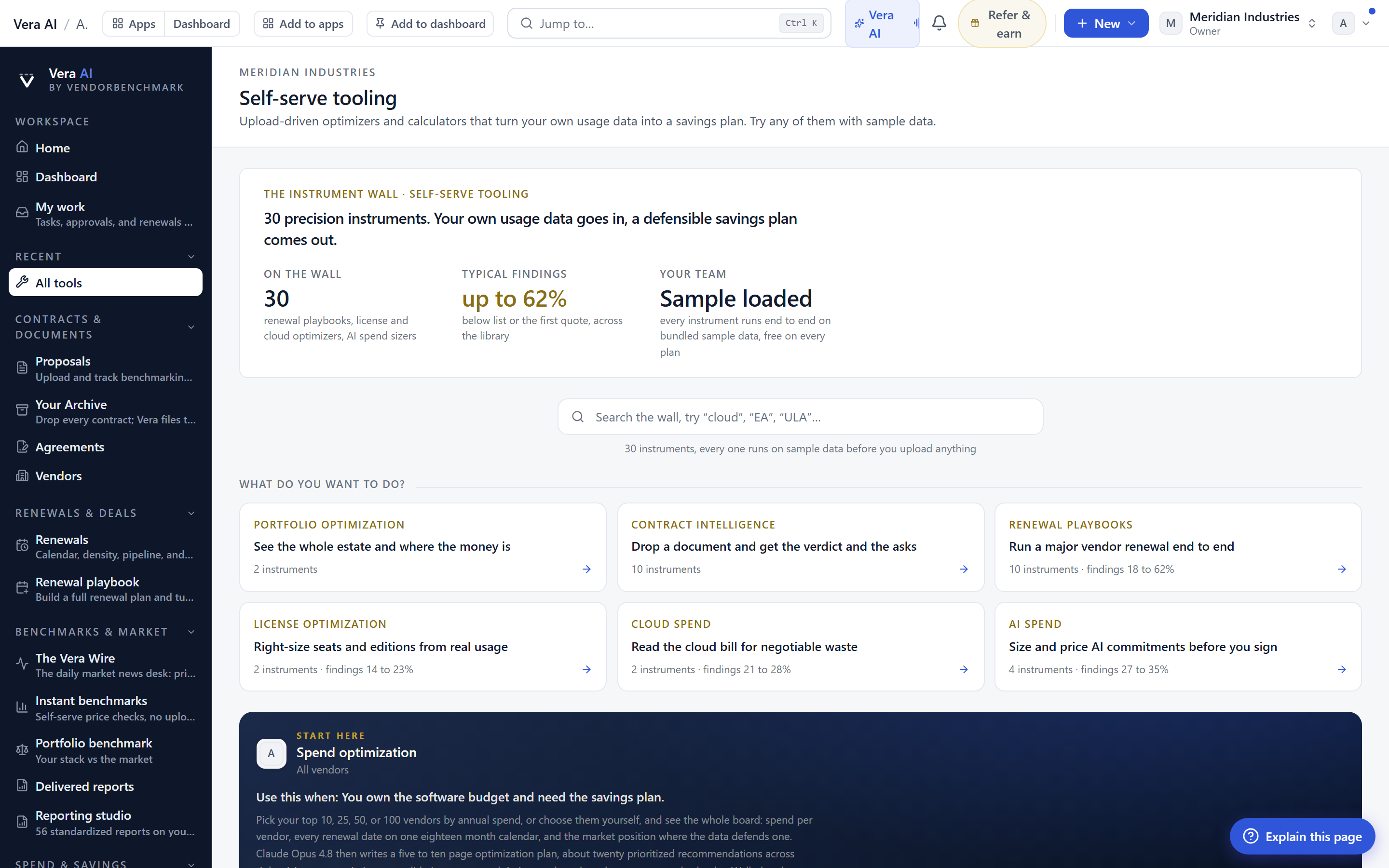
A tool for each big commitment, all upload-driven.
Drop the file you already export; get a plan the team can act on.
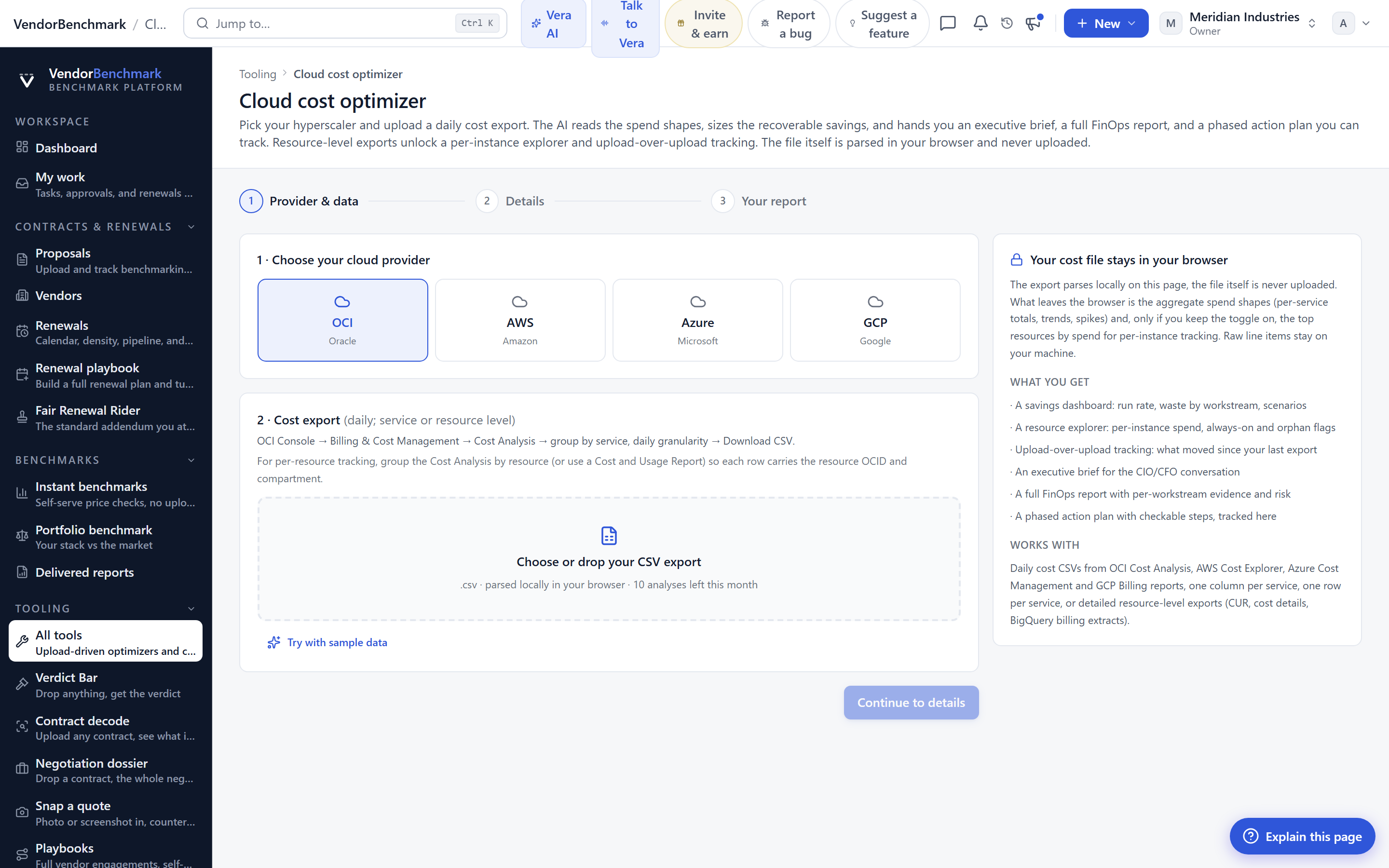
An OCI, AWS, Azure, or GCP billing export in; savings by workstream, an executive brief, a full report, and a tracked phased action plan out.
The admin center exports in; inactive accounts, E1/E3/E5/E7 right-sizing, Copilot sizing, and a per-user reassignment plan out. Name the 180 accounts that should drop from E5 to E3 and what it is worth.
Where the money goes, what changed, how each vendor compares, and what to take out at floor, target, and stretch, with the board pack and the written review.
AI commit optimizers for Claude, OpenAI, and Agentforce, a VMware VCF calculator from an RVTools export, and a workload comparator that prices the same inventory on AWS, Azure, GCP, and OCI.
It does the modeling, then writes the plan.
Each optimizer parses the export, right-sizes against real usage and known discount bands, and writes the executive brief and phased plan in analyst voice. The savings are grounded in your file and the platform’s benchmark data, not a vendor’s growth story or a generic percentage.
Built to turn a file into a defensible plan.
The optimizers are upload-driven, grounded in real bands, and safe with your data.
Each optimizer ships with sample data, so a buyer can explore the full output and understand the method before uploading a single real file.
Scenarios are costed against known market discount bands, not list price, so the target is what the vendor actually gives, not a sticker figure.
Every run produces both the one-page executive brief and a phased action plan the team can track to completion, so the analysis does not die as a PDF.
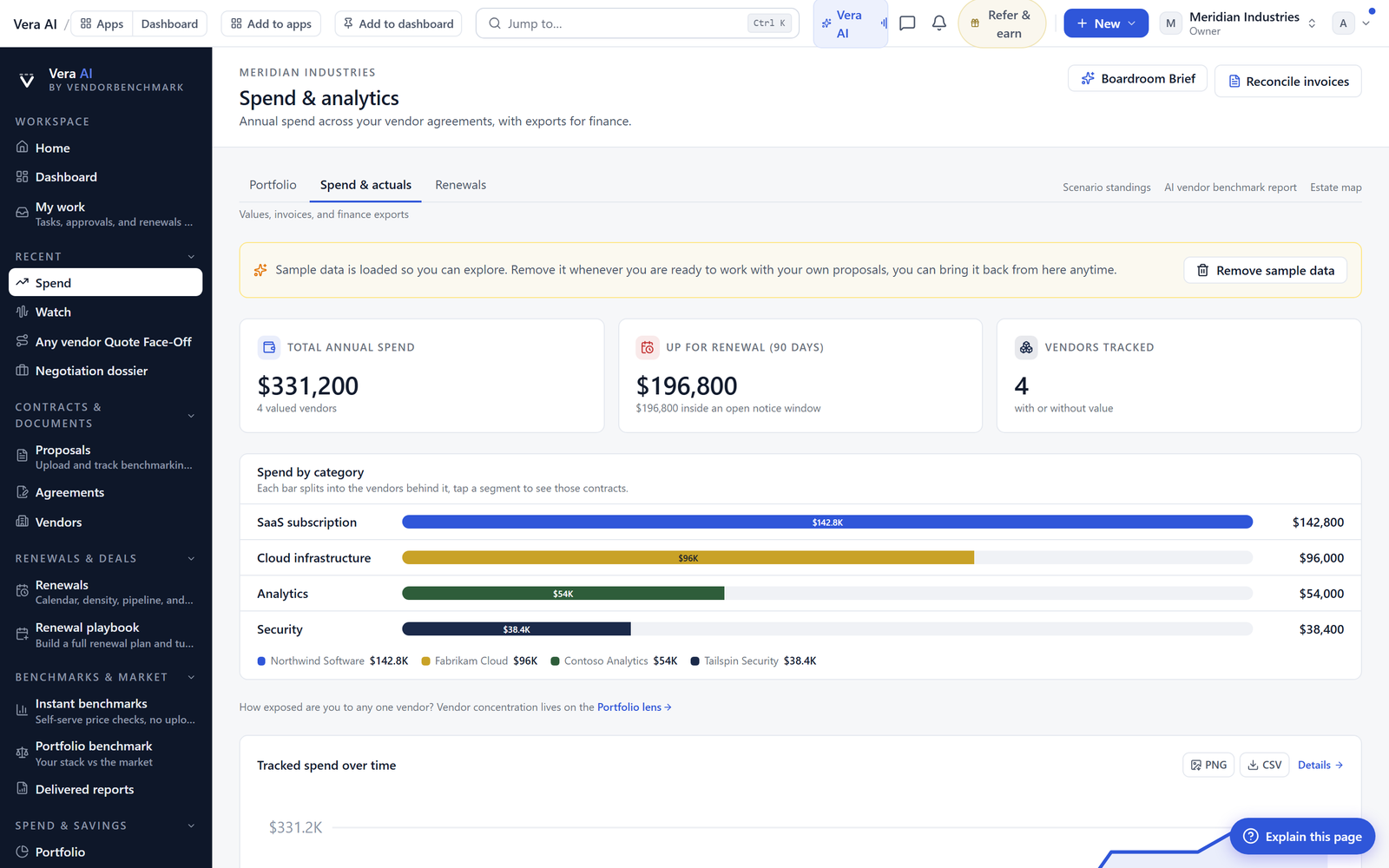
The Spend Agent keeps the run rate, the category split, and the renewal calendar on one screen, so the CFO walkthrough runs from the platform itself, no deck rebuilt the night before.
Exports land in private storage behind tenant isolation, checked on type and size, so a billing file with account detail is handled like the sensitive document it is.
The FinOps modeling exercise, finished in an afternoon.
Right-sizing an E5 estate or modeling a cloud bill against discount bands is weeks of spreadsheet work that most teams start and never finish. The optimizers take the export and hand back the brief and the plan.
Estimate your own hours →Grounded in your export and real discount bands.
FinOps platforms and vendor tools both miss the buyer-side pricing intelligence that makes the plan defensible.
A cloud-cost dashboard shows you where the money goes. It does not price the same workloads on three other clouds or size the commitment against real discount bands. These do.
The vendor’s own calculator sizes you up. A buyer-side optimizer sizes you to what you actually use, and prices the alternative.
The classic right-sizing engagement is weeks and a bill. Here the model is a re-runnable tool with sample data, and the plan is trackable after the consultant would have gone home.
Business value, and the operational value under it.
One line for the board paper, and the day to day the team actually feels.
- Waste turned into a named, priced, defensible savings plan, not a suspicion.
- A stronger renewal position: three priced scenarios and an asks sheet from your own data.
- Commitments sized to real usage, so you stop pre-paying for the vendor’s growth story.
- A CFO-ready walkthrough of the whole Microsoft position, no deck to build.
- The modeling done from an export you already have, in an afternoon not a quarter.
- Named accounts and phased steps the team can actually execute and track.
- Sample data on every tool, so the method is clear before you upload.
- The same inventory priced across clouds, so placement decisions have numbers behind them.
Turn the export into a plan you can defend.
Cloud, Microsoft, VMware, and AI commitments, all buyer-side.