Build the analyst you wish you could hire, once. It works every week.
No-code multi-step automations anyone can build, six specialist playbook agents plus your own custom ones, thirteen inbox agents you reach by email, and ninety nine background jobs that run while you sleep. The operating layer of the platform, not a bolt-on chatbot.
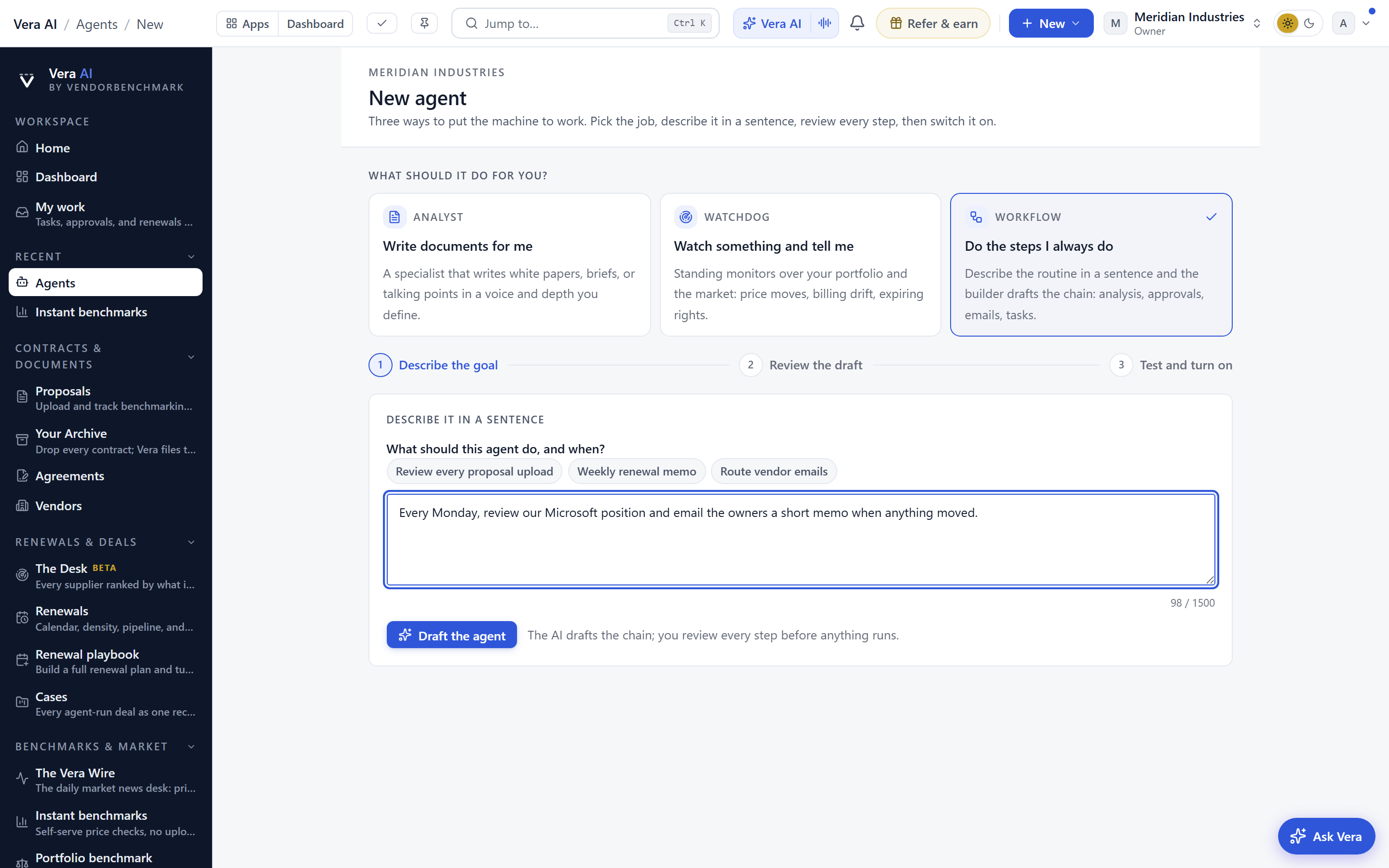
The valuable vendor work is repetitive: summarize every new contract, screen every upload for risky terms, chase every renewal 120 days out. It is exactly the work that never gets done, because doing it by hand is nobody’s favorite Tuesday. So you automate the analyst, not replace the judgment.
Four ways the AI does the recurring work for you.
From a five-minute automation to a standing team of agents.
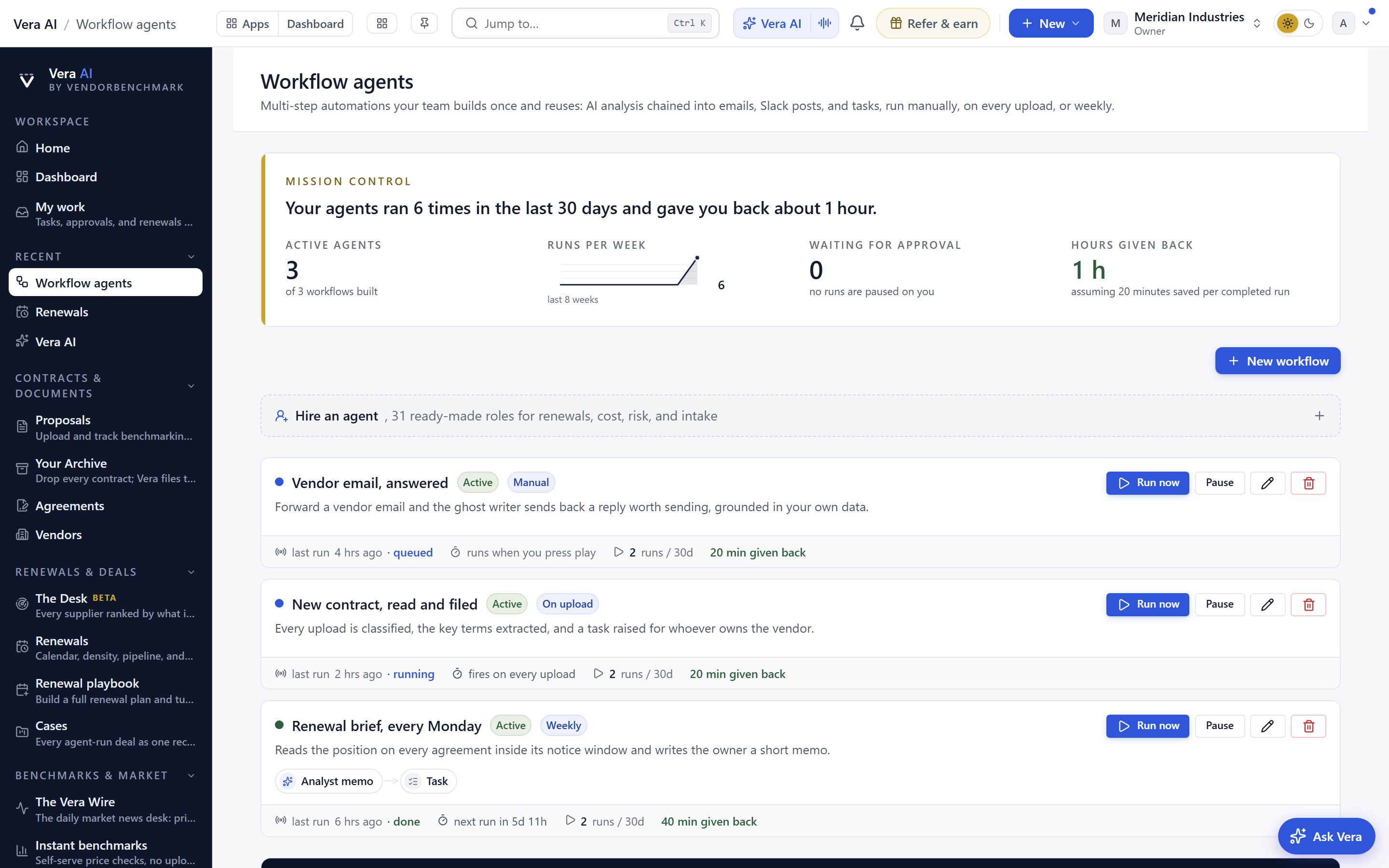
Seven triggers (manual, on upload, weekly, renewal window, agreement state change, intake request, email question) and thirteen step types (AI memo, AI ghostwrite, AI classify, AI extract, if/then, approval, wait, wait for a reply, email reply, draft email, email notify, Slack notify, create task). Build "summarize every new contract to Slack" in five minutes.
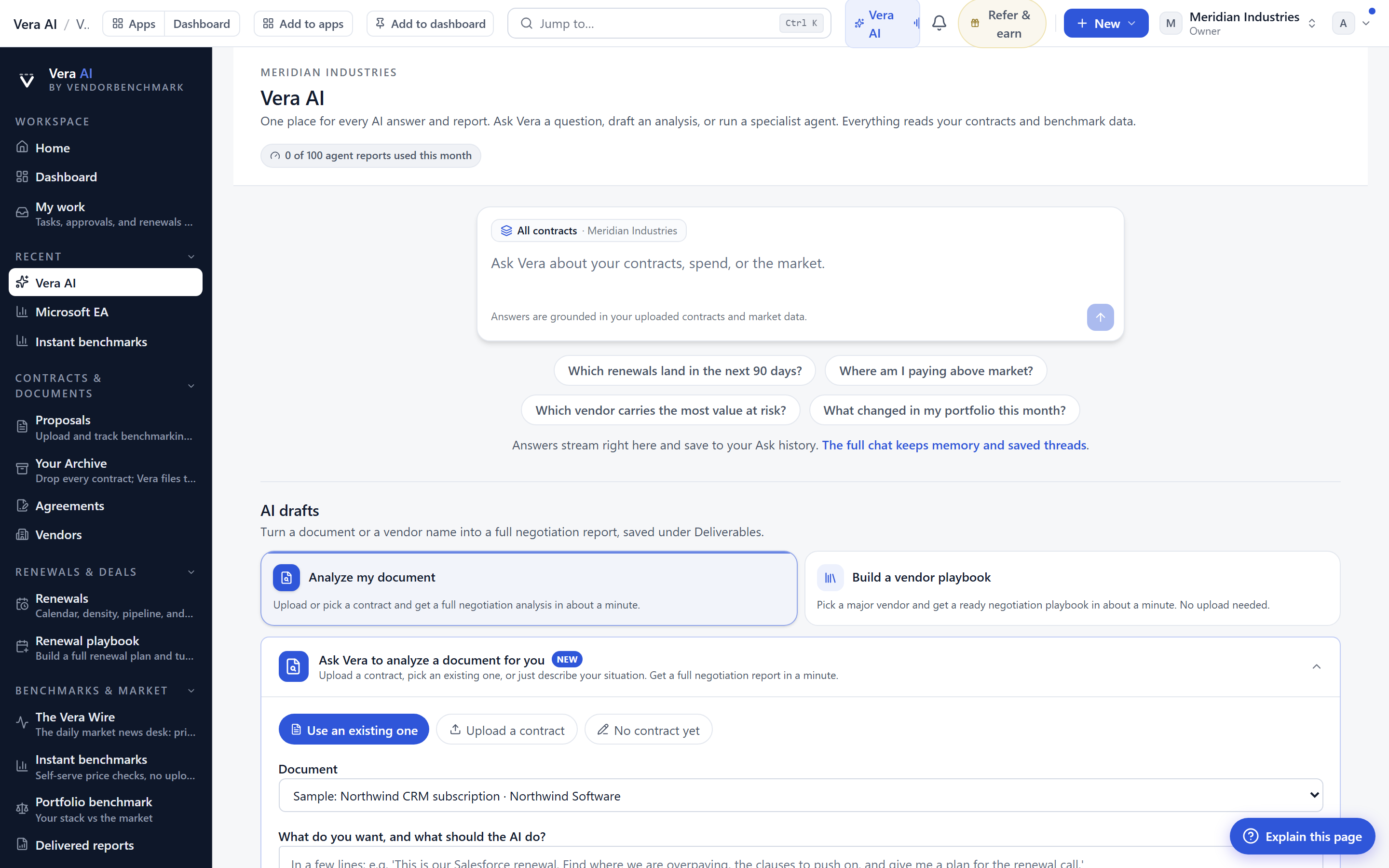
Benchmarking, Contract Flexibility, Legal Terms, License Specialist, Executive Brief, and Talking Points, plus up to six org-defined custom agents with their own prompts, depth, and document access.
Email a question to a private address: proposal price check, risky-terms scan, should-we-buy adviser, executive-summary turnaround, and more. A white-paper answer replies to your inbox.
Daily digests, weekly anomaly watch, hygiene scans, vendor ecosystem watch, and the Monday morning briefing. You arrive to what changed instead of hunting for it.
Forty five pre-built templates on day one, tuned to your policies later.
Every step that reasons is grounded in your stored data and citation-tagged, and every automation is metered and logged. Switch on a weekly renewal radar the first afternoon, then hand your FinOps team a custom agent that thinks in your own thresholds.
Governed automation, not a black box.
Anyone can build a workflow, and every run stays visible, grounded, and revocable.
Automations fire on a contract upload, an intake request, an inbound email question, a weekly schedule, or a manual run, so they hook into the events that already happen.
AI steps write memos, ghostwrite emails, and classify documents; action steps reply, notify Slack or email, and create tasks. One pass can classify, decide, draft, and route hands-off.
Every reasoning step is grounded in your stored contracts, benchmarks, and renewals, so an automated memo is defensible, not a hallucinated summary.
Runs are metered and recorded, custom agents get scoped document access, and nothing an agent does happens outside your tenant’s isolation and audit trail.
A REST API, signed webhooks, and an MCP server mean your own AI assistant can query your portfolio and trigger work, so the automation layer is not a silo.
Build the recurring analysis once. Reclaim the Tuesday forever.
The jobs that never got done because they were nobody’s favorite task now run themselves, on a schedule, grounded in your data, with the output routed to where the team already works.
Estimate your own hours →Grounded in your data, built for vendor work, run by anyone.
Generic automation platforms are empty boxes; generic chatbots forget everything. This is domain-built and grounded.
A generic workflow tool can move data, but it does not know a renewal from an invoice or what a risky term looks like. These automations reason over your vendor data out of the box.
A chat window answers once and forgets. These agents run on triggers, keep context, and take actions: notify, draft, create a task, reply by email.
The recurring reviews do not need a hire, they need a build-once automation. Keep the humans for judgment, give the machine the Tuesdays.
Business value, and the operational value under it.
One line for the board paper, and the day to day the team actually feels.
- The recurring analyst work gets done every week without adding headcount for it.
- Consistency: the same risky-terms screen and renewal radar run identically every time, so nothing slips because someone was on leave.
- Earlier catches, uncapped uplifts and missed notice dates surfaced by a job before they compound.
- An open API and MCP surface so the automation layer extends the systems you already run.
- A five-minute build with no engineering ticket, so the team automates its own toil.
- Output routed to Slack, email, or a task, where work already happens.
- Forty five templates live on day one, tuned to your thresholds later.
- A Monday briefing of what changed, instead of a manual sweep across screens.
Automate the analyst, keep the judgment.
Build once. It works every week, grounded in your data.