Agentforce commits: answer eight questions, then let the model do the math.
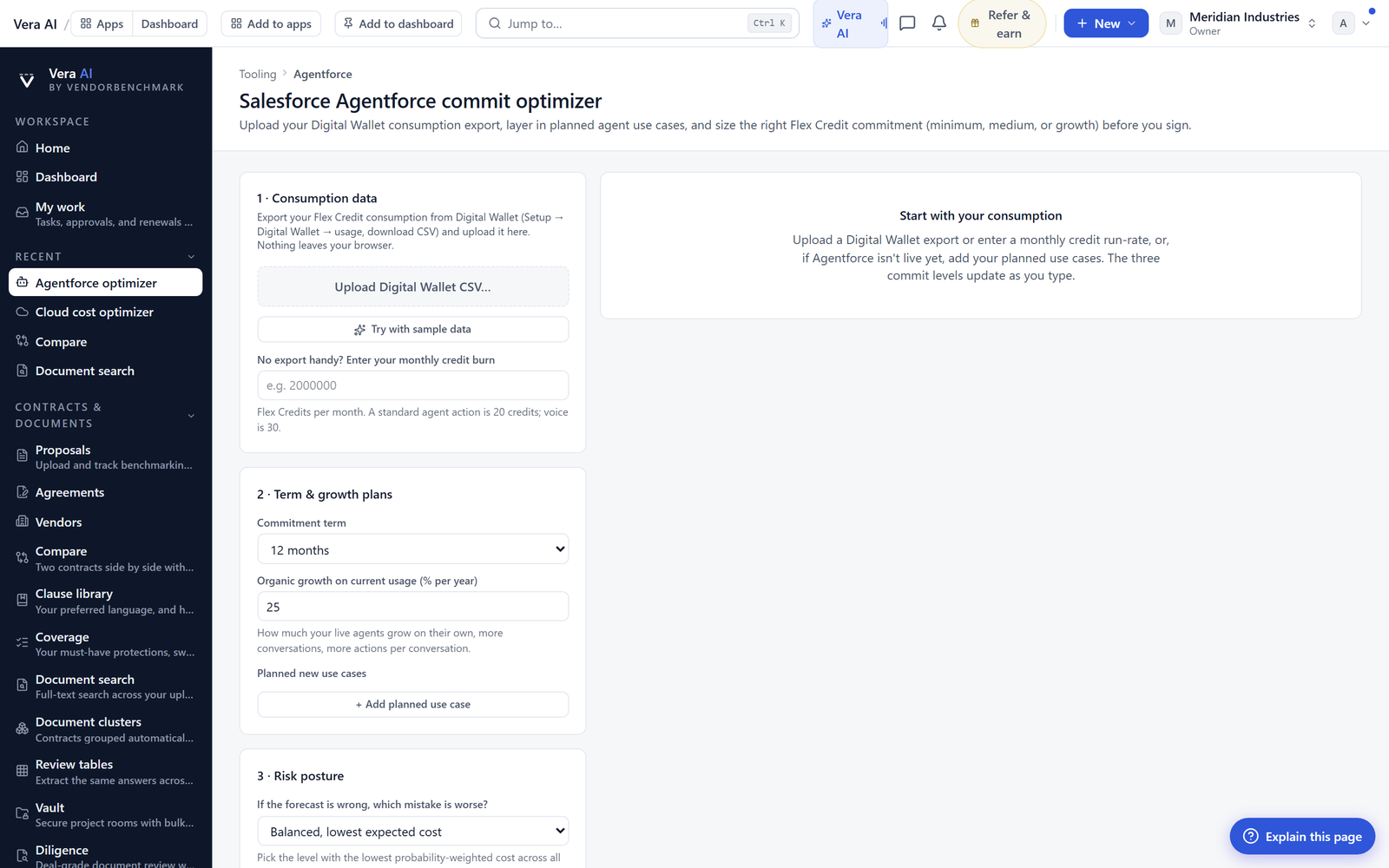
Sizing a Salesforce Agentforce Flex Credit commitment no longer means typing growth percentages into a grid. The optimizer interviews you, eight plain language questions, builds the forecast, and prices the minimum, medium, and growth commitments against it, with one tap what ifs for the scenarios that decide the deal.
Every AI vendor now sells the same moment: commit to consumption you have not had yet, priced against growth they projected for you. Salesforce's version is the Agentforce Flex Credit commitment, and the honest answer for most buyers is that they do not know what to commit to, because the workload is new and the vendor's forecast is a sales document. The Agentforce optimizer's job is to build you a forecast that is yours.
It now starts by interviewing you. Eight plain language questions: where you are with Agentforce, the scale of the workload, which use cases you plan, how fast they go live, expected growth, how ambitious leadership is, the term you would sign, and how much risk you tolerate. No grid of parameters, no growth percentage plucked from the air. Then press Build my commitment model.
Three sizes, priced against your forecast
The model turns your answers into a consumption forecast and then prices three commitments against it: minimum, medium, and growth, each shown next to what your POC or production usage actually burns today. The comparison is the decision: you can see which commitment your realistic forecast fills, which one only fills if the optimistic scenario lands, and what the gap costs in either direction, overcommit or overage.
If agents are already running, upload a Digital Wallet export and the forecast anchors on measured burn instead of stated intentions. If they are not live yet, the planned use cases carry the forecast, clearly labeled as plan rather than measurement. And every granular control still exists for the buyer who wants to hand tune, under Fine tune the model, where it no longer blocks the first pass.
The what ifs are the negotiation
The result ends the way the platform's tools now end: with the scenarios that decide the deal as one tap tiles. Adoption runs slow, adoption runs hot, add a voice agent, stretch the term to 36 months, land a 30 percent discount: each reprices the recommendation live, so the meeting question of what if legal delays the rollout a quarter is answered in the room, from your model, not theirs.
Beside the tiles, the tool drafts five questions to put to Salesforce, generated from your numbers, and a follow up email for the account team or your CFO. The moves that carry the number to the table are laid out so the analysis becomes a negotiation instead of a bookmark.
Want to be updated when major licensing and pricing changes land? One analyst brief a week: the price rises, metric changes and audit campaigns that move software costs. Work email only.
From interview to commitment position
A model of a new workload is still a model
Agentforce consumption is young, and any forecast of a workload this new carries real uncertainty, including this one. The tool is explicit about what anchors it: measured Digital Wallet burn when you have it, planned use cases when you do not, and the risk question exists precisely so the recommendation leans conservative when you tell it to.
The commitment sizes are decision support, not a quote, and the discount what if is a scenario, not a promise that Salesforce concedes it. What the tool guarantees is narrower and more useful: whatever number you take to the table will be one you can defend line by line, because you watched it get built.
Fredrik has spent more than twenty years in enterprise software, with time at Oracle, IBM, SAP, and Salesforce before moving to the buy side. He structured and priced the kind of large agreements most buyers only see once or twice in a career, which taught him where the leverage sits and how far a vendor will actually move. He started VendorBenchmark to hand that knowledge to every sourcing team.
The week in enterprise software buying, in one email.
What shipped on the platform, and the pricing and licensing moves worth knowing before your next renewal. One email a week, to your work address. Unsubscribe any time.