The integration nobody verified, and the go-live it slipped
The request says it plugs into what you already run. Nobody checked. Here is why that gap costs money and how estate visibility closes it before scoping.
Think back to the last request that landed on your desk with the words "integrates natively with our stack" somewhere in the justification. A business owner wanted a new tool, the vendor sheet listed a connector for your CRM and your identity provider, and everyone nodded. Nobody opened your actual estate to confirm those connectors existed for the editions you run, on the data flows you need, in the direction you assumed. The request assumed clean integration. The assumption was never tested. Three months later the go-live slipped because the connector was read only, or gated behind a tier you did not license, or simply not real for your version. This is the quiet failure that turns a tidy contract into a professional services invoice and a calendar apology.
The assumption that feels like diligence
An integration claim reads like a fact. It sits in a datasheet next to logos you recognise, and it borrows their credibility. The trouble is that "integrates with Salesforce" and "integrates with your Salesforce" are different statements. One is a marketing category. The other depends on your edition, your API tier, your object model, and whether the direction of the flow matches what the requesting team actually needs. A tool can genuinely integrate and still be useless to you because it writes where you need it to read, or syncs on a schedule when you assumed real time.
The reason this persists is structural. At intake, the person writing the request is closer to the outcome they want than to the plumbing that delivers it. They are describing a destination, not a route. Procurement inherits the request already framed as a solved integration problem, which is a close cousin of the pattern we described in the intake ticket that names the vendor before the need. Once the assumption is embedded in the justification, it stops being questioned. It becomes background.
Where the cost actually lands
An unverified integration does not fail loudly at signature. It fails on the implementation call, when the systems integrator or the vendor's own delivery team quotes a custom connector, a middleware layer, or a batch of API development to bridge the gap that was assumed to be closed. That work arrives as a professional services line item you did not budget, and it arrives with a schedule attached, which is how the go-live slips.
Two costs, then. The first is money you can see, the change order. The second is money you cannot see as easily, the delay, because a slipped go-live means the value case the request was built on now starts later than the business modelled. If the tool was meant to save a team twenty hours a month, every month of slip is that saving forfeited while you still pay the licence. The invoice math on the licence side is a separate discipline we cover in billed versus contracted on every line, but the integration slip compounds it.
Estate visibility grounds the requirement before scoping
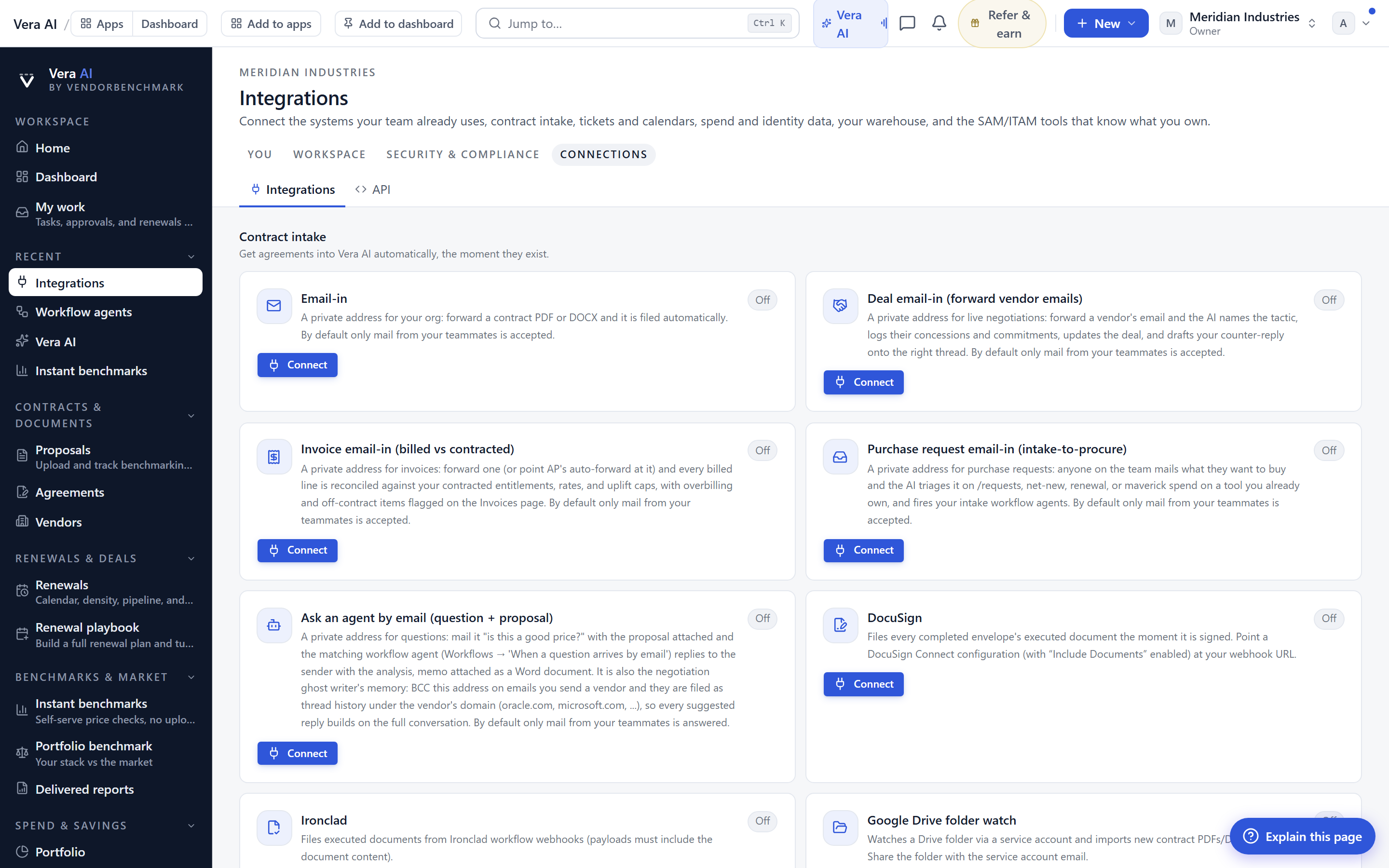
The fix is not more diligence effort. It is diligence pointed at the right target earlier. Estate visibility maps the incoming request against the tools you already run, so integration requirements are grounded in your real stack rather than a datasheet. Instead of asking "does this vendor integrate with Salesforce," the platform lets you ask the question that matters, "does this integrate with the Salesforce edition and objects we actually operate, in the direction this team needs."
This is the same estate awareness that catches duplicate tools at the request. Once the platform knows your true stack, it can tell you not only what you already own but what a new request will and will not connect to cleanly. The scoping conversation then starts from verified ground. You take the vendor's integration claims and you check them against your reality before a number is agreed, not after.
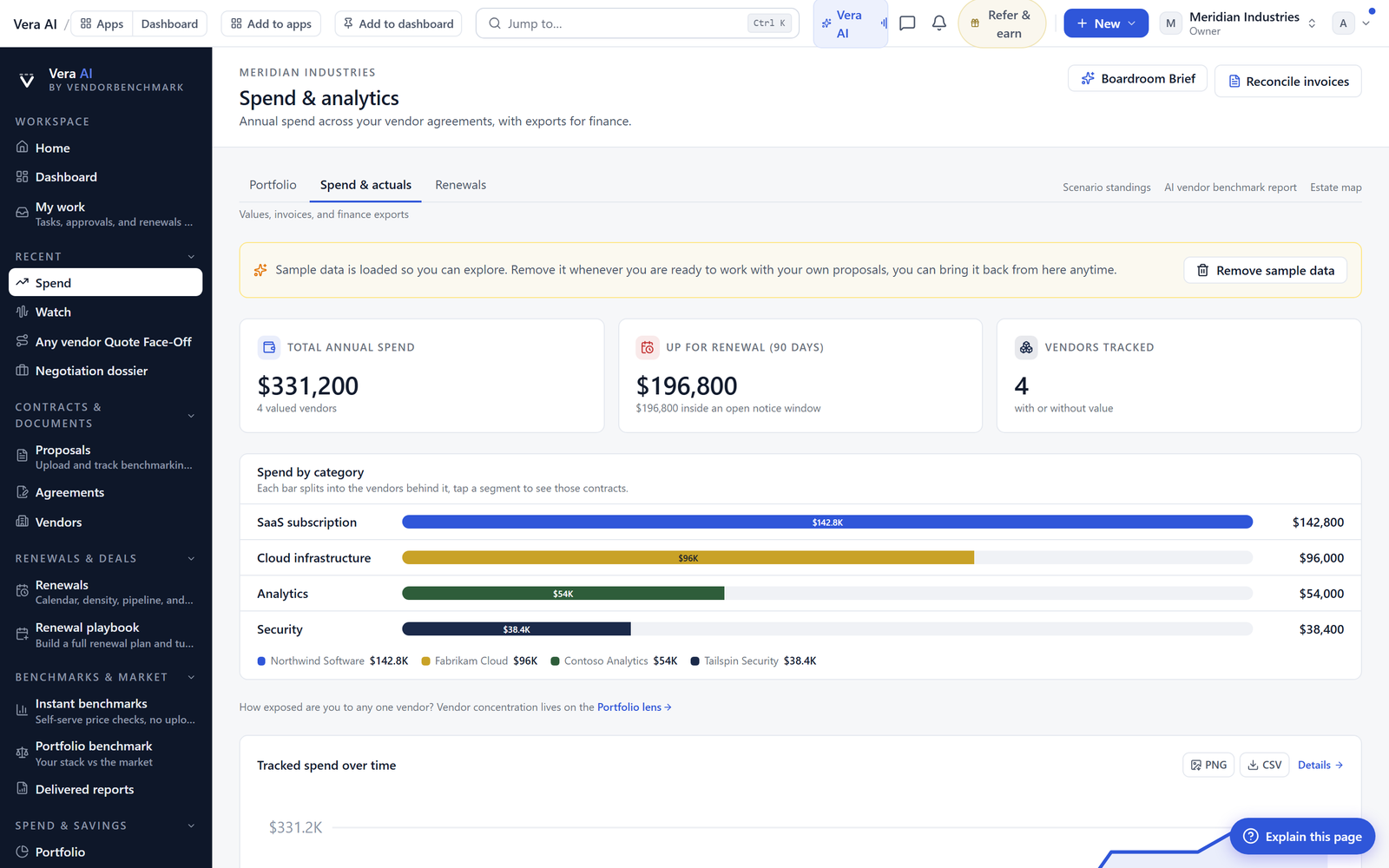
With the estate mapped, the six specialist agents and the background jobs that run against your account can flag the specific integration requirements that remain unverified, so the unknowns are visible as unknowns rather than dissolved into an optimistic assumption. That distinction is the whole game. An acknowledged gap gets scoped and priced honestly. A hidden gap becomes a change order.
What changes in the intake motion
What this does not solve
Be honest about the edges. Estate visibility can only ground the request against the tools and editions the platform can see. If part of your stack is undocumented, or a critical system sits outside what has been connected, the map has a blind spot and the assumption can still hide there. The remedy is completeness of your estate data, which is work, and the platform makes it easier but does not do it for you.
It also does not replace a technical proof of concept. Knowing that a connector exists for your edition tells you the door is there. It does not tell you the door is the right size for your data volume, your latency needs, or your security posture. Those still warrant a scoped test with the vendor. What the platform removes is the false confidence, the moment where a claim was treated as verified because it appeared next to a familiar logo. That moment is where the cost was born, and moving verification ahead of scoping is where you take it back.
None of this eliminates negotiation. A vendor may still price the integration work, and you may still need to argue the tier, the connector, or the direction. It simply means you negotiate from facts about your own environment rather than from a hope. And when the requirement was one you already owned the rights to satisfy, the estate view catches that too, the pattern we cover in the intake that asks to buy what a contract already gave you.
Want to be updated when major licensing and pricing changes land? One analyst brief a week: the price rises, metric changes and audit campaigns that move software costs. Work email only.
Morten brings two decades of enterprise and software procurement, with stints across Oracle, IBM, SAP, and Salesforce shaping how he reads a deal. He has led sourcing through hundreds of renewals, from mid market order forms to nine figure global agreements, and learned that the buyers who win are the ones who walk in knowing the market. He built VendorBenchmark to make that pattern recognition repeatable.