The intake asks to buy what a contract already gave you
A request lands for a capability your company is already entitled to under a live contract. Nobody checked the estate first. Here is why that keeps happening and how to stop paying twice.
Last month a business unit filed an intake for a data quality tool. It went through requirements, a shortlist, a demo, a security review, and a quote. Somewhere in week three, a contracts analyst opened the master agreement with an incumbent platform vendor and found the same capability sitting inside a module the company already licensed and had never turned on. The request was real. The need was real. The purchase was not, because you already paid for it. This is the quiet, expensive version of duplication, and it is almost never anyone's fault in particular.
The problem you recognise from your own week
The pattern is consistent. A requester describes an outcome they want. The intake form captures a product category, sometimes a named vendor, rarely the entitlement question. Procurement receives a request that looks like net-new demand and processes it as net-new demand. Nobody asks the one question that would have ended it in five minutes: do we already have the right to do this under something we are paying for today?
The reason nobody asks is not laziness. It is that the answer is genuinely hard to find. Entitlements are buried in schedules, order forms, and module lists across dozens of agreements. Spend data lives in one system, contracts in another, and the estate as a whole lives in nobody's head. When demand arrives ambiguous and visibility is poor, the default outcome is a purchase. We have written before about how the intake ticket that names a vendor makes procurement inherit a decision instead of a need. This is the spend consequence of the same root cause.
Why the duplication persists
Three structural conditions keep this alive. First, contracts are written to be signed, not to be queried. An entitlement to a capability might appear as a single line in an order form appendix, phrased in the vendor's product taxonomy rather than the outcome the requester was describing. A human reading the intake and a human reading the contract are using two different vocabularies for the same thing.
Second, the estate is fragmented across owners. The finance team sees the invoice. The contract sits with legal or a category lead. The person who negotiated the original deal may have moved on, taking the knowledge of what was bundled in with them. There is no single surface where a buyer at intake can see spend and entitlements side by side.
Third, incentives point the wrong way. A requester wants their problem solved and does not care which contract solves it. Procurement is measured on cycle time and negotiated savings on the deal in front of them, not on deals prevented. Nobody is scored on the duplicate purchase that was quietly avoided, so nobody is resourced to hunt for it. This is close cousin to the problem in catching shadow IT and duplicate tools at the request, except here the duplicate is not a rogue swipe of a card. It is a formal, well-governed purchase of something you formally, legally already own.
The platform motion that removes it
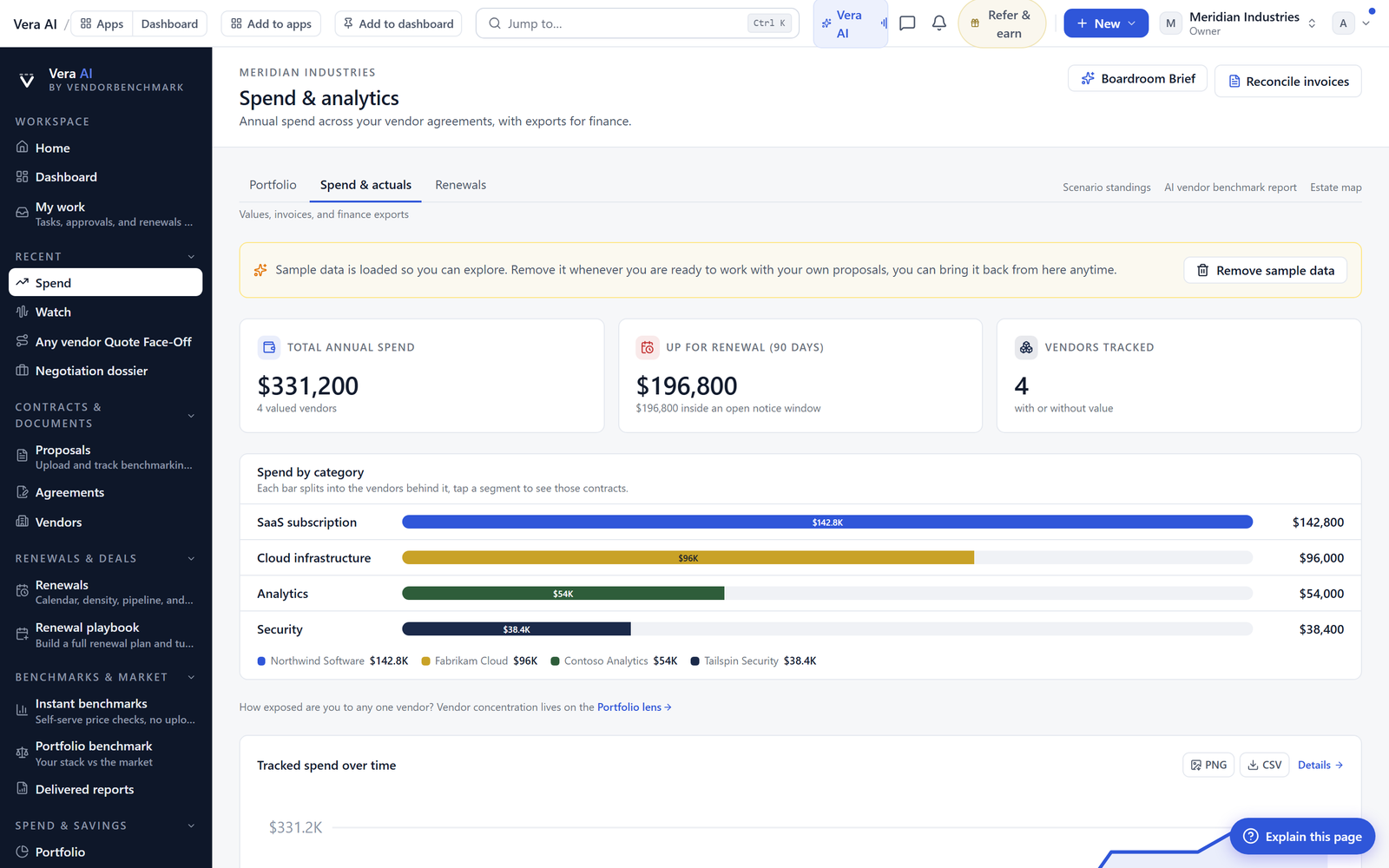
The fix is not a new policy telling people to check first. Policies fail when checking is hard. The fix is making the check automatic and fast enough that it happens by default. That requires two things joined together: spend visibility that shows what you actually pay for, and contract decoding that translates every agreement into queryable entitlements. When both live on one surface, the intake can be tested against the estate the moment it arrives.
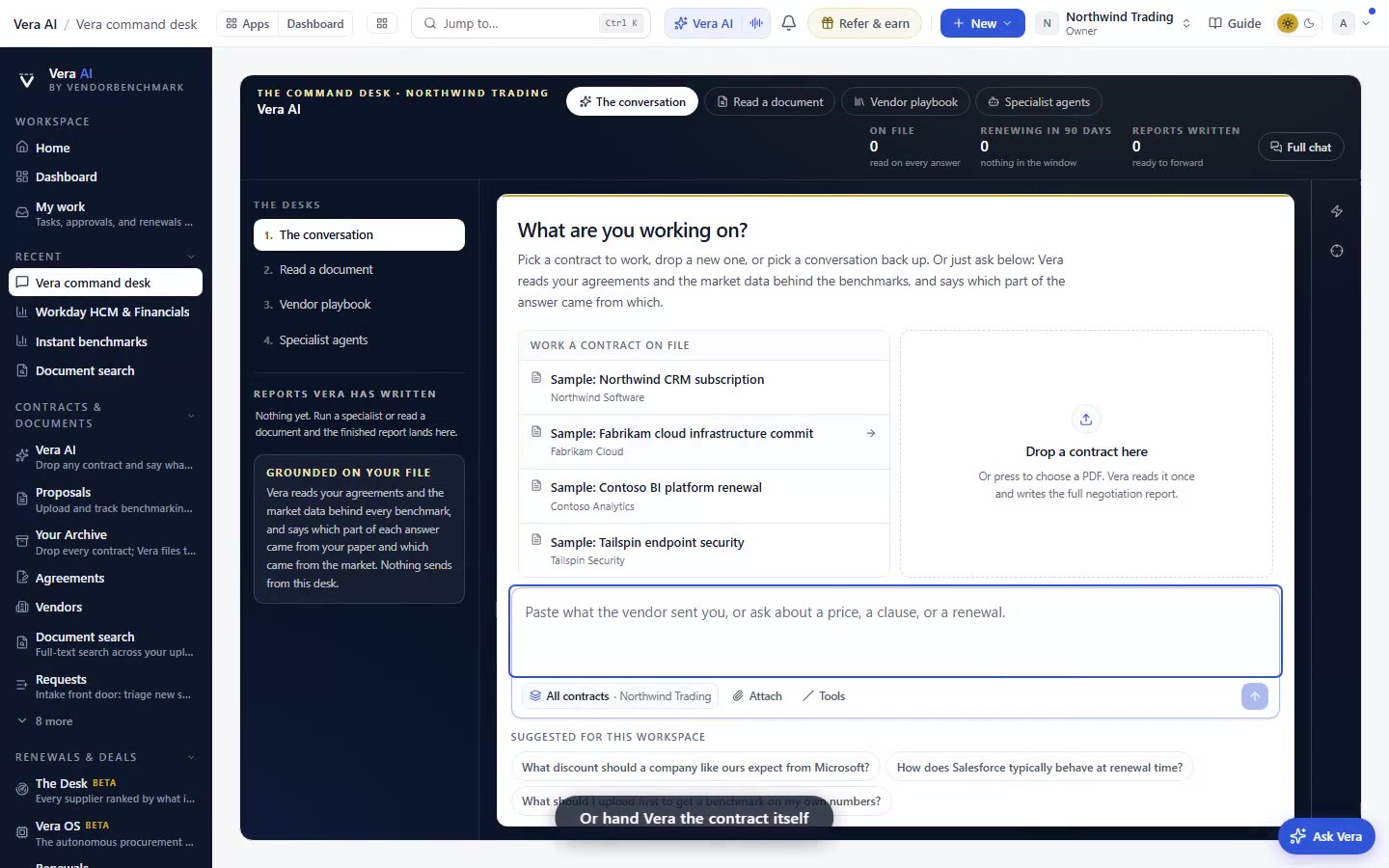
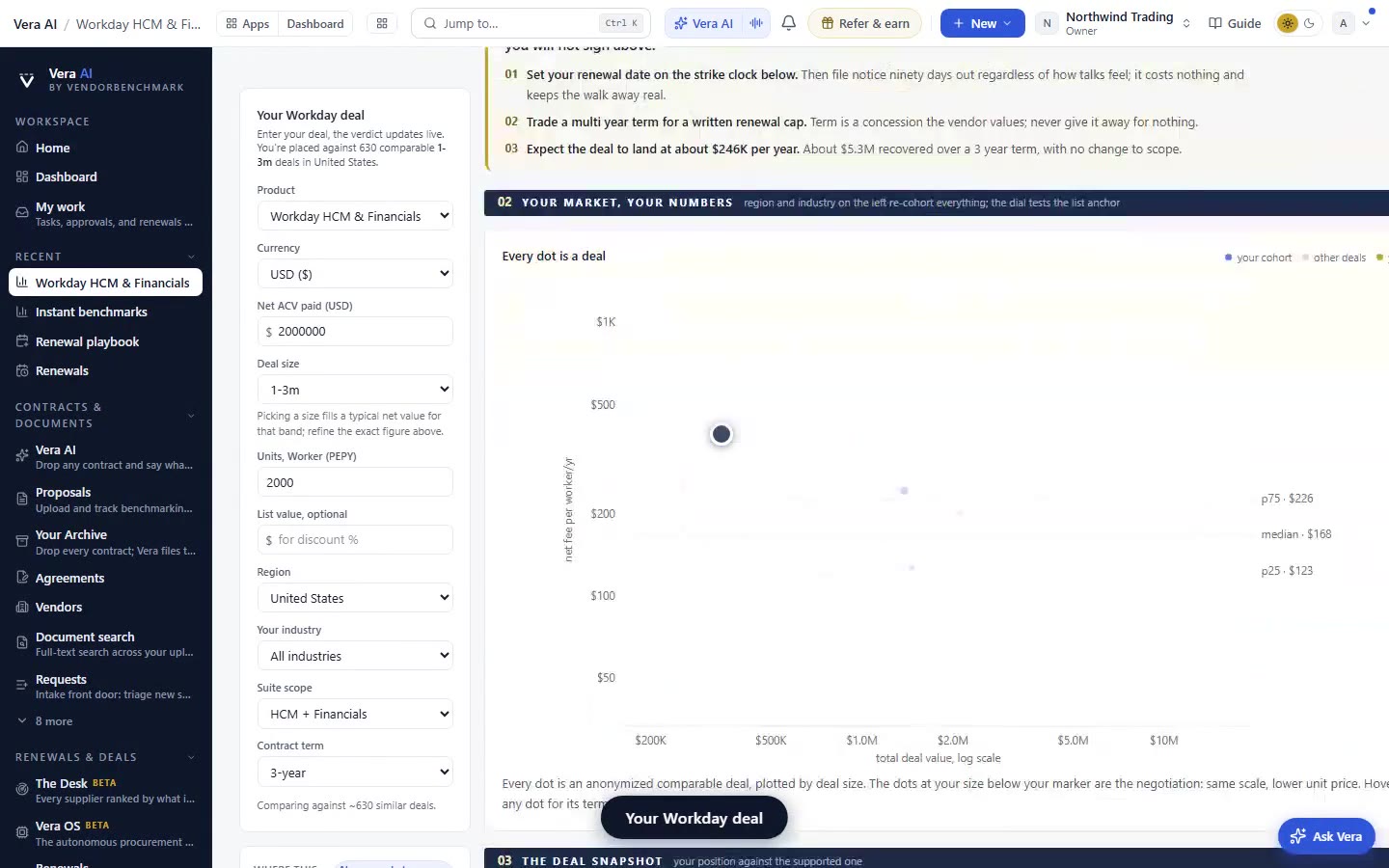
VendorBenchmark decodes each contract into a structured record of rights, modules, quantities, and swap or true-down provisions. It maps those entitlements against the spend view so you can see, per vendor, not just what you are billed but what you are allowed. When a new request comes in describing an outcome, the platform matches that outcome against decoded entitlements across the whole estate, in the vendor's own taxonomy and yours. If the capability already exists somewhere you pay for, it surfaces at intake, not at week three. You can decode any contract in a minute and then ask across all of them at once.
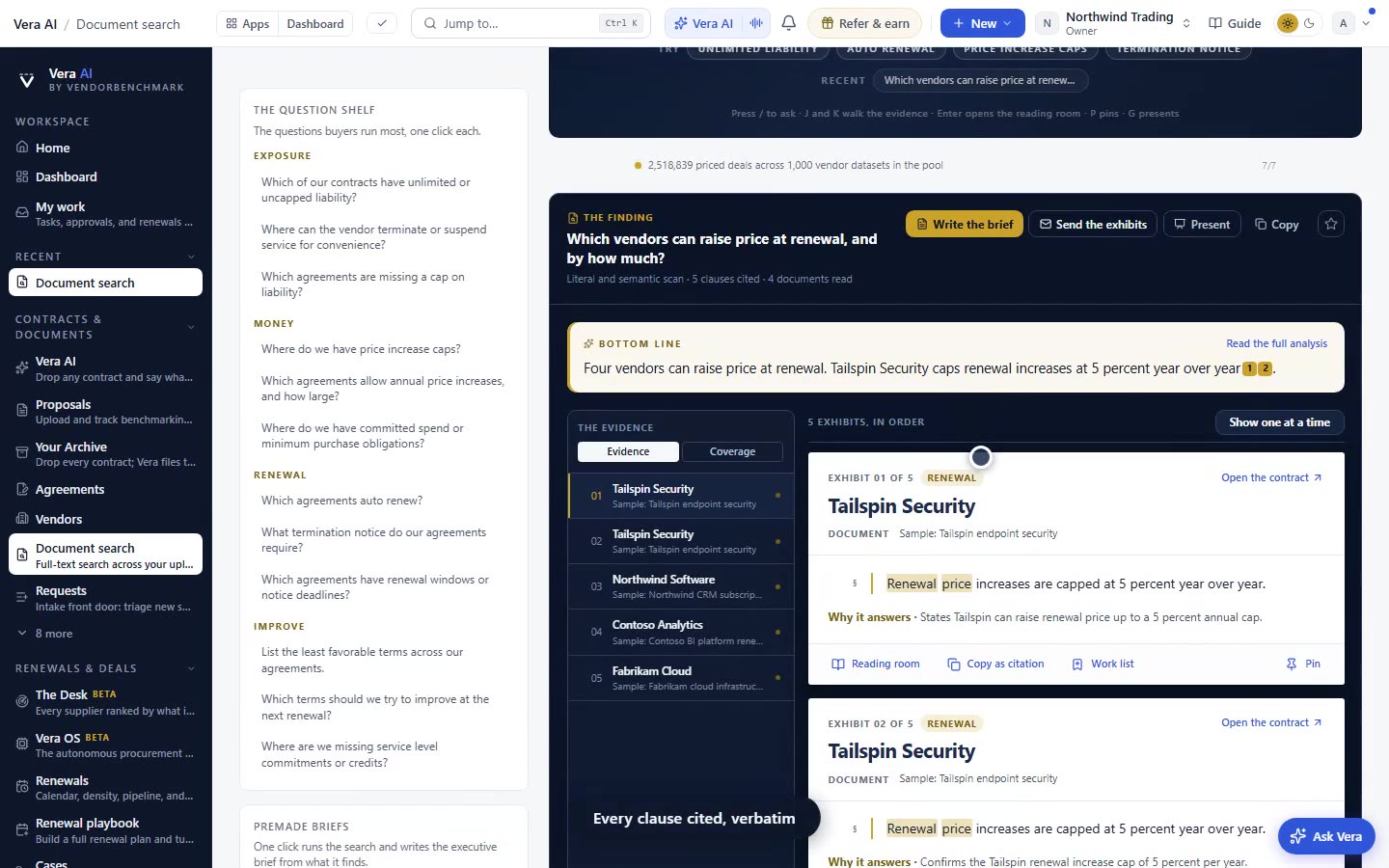
Vera, the analyst layer, closes the loop. A buyer types the intake outcome in plain language and asks whether any current agreement covers it. Vera answers with the specific contract, the clause, and the entitled quantity, with citations you can paste into the ticket. Six specialist agents work the estate in the background so the entitlement map stays current as new contracts land and invoices reconcile. Because the same decoding also exposes the rights you already paid for, including true-downs and swap windows, the intake check often surfaces more than the one capability that triggered it.
What changes at intake
What this does not solve
Be honest about the edges. The platform can only match against entitlements it has been given. If a contract never made it into the system, its rights are invisible, and the duplicate will slip through exactly as before. Estate completeness is the precondition, and it is your work to feed in the agreements, though the decoding of each one takes about a minute.
It also will not adjudicate whether an existing entitlement is good enough. A requester may be right that the module you already own is a weaker version of what they need, or that turning it on carries a migration cost that outweighs the licence savings. The platform surfaces the overlap and the arithmetic. The judgement about whether to use what you own or buy something better stays with your team. When the answer is genuinely buy, the same estate view feeds a stronger negotiation, and in a tight budget cycle that connects directly to the downturn playbook of cutting spend without cutting capability.
And it will not fix a broken intake form on its own. If the form never captures the business outcome, the match has less to work with. Pair the entitlement check with an intake that asks for the point, and the two reinforce each other. The goal is modest and precise: stop paying a second time for capability you already bought, catch it at the request rather than after the quote, and make the avoided spend something you can finally see and report.
Want to be updated when major licensing and pricing changes land? One analyst brief a week: the price rises, metric changes and audit campaigns that move software costs. Work email only.
Morten brings two decades of enterprise and software procurement, with stints across Oracle, IBM, SAP, and Salesforce shaping how he reads a deal. He has led sourcing through hundreds of renewals, from mid market order forms to nine figure global agreements, and learned that the buyers who win are the ones who walk in knowing the market. He built VendorBenchmark to make that pattern recognition repeatable.