Invoice intelligence: billed versus contracted, every line.
Software invoices get approved, not read. Finance checks that the total is roughly expected, procurement never sees it, and the one document that records what you actually pay goes unreconciled against the one document that records what you agreed to pay. That gap has a price, and it compounds quietly. Here is how to close it without anyone gaining a chore.
Consider what has to go right for a software invoice to be correct. The vendor's billing system has to apply the negotiated rate, not the list rate. The quantities have to match what you actually bought, after the true-down you exercised in March. The uplift has to respect the cap your predecessor negotiated two renewals ago. The services line has to correspond to services somebody ordered. Every one of these is a place where a large billing operation can drift, and none of them changes the invoice total enough to trip a budget alarm.
Now consider who checks. Accounts payable matches the invoice to a purchase order, which was raised from the vendor's own quote. Procurement moved on after signature. The contract, the only document that knows what the numbers should be, sits in a repository nobody opens on billing day. The reconciliation everyone assumes is happening is happening nowhere, and billing drift is patient: a few points of unapplied discount on a mid-size vendor, invoiced quarterly, unnoticed for two years, adds up to real money that was never anyone's decision to spend.
What line by line reconciliation actually finds
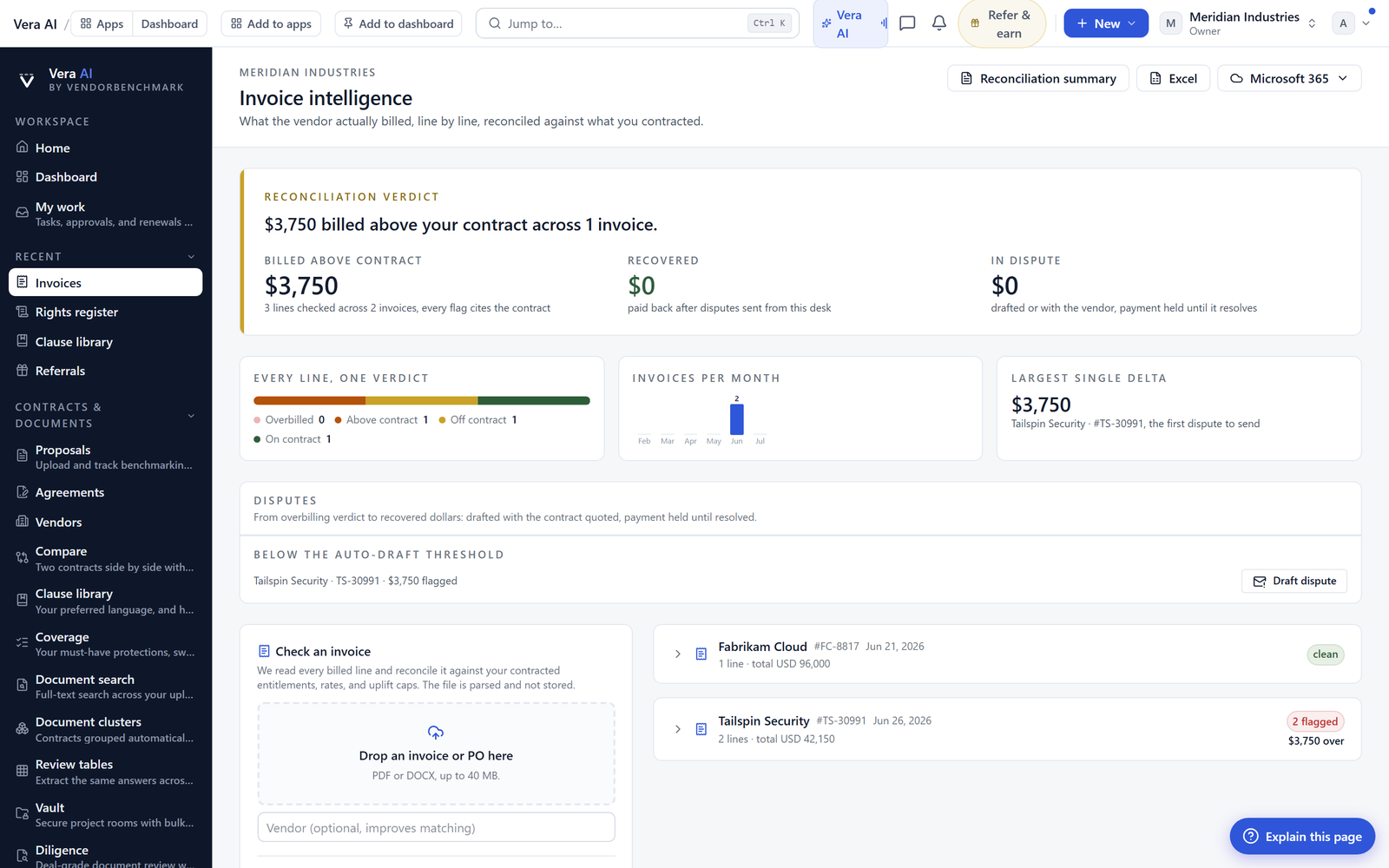
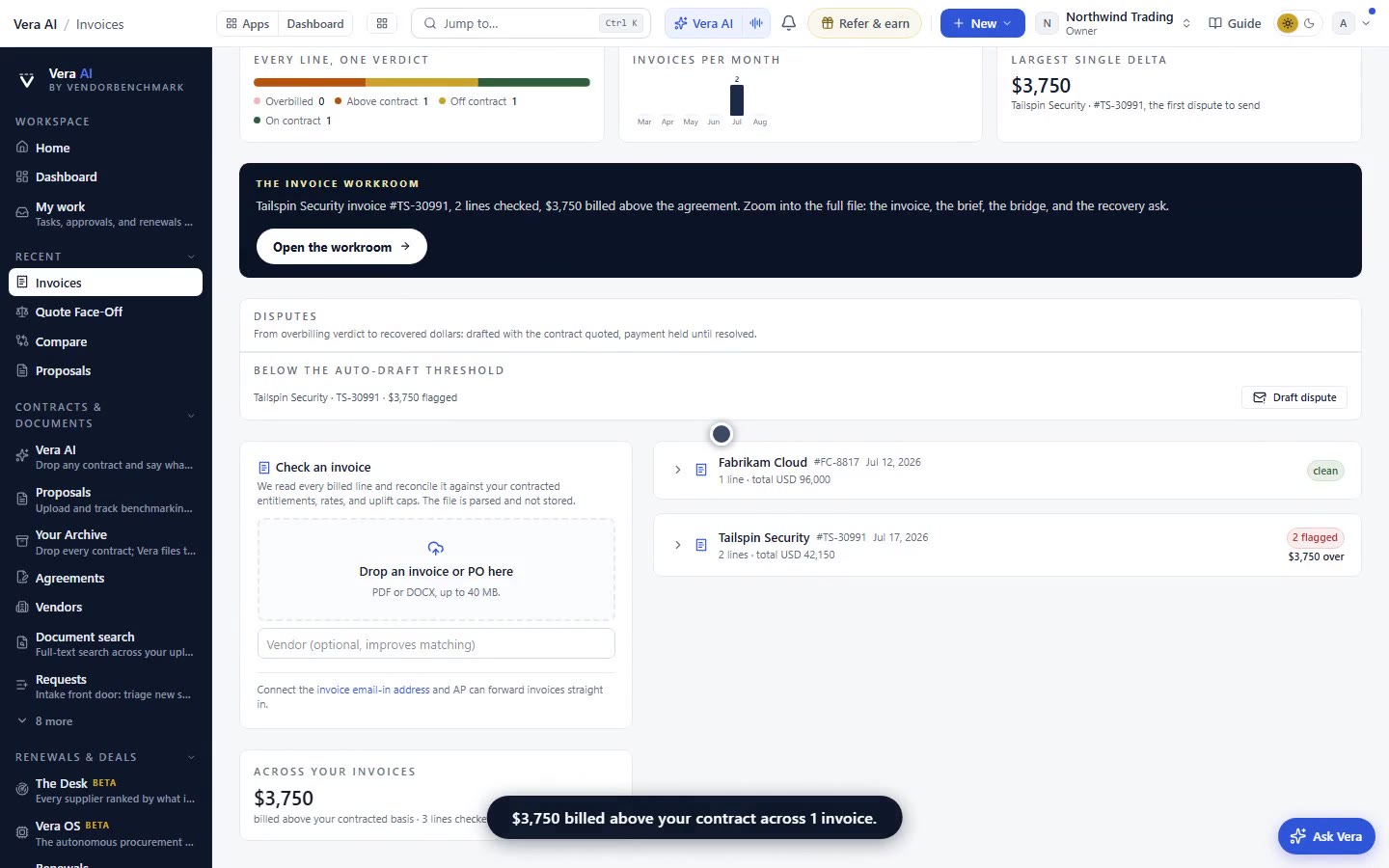
Invoice intelligence does the reading nobody had time for. Upload an invoice, or let it arrive through a connected P2P system, and every line is matched against the governing contract: the rate against the contracted rate, the quantity against the entitlement, the increase against the cap. Four findings come up over and over.
Rate drift. The line bills at a price the contract does not contain, usually list where a discount belonged, often dating from a system migration on the vendor side. This is the most common finding and the easiest to recover, because the contract language is unambiguous.
Off-contract items. Lines with no home in any agreement: the module nobody ordered, the services rider from a project that ended, the SKU that materialized after an "upgrade." Each one is a conversation the vendor would rather not have, which is exactly why it belongs on paper.
Uplift cap breaches. The renewal invoice applies 8 percent where the contract caps increases at 4. Caps you fought for are worth nothing if nobody checks the arithmetic they were written to constrain.
Quantity creep. Billed seats or units above entitlement, often legitimate growth that should have been repriced at the negotiated tier rather than at list, sometimes simply wrong. Either way, the delta is visible only at line level.
Want to be updated when major licensing and pricing changes land? One analyst brief a week: the price rises, metric changes and audit campaigns that move software costs. Work email only.
Billing watch: the audit that runs before payment, not after
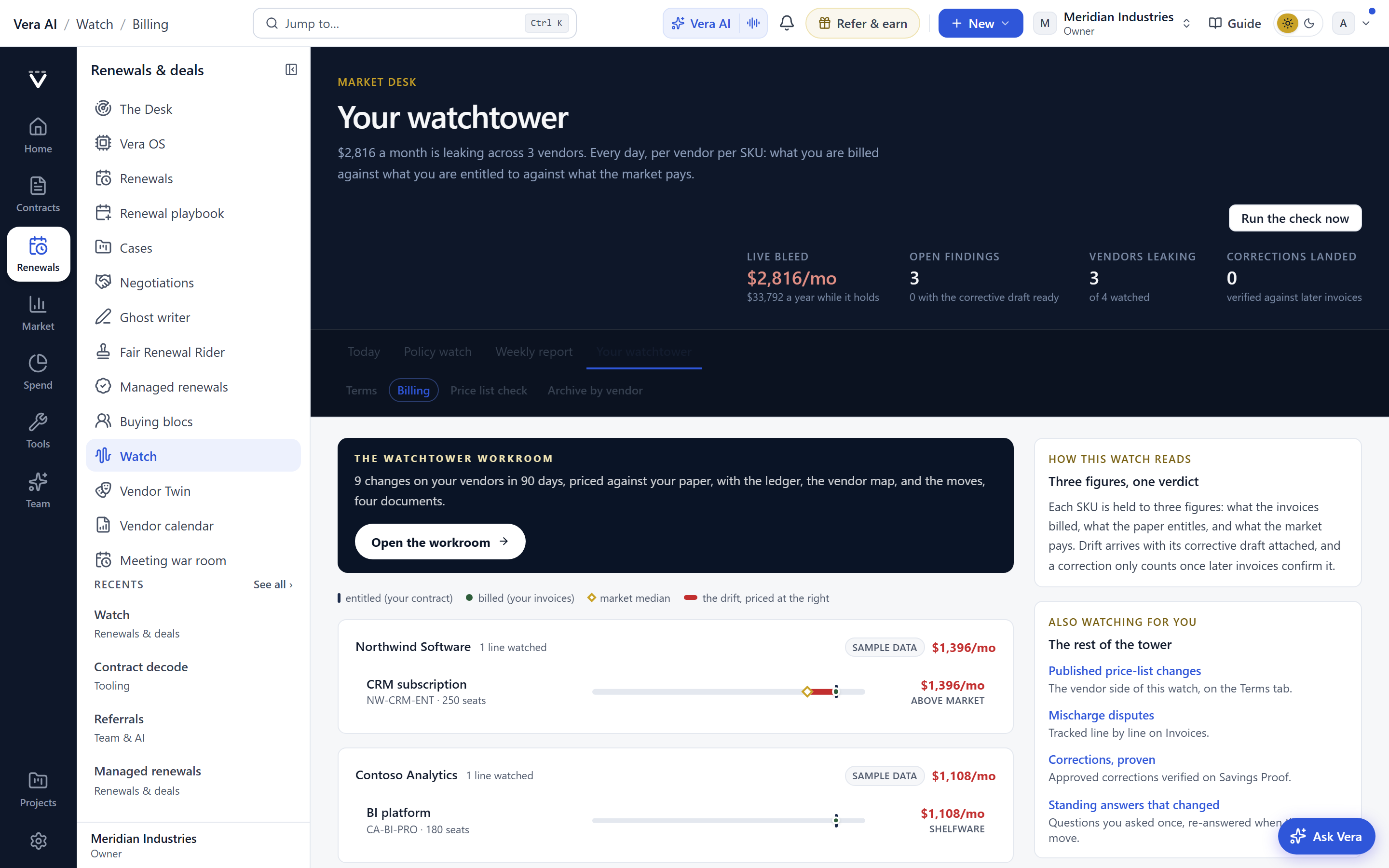
A one-off reconciliation project finds the past. The structural fix is timing: check the invoice in the window between arrival and payment, when a finding is a correction rather than a recovery. That is billing watch, one of the 99 background jobs: invoices checked daily against entitlements, contracted rates, and the market, with anything off flagged before finance pays it.
Two details make it usable rather than noisy. Findings arrive with a corrective draft ready, the email to the vendor's billing team citing the contract clause and the expected number, written for you to review and send. And dispositions stick: a flagged line you review and accept as legitimate stays accepted, so the same explained exception does not re-alert every quarter. The watch gets quieter as it learns your estate, which is the difference between a control and an alarm fatigue generator.
Recovering money after payment is a negotiation. Correcting an invoice before payment is a formality. The entire value of the daily cadence is moving findings from the first category into the second.
Three habits this replaces
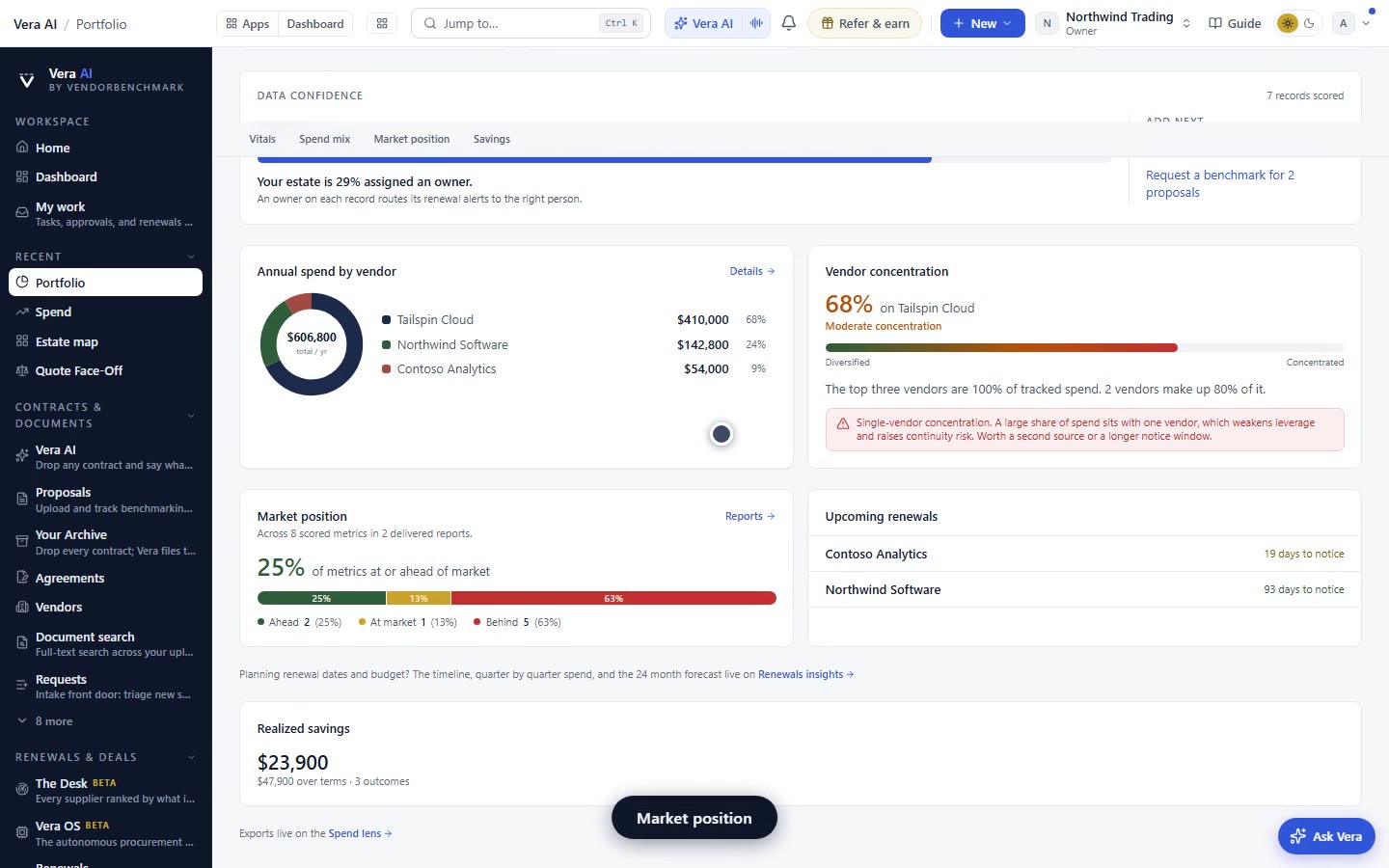
The honest scope note: invoice intelligence enforces the deal you signed, it does not improve it. If the contracted rate itself is above market, every invoice can reconcile perfectly while you overpay on schedule, which is what the benchmark side of the platform exists to catch. The two checks compound: the benchmark makes sure the number in the contract is right, and invoice intelligence makes sure the number on the bill matches it. Between them, there is nowhere left for the drift to live.
Morten brings two decades of enterprise and software procurement, with stints across Oracle, IBM, SAP, and Salesforce shaping how he reads a deal. He has led sourcing through hundreds of renewals, from mid market order forms to nine figure global agreements, and learned that the buyers who win are the ones who walk in knowing the market. He built VendorBenchmark to make that pattern recognition repeatable.
The week in enterprise software buying, in one email.
What shipped on the platform, and the pricing and licensing moves worth knowing before your next renewal. One email a week, to your work address. Unsubscribe any time.