A live analyst in your ear: inside the call copilot.
Everything else on the desk works between conversations. The vendor call is the conversation, live, improvised, against a professional who does this daily, and it is where prepared positions historically went to dissolve. The call copilot puts a whisper rail beside it: a live transcript, and the exact fact you need surfaced at the moment the claim is made.
Consider the asymmetry of the vendor call, because it is sharper than the asymmetry anywhere else in the deal. The account executive on the other side runs some version of this conversation several times a week, with talk tracks rehearsed against every objection you are about to raise, and frequently with a sales engineer and a manager listening in. You run this conversation a few times a year, alone or nearly so, holding a position you prepared on Tuesday in your head on Thursday, while also listening, taking notes, and managing the relationship in real time.
Preparation narrows the gap but cannot close it, because the call's whole character is improvisation. The rep makes a claim, "most customers your size have moved to the new bundle," "that discount is only approved through Friday," "the usage data shows you are growing 40 percent," and the clock starts. You have perhaps four seconds to decide whether the claim is true, whether it matters, and what to say, and the honest answer to all three usually lives in a document you cannot open mid-sentence. So the claim stands, the anchor sets, and the follow-up email three days later relitigates ground that should never have been ceded.
The whisper rail: what it does while you talk
The copilot runs beside the call, on your side only, and does three things continuously.
It transcribes live. The running transcript means you stop splitting attention between listening and note-taking, and it becomes the call's record afterward: every number the rep quoted, every commitment made, captured verbatim instead of remembered generously.
It whispers grounded facts at the moment of relevance. When the conversation touches a number the desk knows, your benchmark position, the concession already traded in the ledger, the cap in clause 12.3, the whisper rail surfaces it, quietly, with the citation attached. Every prompt is grounded in your deal's actual facts, because a hallucinated whisper in a live negotiation would be worse than silence, and the same grounding discipline that governs the rest of the platform governs the rail.
It flags the moves. The same tactic classification the ghost writer applies to email runs on the conversation: the manufactured deadline, the bundle pivot, the anchor reset, named in the margin as they happen. A tactic you can see land is a tactic that mostly does not.
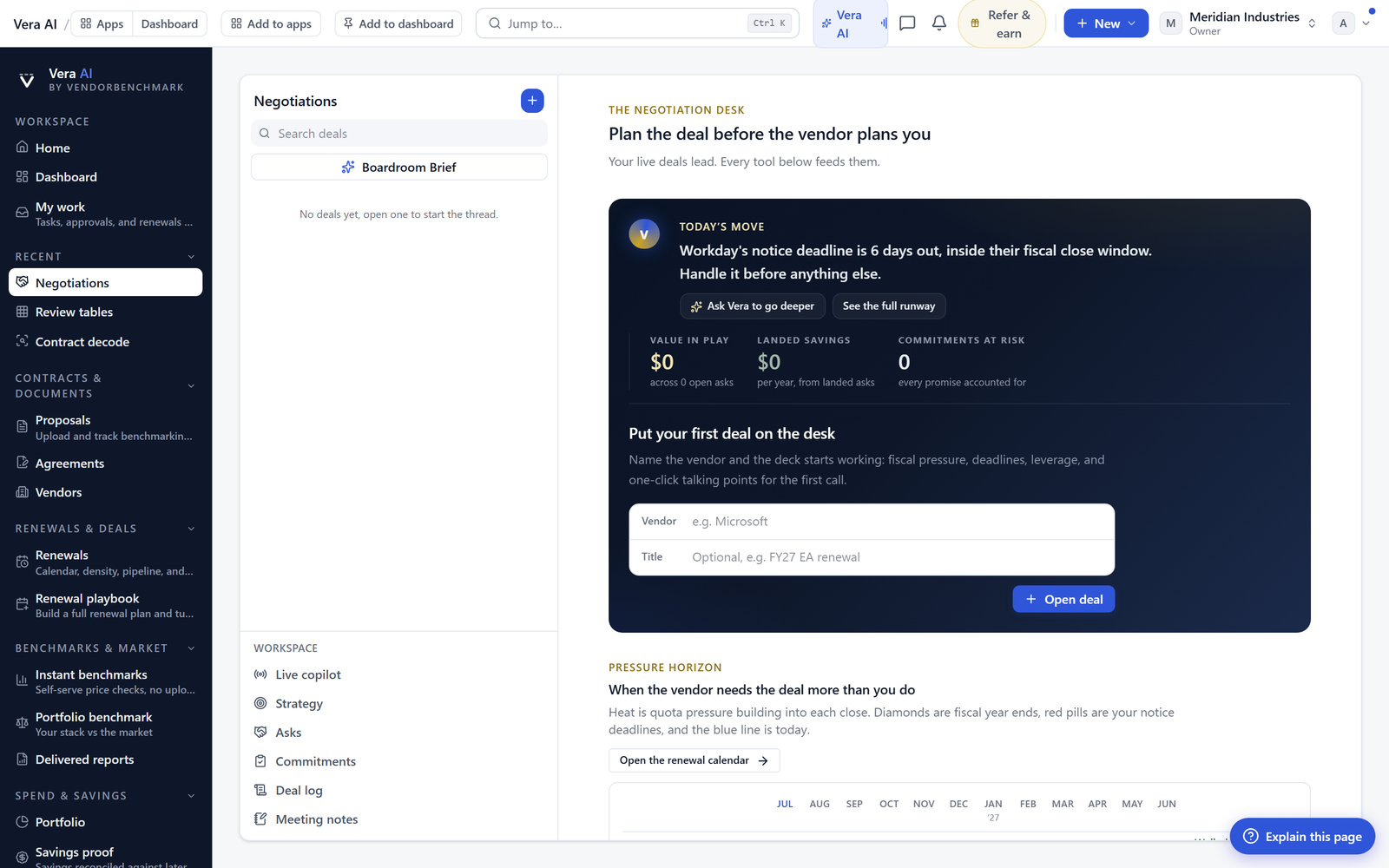
The call is a sandwich: prep flows in, the debrief flows out
The copilot's value on the call depends on what happened before it. The talking points agent preps the session from the live deal state, so the rail opens holding your opening position, your walkaway, the queue of asks, and the responses to the predictable moves. Walking in, you are not hoping to remember the plan. The plan is the rail's first card.
Afterward, the transcript does not go to a folder to die. Commitments and concessions detected in the conversation get proposed to the war room's ledgers, you confirm with a click, and the deal record stays complete without an evening of note reconstruction. The follow-up email, drafted by the ghost writer from what was actually said, goes out while the vendor's own recap is still being spun. Whoever writes the record of a meeting first tends to own it, and for once that is you.
And for the calls you can feel coming, the hard renewal, the escalation, there is the rehearsal room: the voice sparring mode plays the vendor, runs the tactics you expect, and lets you hear yourself handle them before Thursday. Athletes and litigators practice out loud. Negotiators mostly have not, because there was no one safe to practice against. Now there is, and it never gets tired of playing the difficult rep.
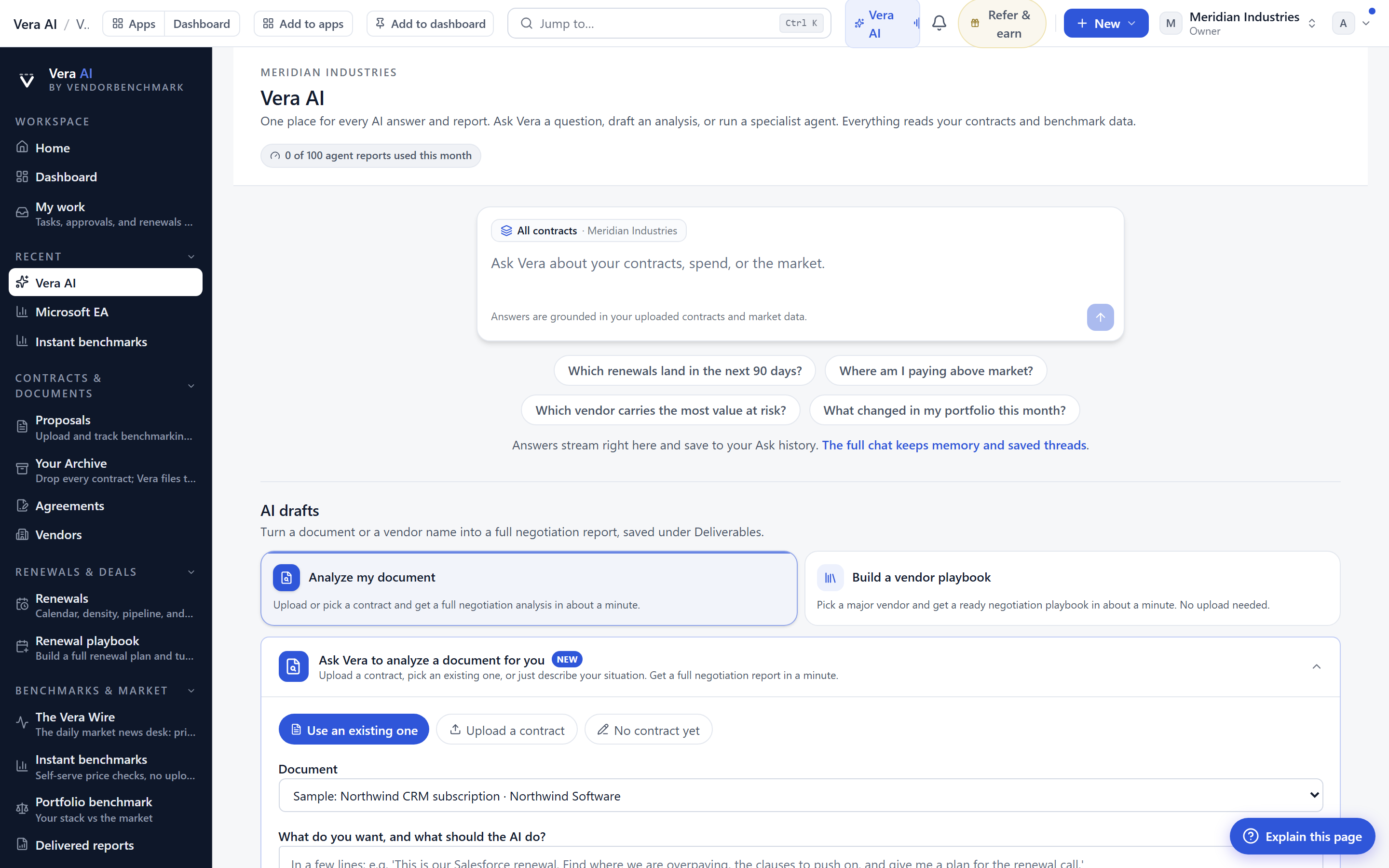
Four moments the rail earns its seat
The honest limits, and there are two that matter. First, meeting recording and AI assistance on calls carry disclosure norms and, in some places, legal requirements; treat the copilot as your side's note-taking and preparation assistant and follow your counsel's guidance on consent, exactly as you would for any recording tool. Second, the rail informs, it does not speak. The pause you take, the warmth you keep in your voice while declining, the read on whether the rep is bluffing or boxed in by their own deal desk, that is the human craft, and no transcript improves it. What the copilot removes is the fog: the unverifiable claim, the forgotten concession, the number you knew on Tuesday. You still play the game. You just stop playing it from memory.
Fredrik has spent more than twenty years in enterprise software, with time at Oracle, IBM, SAP, and Salesforce before moving to the buy side. He structured and priced the kind of large agreements most buyers only see once or twice in a career, which taught him where the leverage sits and how far a vendor will actually move. He started VendorBenchmark to hand that knowledge to every sourcing team.
The week in enterprise software buying, in one email.
What shipped on the platform, and the pricing and licensing moves worth knowing before your next renewal. One email a week, to your work address. Unsubscribe any time.