Six agents and a ghost writer: staffing a procurement desk with AI.
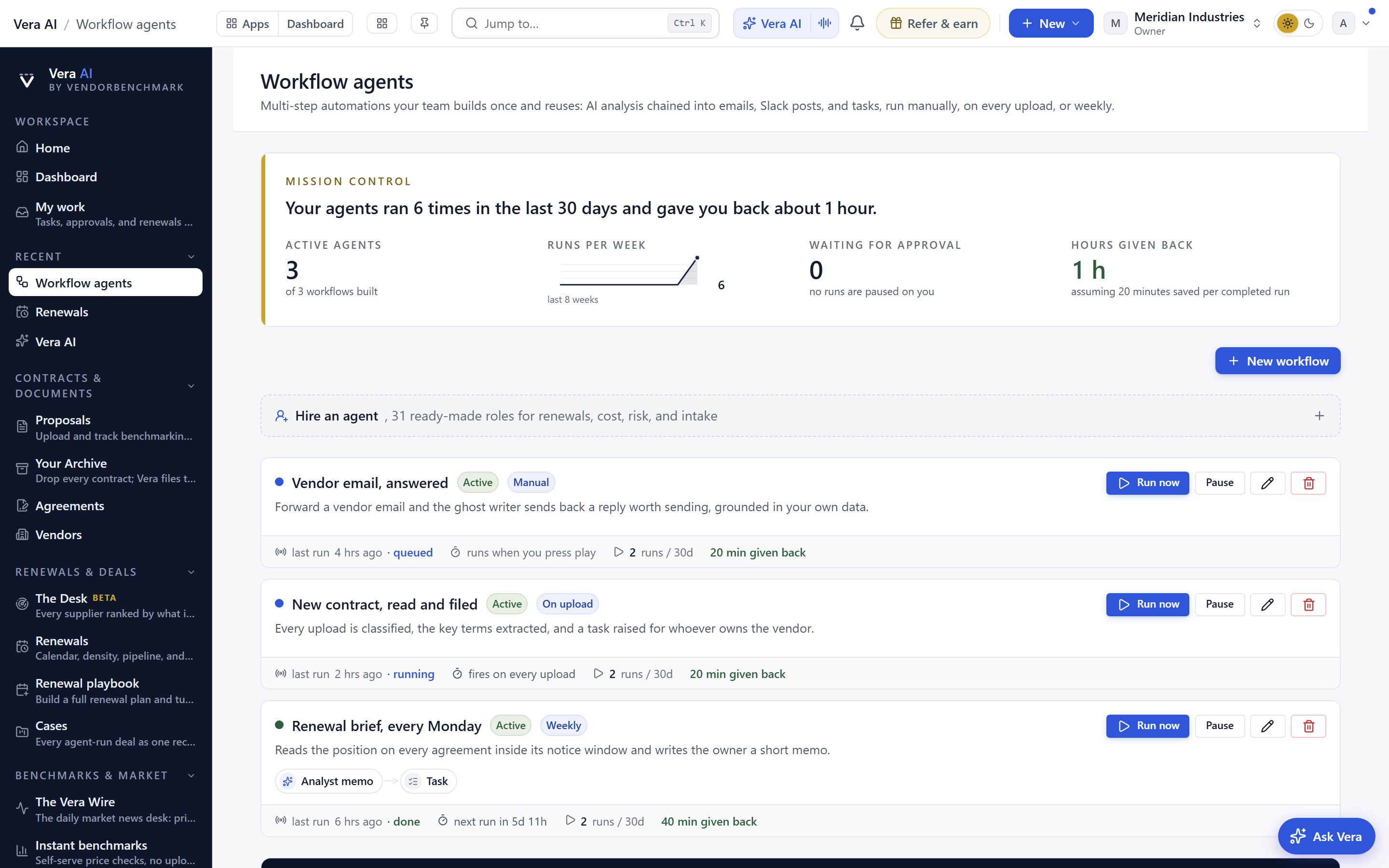
A single AI assistant answers questions. A staffed desk divides the work: a benchmarking specialist, a legal terms reader, a licensing expert, a flexibility scout, an executive brief writer, a talking points coach, and a ghost writer who answers vendor email in your voice. Here is the roster, and how to decide which agent gets which work.
The first generation of AI in procurement was one assistant that did everything, which in practice meant one assistant that did everything shallowly. The lesson from watching thousands of real deals run through the platform is the same lesson every consulting firm learned a century ago: expertise specializes. The person who prices a Microsoft EA against comparable agreements is not the person you want redlining an indemnity clause, and neither of them writes the two paragraph summary the CFO will actually read.
So the desk is staffed the way a good advisory team is staffed, with specialists who share one case file. Every agent works from the same grounded foundation, your contracts, your invoices, and the market data, every figure citation tagged. What differs is the job each one is tuned to do, and the shape of the deliverable it hands back.
The six specialists, and what each one is for
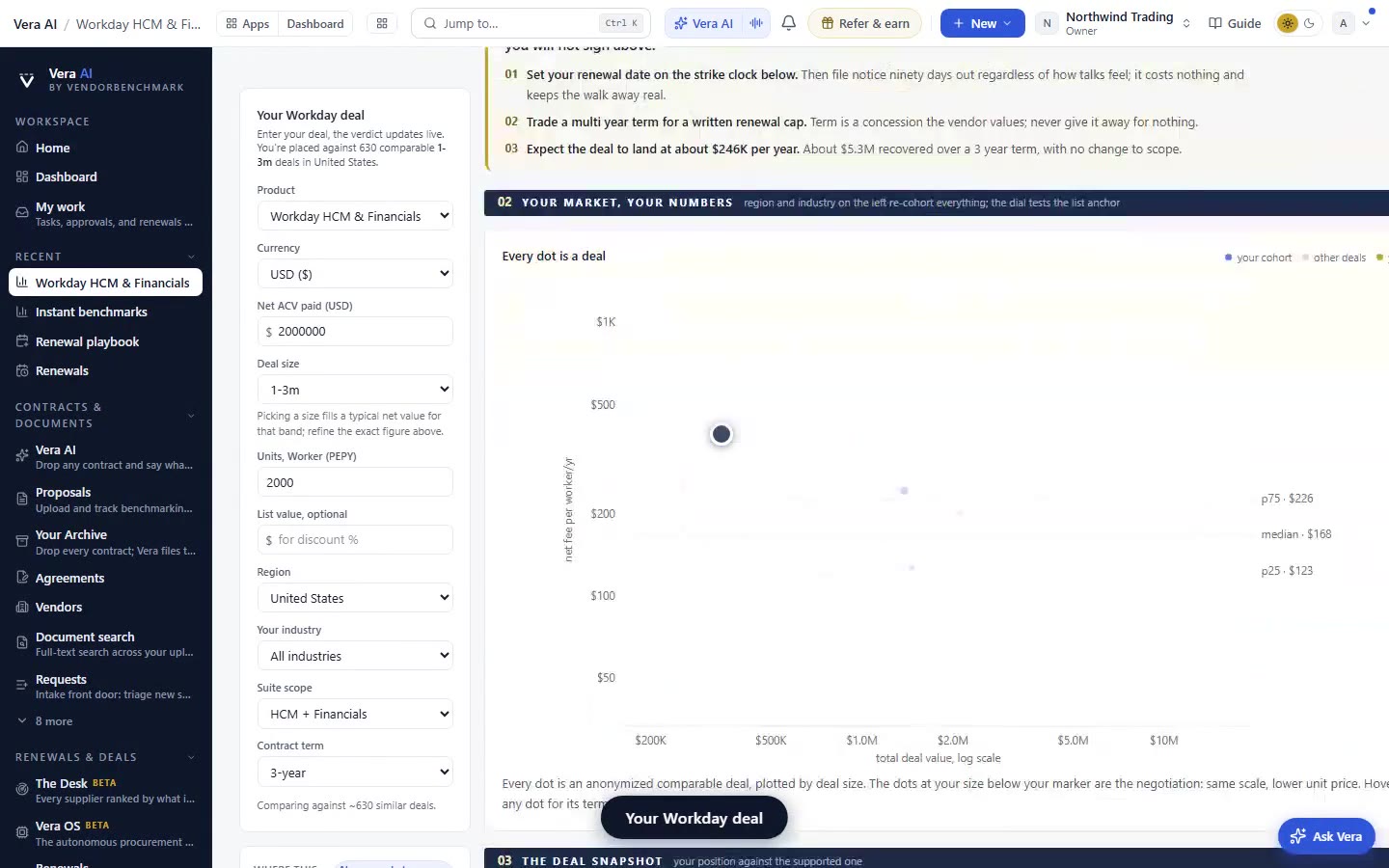
The Benchmarking agent owns the money question. Point it at a deal and it places your net unit price against the comparable closed cohort, quantifies the gap to median and top quartile, and writes the position paper. Use it first, because every other conversation goes better once the number is known.
The Legal Terms agent reads the paper the way outside counsel would, if outside counsel had infinite patience: renewal mechanics, caps, liability, audit rights, exit language, argued against your own clause library rather than generic best practice. Its output is the challenge list with replacement wording attached.
The License Specialist handles the metric layer where vendors hide growth: what counts as a user, a core, a functional equivalent, and whether your entitlements match your deployment. It is the agent that catches the expensive difference between what you bought and what you use.
The Contract Flexibility agent hunts optionality: true-down rights, swap windows, co-term opportunities, termination paths, and what each is worth. Where the legal agent asks "what binds us," this one asks "what frees us."
The Executive Brief agent compresses. Whatever the other agents produced becomes the two page narrative a decision maker reads on the way to the meeting: position, options, recommendation, in the house exec-brief style.
The Talking Points agent preps the human. Given the deal state, it drafts what to say on the call: the opening position, the responses to the predictable vendor moves, and the lines that keep an anchor from sticking.
Want to be updated when major licensing and pricing changes land? One analyst brief a week: the price rises, metric changes and audit campaigns that move software costs. Work email only.
The ghost writer: the seventh chair at the desk
Most of a negotiation is not the meeting, it is the email thread, and the thread is where prepared positions go to die. The rep's message arrives at 4:50 on a Friday, it contains a deadline, a bundle, and a favor, and the reply you send tired becomes part of the record.
The ghost writer exists for exactly this. Forward a vendor email to your deal's private address and it comes back triaged: the tactic classified, urgency, bundling, the expiring discount, any concessions or commitments logged to the deal ledger, and a counter-reply drafted in your voice, consistent with everything your side has said in the thread so far, grounded in the benchmark position the desk already holds. You edit and send, or you do not. The draft never leaves without you.
Around the core desk sit two extensions. Thirteen inbox agents answer standalone questions by email, forward a quote to the price check address and a verdict comes back, no login required. And up to six custom agents carry org-specific instructions, so a FinOps team can run a reviewer that thinks in its own policies.
Which agent, when: a working assignment rule
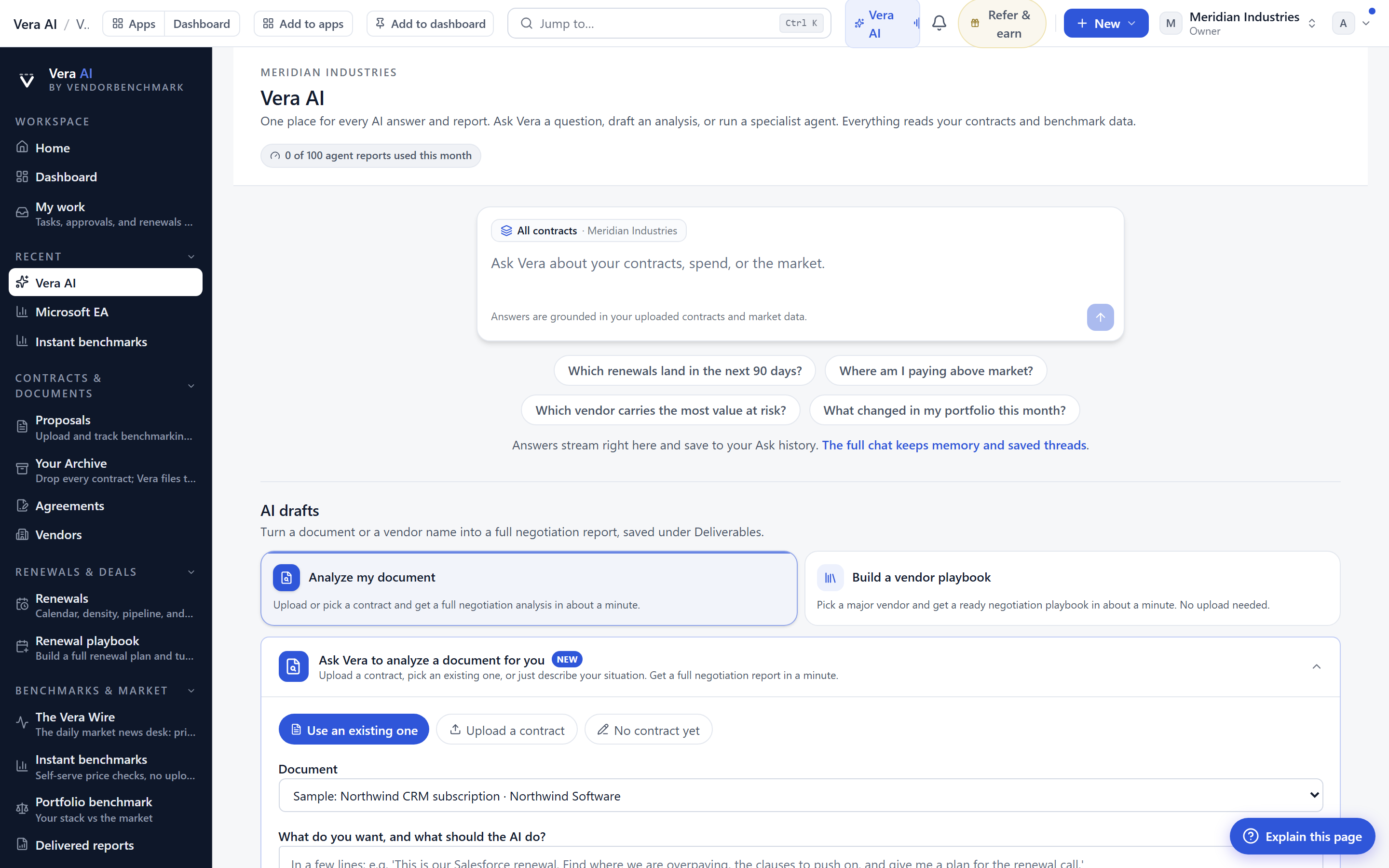
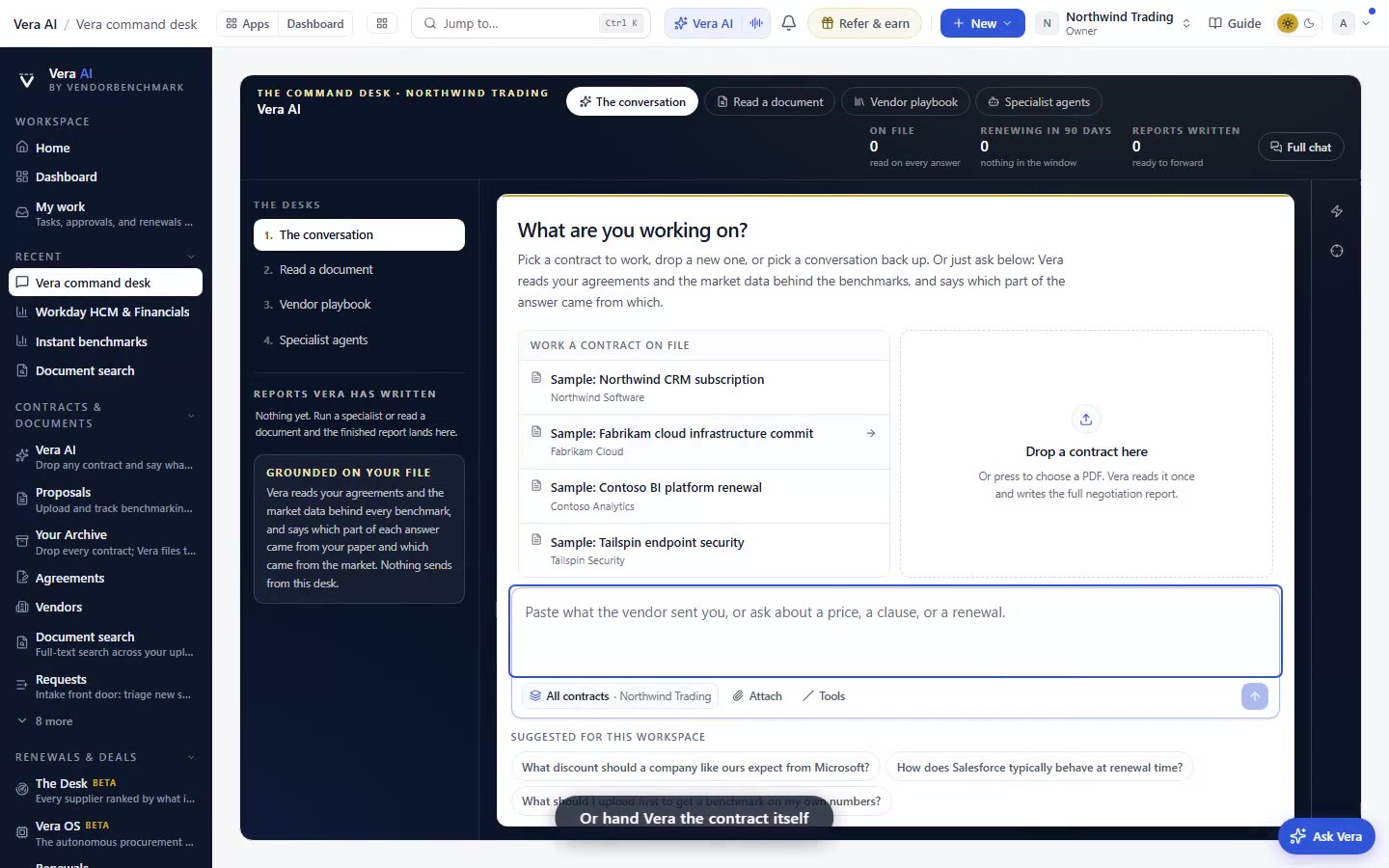
And for the quick question in between, there is Vera, the generalist who fronts the desk, one keystroke from any screen, answering with citations and pulling in a specialist when the question deserves one.
The honest framing for all of it: the agents are staff, not management. They read exhaustively, they never miss a Friday email, and they draft faster than any team you could hire, but every send, every signature, and every judgment about what the relationship can bear stays with a person, logged in the same audit trail as everything else. What changes is what that person walks in holding. A desk of one becomes a desk of eight, and the one who matters still sits in your chair.
Morten brings two decades of enterprise and software procurement, with stints across Oracle, IBM, SAP, and Salesforce shaping how he reads a deal. He has led sourcing through hundreds of renewals, from mid market order forms to nine figure global agreements, and learned that the buyers who win are the ones who walk in knowing the market. He built VendorBenchmark to make that pattern recognition repeatable.
The week in enterprise software buying, in one email.
What shipped on the platform, and the pricing and licensing moves worth knowing before your next renewal. One email a week, to your work address. Unsubscribe any time.