The Policy Theatre: what vendors changed in the fine print, staged nightly.
Twenty eight vendor policy documents are diffed every day. The Policy Theatre stages what changed: a ninety day pulse, a wall of vendor tiles that glow when something material is fresh, and one scene per change with the exact lines added and removed, plus Vera's read on what it means for buyers.
Vendors change their licensing rules in documents nobody rereads: audit clauses, usage definitions, support policies, program guides. The change lands quietly, and you meet it eighteen months later, at renewal, priced in. The platform has watched these documents for a while; what is new is how you experience the watching. The Policy Theatre stages it.
Open the policy wire and a show raises by default. The overture counts the vitals: documents watched, changes caught, how many were material. Then the pulse: a ninety day seismograph of change activity where every bar is clickable, because a spike in a vendor's policy edits is itself intelligence. Then the wall: twenty vendor tiles, and the ones with a material change under thirty days old carry a glow you can see from across the room.
One scene per change, with the receipts
Every material change gets its own scene, and the scene has a shape: a verdict strip that says how much a buyer should care, Vera's read as a plain paragraph, and then the diff replay, the exact lines removed and the exact lines added, played back so you watch the language shift. Not a summary of the change: the change.
That precision matters because policy arguments are textual. When an audit clause tightens, the negotiation is about specific sentences, and walking into it with the before and after verbatim is a different conversation from walking in with a rumor. The scene gives you the verbatim, and the docket scene behind it shows the health of all twenty eight documents so you know the watch itself is current.
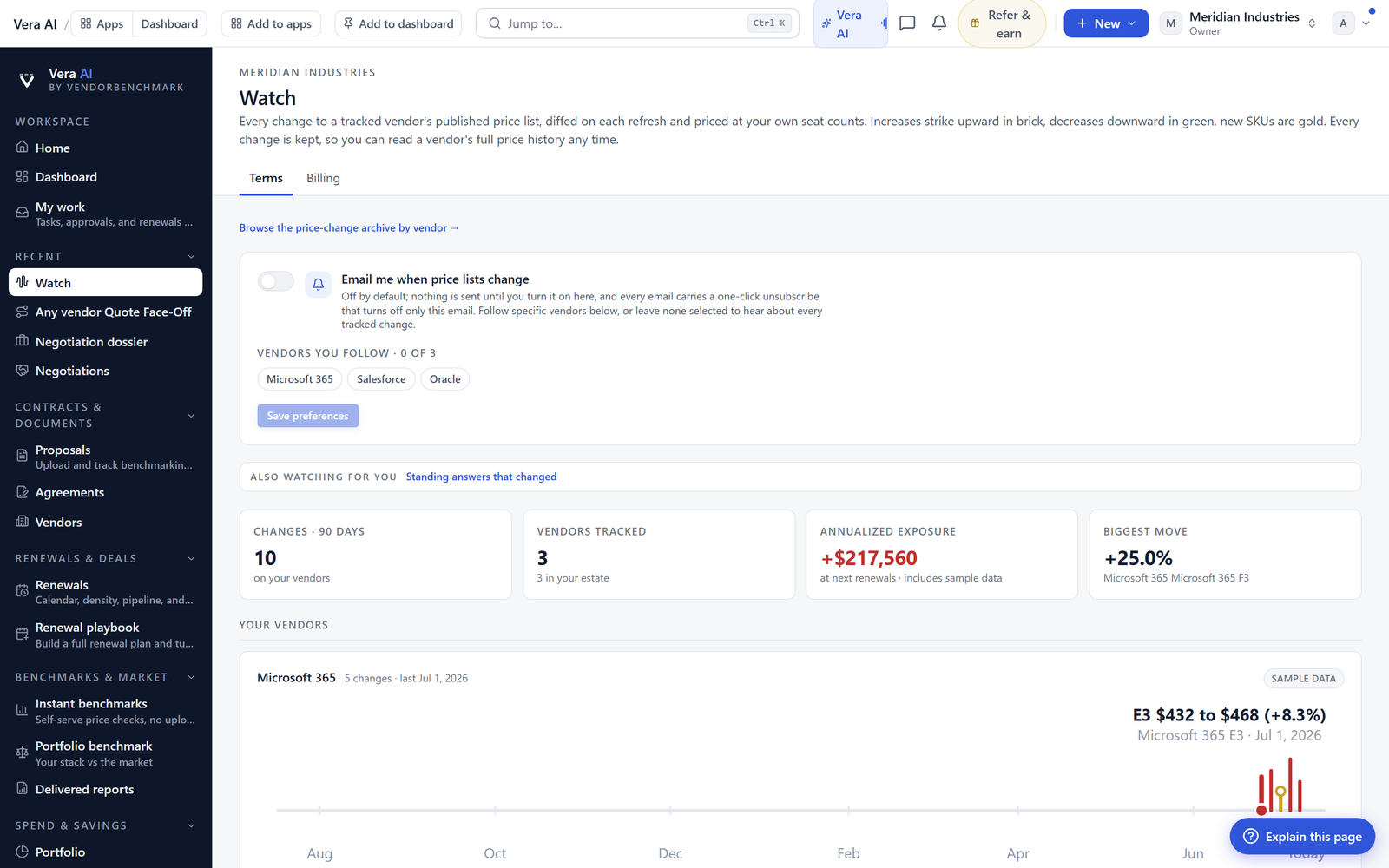
Follow what you own, get told when it moves
Watching is only useful if it reaches you. Every vendor tile carries a follow bell: follow one vendor, several, or everything. Followed changes arrive two ways, as an in app notification on the bell and as an email alert, each filtered to the vendors you chose, each with an unsubscribe that works. If you own SAP and Broadcom paper, you can hear only SAP and Broadcom.
In the theatre itself, the M key filters the show to material changes only, which is the mode to use in a team meeting: five scenes about things that matter rather than forty about typo fixes. Escape lands you on the classic desk with the full document list, and the show is one button away when you want it back.
Want to be updated when major licensing and pricing changes land? One analyst brief a week: the price rises, metric changes and audit campaigns that move software costs. Work email only.
What you can do in the Policy Theatre
A watch, not a lawyer
The verdicts and reads are a buyer analyst's triage, not legal advice, and a material flag means read this, not litigate this. A handful of vendors publish their policies in ways that resist automated fetching, and the docket scene is honest about which documents those are rather than pretending coverage it does not have.
The watch covers the published policy estate: program guides, audit and support policies, usage terms. Your own negotiated paper can override any of it, which is exactly why the change scenes matter: they tell you when the public baseline your contract silently references has moved underneath it.
Fredrik has spent more than twenty years in enterprise software, with time at Oracle, IBM, SAP, and Salesforce before moving to the buy side. He structured and priced the kind of large agreements most buyers only see once or twice in a career, which taught him where the leverage sits and how far a vendor will actually move. He started VendorBenchmark to hand that knowledge to every sourcing team.
The week in enterprise software buying, in one email.
What shipped on the platform, and the pricing and licensing moves worth knowing before your next renewal. One email a week, to your work address. Unsubscribe any time.