The spec written in fifteen minutes between meetings
A rushed spec reflects the calendar of one busy stakeholder, not the need of the business. The AI analyst does the requirements legwork so the busiest person stops being the bottleneck.
You know the message. It landed at 4:52 on a Thursday. Here is the spec, had to be quick, ping me if anything is off. Attached was a document that took the busiest person in the building about fifteen minutes to write, in the gap between a board prep and a one to one. It reads like it. Three must haves that are really one requirement said three ways. A budget number carried over from a different deal. No line about compliance, no line about the outcome. You now have to run a sourcing process off it, and every vendor you brief will optimise for exactly what that document says, not for what your business actually needs.
This is not a story about a lazy stakeholder. The person who wrote it is usually the most capable one on the project, which is precisely why they never have time. The spec measures their availability, not their intent. And because it looks finished, nobody challenges it until the demos start going sideways.
Why the fifteen minute spec keeps happening
Requirements gathering is real analytical work, and it is almost always assigned as a side task to someone whose day job is something else. The finance lead who owns the tool budget. The engineering manager who will live with the integration. They are the right people to consult and the wrong people to make into the single author, because their calendar decides how much thinking the spec gets.
The organisation then treats the output as authoritative. A spec with a version number and a header looks like a decision. It gets forwarded, quoted, and frozen into an RFP. What you have actually captured is one person's fifteen minute recall of a problem they understand deeply but described hastily. The gap between recall and reality is where the process breaks, and it breaks late. This is a close cousin of the intake form that asks for everything except the point. Both problems collect fields and miss the need.
What the rushed spec costs you downstream
The cost does not show up in the fifteen minutes. It shows up in weeks three through eight. Vendors respond to what you wrote, so their proposals converge on the wrong axis. Your comparison table looks tidy and tells you nothing, because everyone answered the same incomplete question. Then someone in a demo asks about SSO, or data residency, or the renewal uplift structure, and you realise none of it was in the spec.
Two failures are especially common and especially expensive. The first is compliance arriving late, which resets your timeline the way the spec that skipped compliance describes. The second is authorship risk: the one person who wrote it rolls off the project, and the reasoning behind each requirement leaves with them, turning the document into folklore nobody can defend in negotiation.
The platform motion: an interview, not a blank page
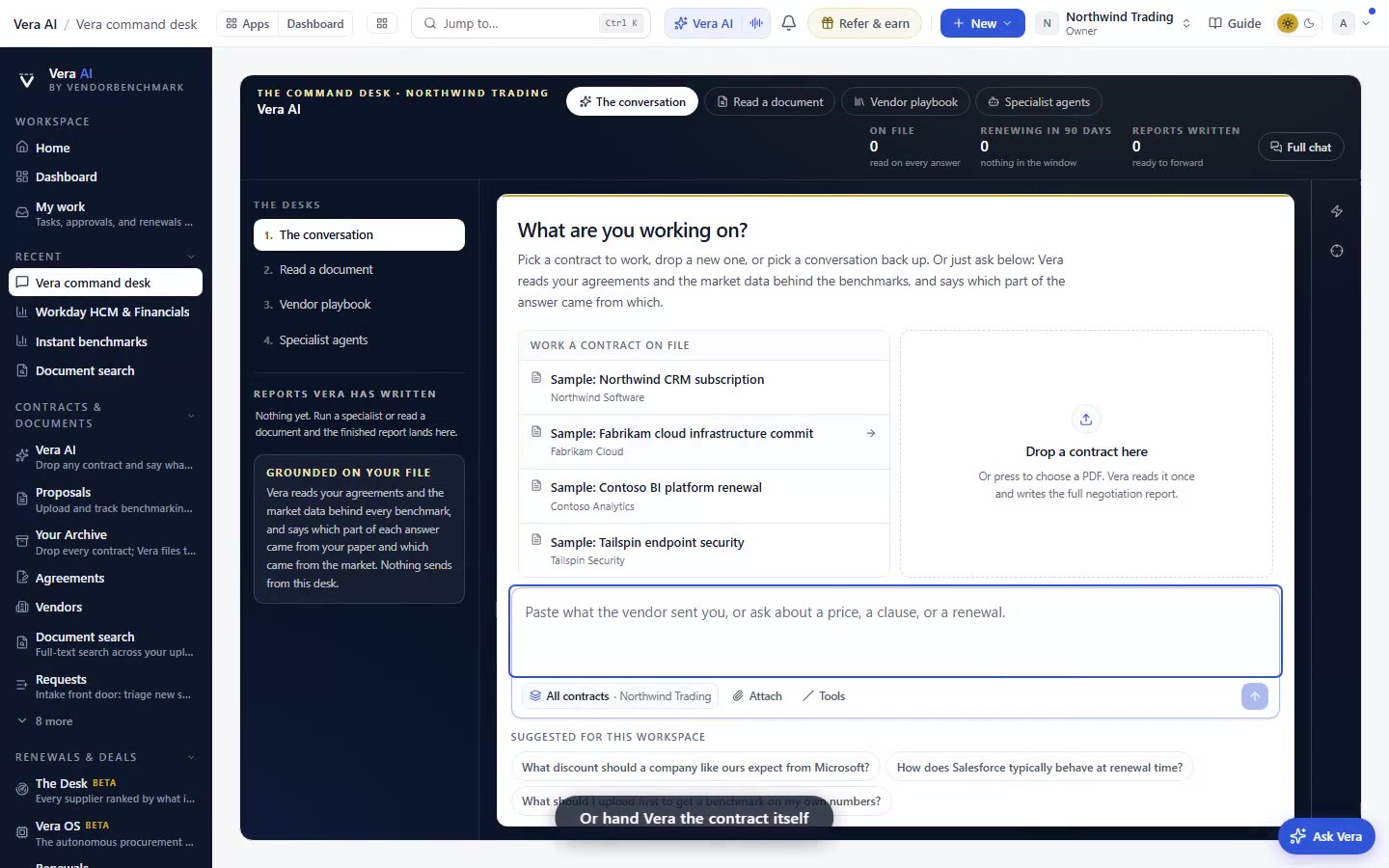
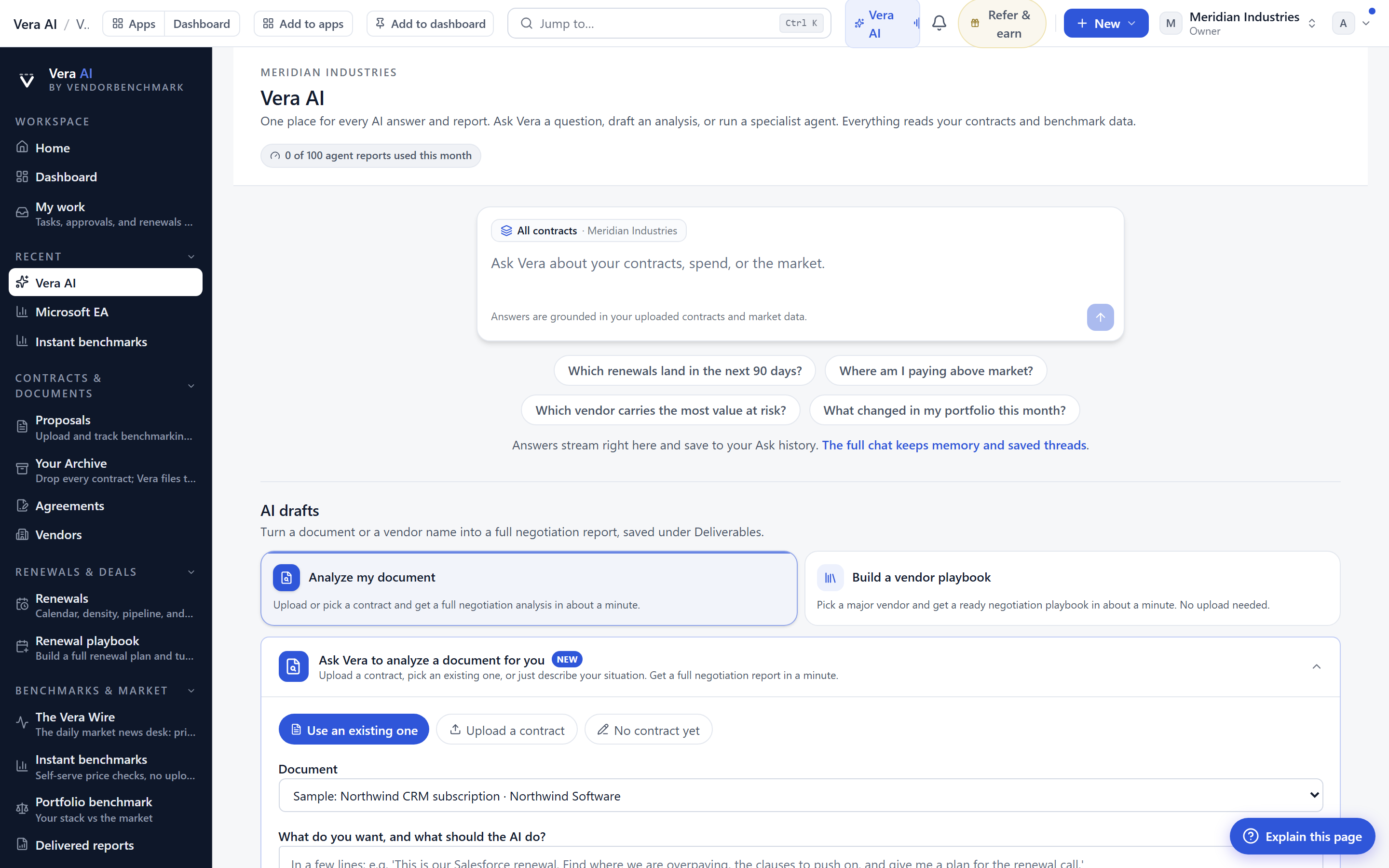
The fix is to move the requirements legwork off the busiest person's fifteen minutes and onto an analyst that has time and structure. Vera runs a guided interview. Instead of a blank document, you get a sequence of specific prompts drawn from how similar requirements have actually been specified before. The busy stakeholder still contributes the judgment only they hold, but they do it as short answers to precise questions, not as a from scratch essay.
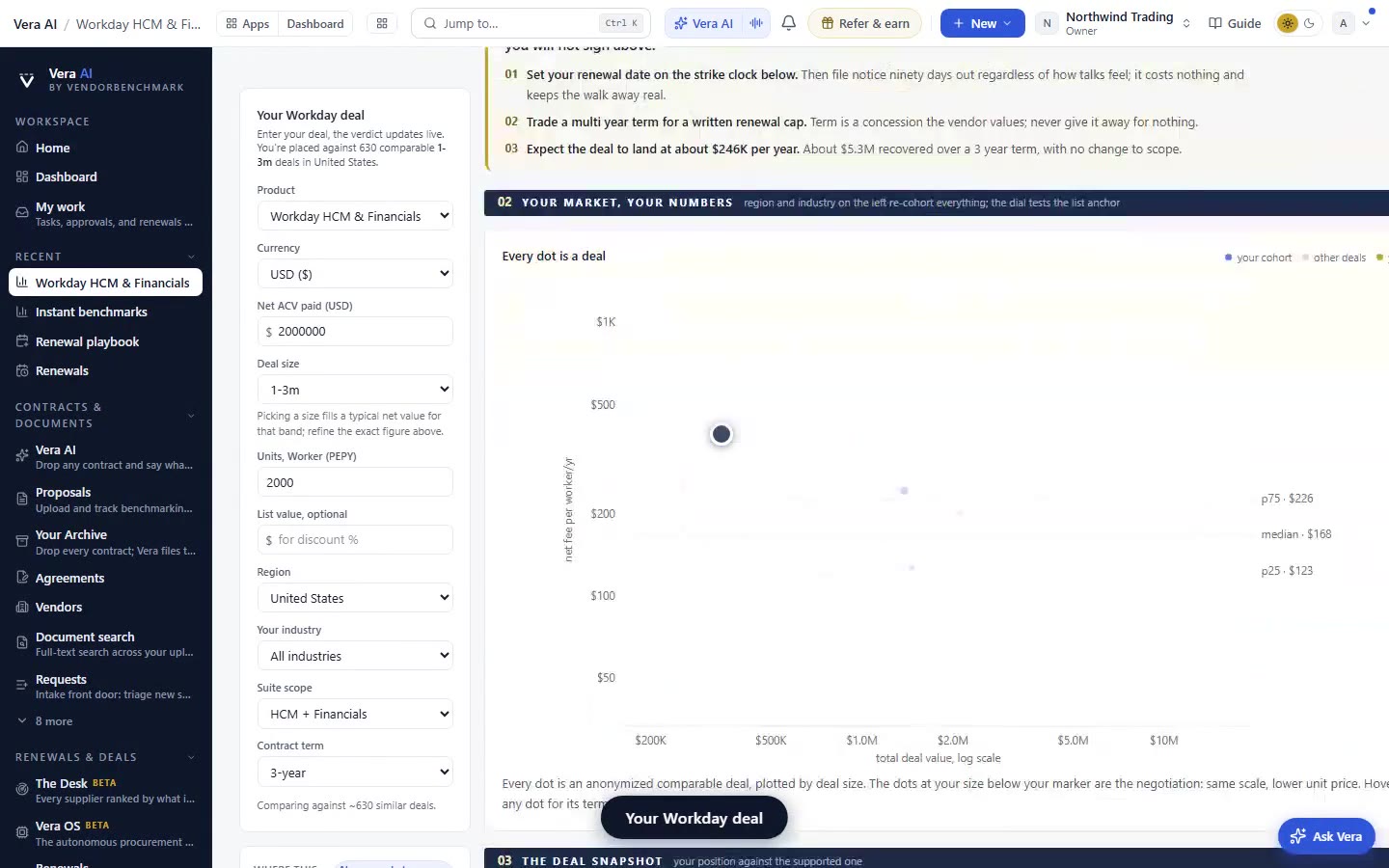
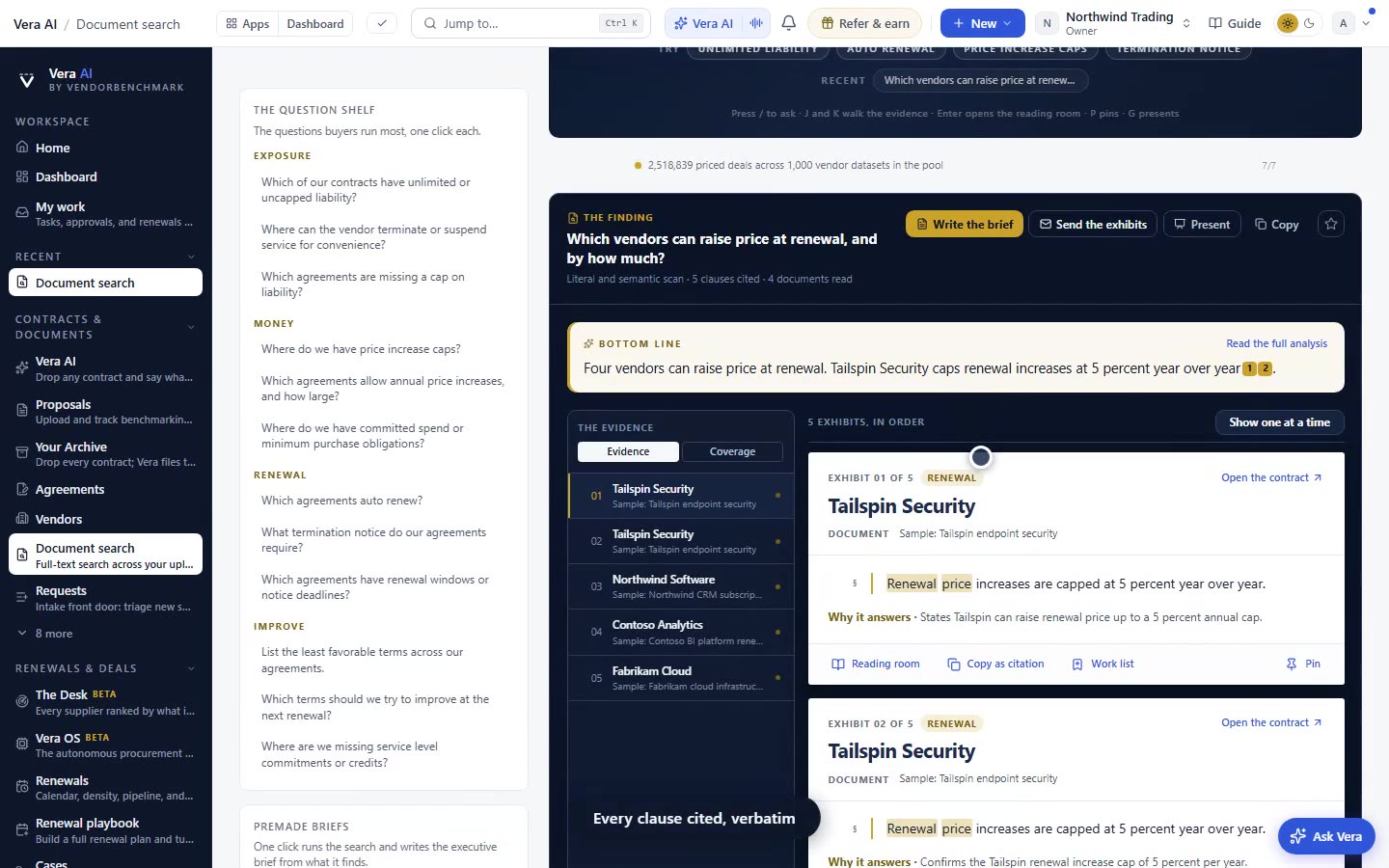
Under that interview sits real reference material. The analyst can pull from benchmarks across 1,471 vendors and lean on the patterns in the modelled cohorts to ask the questions a rushed author skips. It surfaces the compliance line, the integration dependency, and the outcome metric because those show up in comparable deals, not because someone remembered to type them. This is the same principle behind starting a renewal with an interview, not a blank dashboard.
The output is a spec that no longer measures who had a spare hour. It reflects a structured pass across the requirement space, with the busy stakeholder's expertise captured as confirmations and corrections rather than as the entire load. When they roll off, the reasoning stays in the record, and when compliance reviews it, the lines are already there.
What changes on your desk
What this does not solve
Be honest about the edges. The interview cannot invent judgment that only your stakeholder holds. If the business genuinely does not know its outcome, no analyst can guess it, though the interview will at least make the absence visible rather than papering over it. The tool structures and prompts. It does not decide what your business needs.
It also does not stop requirements from moving. A spec can be well built and still drift once the project starts, which is a different failure mode covered in the RFP froze but the need kept moving. And if the real problem is that no single vendor can deliver what you have listed, a cleaner spec will surface that contradiction faster, but it will not make the market carry a product it does not sell. What the guided interview removes is narrow and specific: the risk that your requirements measure one person's calendar instead of your business. That alone is worth reclaiming.
Want to be updated when major licensing and pricing changes land? One analyst brief a week: the price rises, metric changes and audit campaigns that move software costs. Work email only.
Morten brings two decades of enterprise and software procurement, with stints across Oracle, IBM, SAP, and Salesforce shaping how he reads a deal. He has led sourcing through hundreds of renewals, from mid market order forms to nine figure global agreements, and learned that the buyers who win are the ones who walk in knowing the market. He built VendorBenchmark to make that pattern recognition repeatable.