Rights you already paid for: true-downs, swap windows, and SLA credits.
Every negotiated concession in your contracts is an option with an expiry date, and most estates let them depreciate to zero unexercised: the swap window nobody remembered, the SLA credit nobody claimed, the true-down that lapsed at the anniversary. The rights register is the account where those assets stop disappearing.
Here is a strange accounting fact about enterprise software: companies fight hard for concessions and then keep no record of holding them. The negotiation team wins a mid-term true-down right, a product swap window, a price hold on expansion, a service credit regime with real teeth, and each victory gets celebrated, signed, and filed into a PDF that nobody will open again until the next renewal. The person who won it changes roles. The person who could exercise it never knew it existed. Three years later someone rediscovers the clause a month after its window closed and does the grim arithmetic of what it would have been worth.
The pattern is universal because the incentives are lopsided. Vendors track their rights meticulously, audit clauses get exercised, true-up provisions get invoked, uplift entitlements arrive on schedule, because a vendor's rights generate revenue and revenue has owners. Your rights generate savings, and savings, as the proof problem showed, traditionally have no system. A right without a register is a right in name only.
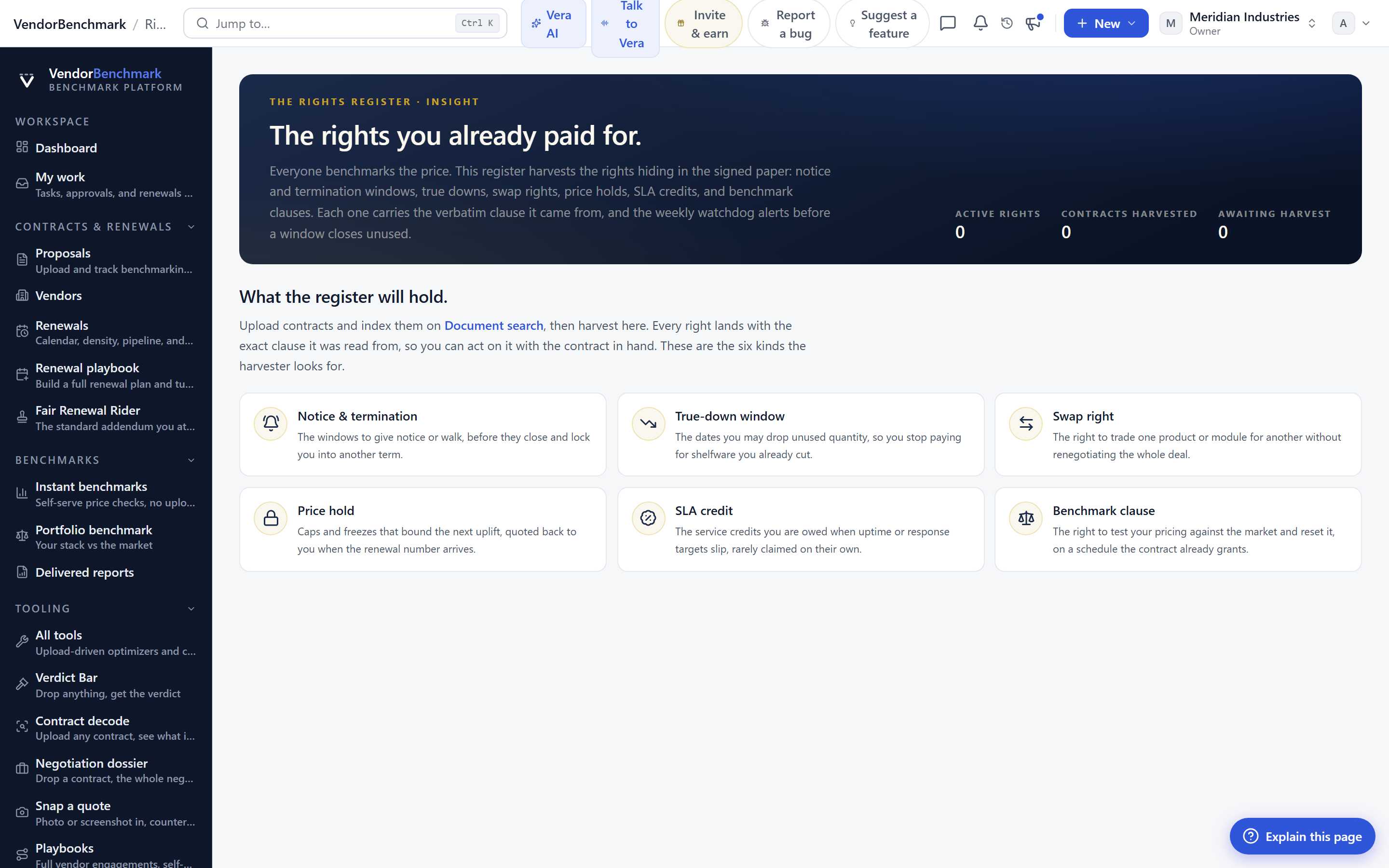
The register: every right, extracted, dated, and owned
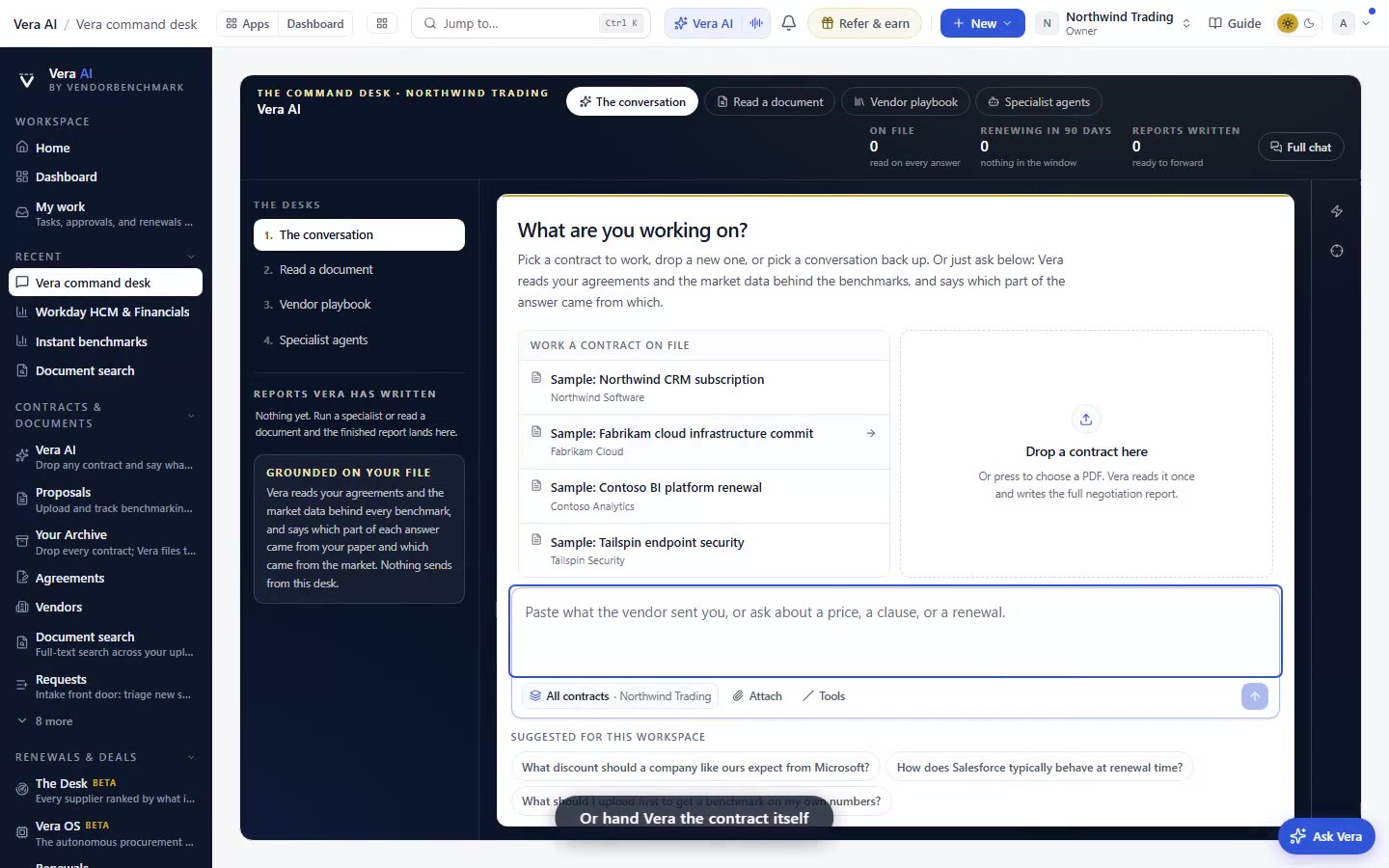
The register builds itself from the documents. When contracts land in the workspace, the same decode that flags the terms that hurt also extracts the terms in your favor, and the favorable ones file into the rights register by family.
Reduction rights: true-downs at anniversary, divestiture carve-outs, and reduction corridors, the rights that let the estate shrink when the business does. Flexibility rights: swap windows to exchange one product for another, edition conversion rights, and transfer rights across entities. Price rights: holds on expansion pricing, protected renewal rates, and caps with their reference terms. Service rights: SLA credit regimes, escalation entitlements, and the audit conduct terms your rider installed. Each entry carries the clause citation, the exercise window, the conditions, and critically, an expiry alert wired into the same watchers that track your notice deadlines, because a right's expiry date is exactly as much a one way door as a renewal window.
Exercising: rights pay when events meet the register
A register is a filing system. The money appears when events in the estate get matched against it, and the platform makes those matches automatically.
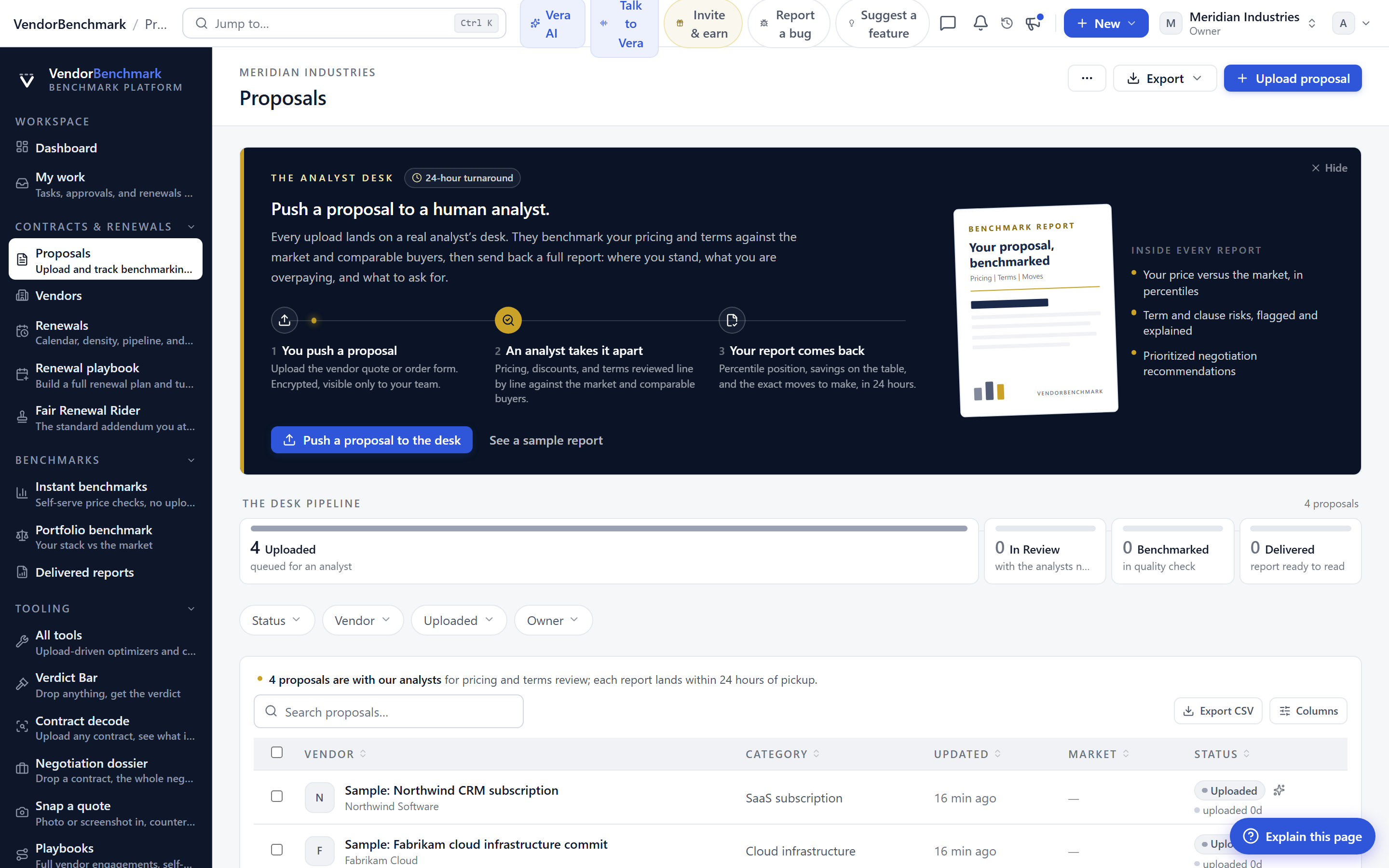
The outage meets the SLA credit. Service credits are the most reliably unclaimed money in enterprise software, because claiming one requires noticing the breach, knowing the regime, and filing within the window, three things that rarely coincide in a busy quarter. With the register wired to the estate, a documented incident surfaces the credit entitlement and drafts the claim, and the invoice reconciliation verifies the credit actually lands.
The renewal meets the reduction and swap rights. When a renewal enters its window, its brief opens with the rights you hold on that vendor: the true-down corridor, the swap window, the protected rate. Every negotiation should begin from what you are already entitled to, because asking for something the contract already grants is not negotiating, it is billing.
The reorganization meets the flexibility rights. Divestitures, downsizing, and platform migrations are exactly the moments the reduction and transfer rights were negotiated for, and exactly the moments nobody has time to reread contracts. The register turns "what do our contracts let us do?" from a two week legal project into a filtered view.
And unexercised rights have one more life: currency. A swap window you will not use, a credit balance, a protected expansion rate on a product you are dropping, all of it is tradeable in the next negotiation, but only if it is visible when the war room opens. The register is where the trading stock lives.
Four disciplines that keep the assets alive
The honest limit: extraction reads what the clause says, and some rights are written in the vendor's favorite dialect, vague enough to require a legal read before anyone relies on them. The register flags those as needing interpretation rather than pretending certainty, and the exercise of any material right remains a human call, made with counsel where the clause deserves it. What the register removes is the failure mode that never deserved to exist: the clean, valuable, clearly worded right that died in a drawer because no system knew its birthday. You paid for these terms once, at the table. The register is how you stop paying for them twice, in silence.
Morten brings two decades of enterprise and software procurement, with stints across Oracle, IBM, SAP, and Salesforce shaping how he reads a deal. He has led sourcing through hundreds of renewals, from mid market order forms to nine figure global agreements, and learned that the buyers who win are the ones who walk in knowing the market. He built VendorBenchmark to make that pattern recognition repeatable.
The week in enterprise software buying, in one email.
What shipped on the platform, and the pricing and licensing moves worth knowing before your next renewal. One email a week, to your work address. Unsubscribe any time.