The requirement that speaks one vendor's language before evaluation begins
Borrowed vocabulary encodes an unstated preference. It quietly excludes vendors that solve the problem differently, and it costs you at signature. Here is how to translate it back into outcomes.
Read last month's intake ticket again. Somewhere in the requirements there is a phrase that does not describe a business outcome. It describes a screen. A stakeholder writes that the tool must have a "pipeline board with swimlanes", or a "journey canvas", or a "case timeline view". Nobody flags it, because it reads like a normal requirement. But those are not requirements. They are the labels one specific product printed on its navigation, and the person who wrote them learned those words at a previous job where that product was already installed. The specification now presumes one design without ever saying so.
This is quieter than a spec written to fit the incumbent, and quieter than a ticket that names the vendor outright. No vendor is named here. The author may not even remember which product taught them the vocabulary. But the effect is the same. The field narrows before the first demo, and the price rises to match the narrowing.
Why borrowed vocabulary is invisible
A named vendor triggers procurement's antibodies. Everyone knows to ask why. Borrowed terminology does not, because it wears the costume of a real requirement. "The system must support swimlanes" parses as a feature ask. It reads as neutral. It is not. Swimlanes are one product's answer to the question of how you segment work in progress. Kanban columns are another answer. A status field with saved filters is a third. All three solve the underlying need, which is to see work grouped by state. Only one of them is written into your spec, and it is there by accident of biography.
The vocabulary persists because it is efficient to copy. The stakeholder who used the tool for three years has muscle memory for its terms. Writing "journey canvas" is faster than writing "a way to design and edit multi-step customer sequences with branching logic." The precise, vendor-neutral version takes effort. The borrowed version is free. So the borrowed version wins, and the unstated preference travels straight into the evaluation criteria unchallenged.
How the narrowing inflates the price
When a spec is written in one product's dialect, the vendors who share that dialect look like an obvious fit and the vendors who solve the problem differently look like they are missing features. The differently-shaped vendor now has to spend the evaluation explaining why its status filter does the job of your swimlane, and it usually loses that argument on optics rather than on merit. You end up with a shortlist that is not the best three answers to your problem. It is the three answers that happen to use your author's old vocabulary.
A thin shortlist is expensive in a specific, measurable way. When the vendor that matches your language knows the alternatives look awkward on paper, it has less reason to discount. This is the same mechanism as a flat mandatory list that collapses your options to one. The fewer credible substitutes are at the table, the closer you pay to list. And because the borrowed vocabulary sometimes describes features no single competitor bundles the same way, you can drift toward a spec that adds up but nobody actually sells, which forces custom scope and premium pricing.
Translate the language, then price the approach
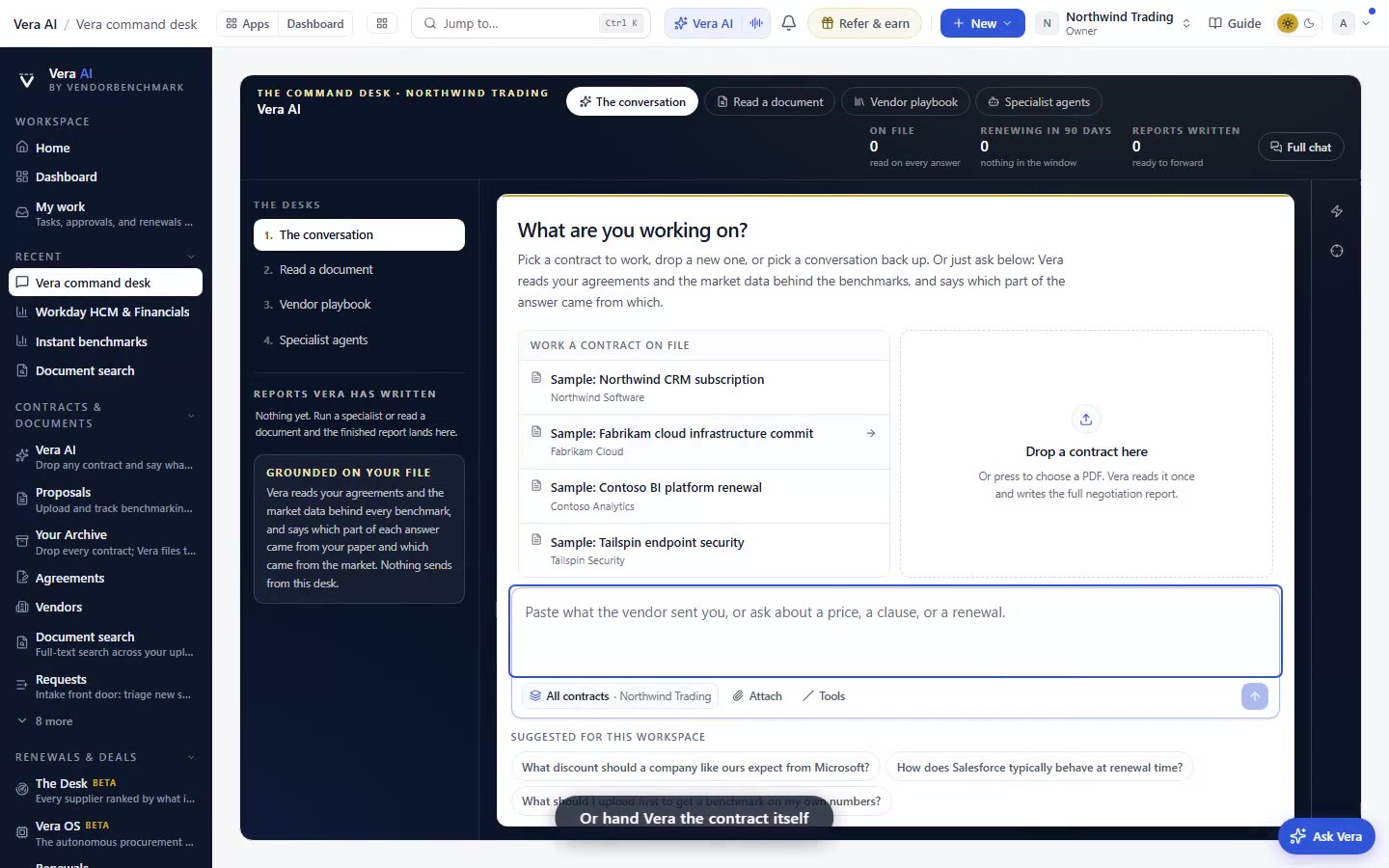
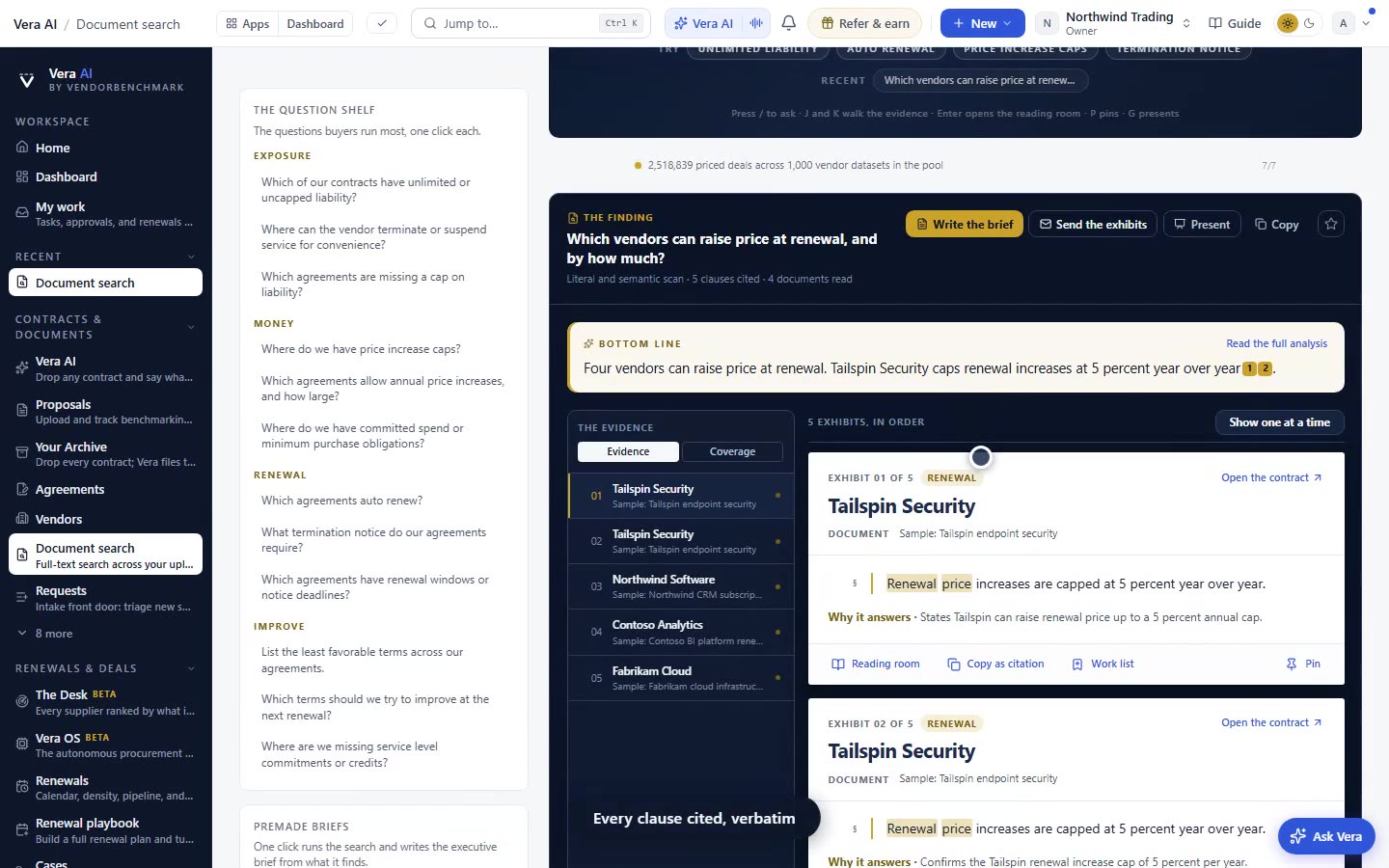
The platform motion has two moves. First, Vera reads the draft and separates the outcome from the interface word. "Journey canvas" becomes "design and edit multi-step sequences with branching." "Case timeline view" becomes "chronological record of all activity on a work item." The outcome is what you actually need, and stated that way it is answerable by every vendor that can meet it, not just the one that named it that way. This is the same discipline as translating a product name back into a problem, done at the level of the individual requirement line.
The second move is the check that matters most to your budget. Once the requirement is neutral, benchmarking tells you whether the design the borrowed vocabulary implied is actually the market standard or a premium path. If the implied approach corresponds to a product tier that closes well above the median for the outcome, that is the signal that the vocabulary was quietly steering you toward a more expensive answer than the problem required. Survey-based numbers will not show you this, because they flatter the field. Researched pricing evidence from closed transactions will.
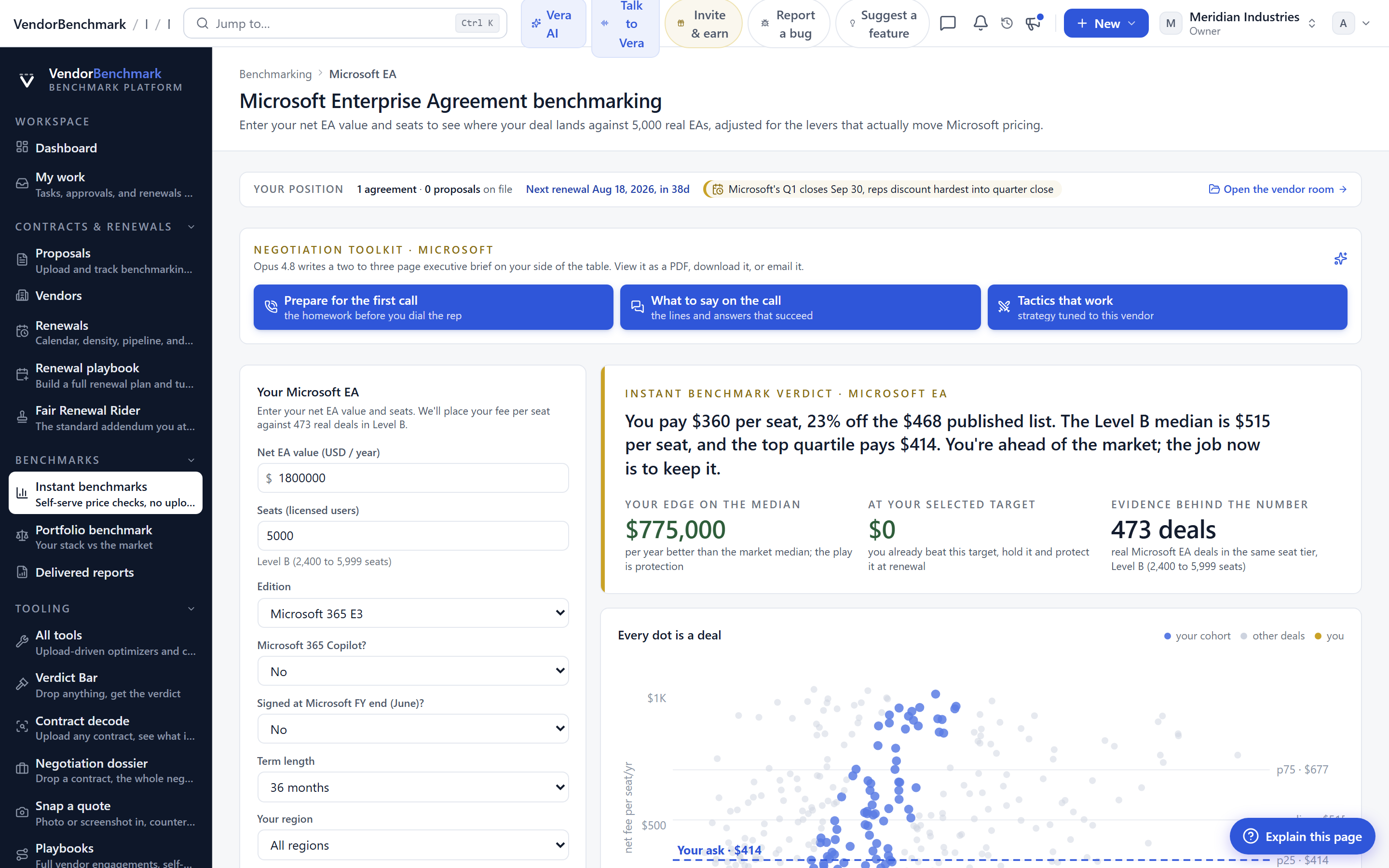
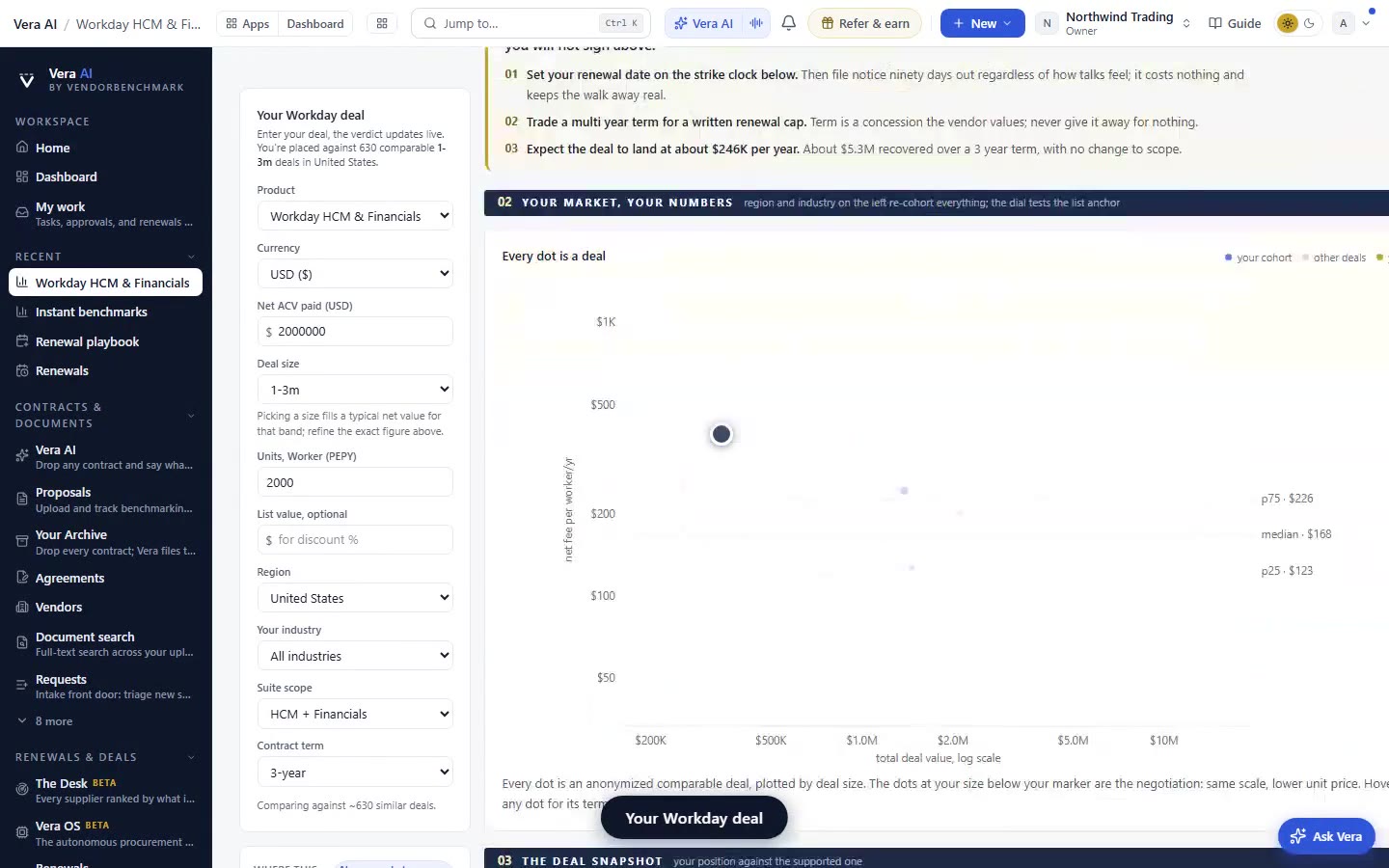
With the outcome stated neutrally, you can pull up to the modelled peer cohort for the capability rather than the vendor, and the percentile view tells you whether the implied design is a market-rate answer or a costly one. That is the difference between paying for the outcome and paying for a stakeholder's habit.
What changes, concretely
What this does not solve
Translation removes the accidental steer. It does not remove a genuine, defensible preference. If your stakeholder has weighed the alternatives and still wants the specific design, that is a legitimate decision, and the platform's job then shifts from widening the field to pricing the choice honestly. Vera will tell you what that design costs against the market. It will not tell you the preference is wrong.
It also cannot read intent that was never written down. If the borrowed vocabulary reflects a decision made in a corridor before intake opened, the requirement may look neutral after translation while the outcome was already fixed elsewhere. That is a different problem, and it needs a different intervention. And no benchmark replaces judgement about fit. It tells you where a price sits and how wide your options really are. The decision, and the responsibility for it, stay with you.
Want to be updated when major licensing and pricing changes land? One analyst brief a week: the price rises, metric changes and audit campaigns that move software costs. Work email only.
Morten brings two decades of enterprise and software procurement, with stints across Oracle, IBM, SAP, and Salesforce shaping how he reads a deal. He has led sourcing through hundreds of renewals, from mid market order forms to nine figure global agreements, and learned that the buyers who win are the ones who walk in knowing the market. He built VendorBenchmark to make that pattern recognition repeatable.