The requirement with no success metric, and the renewal argued on habit
A requirement with no success metric guarantees a renewal argued on habit instead of results. The fix is not a better renewal meeting. It is a measurable definition captured at intake.
You are three weeks out from a renewal and someone asks the only question that matters: did it work? You open the original request. It names the tool, it lists features, it has a budget line. It does not say what success would look like. There is no target, no baseline, no threshold anyone agreed to. So the renewal conversation drifts to the only evidence available, which is that people are using it and nobody has complained loudly. That is not results. That is habit wearing results as a costume, and the vendor knows it.
Name the problem: the request that could never be graded
Go back to the intake ticket that started this. It almost certainly reads like a shopping list. It says the team needs a platform to do X, it references two named competitors, it has an owner and a date. What it does not contain is a sentence of the form: we will consider this successful if, twelve months from now, metric A has moved from B to C. Without that sentence, the purchase is ungradeable by design. You did not fail to measure the outcome. You were never given an outcome to measure.
This connects to a pattern we have written about before, where the intake ticket already names the vendor and procurement inherits a decision instead of a need. A request that arrives as a product name rarely arrives with a success metric, because the requester has skipped the step where they say what problem they are solving. Skip the problem and you skip the yardstick.
Why the metric goes missing, every time
The success metric disappears for structural reasons, not lazy ones. At intake the requester is optimistic and busy. They want the tool approved, not interrogated. Asking them to commit to a number feels like inviting a future failure onto the record, so nobody asks and nobody offers. Procurement, meanwhile, is measured on getting the deal closed and the discount secured, not on defining outcomes twelve months out. The metric falls into the gap between two roles that each assume the other owns it.
Then time does its work. The person who wrote the spec moves on, a pattern we covered when the spec becomes folklore after its author rolls off. Whatever informal expectation lived in that person's head leaves with them. By renewal the institutional memory is a shrug and a Slack thread. The vendor, by contrast, has kept perfect records of every login and arrives with a usage report styled as proof of value. Adoption is not value. It is the easiest thing to count, which is exactly why it fills the vacuum a missing metric leaves.
The cost of this is quiet and compounding. A tool that never delivered its intended outcome renews anyway because the argument against it is harder to assemble than the argument for it. That is how estates fill with spend that survives on momentum. It is adjacent to the shelfware problem, but worse in one respect: shelfware is at least visibly unused. A purchase with no success metric can be fully used and still fail its original purpose, and you would have no way to tell.
The platform motion: capture the yardstick at intake
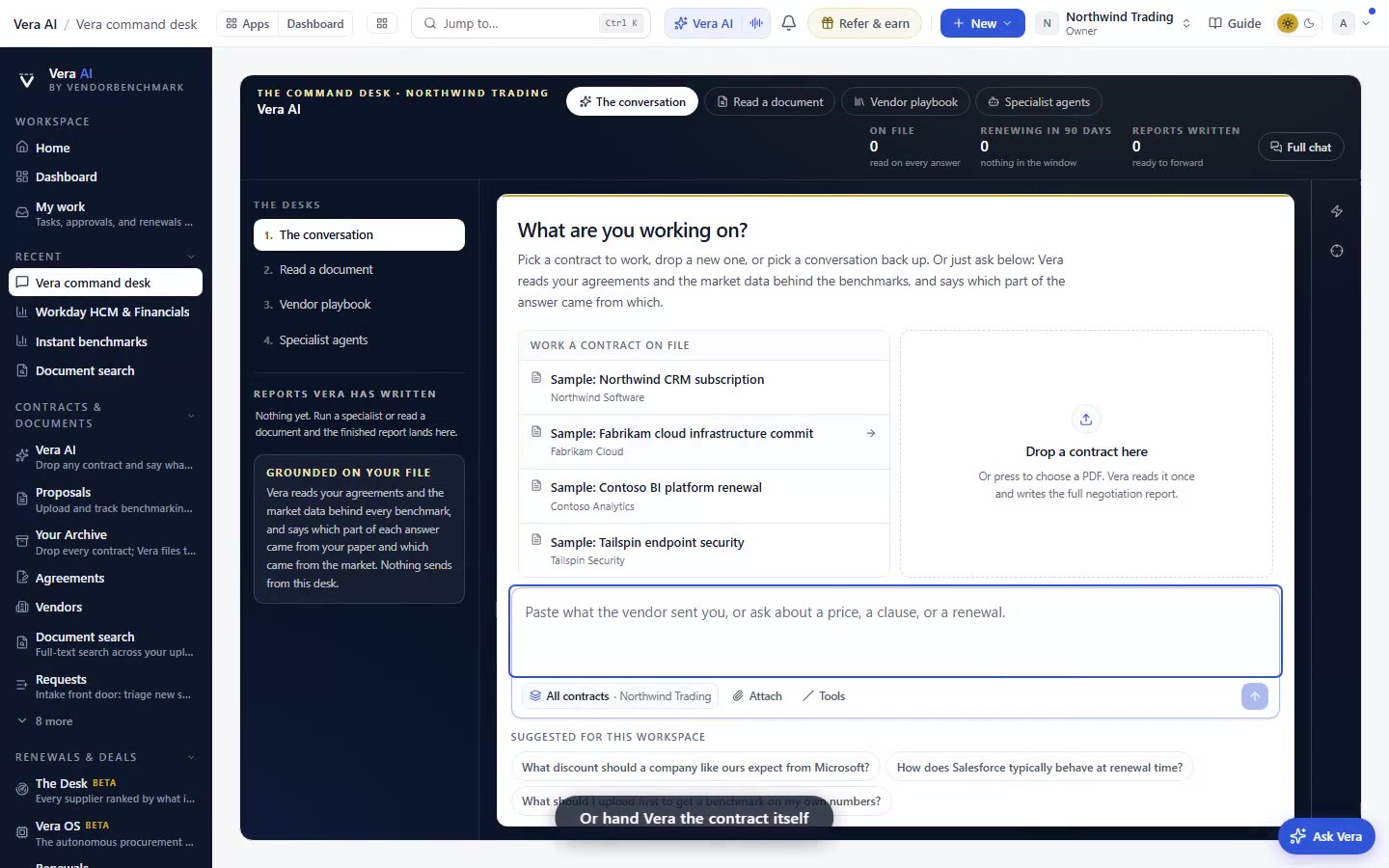
The fix has to happen upstream, because you cannot retrofit a success metric onto a renewal and have it mean anything. The moment to define how a purchase will be judged is the moment it is requested. Vera captures a measurable success definition at intake. When a request comes in, Vera does not just record the tool and the budget. It asks for the outcome: what metric moves, from what baseline, to what target, by when. That sentence becomes part of the contract record, not a note in someone's inbox.

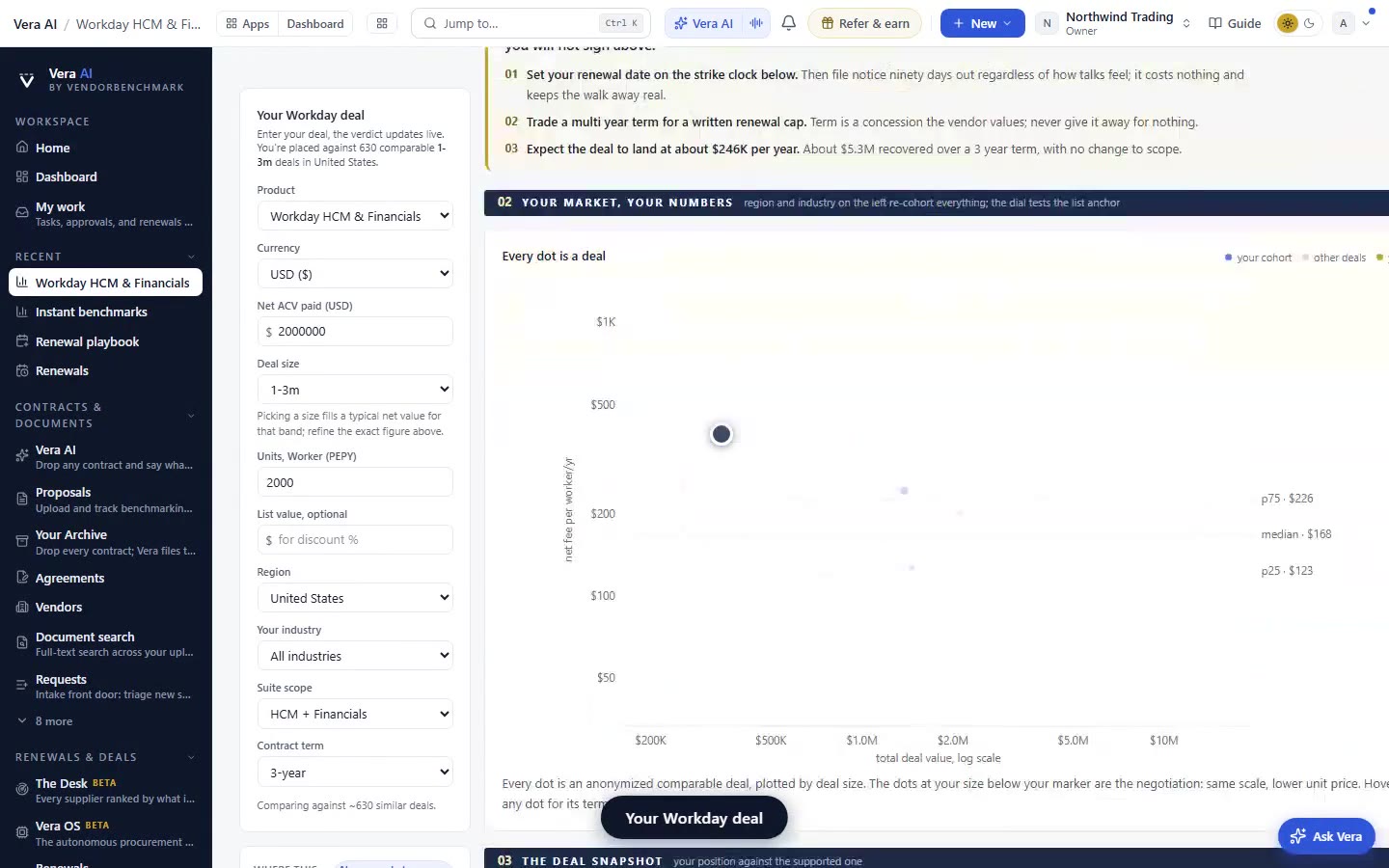
From there the tracking is automatic. Spend data flows against the stated definition across the term, so at renewal you are not reconstructing anything. The contract record already holds the target and the actual, side by side with the money spent. This is the same intake discipline behind turning any contract into a project: the decision is made once, captured cleanly, and carried forward so the renewal conversation starts from evidence rather than folklore. Six specialist agents and ninety nine background jobs keep the spend and usage picture current between now and the renewal date, so the yardstick and the spend never drift out of sync.
What the evidence lets you actually do
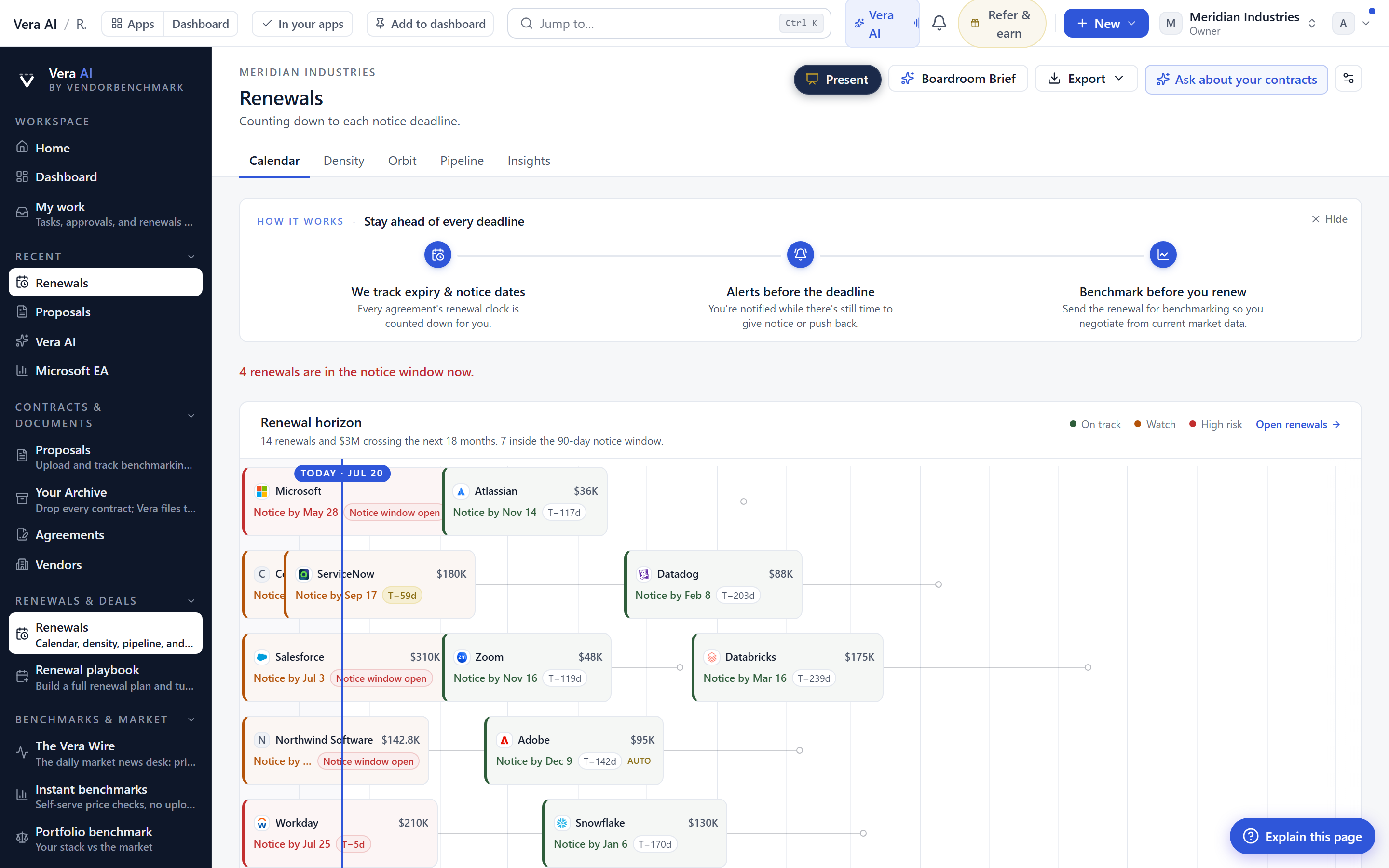
With a captured metric and tracked spend, the renewal splits cleanly into three cases, and each one gives you a stronger position than habit ever did. If the metric was met, you renew, and you renew knowing precisely what you are paying for, which is the best footing for pressing on price against 1,471 vendors. If the metric was missed, you have a documented, non-emotional reason to renegotiate scope, cut seats, or walk. And if the metric was never realistic, you have learned something about your own intake that improves the next request.
Honest limits: what this does not solve
Be clear about the boundary. Capturing a success metric at intake does not make a bad metric good. If your team defines success as a vanity number that was always going to rise on its own, tracking it faithfully will produce a confident renewal for a tool that did nothing. The platform captures and tracks whatever definition you give it. Choosing a metric that genuinely reflects the outcome is judgement, and judgement is still yours.
Nor does it settle attribution. If a metric moved, the platform will show you that it moved and what you spent to move it. It will not prove the tool caused the movement rather than a market tailwind or another initiative running in parallel. That inference remains a human argument, though a metric plus tracked spend is a far stronger place to argue from than a usage report. And measurement will not, on its own, price the cost of leaving. For that you still need to read the switching costs before the vendor prices them for you. What the platform removes is the specific failure named at the top: the renewal argued on habit because the request never said how the purchase would be judged. Fix that, and every other conversation gets honest.
Fredrik has spent more than twenty years in enterprise software, with time at Oracle, IBM, SAP, and Salesforce before moving to the buy side. He structured and priced the kind of large agreements most buyers only see once or twice in a career, which taught him where the leverage sits and how far a vendor will actually move. He started VendorBenchmark to hand that knowledge to every sourcing team.