Index your backlog with Vera, and turn any contract into a project
The reading pipeline that fills in vendors, terms, and lifecycle judgments on intake now runs on documents you filed before it existed. And a contract you are reading no longer dead-ends.
Every procurement team runs two archives. One is the set of documents that arrived after you turned on structured intake, clean records with vendors, terms, values, and a lifecycle judgment already attached. The other is the older, larger pile: contracts scanned and dropped into folders in the years before any of that existed. The second pile is where the surprises live. A renewal fires from a paper nobody read closely, an auto-renew window closes on a tool three people forgot you owned, a co-term clause quietly extends a commitment. The backlog is not neutral storage. It is unpriced risk, and until now the only way to price it was to open documents one at a time.
This update closes that gap in two directions. The archive now works backwards as well as forwards, so the same reading that runs on intake can be pointed at anything you have already filed. And a contract you happen to be reading is no longer a dead end. You can turn it into a renewal project or hand it to Vera without leaving the page.
The named problem: your archive was write-only
For most teams the archive has been a place documents go, not a place decisions come from. You could store a contract, search for it by filename, and open it. What you could not do was ask the archive what it contained across the whole estate, because the older records were never read into structure. They had no extracted term, no renewal date, no value, no verdict on the clauses that matter. So the archive answered the question "where is the file" but never "what is in the file, and does it expose us."
That asymmetry is expensive. It means the quality of your renewal calendar depends entirely on when you started scanning, and everything older is a blind spot you patch by hand under deadline pressure. The duplicate tools and shadow spend that hide in old folders stay hidden, because nothing has read them into a form you can compare.
Index with Vera, at three scopes
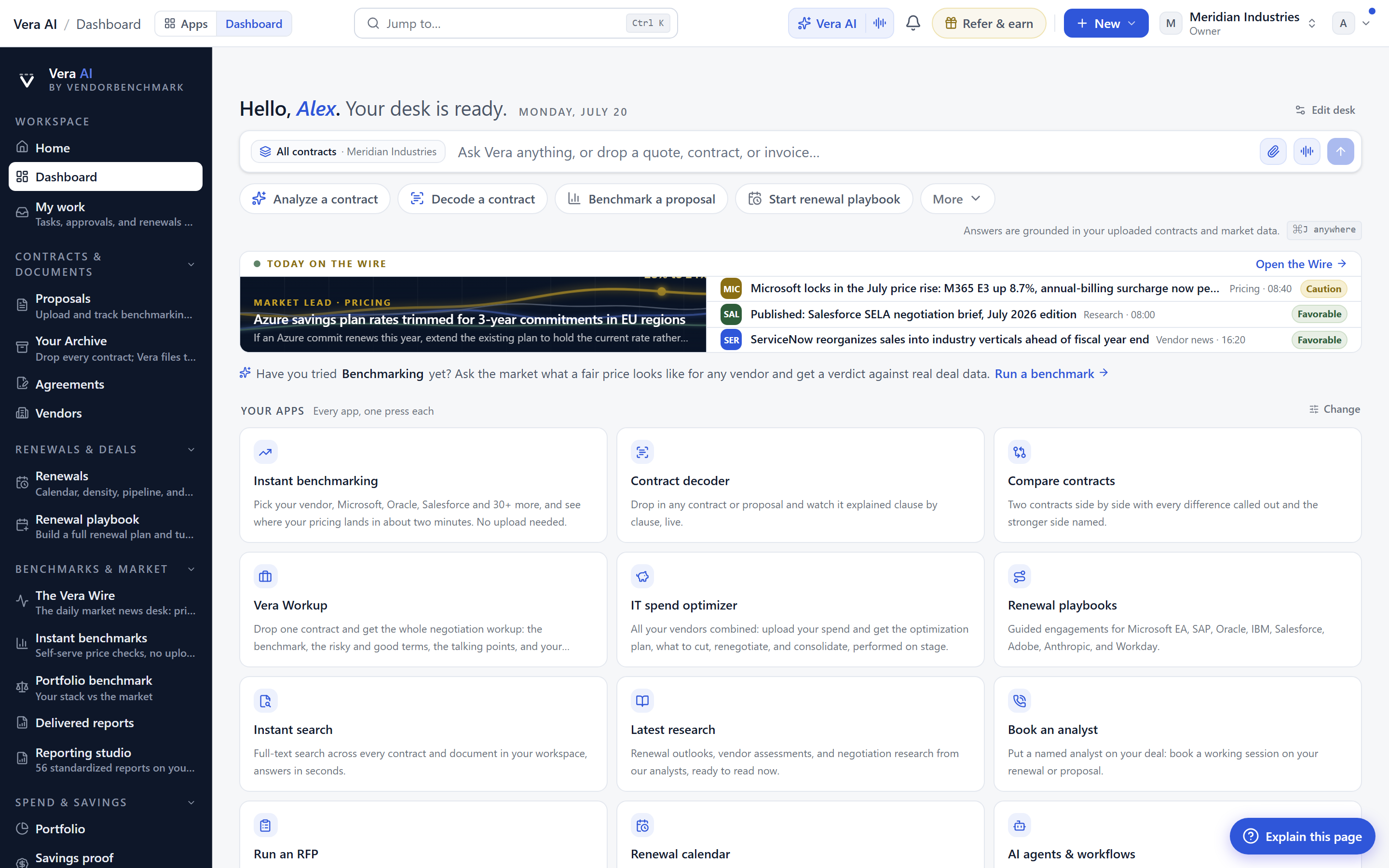
The mechanism is deliberately plain. On the Document Desk you will see an Index with Vera action at three levels. You can run it on the whole archive, on a single vendor folder, or on one paper you are looking at. You press it, you confirm the scope, and the same reading pipeline that intake uses does the work: it identifies the vendor, extracts the terms, reads the values, and forms the lifecycle judgment that decides whether a contract is active, expiring, or already past a decision point.
The important word is same. This is not a lighter, second-class reader for old documents. Backlog records that come through indexing land in the identical shape as records that arrived through intake, which means they join your renewal calendar, your spend view, and your review tables without a separate reconciliation step. A contract read this way is as queryable as one that arrived yesterday. If you want to understand what that read looks for first, our note on decoding any contract in a minute walks through the order of operations.
A contract you are reading no longer dead-ends
The second half of this update is about momentum. Until now, reading a contract and deciding it needed action meant leaving the document, going somewhere else, and rebuilding the context by hand. The document knew everything and the next tool knew nothing. Two actions close that gap directly on the paper you are reading.
Start a renewal project puts the contract on the renewal ledger and opens the renewal room, so the thing you just decided needs attention becomes a tracked piece of work in one step rather than a note to self. If you want that room to open with substance rather than a blank slate, our pieces on starting the renewal with an interview and on the room opening on the morning brief describe what fills it.
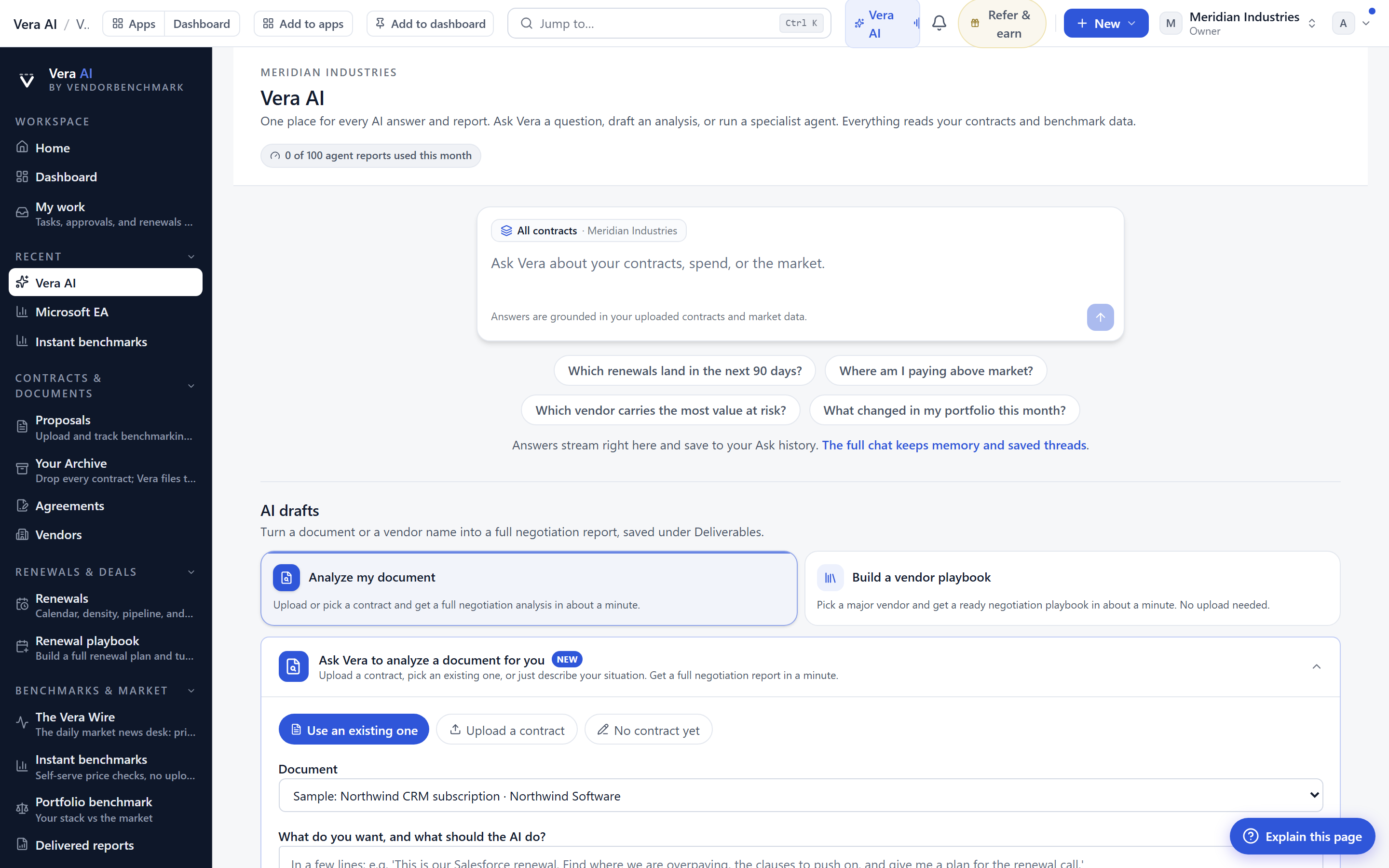
Send it to Vera AI opens the Vera door with the document already attached, so you only pick which read you want. You do not re-upload, you do not re-describe the vendor, you do not paste in a clause. The context follows the document. This is the same analyst that answers with cited figures, now reachable from inside whatever you happen to be reading.
The desk itself grew up
Two smaller changes make the reading work less friction. The Document Desk is larger and now carries PDF zoom controls, which matters more than it sounds when the term you need to confirm is in six point type in a schedule three pages deep. And folders now list documents in a tight file-manager view showing size and last updated, so you can see at a glance which folder is heavy, which papers are stale, and where the indexing effort should go first.
None of this is decorative. When you are triaging a legacy folder to decide what to index, size and last updated are the fields that tell you where the risk concentrates. A folder of large, recently touched documents is a different priority from a folder of small, untouched ones. The view now lets you make that call before you spend the reading budget.
Honest limits
This is a reading pipeline, not a source of ground truth, and the distinction matters most on old documents. A lifecycle judgment on a legacy contract is only as reliable as the paper itself. If a signed amendment was never filed, the read cannot know the term was extended. If a document is a scan of a scan, extraction quality drops and you should treat the values as a first pass to confirm, not a fact to act on. Index with Vera surfaces what the archive contains. It does not certify that the archive is complete.
Two more boundaries worth stating plainly. First, indexing the whole archive is a large job and it costs reading budget, which is why the three scopes exist. Point it at the folders where risk concentrates rather than running everything on day one. Second, Send it to Vera attaches the document you are reading, not the entire vendor relationship. For a full picture across an account you still assemble the vendor context deliberately, the way our note on answering the CFO in one page describes. The read is fast. The judgment is still yours.
What this update does not change is the discipline. A backlog that has been indexed is a backlog you can finally interrogate, but the interrogation is the point. Index the folders, read the surfaced records, and start the projects on the contracts that are inside their window. The archive working backwards is only useful if you then move forwards.
Fredrik has spent more than twenty years in enterprise software, with time at Oracle, IBM, SAP, and Salesforce before moving to the buy side. He structured and priced the kind of large agreements most buyers only see once or twice in a career, which taught him where the leverage sits and how far a vendor will actually move. He started VendorBenchmark to hand that knowledge to every sourcing team.


