Everything is urgent, so nothing is: the intake flag that hands the deal to the vendor calendar
Fake urgency at intake strips procurement of the one thing a proper process needs, which is time. Here is how to separate the real deadlines from the manufactured ones.
Open your intake queue and read the priority column. If you are like most desks, it says the same thing on every row. High. High. Urgent. High. The request to replace an expiring analytics suite that lapses in nine days sits at the same priority as the request to trial a note-taking tool that has no deadline at all, only a stakeholder who wants it now. You cannot tell them apart from the flag, so you triage by whoever emailed you last or shouted loudest. Somewhere in that queue is a genuine deadline you are about to miss, and three invented ones you are about to serve.
This is the quiet failure that runs a whole quarter. When every intake reads urgent, the priority field carries no information. And when priority carries no information, the calendar takes over. The deal gets driven by whichever date is loudest, not by the requirement underneath it. That is precisely the condition a vendor timeline is built to exploit.
Why every intake arrives flagged urgent
Urgency at intake is almost never a lie. It is a rational move by the person filing the request. A requester who marks their ticket normal watches it sit. A requester who marks it high gets a call back this week. So everyone marks high, and the signal collapses, in exactly the way a shortlist collapses when every requirement is tagged mandatory. The mechanism is identical. When there is no cost to claiming the top tier, everyone claims it, and the tier stops meaning anything.
There is a second source, and it is external. Some urgency is imported directly from the vendor. A price expires at month end. A discount is only available if you sign before the quarter closes. A renewal quote lands with a fourteen day window printed on it. The requester forwards this to procurement and the vendor's clock becomes your clock. The vendor's calendar is a timing desk, and a manufactured deadline dropped into your intake is one of its cleanest instruments. It looks like a real constraint because it has a date on it. It is a real constraint only for the vendor's quota, not for your requirement.
What fake urgency actually removes
The damage is not that you rush one deal. The damage is that you lose the ability to run a process at all. A proper sourcing process has stages that take real time. Benchmark the price. Test the requirement against alternatives. Read the contract. Route the sign-off chain. Each stage exists to protect the buyer, and each stage can be compressed to zero by a deadline that feels non-negotiable.
When the calendar drives the deal, you skip the benchmark because there is no time to pull one. You skip the alternatives because evaluation takes weeks you have been told you do not have. You accept the discount off list because the countdown makes any number look like a win. Every one of these skips is a transfer of leverage from your side of the table to theirs. Fake urgency is not a scheduling problem. It is the removal of process, and the removal of process is the whole point of the vendor timeline.
Separating the real deadline from the invented one
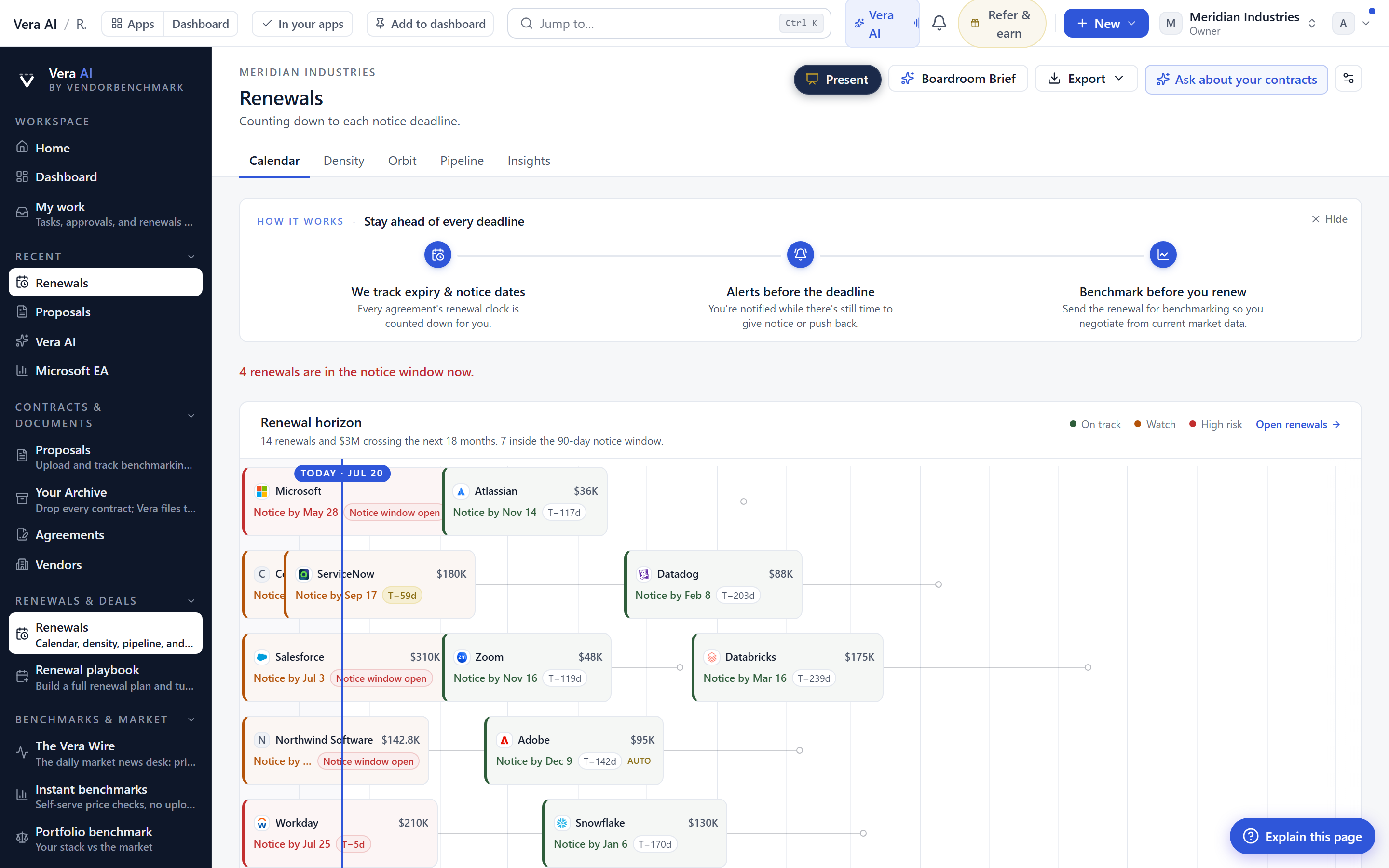
The fix is not to distrust every requester. It is to give the priority field something real to check against. A genuine renewal deadline is a fact recorded in a contract. It has an expiry date, a notice period, and an auto-renewal clause with a real cutoff. A manufactured deadline is a date printed on a quote. The two are trivial to tell apart once you put them next to the estate, and impossible to tell apart when all you have is a flag.
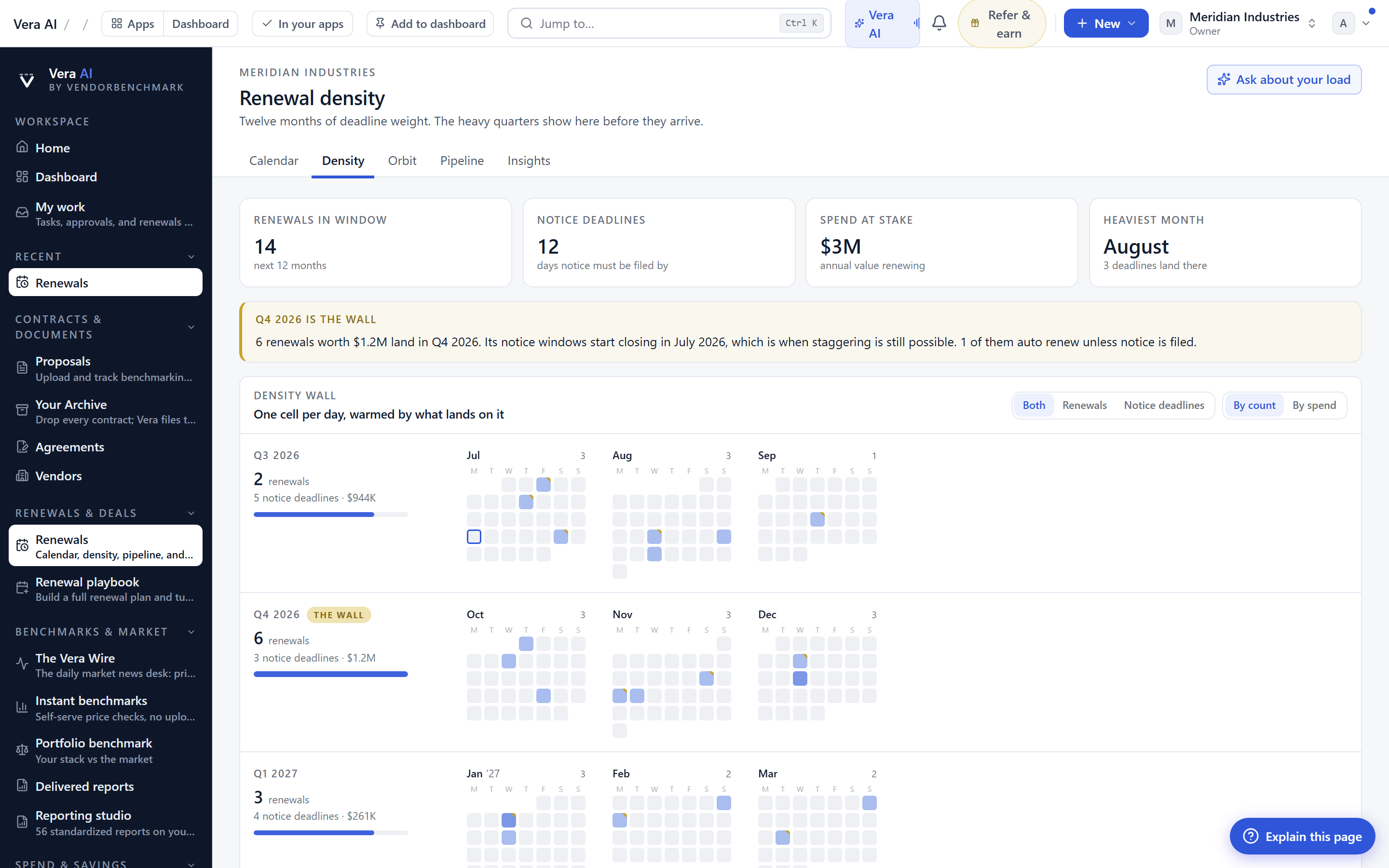
This is what the renewal calendar and intake triage do together. The calendar holds every genuine expiry across the portfolio, so a real deadline is already on the timeline before the requester ever files. When a new intake arrives claiming urgency, triage checks the claim against that calendar and against the contract record. If the date is real, the process starts with the right lead time. If the date came from a vendor quote, it is tagged as external pressure and the process length is set by the requirement instead. This is the same discipline as watching the vendor fiscal calendar. You do not ignore their clock, you just stop mistaking it for yours.
What runs underneath the triage
Triage is only credible if it has evidence behind the sequencing decision. When a request is deprioritised, the requester will push back, and the answer cannot be a shrug. It has to be the contract, the expiry, and the benchmark. That is why the calendar sits alongside the benchmarking library and the contract records rather than as a standalone list. Six specialist agents and ninety nine background jobs keep the estate current, so the expiry date you triage against today reflects the contract as it stands, not a snapshot from onboarding.
It also changes what happens when a request arrives already carrying a vendor's deadline. Instead of inheriting that clock, you can benchmark the number the same week and see whether the discount tied to the deadline is real or theatre. If the price is at market with or without the countdown, the deadline was decoration. This is the same reflex as refusing to inherit a decision when the intake ticket already names the vendor. You slow the request down to the speed of the requirement, and the requirement almost never moves as fast as the quote says it must.
What this does not solve
Be honest about the limits. Triage separates real deadlines from invented ones. It does not stop a genuine deadline from being genuinely tight. If a contract auto-renews in eight days and nobody logged it, the calendar will show you the eight days, not give you back the eight weeks you should have had. The calendar surfaces the truth. It cannot rewrite it.
It also does not settle the internal politics. A senior stakeholder who wants a tool now will still want it now after triage tags the request as no real deadline. The platform hands you the evidence for that conversation, but you still have to have it. And triage cannot prevent a requester from creating a real deadline by stalling, then arriving late with a genuine clock. The discipline reduces manufactured urgency. It does not manufacture time that was already spent. What it does, reliably, is stop the calendar from running the deal when the requirement should. That alone changes the shape of every renewal that follows.
Want to be updated when major licensing and pricing changes land? One analyst brief a week: the price rises, metric changes and audit campaigns that move software costs. Work email only.
Morten brings two decades of enterprise and software procurement, with stints across Oracle, IBM, SAP, and Salesforce shaping how he reads a deal. He has led sourcing through hundreds of renewals, from mid market order forms to nine figure global agreements, and learned that the buyers who win are the ones who walk in knowing the market. He built VendorBenchmark to make that pattern recognition repeatable.