The 99 background jobs that run while procurement sleeps.
Procurement is a monitoring job disguised as a negotiation job. The negotiating takes days a year. The watching, renewals, invoices, price lists, vendor news, usage drift, takes every week of it, and it is exactly the work nobody has time for. So the platform does it around the clock, and starts your Monday with what changed.
Ask a procurement leader what their job is and they will describe the negotiations: the renewals fought, the terms won, the savings landed. Ask where the time goes and a different job appears. Checking whether any of 300 vendors quietly raised a list price. Reconciling invoices against contracts. Noticing that a renewal's notice window opens in six weeks. Reading vendor news for the account that matters. Spotting that usage of an expensive tool has been sliding for two quarters.
None of these tasks is hard. What they have in common is worse than hard: each is easy, endless, and catastrophic to skip. A missed notice window locks a year of uplift. An unreconciled invoice pays for licenses that were never delivered. A price list change you saw in week one is a negotiating point, and the same change discovered at renewal is a done deal. The failure mode of manual monitoring is not doing it badly. It is not doing it, because there was a negotiation on this week.
This is the most obviously automatable work in the discipline, and it is where the platform puts its 99 background jobs.
Four kinds of watching, running on a schedule
Deadline watch. Every renewal and notice window on the calendar, counted down daily, with alerts that escalate as the one way doors approach. The renewal you forgot stops being a category of loss.
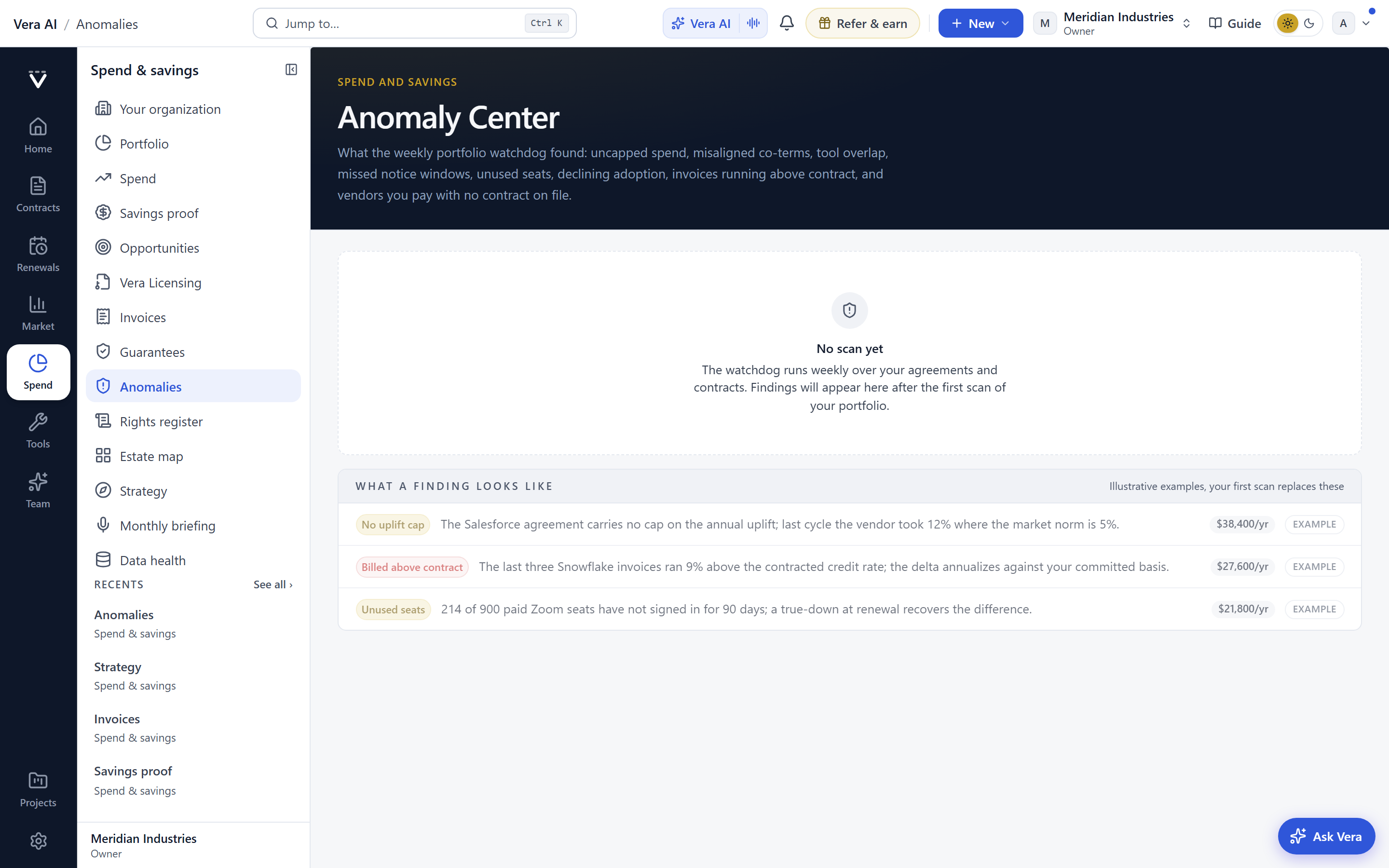
Money watch. Invoices checked against entitlements and contracted rates as they arrive, spend leakage and off-contract items flagged, and uplift caps enforced against what the vendor actually billed. The weekly anomaly watchdog goes further and hunts the structural leaks: uncapped uplifts, misaligned co-terms, overlapping tools, shelfware, and shadow spend.
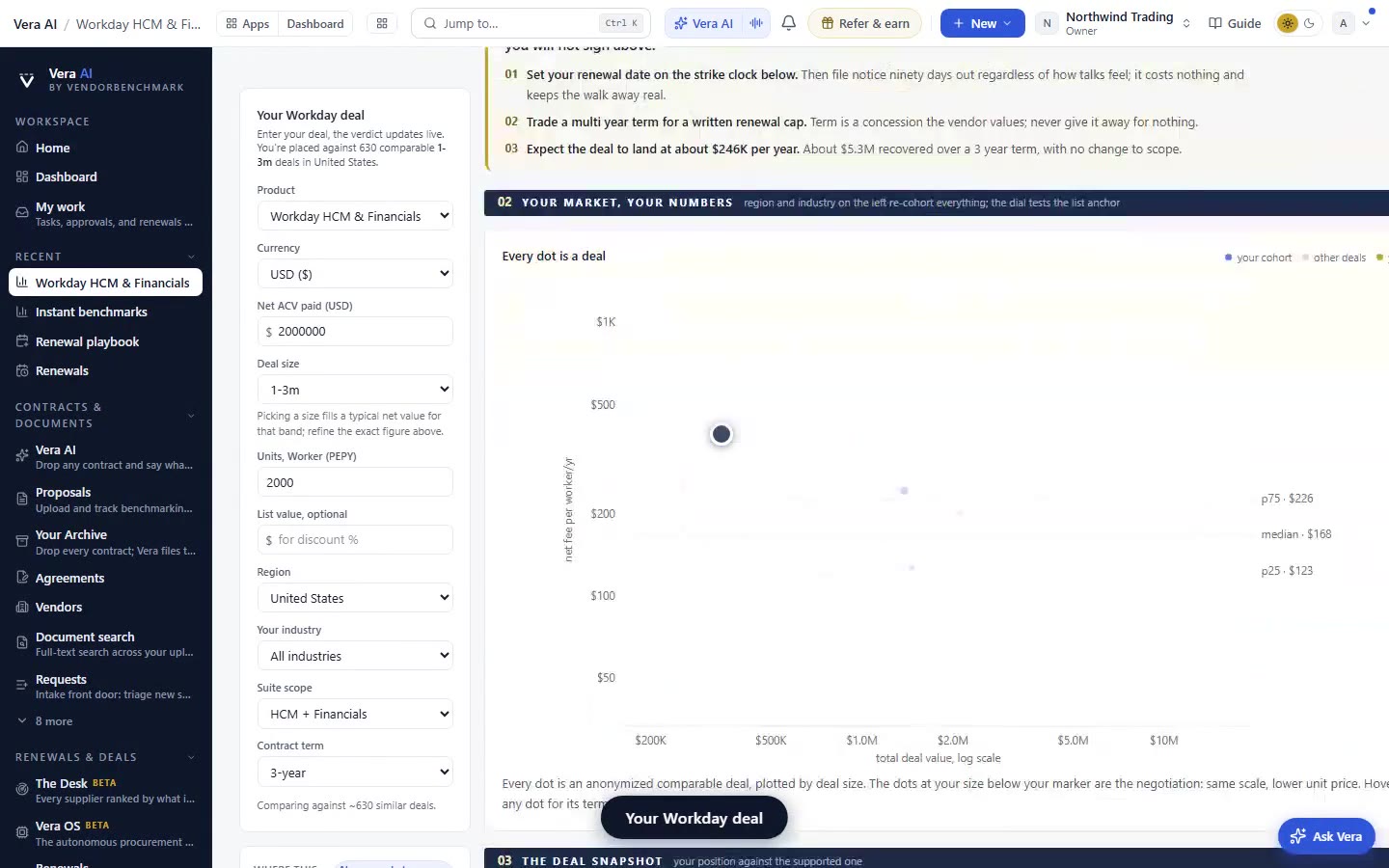
Market watch. Vendor published price lists diffed on every refresh and priced at your seat counts, benchmark alerts when the market moves against a position you saved, and the weekly vendor report tracking news, pricing moves, and ecosystem shifts for the vendors you follow.
Hygiene watch. The unglamorous scans that keep the estate honest: contracts missing owners, renewals nobody is assigned to, documents that failed extraction, and data that has drifted out of date. Boring, and the reason everything else can be trusted.
Want to be updated when major licensing and pricing changes land? One analyst brief a week: the price rises, metric changes and audit campaigns that move software costs. Work email only.
Thirty jobs, one briefing
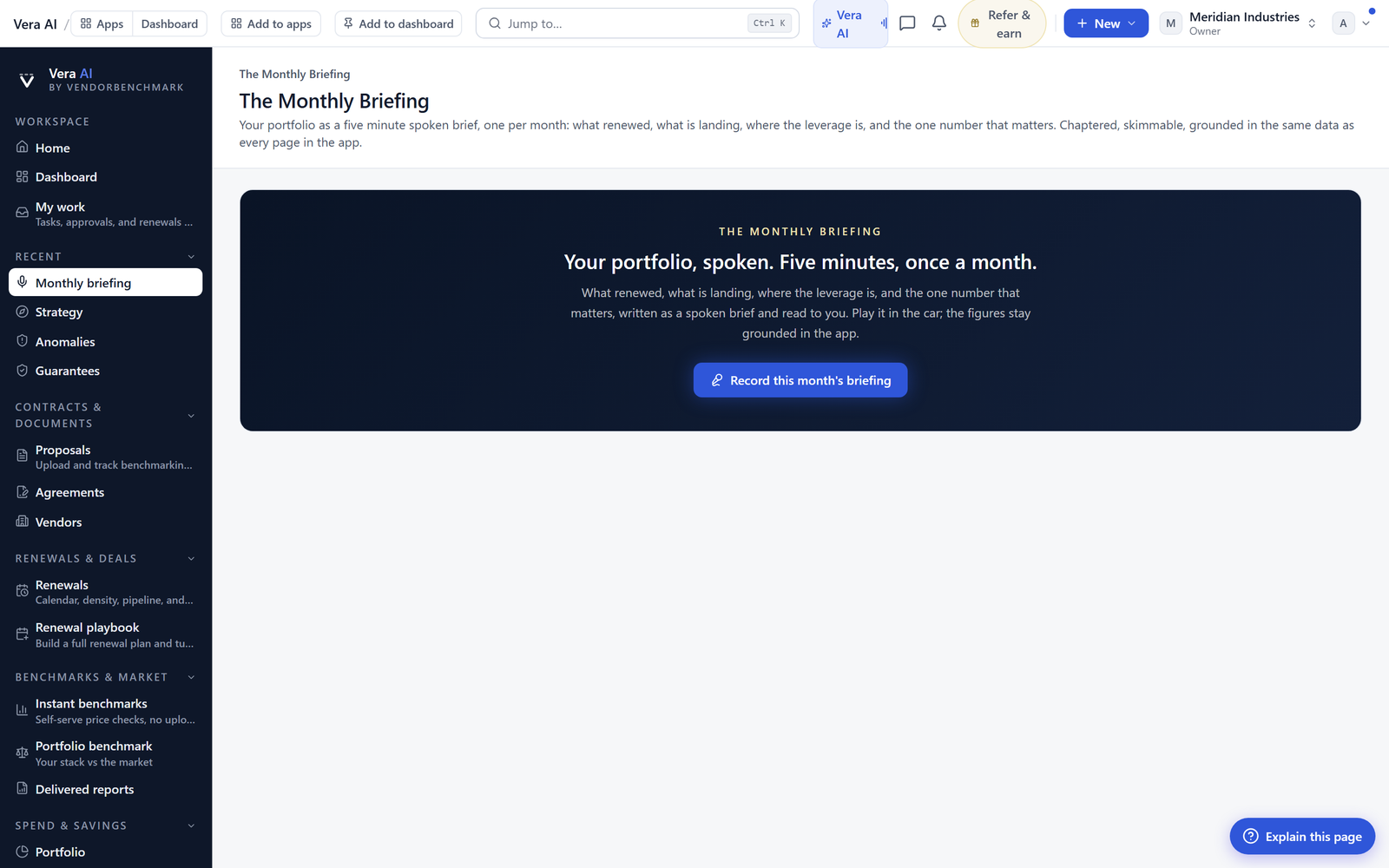
Thirty watchers producing thirty streams of alerts would just relocate the problem from "nobody watched" to "nobody read." So the output converges. The Monday morning briefing opens the week with what actually changed: the renewals entering their decision window, the invoices that stopped matching, the price lists that moved and what your exposure is, and the vendor news that affects an account you own. Five minutes, prioritized, with each item linking straight into the screen where you act on it.
Urgent findings do not wait for Monday. A notice window about to close or an invoice materially off contract interrupts, by email, by Slack or Teams if connected, at the moment it is found. Everything else queues for the briefing, because an alert that can wait until Monday should.
The thirty-first job is whatever you build
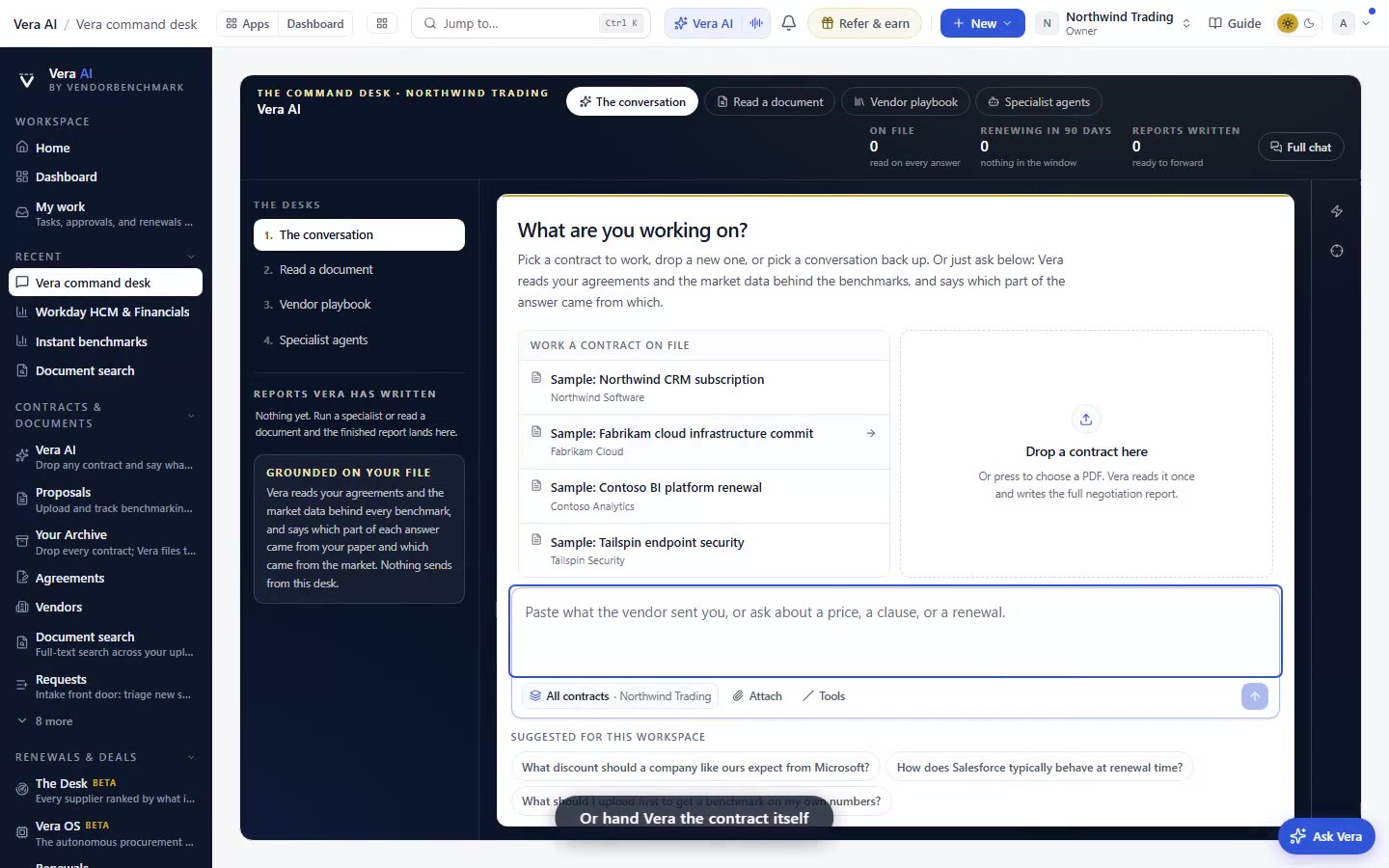
The built-in jobs cover what every procurement desk needs. The workflow builder covers what only yours does. Anyone can chain a no-code automation from seven triggers and ten step types: screen every uploaded contract for risky terms, send a weekly renewal radar to the team channel, or route every intake request through an AI triage before a human sees it. Forty four templates ship ready to switch on, and up to six custom agents can carry org-specific instructions, so the watching reflects your policies, not just our defaults.
The division of labor is the point, and it is the same one that runs through everything we build. Machines are better at never forgetting to check. People are better at deciding what the finding means. A desk where humans do the watching wastes its people. A desk where nobody does the watching pays for it at renewal, with interest. The 30 jobs exist so that neither happens, and so the week starts with answers instead of a backlog of questions.
Fredrik has spent more than twenty years in enterprise software, with time at Oracle, IBM, SAP, and Salesforce before moving to the buy side. He structured and priced the kind of large agreements most buyers only see once or twice in a career, which taught him where the leverage sits and how far a vendor will actually move. He started VendorBenchmark to hand that knowledge to every sourcing team.
The week in enterprise software buying, in one email.
What shipped on the platform, and the pricing and licensing moves worth knowing before your next renewal. One email a week, to your work address. Unsubscribe any time.