The curve library now prices the AI coding tools, the category that reprices under you
We shipped benchmark coverage for the AI coding category, where metering changes mid subscription and the protection clauses are worth more than the discount. Here is what changes for a buyer.
You saved a benchmark for Cursor in May. In June the flat plan became API rate credits and the number you took to your CFO stopped meaning what it meant. This is the problem with the AI coding category. It is not that the tools are expensive, it is that the meter moves faster than the paper. A rate you agreed in the spring can be repriced under a metering change in the summer without anyone renegotiating a contract. We have shipped six benchmark documents covering Cursor, Windsurf, GitHub Copilot, Replit, v0 by Vercel and Lovable, and the shared finding across all six is the same. In this category the protection clauses are worth more than the rate, and every benchmark page now says exactly which ones you need.
The named problem, the meter moves faster than the paper
Most software categories reprice on renewal. You know the date, you prepare, you negotiate the uplift. The AI coding category does not respect that rhythm. Cursor flipped its flat plan to API rate credits mid subscription in June 2025. Windsurf changed its metering four times in sixteen months, under three different owners. GitHub added its meter twice. None of these are renewals in the traditional sense. They are the vendor changing the definition of a unit while your subscription runs, which means the effective price you pay drifts even when the headline rate on your order form is frozen. If you benchmark on rate alone here, you are measuring the wrong thing. This is why what the vendor quietly changed matters more in this category than in almost any other.
Where the discount actually lives, route by route
The six curves do not behave alike, and the benchmark pages say so plainly. Cursor and Windsurf are thin, young vendor curves. They move on rival quotes, so a documented competing offer is the lever. GitHub Copilot is different, the purchasing route decides almost everything. Standalone you are looking at roughly 8 percent as an example of the documented range, but the same tool bought through an Enterprise Agreement with Azure MACC linkage moves into the 23 to 28 percent band. On the GitHub Copilot benchmark we lay out both routes side by side so you can see which door you are walking through before you negotiate rate at all. Replit is negotiated on caps and ceilings rather than unit price, because the effort meter simply cannot be forecast. v0 by Vercel shows a documented bundle discount of 15 to 20 percent off the combined Vercel bill. Lovable carries a 17 percent documented average, which we frame as the floor a prepared buyer beats, not the target.
Why the clauses now sit on every page
When the meter can change mid term, the discount you negotiate is only as durable as the clause that protects the unit definition. That is the shift these benchmarks encode. Each page now lists the specific protection clauses that matter for that vendor, a metering change cap, a price hold on existing units, a right to remain on the prior meter for the term, a ceiling on effort based billing. This is the practical version of the argument in negotiating the uplift, applied to a category where the uplift can arrive without a renewal. The rate tells you where you land today. The clause tells you whether you are still there in ninety days.
How it fits the workflow you already run
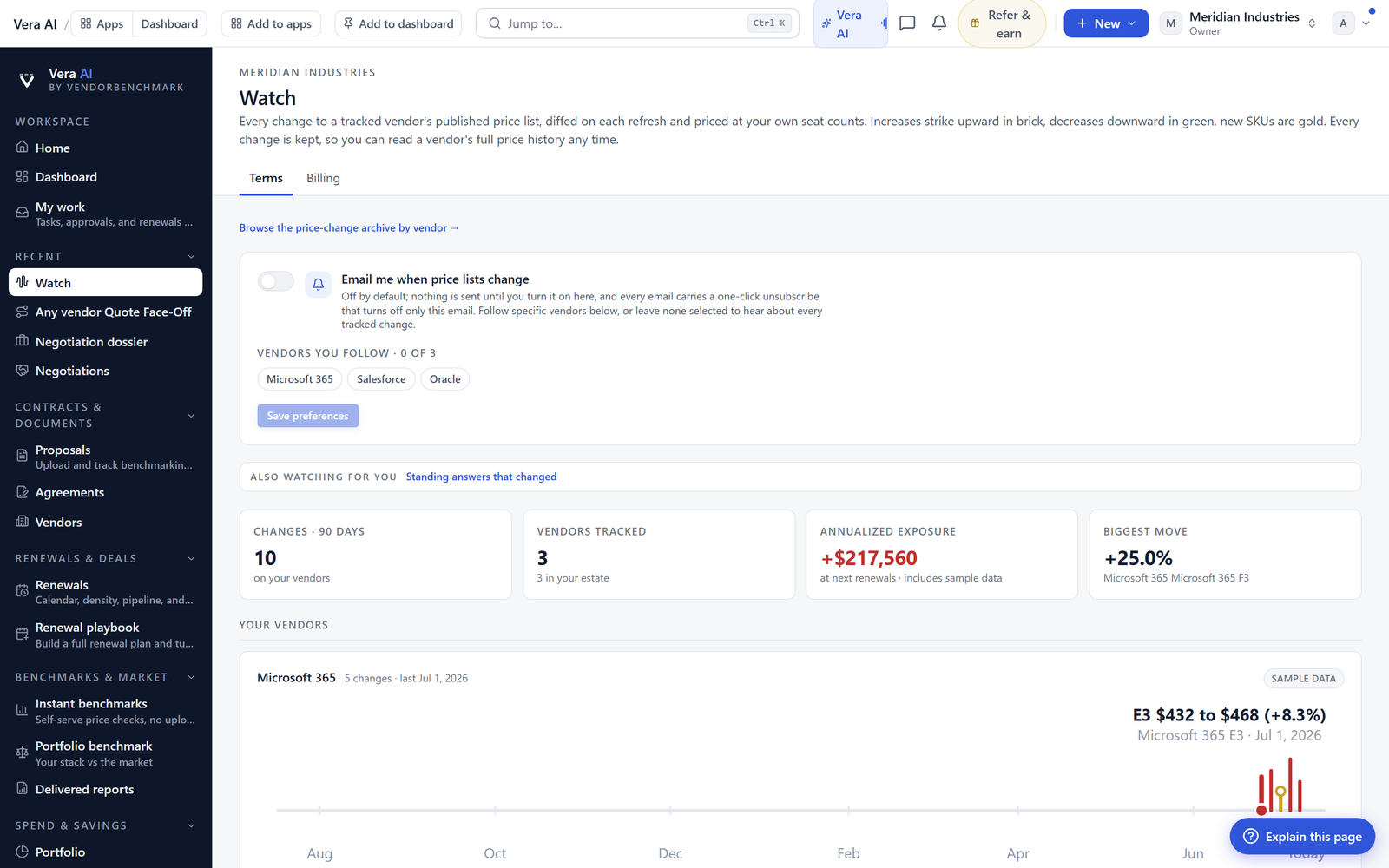
You do not have to change how you work. The six benchmarks sit in the same library as the other 520, so they show up when you search the vendor, when you build a dossier, and when a saved deal is affected by a change. If you have a Cursor or Windsurf agreement saved, a metering change now triggers an alert rather than surprising you at the invoice, which is the same mechanism described in benchmark alerts. The clause positions flow into the negotiation brief, and the peer outcomes flow from the same modelled cohorts that back the rest of the category work. Nothing here is a separate module. It is the category getting the same treatment as everything else, with the meter risk made explicit.
The honest limits
Two things you should know before you lean on these pages. First, these are young vendors in a fast moving category, and thin curves are exactly that, thin. The Cursor and Windsurf documented ranges rest on fewer comparable deals than a mature category like infrastructure, so treat the numbers as directional and let the clause guidance do the heavier work. We are transparent about how freshness beats volume here, because a slightly smaller set of recent deals in a repricing category tells you more than a larger set of stale ones. Second, we cannot predict the next metering change. We can flag it the day the price list moves and we can tell you which clause would have protected you, but we cannot promise the vendor will not invent a unit we have not seen. The value is in walking into the room having priced that risk, not in pretending the risk is gone.
If your estate touches any of these six tools, open the benchmark, read the clause list first and the curve second, and check whether a saved deal is already sitting behind a metering change. In a category that reprices under you, the buyer who negotiated the cap is the one who is still paying the rate they agreed.
Want to be updated when major licensing and pricing changes land? One analyst brief a week: the price rises, metric changes and audit campaigns that move software costs. Work email only.
Morten brings two decades of enterprise and software procurement, with stints across Oracle, IBM, SAP, and Salesforce shaping how he reads a deal. He has led sourcing through hundreds of renewals, from mid market order forms to nine figure global agreements, and learned that the buyers who win are the ones who walk in knowing the market. He built VendorBenchmark to make that pattern recognition repeatable.