The Feature Checklist That Hands Vendors the Scoring Pen
When requirements are a list of undefined features, every vendor interprets the vague ones to its own advantage. You end up scoring interpretations, not products.
Picture the response matrix from your last competitive RFP. Down the left, forty or fifty requirements, most of them one line each. Single sign on. Role based access. API access. Reporting. Across the top, four vendors, and under every requirement a column of green ticks. All four say yes to almost everything. Now try to award the points. You cannot, because a tick against API access from one vendor means a documented REST API with rate limits published, and from another it means a partner can be paid to build a connector on request. You wrote one line and got four different products answering it. The checklist did not compare anything. It gave each vendor a blank space to describe itself flatteringly, and you are now the person trying to grade essays written in four private languages.
Why the bare checklist keeps winning
A feature checklist feels like rigour. It is a list, it has boxes, it looks defensible in a procurement file. That is exactly why it persists. Nobody gets criticised for sending a thorough list of features, and the effort of writing forty crisp lines feels like the whole job is done. The failure is invisible until the responses come back, by which point the list has already left the building and every vendor has answered the version of the question that suits it.
The deeper reason is that an ambiguous requirement is not neutral. It is an option, and the vendor holds it. Write the system must support reporting and you have not specified anything the vendor has to do. You have invited the vendor to define reporting as whatever its product already does. The ambiguity does not split the difference. It always resolves in the direction of the responding party, because that party writes the answer. This is the same mechanism, pointed a different way, as the spec that already picked the winner before evaluation began. There the shaping was deliberate. Here it is accidental. The result on your desk is identical: a document that looks competitive and is not.
You are scoring interpretations, not products
Once the responses are in, the comparison problem is structural, not a matter of effort. Suppose you score every vendor a four out of five on reporting. The scores are equal, but they are measuring different things: one vendor built scheduled exports, another has a live dashboard, a third will build reports as a professional services line item you have not priced. Averaging those into one number destroys the only information that mattered, which is that the products differ. The tidy scorecard laundered the ambiguity into false precision.
It gets worse at contract time. The vague requirement becomes a vague obligation. If reporting was never defined, the vendor is not contractually bound to deliver the reporting you imagined, only the reporting it privately meant. Nine months later the report you assumed came standard is a change order. And if you later compare this year's terms to last year's, you may find the same words covering quietly narrower ground, which is the pattern we walk through in what the vendor quietly changed. The bare checklist does not just make selection harder. It plants ambiguity directly into the paper you sign.
Rewrite the line so it cannot be graded in the vendor's favour
The fix is not more requirements. It is requirements written as testable statements. A testable statement removes the vendor's option by specifying what a passing answer must contain. Not the system must support reporting but the system must let a non technical user schedule a CSV export of any standard object on a daily cadence without professional services. Now a yes has a defined shape. A vendor that cannot do it must say no, or qualify, and either way you learn something the tick would have hidden.
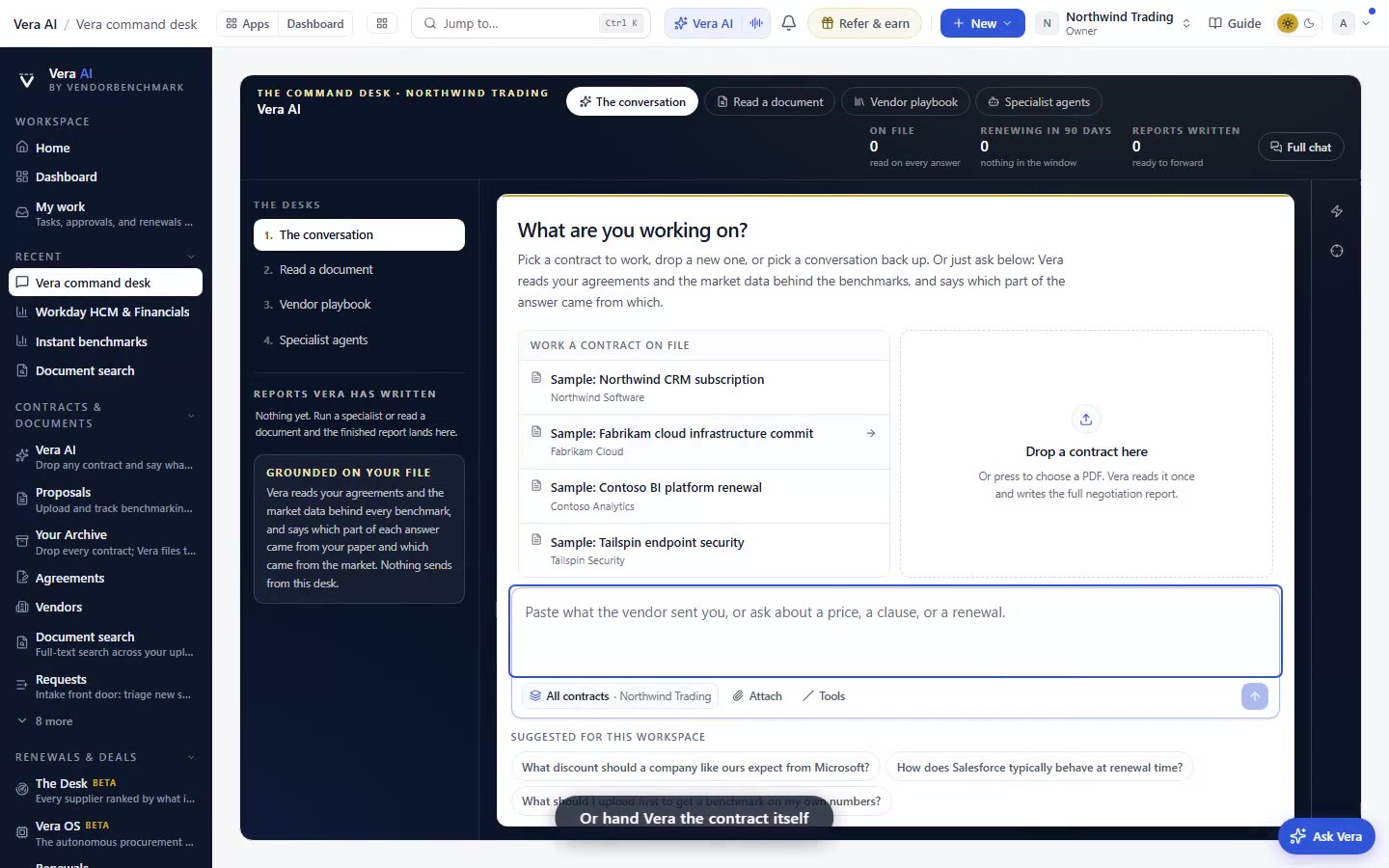
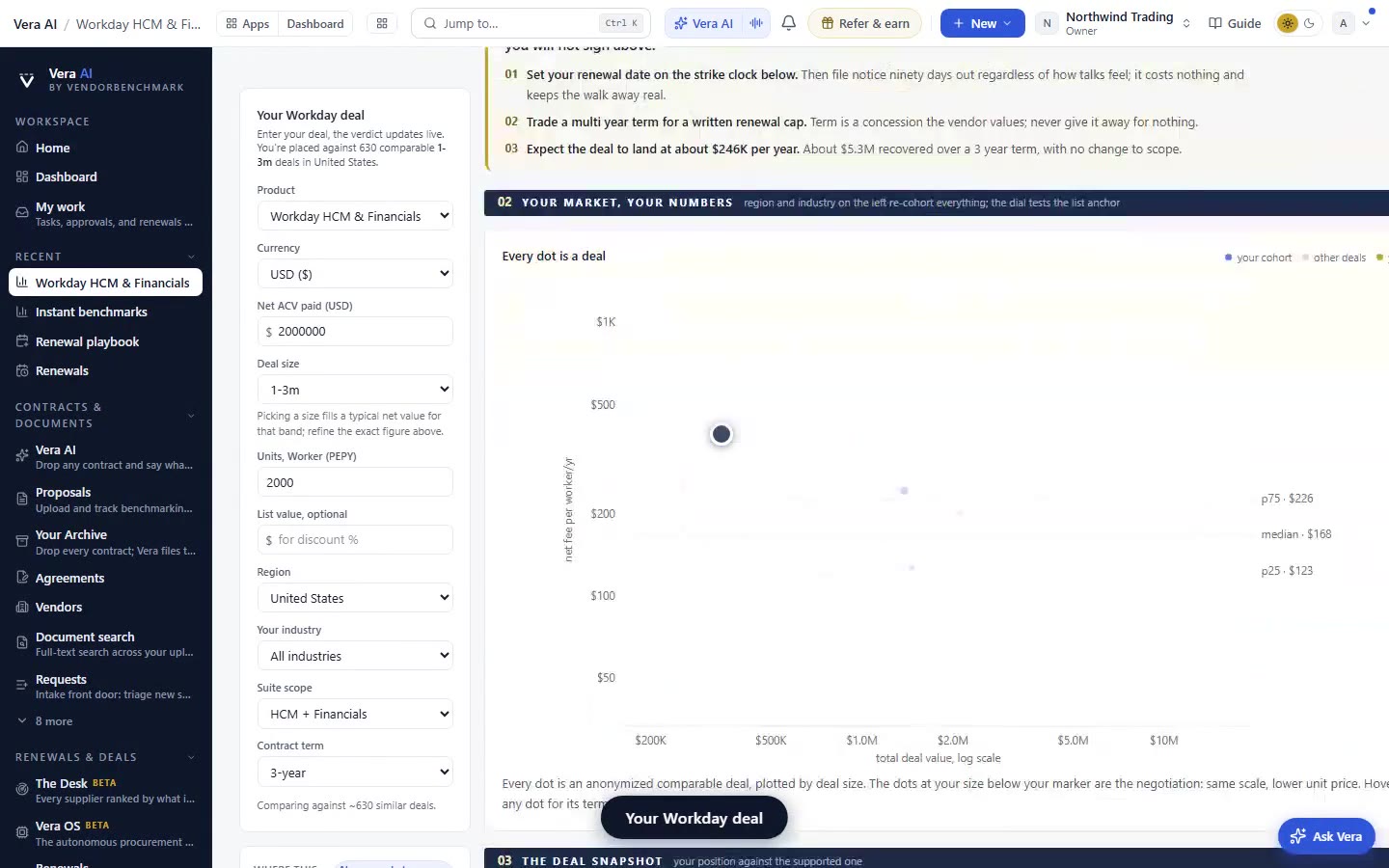
This is what Vera does before the RFP leaves the building. She reads your checklist, marks the lines that can resolve more than one way, and rewrites each into a statement with a defined pass condition. The six specialist agents cross reference your draft against how the same requirement has actually been interpreted across prior deals, so the rewrite is not guesswork, it is grounded in language that has already caused disputes. You approve or edit each one. What leaves the building is a document where a green tick means the same thing in every column, which is the only condition under which a scorecard tells you anything. It is the opposite of letting the demo write your requirements for you.
Decode the responses to see the interpretation, not the answer
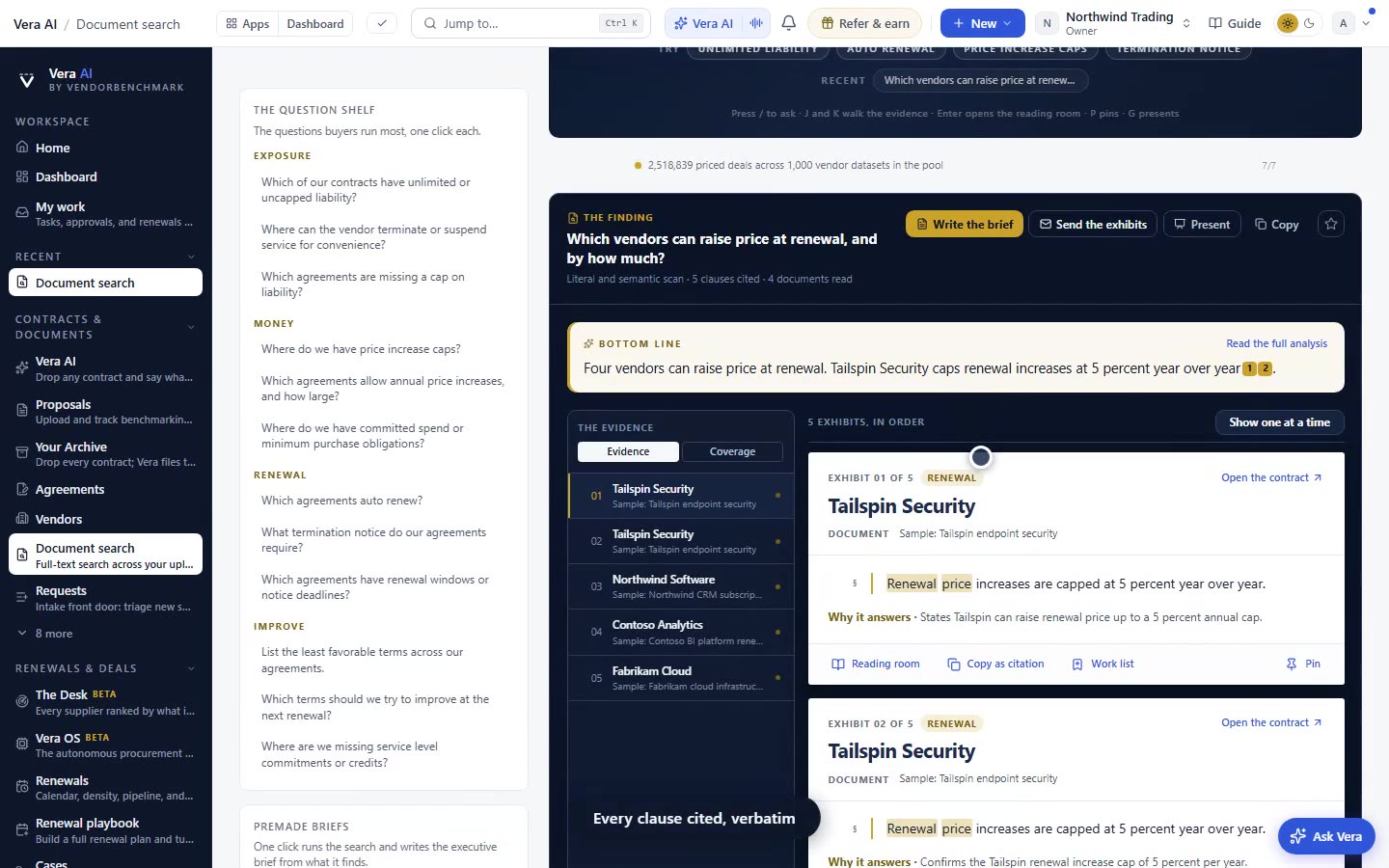
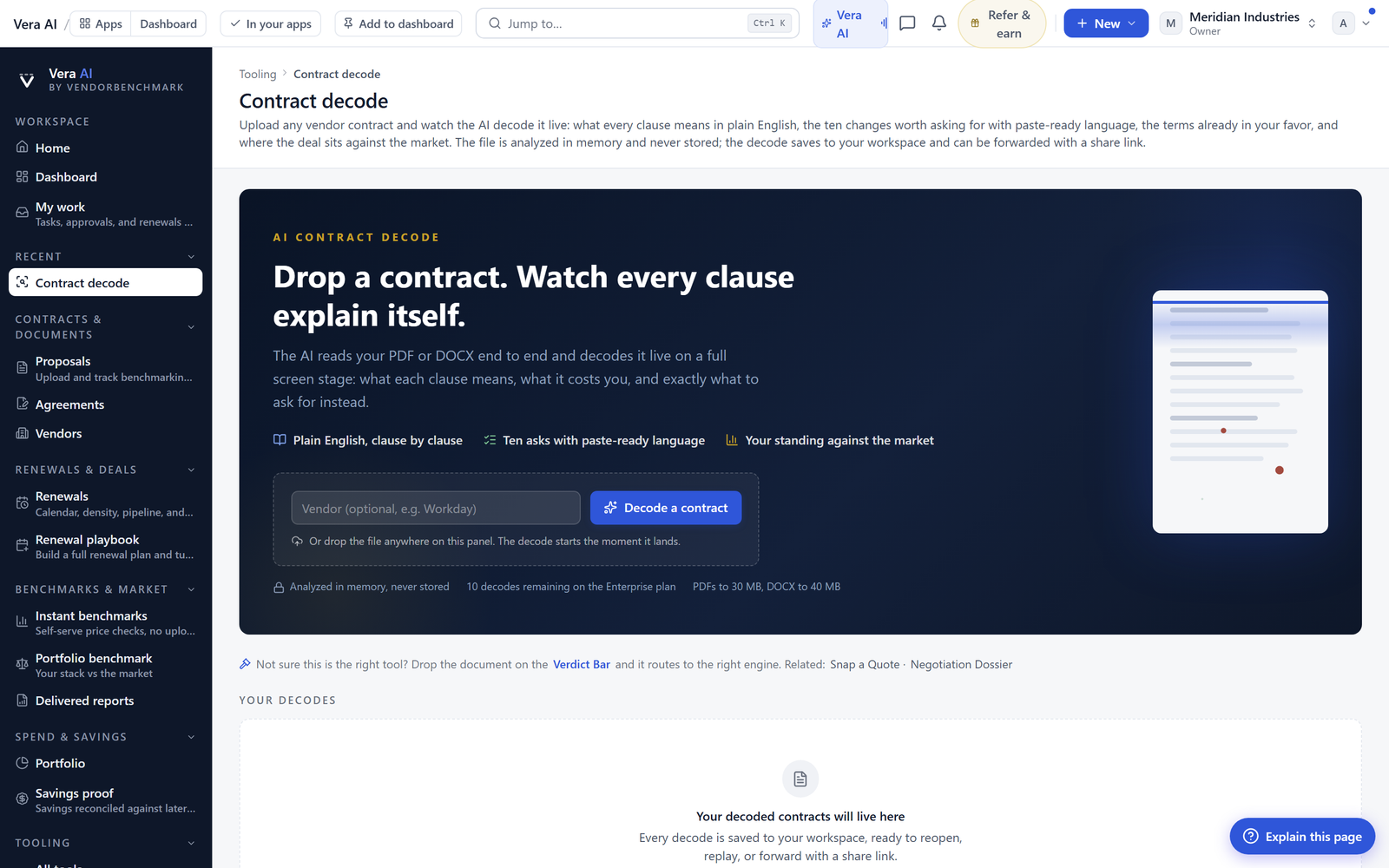
Testable statements reduce ambiguity going out. Decoding handles what comes back. When responses and eventually contracts arrive, contract and quote decoding reads each one and surfaces how that specific vendor interpreted each requirement, in its own words, pulled to the surface next to yours. Where a vendor answered a narrower question than you asked, decode shows the narrowing rather than burying it in a yes. The same engine we describe in decode any contract in a minute is pointed at the RFP response, so the comparison you build is between what vendors actually committed to, not between the tidy summaries they chose to write.
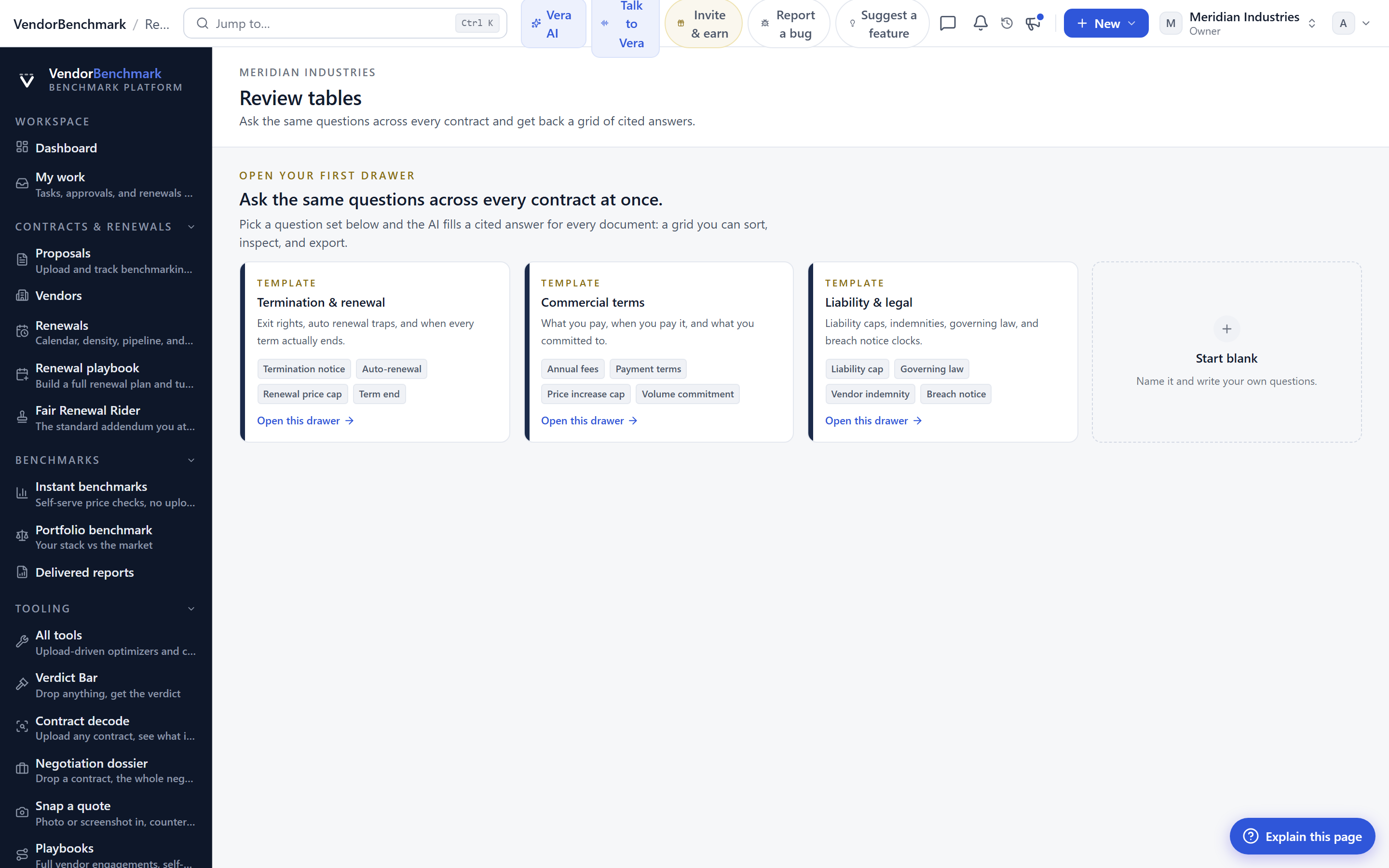
The review tables let you ask a single question across every response at once. Where does each vendor put reporting behind professional services. Which ones cap API calls. The answers land in one grid, aligned, so the divergence you would have spent two weeks discovering is visible in one screen. This is also where you catch the requirement that no single vendor can actually deliver, because the pattern of qualified yeses across every column tells you the requirement, not the market, is the problem.
What this does not solve
Testable statements make comparison honest. They do not make the decision for you. If two vendors both pass a well defined requirement, you still have to weigh which passing answer suits your estate, and that judgement is yours. Vera narrows the field to real differences. She does not rank your priorities.
Decoding also cannot see through a requirement you never thought to write. If reporting matters to you but data residency does not appear anywhere on the list, no rewrite will surface a residency gap, because there was nothing to test. The tool sharpens what you asked. It does not know what you forgot to ask, and a checklist inherited from a project whose author has already rolled off may be missing the questions only that person knew to raise. Finally, a testable statement written and then not enforced at contract is just a better sentence in a document nobody read. The value comes from carrying the defined requirement all the way into the obligation you sign, which is a discipline the platform supports but cannot perform on your behalf. What it removes is the specific failure named here: the day the responses come back and you realise the vendors, not you, decided what the questions meant.
Fredrik has spent more than twenty years in enterprise software, with time at Oracle, IBM, SAP, and Salesforce before moving to the buy side. He structured and priced the kind of large agreements most buyers only see once or twice in a career, which taught him where the leverage sits and how far a vendor will actually move. He started VendorBenchmark to hand that knowledge to every sourcing team.