Your spec was accurate the day you wrote it, and wrong within a year
When the specification anchors to a snapshot, the contract outgrows it fast, and every path out of that gap favours the vendor.
Look at the last requirement you signed off. It probably said something like 250 seats, or 2TB of storage, or 5 million API calls a month. It was accurate. It matched what the requesting team needed the week they filed the ticket. And that is exactly the problem, because you did not buy the software for that week. You bought it for the two or three years the contract will run, and nobody in the intake conversation was asked what the team looks like at the end of that term.
This is the quiet failure mode of a clean intake process. The form captures the immediate need precisely, and the precision is what makes it dangerous. A specification that anchors to a snapshot feels complete. It sails through review because there is nothing obviously wrong with it. Then usage climbs the way usage always climbs, and by month nine you are either paying overage rates you never negotiated or reopening a contract from a position of weakness. Both outcomes were priced in by the vendor before you signed.
Why the snapshot wins in the room
Intake rewards specificity. When a requester writes 250 seats, that number is checkable, defensible, and easy to approve. When someone says the team might grow to 400 by year two, that is a projection, and projections invite argument. So the projection gets dropped in favour of the fact, and the fact becomes the commitment. The organisation optimises for a spec that is easy to sign, not a spec that survives contact with its own growth.
There is a second reason the snapshot persists. The person who files the intake ticket is rarely the person who owns the renewal. The requesting team knows this year's headcount plan. They do not carry the memory of what happened the last three times a contract was sized to launch-day usage. That institutional knowledge lives in procurement, and procurement usually sees the request after the number is already written down. We wrote about a related version of this in the one line request that hides a multi year commitment.
The gap always favours the seller
Consider what happens after the undersized spec is signed. Usage grows past the committed tier. Now you have exactly two moves, and the vendor priced both. Option one is overage, where you pay the list rate for everything above your commit, and list is the number you negotiated away from at signing. Option two is early renegotiation, where you reopen the contract mid-term because you need more capacity, which hands the vendor a live deadline and a buyer who cannot walk away.
This is the same dynamic we describe in sizing AI commits from your usage, not the vendor's growth story. The vendor's growth story is optimistic on purpose, and the buyer's snapshot is conservative by accident, and the space between them is where margin lives. The fix is not to guess higher. The fix is to capture the real trajectory at intake and to size the commitment against evidence of how comparable buyers actually structured their deals.
What the platform does about it
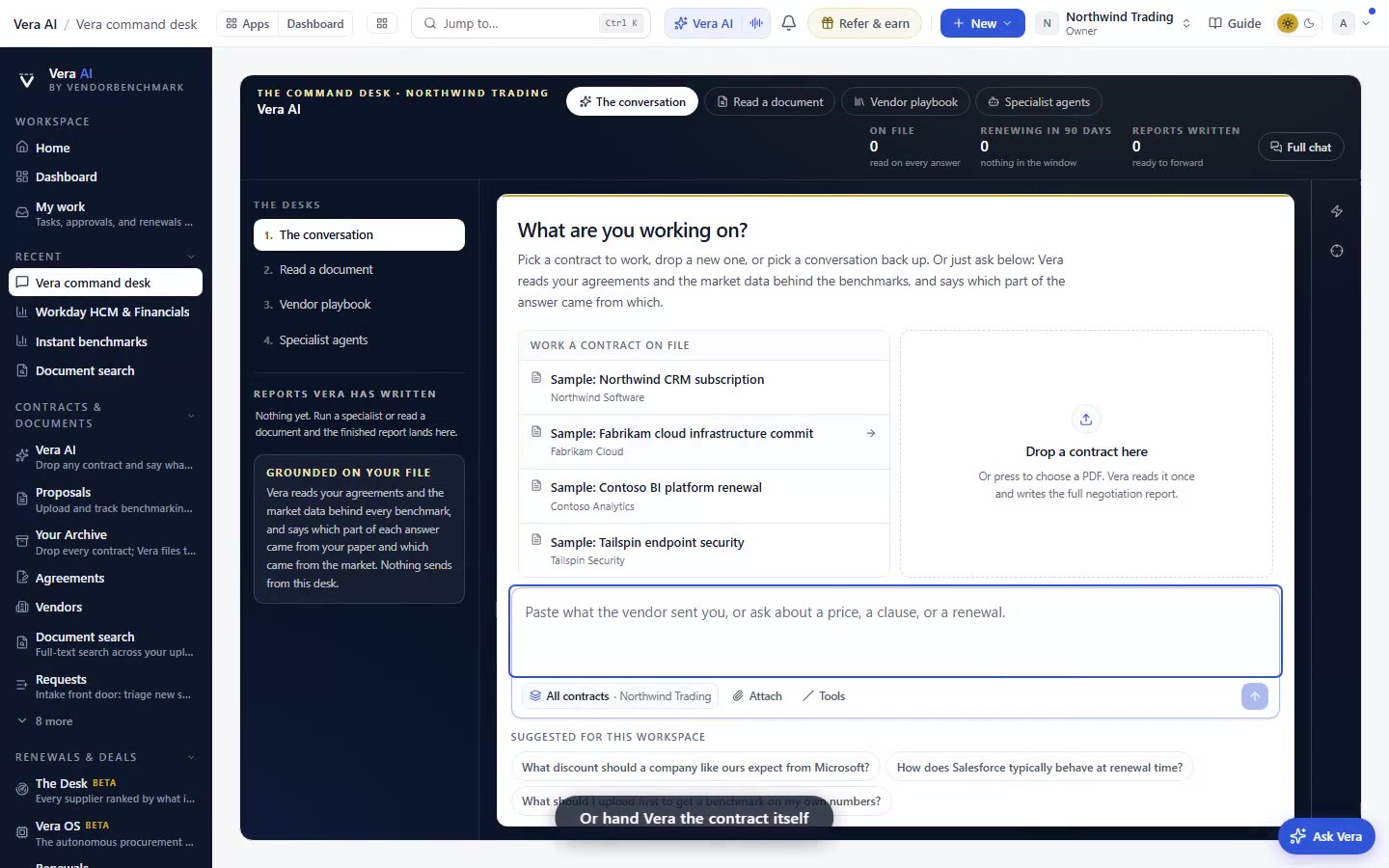
Two things happen. First, Vera changes the intake conversation. Instead of accepting the snapshot and moving on, the intake prompt asks for the trajectory the eventual commitment has to accommodate. Where is headcount going. What does the data volume look like at term end. Is usage seasonal or steadily climbing. These are questions the requesting team can answer, but only when someone asks them at the right moment, before the number hardens into a spec.
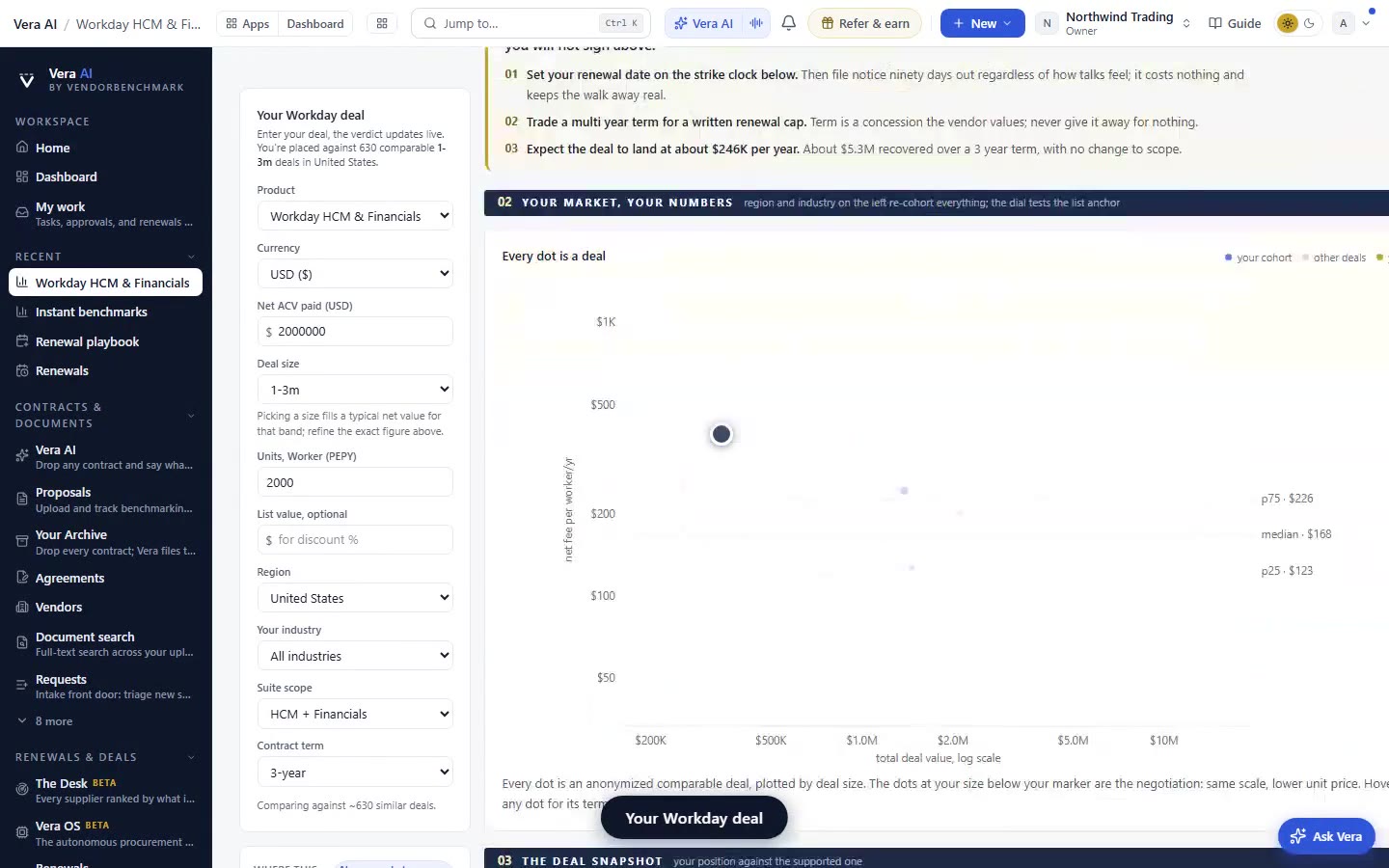
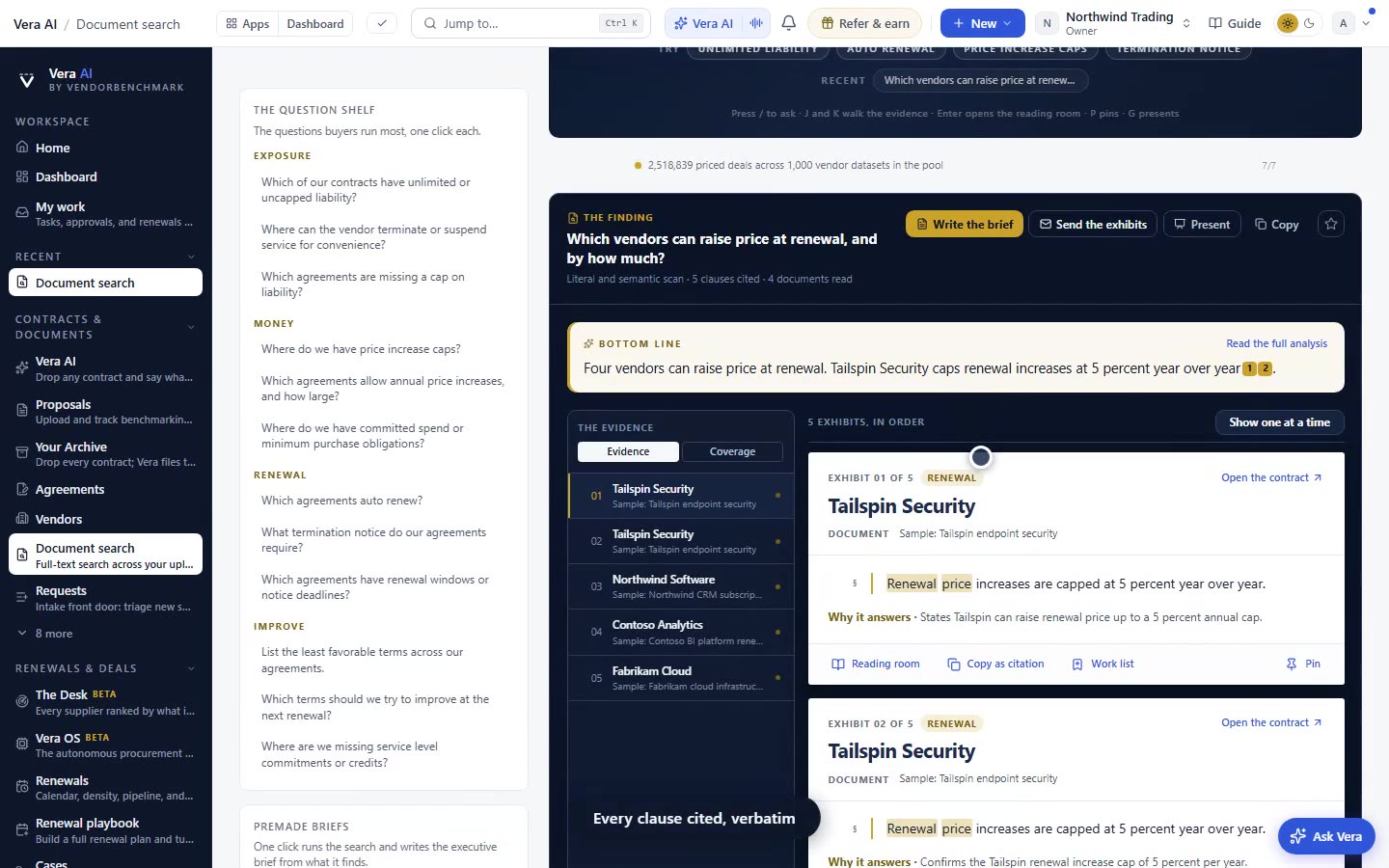
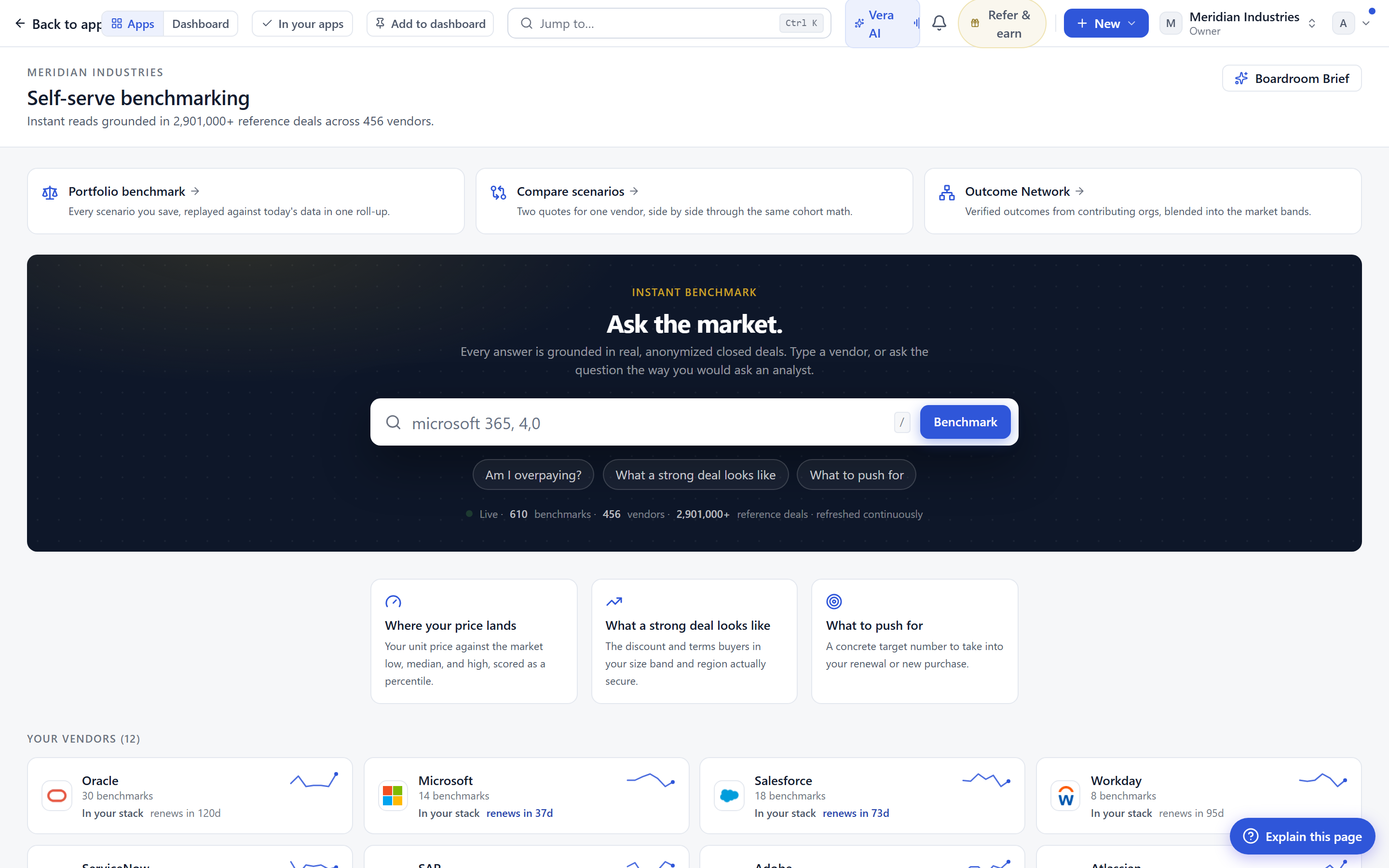
Second, the benchmark library shows you how comparable buyers handled the same problem. You are not inventing a growth clause in a vacuum. You are looking at the structure of comparable deals, drawn from documented market evidence, filtered down to the cohort that matches your vendor, your size, and your usage shape. With the peer cohort on the table, the pattern of how peers tiered their commitments, negotiated step-up pricing, and capped overage is not opinion. It is evidence you can put in front of a vendor.
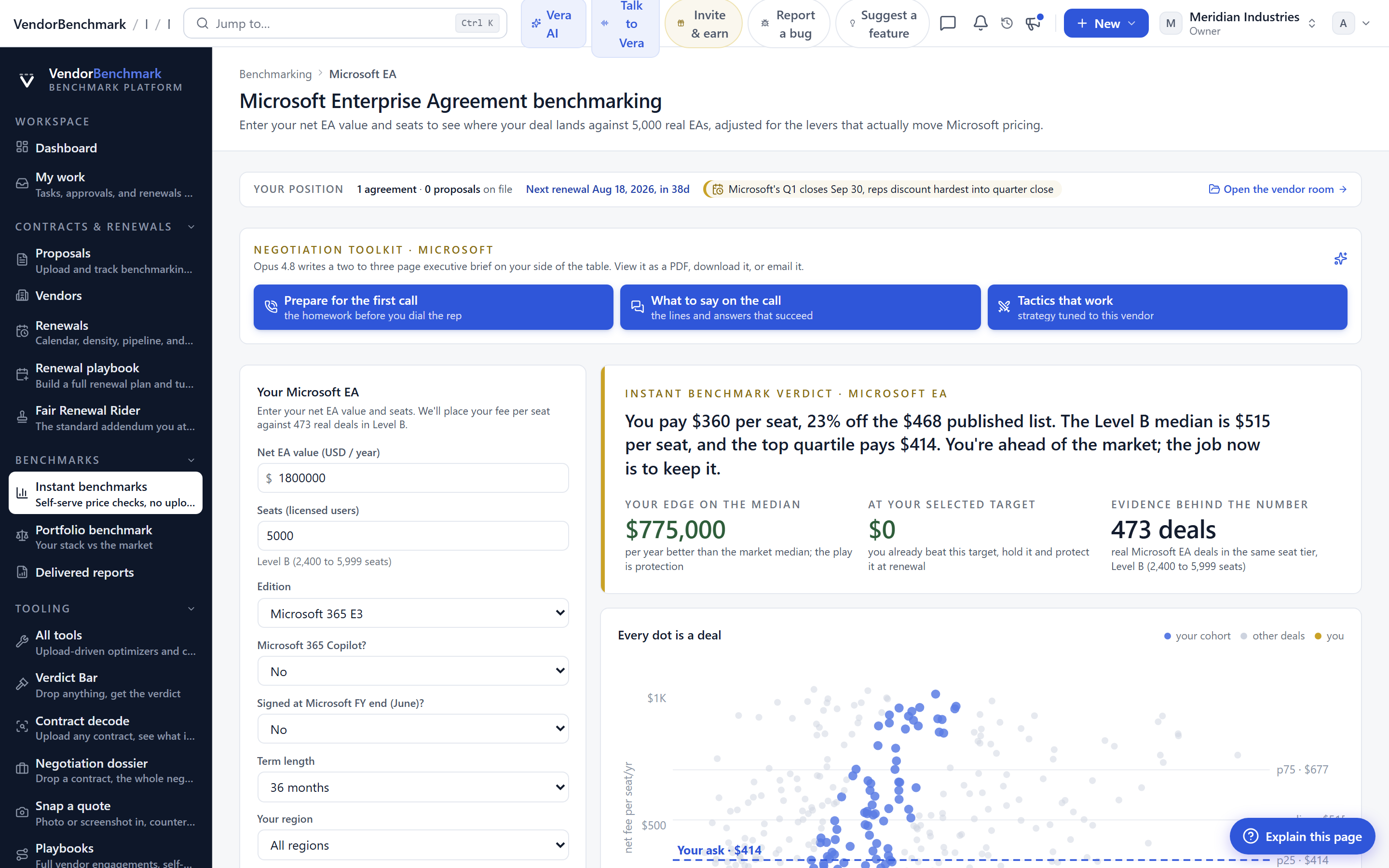
The two motions reinforce each other. The trajectory Vera captures at intake tells you which cohort of benchmarks is relevant, and the benchmarks tell you what a defensible structure for that trajectory looks like. This is the difference between researched pricing evidence and survey averages, a distinction we draw out in survey benchmarks flatter everyone.
What this does not solve
Be honest about the limits. The platform cannot tell you what your headcount will actually be in two years. If the requesting team's forecast is wrong, the sizing built on it will be wrong too, and no benchmark corrects for a growth number that was fiction from the start. What the platform does is make the assumption explicit, sourced, and reviewable, so that when reality diverges you know exactly which input to revisit rather than discovering the gap on an overage invoice.
It also cannot force a vendor to offer step-up pricing they do not sell. Some vendors structure their catalogue precisely to make growth expensive. The benchmarks will show you that, and they will show you which comparable buyers refused those terms and what they got instead, but the negotiation is still yours to run. The platform arms the buyer. It does not replace the buyer. When the structure genuinely does not exist in any single vendor's offering, that is a different problem, the one we cover in the spec that adds up but nobody sells.
And it does not retroactively fix a contract already signed to a snapshot. If you are living with an undersized commit today, benchmarking will tell you how far off market your position is and what a fair correction looks like, but the leverage you have mid-term is the leverage the original spec left you. The value compounds when you use it at intake, before the number hardens, which is the whole point of asking for the trajectory in the first place.
Fredrik has spent more than twenty years in enterprise software, with time at Oracle, IBM, SAP, and Salesforce before moving to the buy side. He structured and priced the kind of large agreements most buyers only see once or twice in a career, which taught him where the leverage sits and how far a vendor will actually move. He started VendorBenchmark to hand that knowledge to every sourcing team.