The stakeholder asked for a whole category. The real problem was one broken workflow.
A request for an entire tool category usually hides a single broken step. Sizing the purchase to the category, not the problem, is where the money leaks.
Last month a request landed in your queue that said, more or less, we need a contract lifecycle management platform. It came from a director in legal operations, it was tagged as strategic, and it carried a rough budget that someone had already floated to finance. You started lining up the market. Then, four calls in, you learned what had actually happened: a single approval step was breaking. Contracts sat in an inbox because there was no automated handoff to the reviewer, and twice that quarter a renewal slipped past its notice date because nobody was reminded. That was the pain. Not the absence of a platform. The absence of one working handoff.
By the time you understood that, you had already assembled a shortlist, booked two demos, and set an expectation with the stakeholder that a category purchase was coming. The request named a category at intake, and the category, not the problem, set the scope. This is one of the quietest and most expensive patterns in software sourcing, and it is close cousin to the intake ticket that already names the vendor. Both hand procurement a decision instead of a need.
Why a workflow problem arrives dressed as a category
Stakeholders do not describe problems in the language of problems. They describe them in the language of solutions they have heard of. A person who cannot get a document approved on time does not write down get one approval step automated. They write down we need CLM, because CLM is the noun they have seen attached to this kind of pain in a webinar or a peer conversation. The translation from pain to product happens in their head, silently, and the intake form captures only the output of that translation.
The translation is almost always an inflation. A category is a superset. It bundles the one thing the stakeholder needs with fifteen things they do not, and every one of those fifteen things carries license cost, implementation cost, and change management cost. When you buy the category to fix the workflow, you are paying for a whole building to repair one door. The stakeholder is not being dishonest. They genuinely do not know the difference between the door and the building, because naming the building is the only vocabulary they have.
Why the inflation survives contact with procurement
You would expect procurement to catch this. Often it does not, and the reasons are structural rather than personal. First, momentum. The moment a category is named and a budget is floated, an expectation forms. Walking a stakeholder back from platform to point tool feels like telling them their problem is smaller than they thought, which reads as dismissive even when it is accurate. Second, the intake form itself rewards the category answer. It asks what you want to buy, not what you want to change. Third, and most corrosively, nobody on the buyer side has an easy way to see what comparable organisations actually purchased to solve the same underlying complaint.
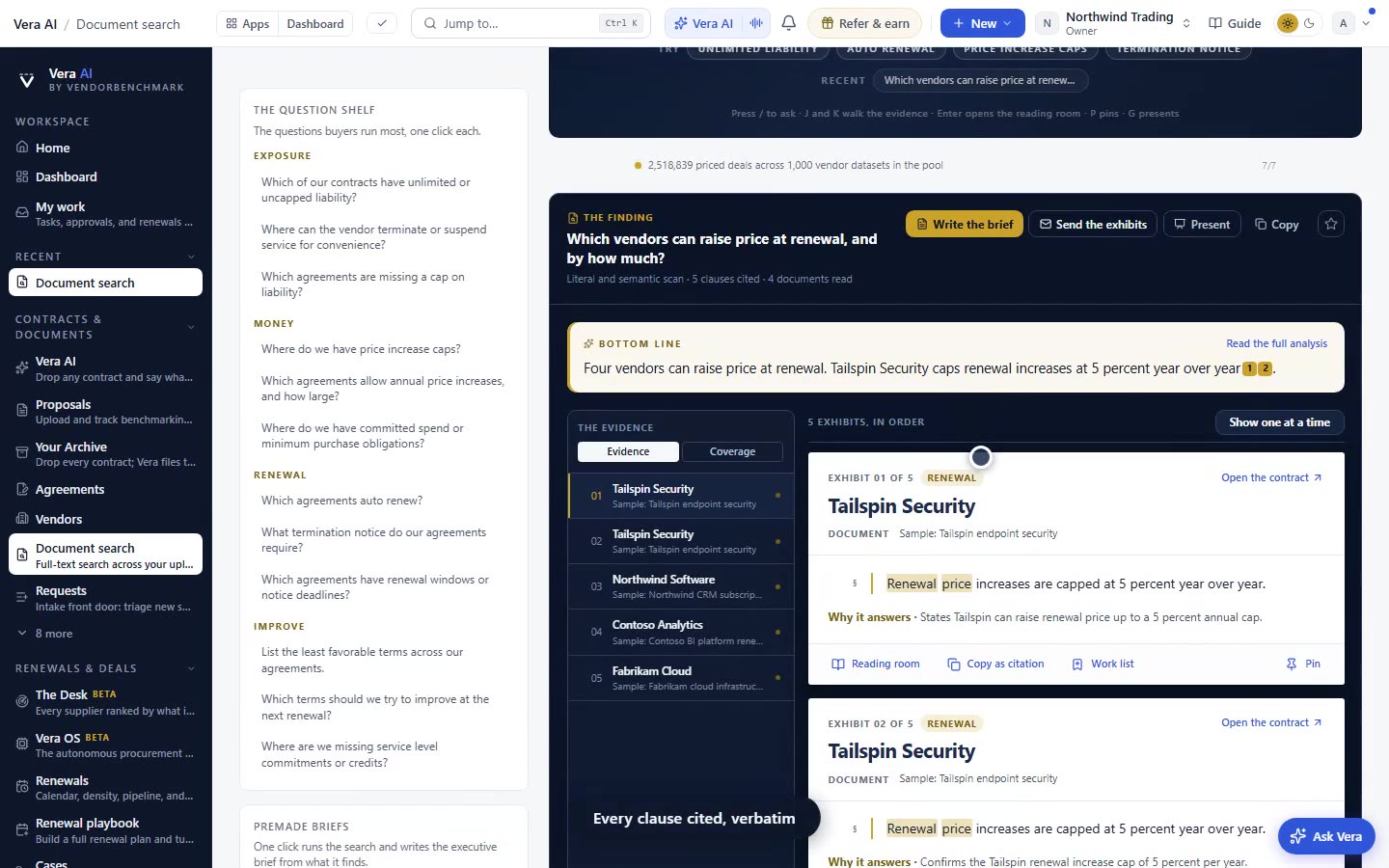
That third gap is the one that keeps the inflation alive. If you could look at fifty organisations that had the same broken approval step and see that most of them solved it with an existing license extension or a point tool a fraction of the platform price, the conversation with your stakeholder changes completely. You are no longer arguing. You are showing. But that evidence is not sitting in your intake queue, and it is not in the vendor's deck either, because the vendor is selling the building. This is the same evidence gap that lets a spec add up on paper while no single vendor sells it.
The platform motion: interrogate the intake, then benchmark the problem
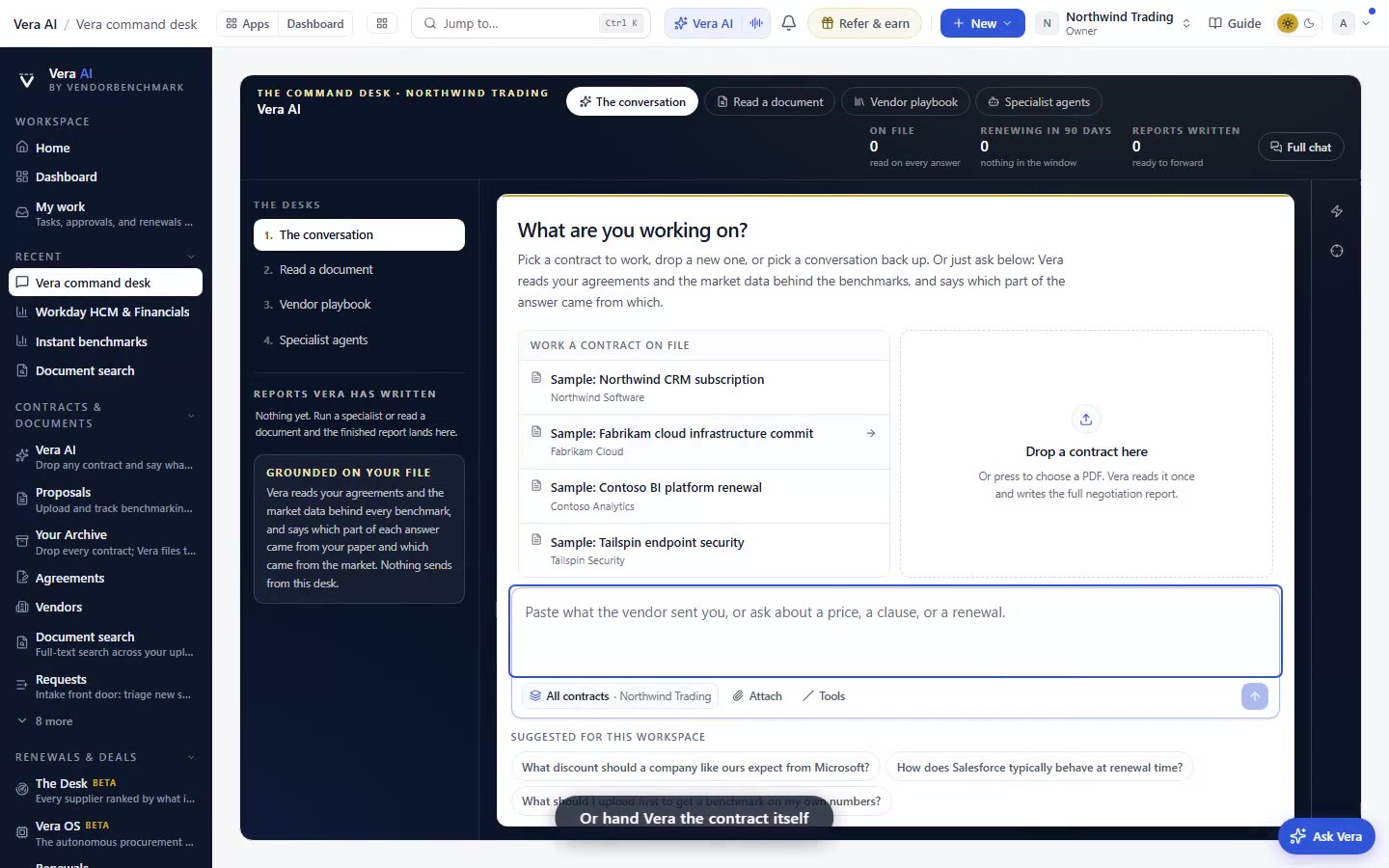
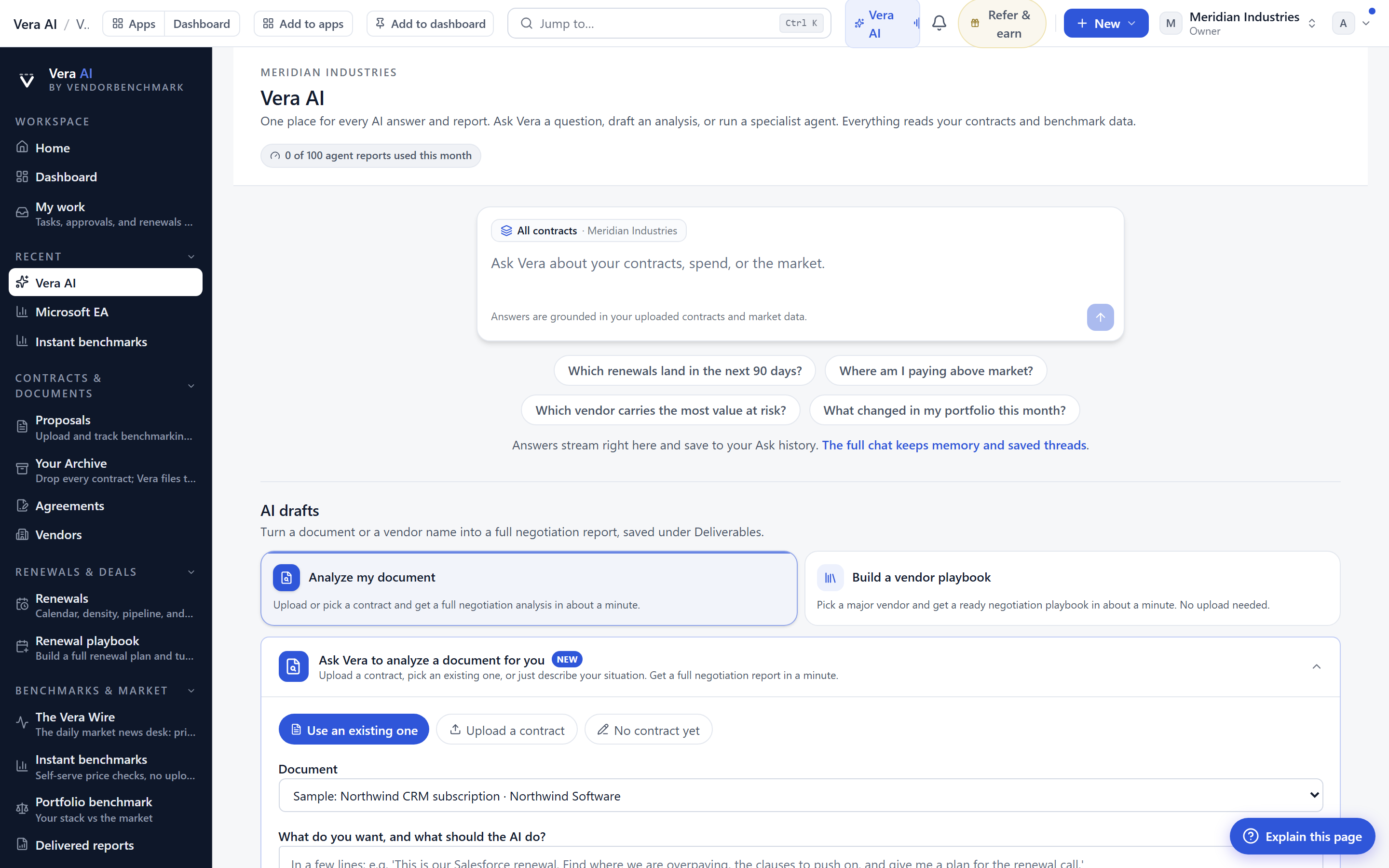
Vera starts where the inflation starts, at intake. Instead of accepting the category as the requirement, she interrogates the request to separate two things that the stakeholder fused together: the category they named and the workflow it is meant to fix. She asks the questions a good analyst would ask on those two or three calls, in one pass, and she asks them of the problem rather than the product. What breaks today. How often. Who is blocked. What already exists in your estate that touches this step.
That last question matters, because the answer is frequently a license you already own. A workflow gap that reads as a missing platform is often a feature sitting unused in a tool three teams already pay for. Surfacing that is close to the duplicate tools you can catch at the request, only pointed at underused entitlements rather than redundant purchases.
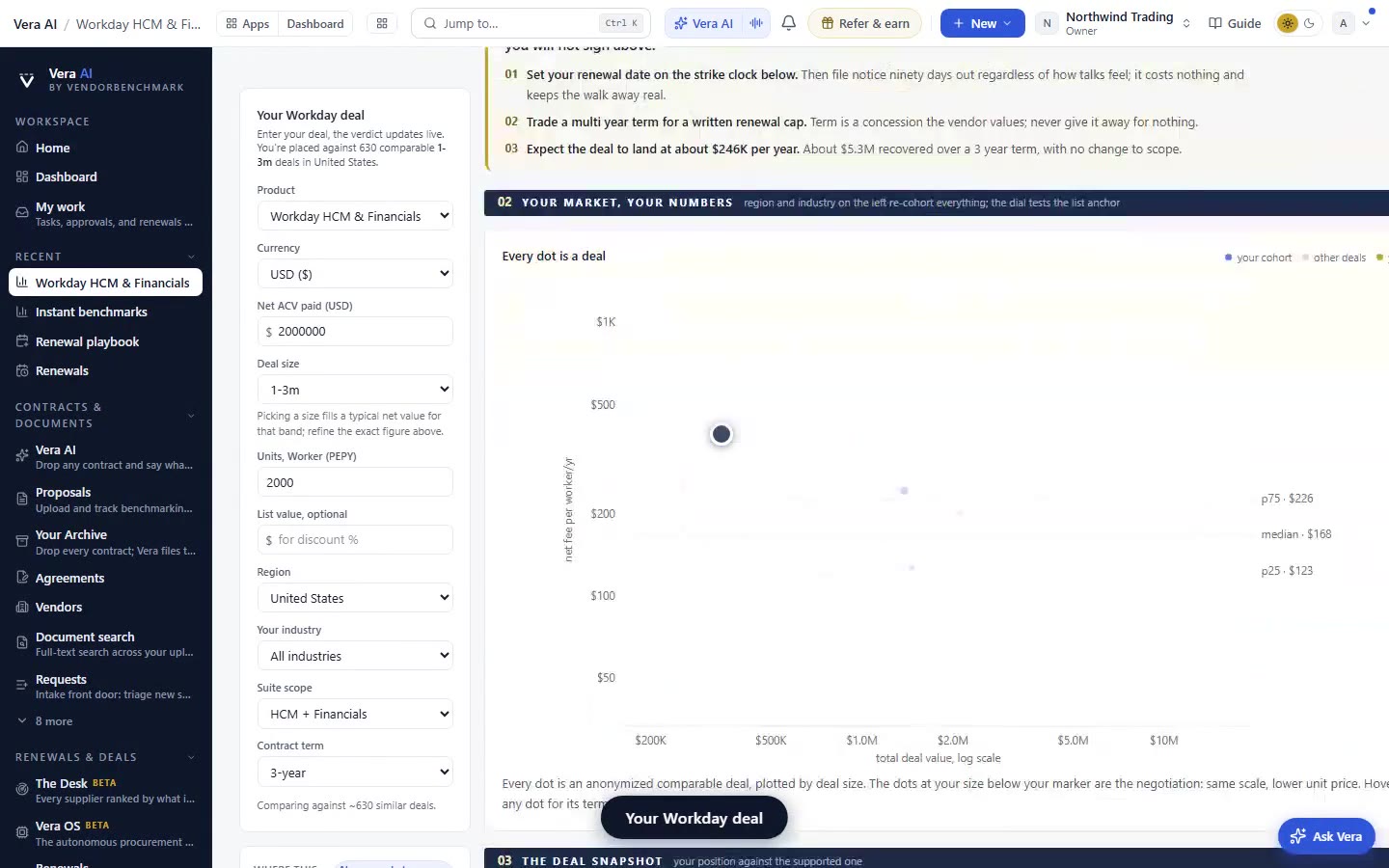
Then comes the evidence. Once the underlying problem is named, Vera benchmarks it against comparable deals, not against a survey of stated intentions. This distinction is the whole game, and we have written before about why survey benchmarks flatter everyone while researched pricing evidence does not. When you can show a stakeholder what comparable buyers actually purchased to solve their exact complaint, the argument about scope resolves itself, because it stops being your opinion and becomes the market's record.
What right-sizing at intake actually protects
What this does not solve
Be honest about the edges. Sometimes the stakeholder is right and the category is the correct answer. A single broken workflow today can be the visible edge of a genuine platform need across a dozen adjacent processes, and Vera will show you when the benchmark evidence points that way rather than away from it. The tool separates the stated category from the workflow so you can size the purchase deliberately. It does not always shrink it. Occasionally it will confirm the platform, and that is a good outcome too, because now it is justified rather than assumed.
It also cannot fix organisational politics. If a director has already told finance a platform is coming, the evidence gives you a stronger position but not an automatic win. Someone still has to have the conversation. And Vera works from the estate and closed deal record you connect her to. If underused licenses live in systems she cannot see, she cannot surface what you own. The motion removes the analytical excuse for oversizing. The judgement, and the conversation, remain yours.
What you get back is the early hours you used to spend interviewing your way to a problem definition, and a market position built on what peers actually bought rather than what a category costs at list. On a queue of requests where even a few are dressed as categories they should not be, that arithmetic compounds fast.
Want to be updated when major licensing and pricing changes land? One analyst brief a week: the price rises, metric changes and audit campaigns that move software costs. Work email only.
Morten brings two decades of enterprise and software procurement, with stints across Oracle, IBM, SAP, and Salesforce shaping how he reads a deal. He has led sourcing through hundreds of renewals, from mid market order forms to nine figure global agreements, and learned that the buyers who win are the ones who walk in knowing the market. He built VendorBenchmark to make that pattern recognition repeatable.