From chat to deliverable: why AI reports beat AI answers.
A chat answer is read once, by you, and gone. A report is forwarded to the CFO, quoted in the steering meeting, and pasted into the board pack, which means its claims travel further and its errors live longer. That difference is why the platform treats documents as a separate discipline, with a visual standard, a structural standard, and a grounding bar that chat never needs.
There is a moment in every piece of procurement work where an answer stops being enough. You asked whether the Workday price is fair, and Vera told you, with citations. Fine. But the steering committee meets Thursday, the CFO wants something to read on the plane, and "the AI said we are at P38" is not a document anyone can circulate. The work product that decisions actually run on is not an answer. It is an artifact: a thing with a title, a structure, an author of record, and a life of its own after you stop looking at it.
Most AI tools treat documents as long answers, and it shows: a wall of competent paragraphs, no argument, numbers of unknown parentage, formatted like a printout of a chat. The platform takes the opposite view. The moment output becomes a document, three standards switch on that chat never needed, because chat's mistakes die in the scroll and a document's mistakes get laminated.
The white-paper standard: what analyst-grade means, mechanically
The writing interprets, it does not restate. A table of metrics is never the report; it is the appendix. The narrative says where the leverage is, where the risk is, what a strong outcome looks like, and what to do first, in that order, because that is the order a decision maker needs them. Structure is fixed and familiar: executive summary, market position, section by section analysis, prioritized recommendations, and a bottom line. A reader who has seen one of our briefs can navigate all of them.
Every figure is grounded and tagged. The same rule as everywhere else on the platform, enforced harder: each number in the narrative carries a citation back to a stored document or a benchmark cohort, and the whole document passes the groundedness check before it renders. A report that will be quoted in a meeting you are not in has to survive scrutiny you will not be there to help it through.
It looks like it came from a firm, because presentation is credibility. The executive-brief theme, the masthead, the section bands, the data-labeled charts, is the same whether the report renders on screen or exports to Word, PDF, or PowerPoint. The version you forward is the version you saw, and it reads like senior analyst work because that is the bar it was built against.
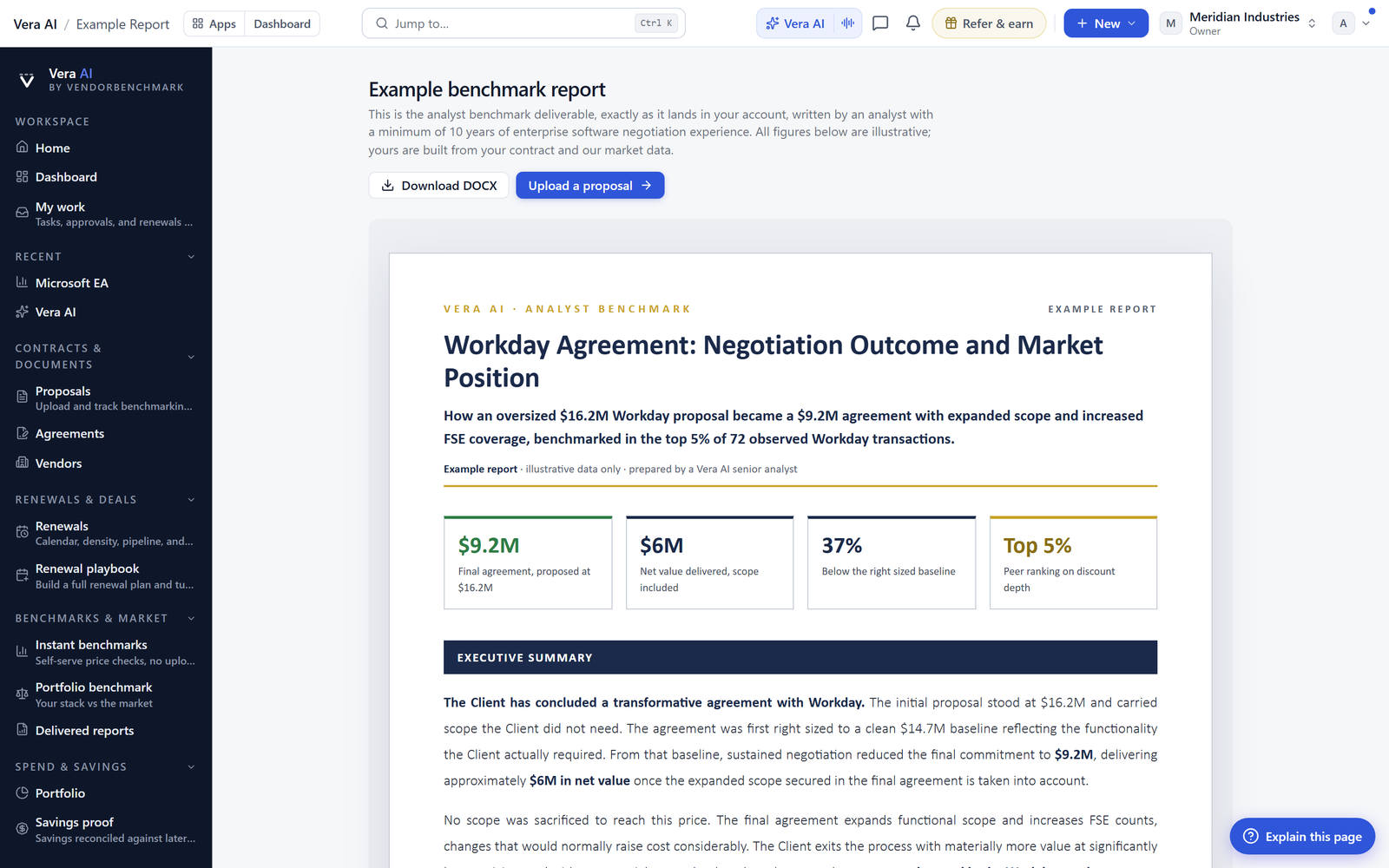
39 report types, one bar, generated from live data
The library covers the documents a procurement desk actually ships: benchmark narratives, negotiation briefs and talking points, renewal and scenario memos, vendor intel briefings, portfolio and board reports, audit readiness memos, and the executive brief the dossier hands the CFO. Every type renders to the same standard, and every one generates from the live estate rather than from a snapshot, so the portfolio report produced in October describes October, and regenerating it after a renewal closes takes a click instead of an afternoon of chart surgery.
Reports also arrive without being asked for, where the platform knows they are due. The Monday briefing is a report on the week ahead. A renewal entering its decision window triggers its brief. The ask-by-email agents reply to a forwarded quote with a white-paper answer, because even an inbox response deserves better than a paragraph of vibes. The pattern underneath is consistent: whenever output will be read by someone other than the person who requested it, it ships as a document, at the document bar.
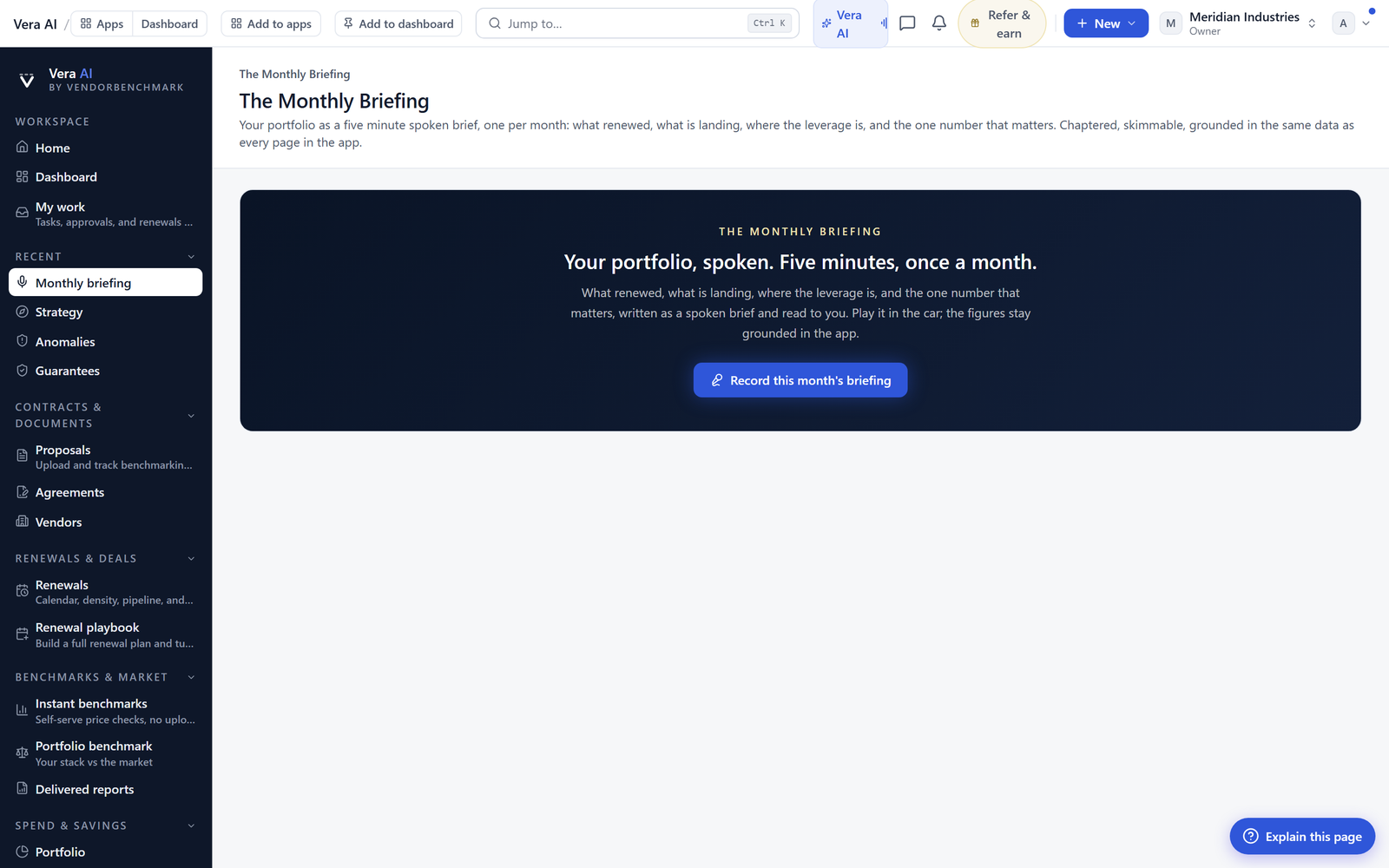
When to ask, and when to commission: a working rule
The honest limit is the one every analyst desk knows: a beautifully argued document can still recommend the wrong thing, and no groundedness check validates judgment, only evidence. The reports give the humans in the meeting a common, verified set of facts and a clear recommendation to argue with. Arguing with it, and sometimes overruling it, is what the meeting is for. What nobody in that room should ever have to do again is wonder where the number came from, and now they do not.
Morten brings two decades of enterprise and software procurement, with stints across Oracle, IBM, SAP, and Salesforce shaping how he reads a deal. He has led sourcing through hundreds of renewals, from mid market order forms to nine figure global agreements, and learned that the buyers who win are the ones who walk in knowing the market. He built VendorBenchmark to make that pattern recognition repeatable.
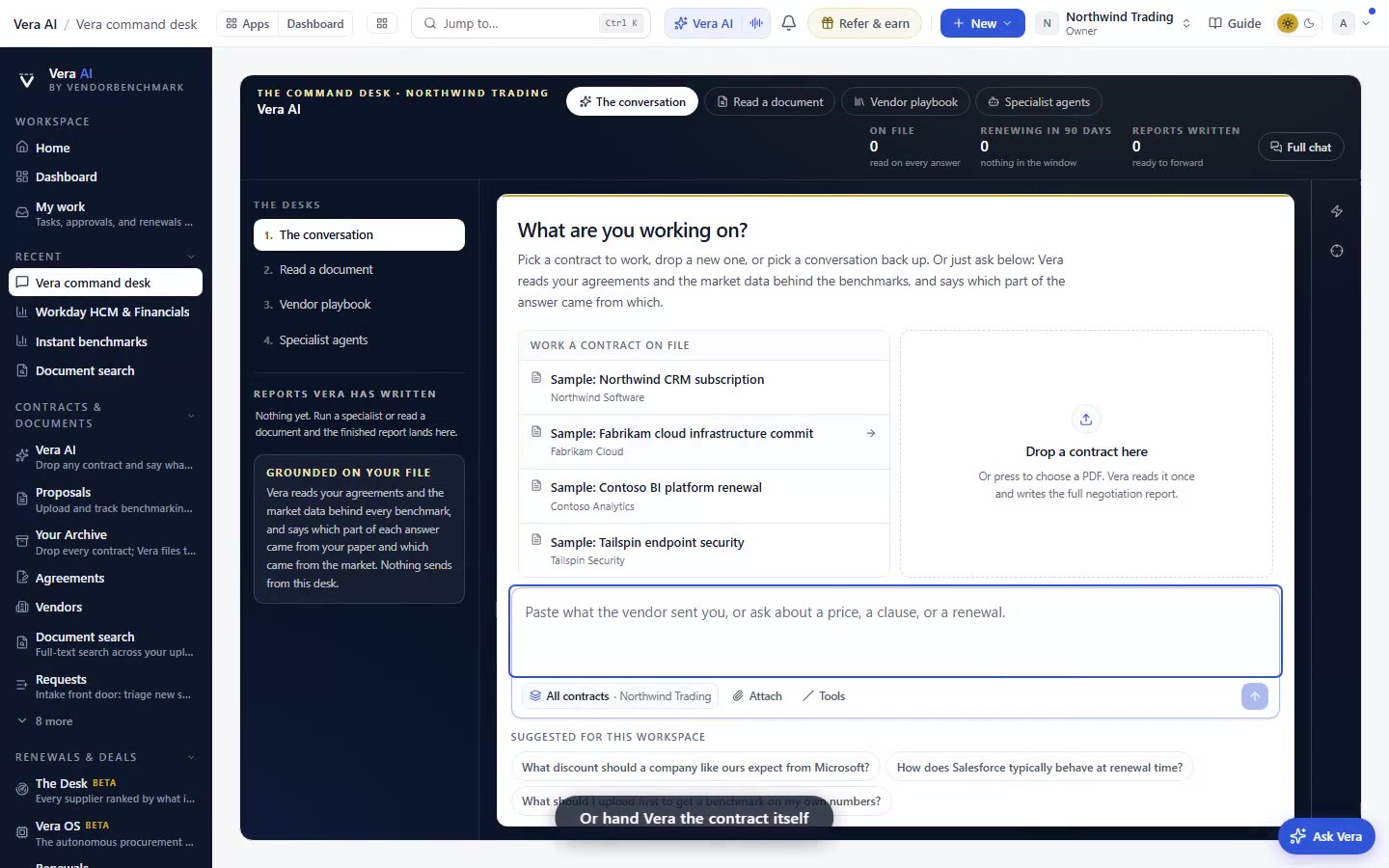
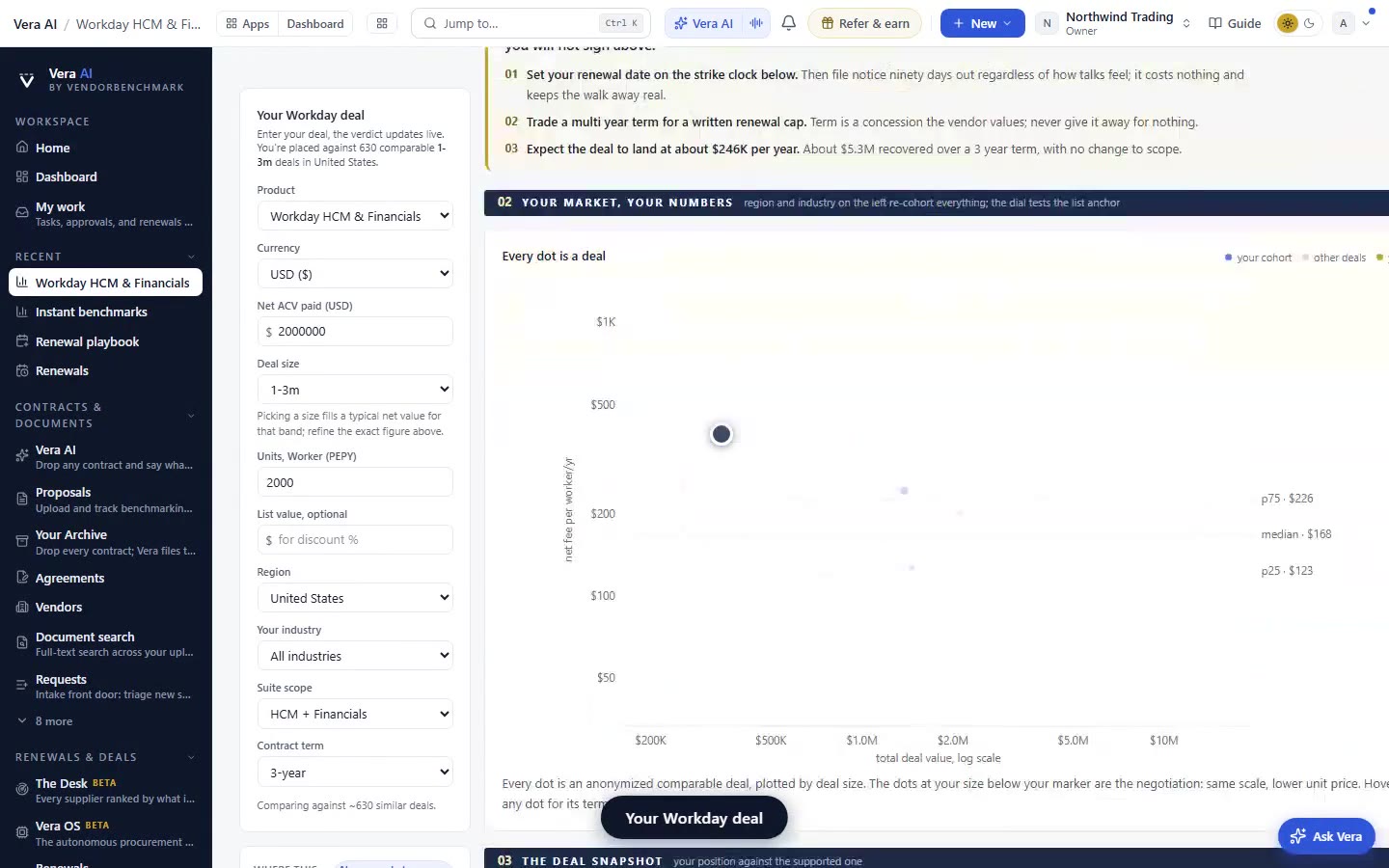
The week in enterprise software buying, in one email.
What shipped on the platform, and the pricing and licensing moves worth knowing before your next renewal. One email a week, to your work address. Unsubscribe any time.