Hand the verdict to your CFO
Your CFO does not want the whole report. They want the discount, the peer comparison, the rank, and the summary. Now they can have exactly that, and nothing else.
You have run the benchmark. The number is defensible, the peer cohort is real, and the executive summary says in three lines what took you three weeks to establish. Then comes the last mile, which is also the one that leaks the most value. You need a finance approver to sign, and the way you get their signature today is to forward the whole thing. The full report, the metric tables, the workspace link, the working notes. You hand over the archive when all you needed to hand over was the verdict.
The problem: the last mile is a forward, and a forward overshares
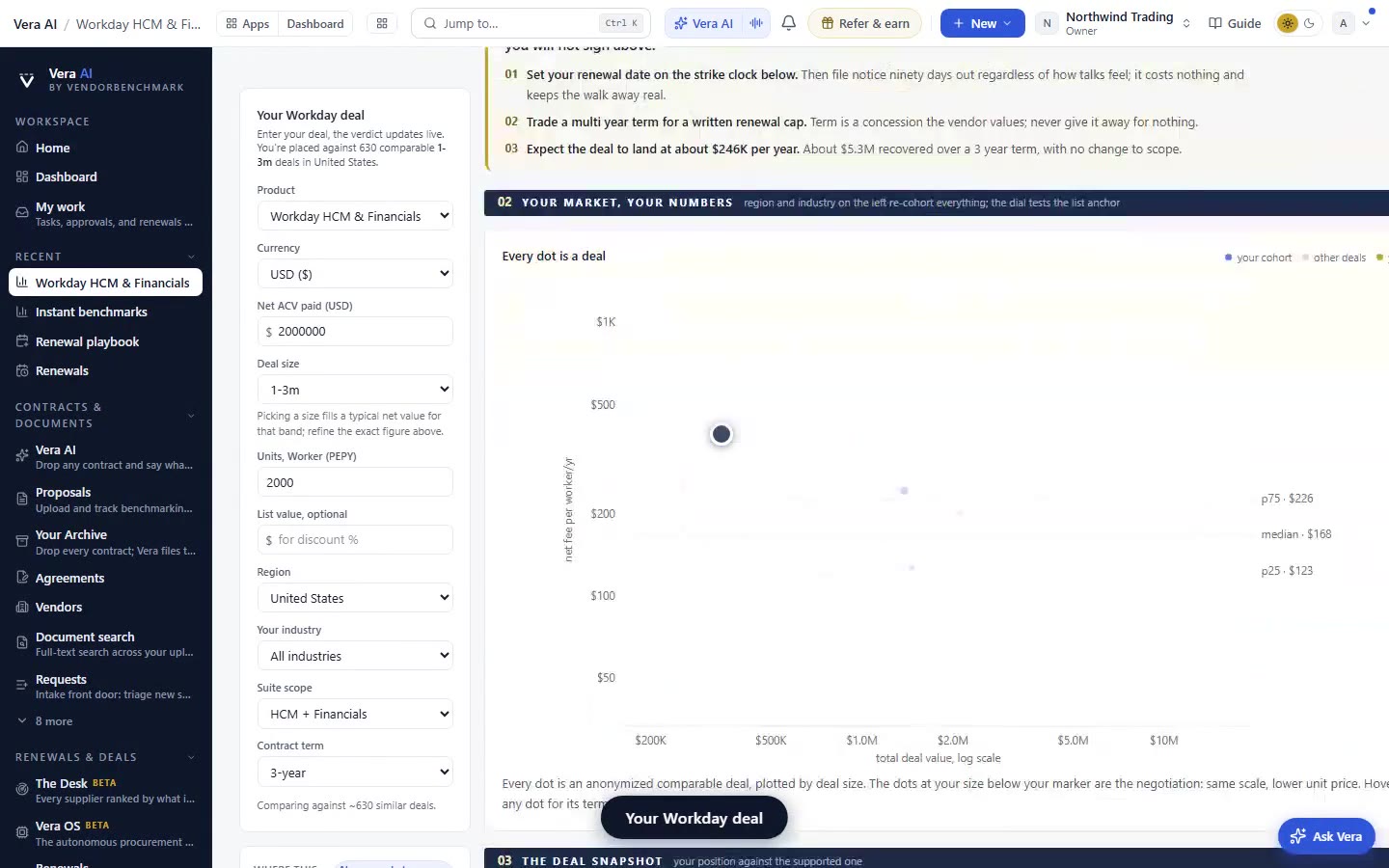
Procurement teams recognise this the moment it is named. The approver does not want to read the benchmark. They want to know four things. What discount did we land. What do comparable customers get on the same shape of deal. Where does this rank against the market. And what does the one paragraph summary conclude. That is the verdict. Everything else in the report is your evidence, not their decision input.
When you forward the full artifact to answer four questions, three things go wrong. The approver gets lost in a metric table they were never meant to interpret, and asks you a question you already answered on page one. The report file lands in an email thread and then a shared drive, where it lives forever with no expiry and no audit. And you have quietly given someone outside the deal a window into your workspace. This is the same failure mode we wrote about in present the benchmark, do not just forward it. The fix there was presentation. The fix here is scope.
What the link carries, and what it leaves behind
The verdict link renders exactly one page. Your discount, what comparable customers get for the same shape of deal, where the deal ranks against the market, and the executive summary. That is the whole payload. No metric table travels with it. No report files travel with it. No workspace access travels with it. The approver clicks, reads four things, and signs. There is nothing to get lost in because there is nothing else on the page.
A note on what the discount line means, because it matters. If your verdict leads with percent off list, you are handing your CFO a soft number. The figure that survives scrutiny is net unit price, which is why we keep coming back to discount off list is a trap. The verdict page is built to present the number that holds, so when finance asks the obvious follow up, the answer is already on the page they are looking at.
How it behaves once it leaves your hands
A read only link that lives forever is just a slower leak. So the verdict link is built to expire and to be watched. It expires after 14 days by default, and you can shorten that. It shows you how many times it was opened, so you know whether the approver has actually seen it before you chase them. And you can revoke it in one click, which ends the page immediately, no matter who has the URL.
The storage model is the part worth understanding. The link is stored hashed, which means the full link exists only at the single moment you copy it. We never hold a copy that could be leaked from our side, and the page itself never renders a draft, only a published verdict. If a report is unpublished or revoked, the link resolves to nothing. This is the same discipline that runs through our benchmark library method. The number is only worth sharing if the way you share it is as controlled as the way you built it.
Where it fits the workflow
This sits at the end of a chain you are already running. You benchmark the deal, you build the position, and when you are ready to close you take it into the negotiation war room. The verdict link is the artifact you produce once the number is settled and you need a sign off before you countersign in contracts. It is not a replacement for presenting the full benchmark to your own team. It is the thing you hand to the one person who only needs to approve the outcome.
What changes for the buyer, in order
What this does not do
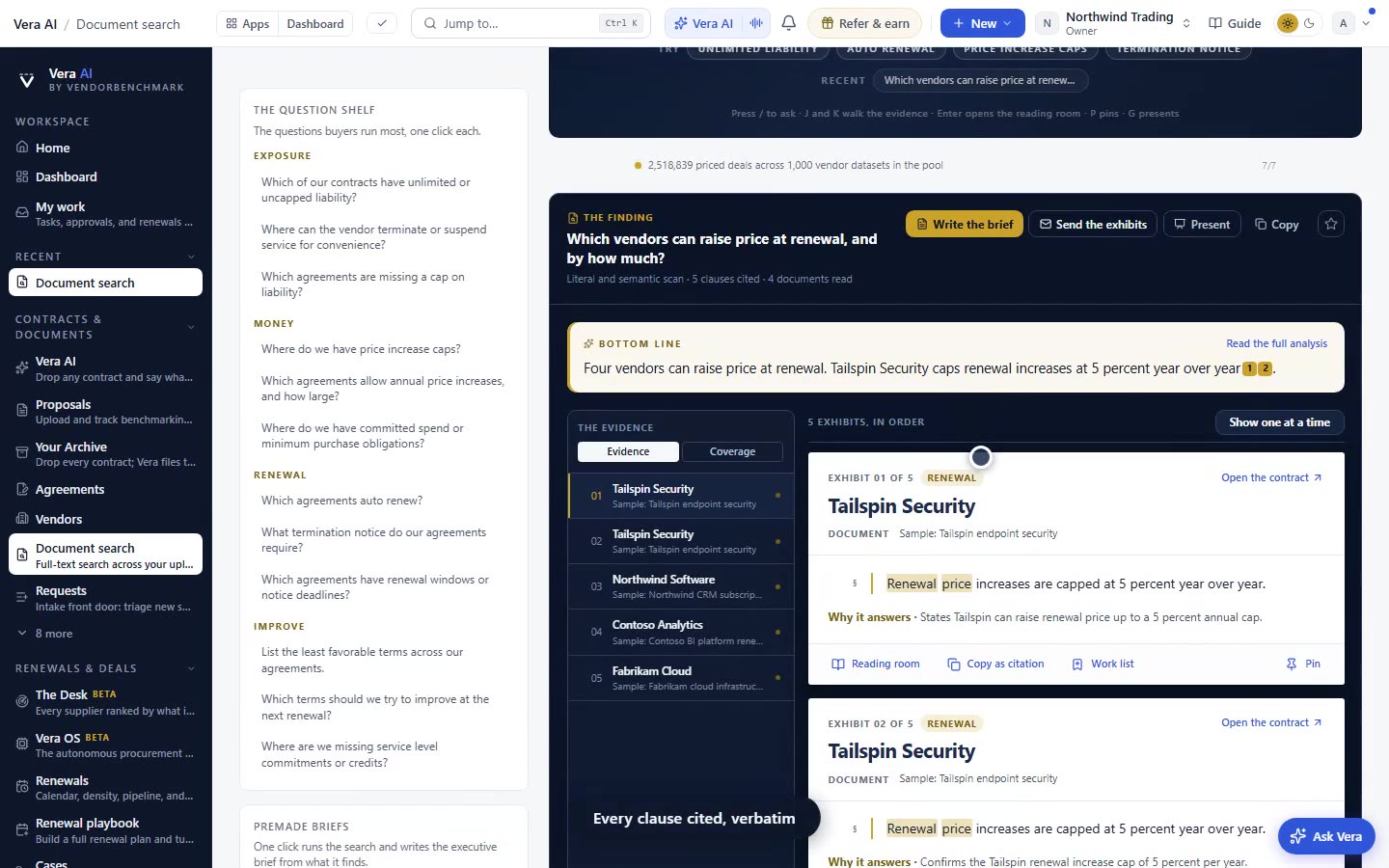
Be clear about the edges. A verdict link is a one way share, not a collaboration space. If your CFO wants to comment, question a line, or see the evidence behind the rank, this is the wrong tool and you should bring them into the report proper. The page is deliberately thin, so anyone who needs to interrogate the method will find it thin by design.
The link is also only as controlled as the person you send it to. Within its 14 day life it can be forwarded, and while you cannot stop that, you can revoke it the moment you see an open count you did not expect. Treat the link as a scoped share, not as a secret. Finally, this is not a substitute for a signed record. The verdict earns you a sign off, but the sign off still has to land in your contract record to count. The link ends when the deal moves to paper, and that is the correct place for it to end.
For most buyers the trade is plain. You were forwarding an archive to answer four questions. Now you send four answers, on one page, that expires, that tells you when it was read, and that leaves nothing behind. Same sign off, far less surface area.
Want to be updated when major licensing and pricing changes land? One analyst brief a week: the price rises, metric changes and audit campaigns that move software costs. Work email only.
Morten brings two decades of enterprise and software procurement, with stints across Oracle, IBM, SAP, and Salesforce shaping how he reads a deal. He has led sourcing through hundreds of renewals, from mid market order forms to nine figure global agreements, and learned that the buyers who win are the ones who walk in knowing the market. He built VendorBenchmark to make that pattern recognition repeatable.