Sourcing gets governed: rounds, sealed bids, and the evaluation panel
The large events can run inside the platform now. Here is what changes for a buyer, how it fits the workflow, and where the honest limits sit.
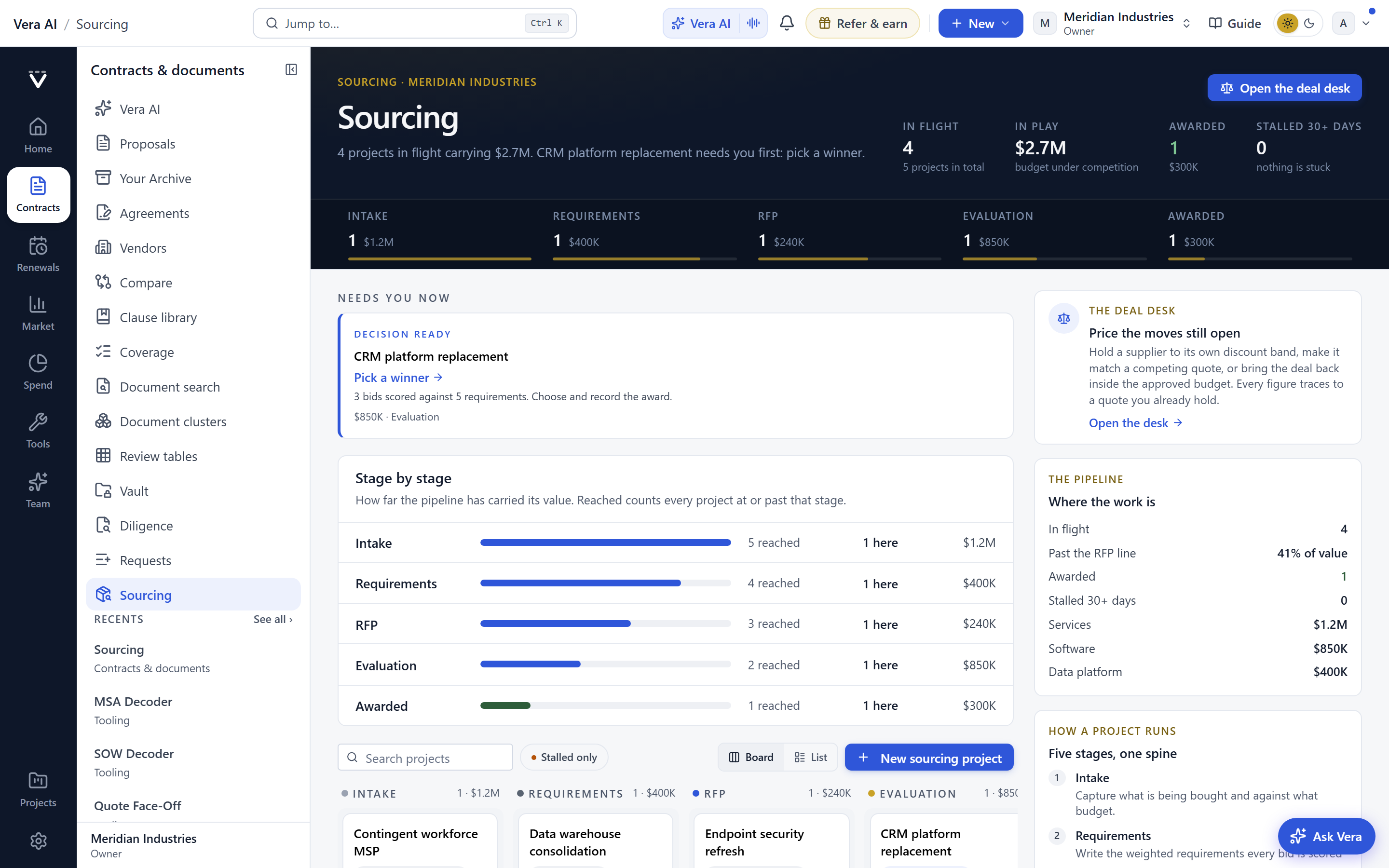
Every procurement lead recognises the moment a competitive event stops being a process and becomes a liability. Three suppliers were told the deadline on Tuesday, one on Wednesday. A best and final got run over email, so the pricing you compared came in on different days with different information. An evaluator scored category two after seeing category one, and nobody can prove the requirements were signed off before the RFP went out. When the loser asks why they lost, the honest answer is that the record is a mailbox. This update is about closing that gap. The large events can now run inside the platform, with rounds, sealed windows, a named evaluation panel, and a policy engine that enforces the discipline your organisation already wrote down but rarely applied evenly.
A best and final is now a first class round
Until now a second round of pricing was a thing you managed by hand. You emailed each bidder, hoped the deadlines matched, and reconciled what came back against what came before. That reconciliation is exactly where disputes start. A best and final is now a structured round with its own deadline. Every bidder is told at the same moment, bids are stamped by the round they belong to, and the pricing room reads what each supplier moved between rounds rather than a flat list of final numbers. You see the direction and size of every movement, which is the information that actually tells you whether a supplier still has room.
This matters most when you are trying to read intent. A supplier who drops nine percent then holds is telling you something different from one who holds then drops at the buzzer. Because the rounds are stamped and ordered, that story is legible after the fact, not reconstructed from timestamps in your sent folder. It is the same reasoning behind the deal sign-off chain: the record has to hold up when someone questions it later.
Sealed windows that actually stay sealed
A sealed bid is only sealed if nobody inside can read it early. That is the part manual processes cannot promise. Here, when you seal a window, bid contents stay withheld from every reading surface until the deadline. Not just the buyer view, every surface. At the deadline the bids unseal simultaneously, the scoring runs, and late bids are refused outright rather than quietly accepted because someone felt generous. The point is not secrecy for its own sake. It is that a supplier who suspects their number leaked to a competitor has grounds to walk, and a sealed window you can demonstrate removes that argument entirely.
Sealing can also be automatic. The policy engine can force sealing above a spend line you set, so the events that carry the most risk get the most protection without anyone remembering to switch it on. That is the same governance instinct that runs through pooling leverage without exposing your numbers: the protection is structural, not a habit you hope holds.
The panel scores blind, and the AI read sits beside it
Evaluation is where good sourcing goes quietly wrong. One loud evaluator anchors the room, halo effects carry a strong first category into weak later ones, and nobody logs a conflict until it becomes a problem. The panel here is named. Each evaluator declares conflicts up front, then scores blind per category, so the second category is judged on its own merits rather than in the shadow of the first. The consensus view shows the average and, just as importantly, the spread, so a category where evaluators disagreed sharply is visible rather than smoothed into a mean. Beside that consensus sits the AI read, so you can see where the panel and the model diverge and ask why.
The spread is the number to watch. A high average with a wide spread means the panel is not agreeing, and that is a conversation to have before award, not after. This connects to how we treat scoring generally, discussed in the feature checklist that hands vendors the scoring pen: unstructured scoring lets each party grade to their own advantage, and structure is the fix.
The policy engine enforces what your org wrote down
Most procurement teams have a policy document. Few can prove every event followed it. The policy engine turns that document into enforcement. It can require a minimum number of invitations so an event is genuinely competitive. It can require sign offs on the requirements, the RFP, and the award memo before each moves forward. It can seal automatically above a spend line. And it can attach your standing protections to every RFP a bidder reads, so your baseline terms are present without a person remembering to paste them in. The effect is that discipline stops depending on who is running the event.
Awards handle the messy real world too. A split records as real awards, with an agreement per member of the split rather than one document pretending the work went to a single supplier. Losing bidders get a debrief built only from their own scores, which is both fairer and safer, because it never leaks a competitor's numbers into a debrief. And per project roles wall off who can edit, score, or only read, so an evaluator cannot quietly rewrite a requirement they are meant to be judging against.
The honest limits
Governance software enforces the rules you configure, not the ones you meant to. If your minimum invitation count is set to one, the engine will happily run an uncompetitive event and call it compliant. The discipline still lives in your policy, we only make it consistent once you have written it down properly. Configure it wrong and you enforce the wrong thing efficiently.
The AI read beside the panel is a reference, not a vote. It reflects the market context we hold and the model's reasoning, and it will sometimes disagree with a domain expert who is correct. Treat divergence as a prompt to look closer, not as a tiebreaker. Blind scoring reduces anchoring, it does not eliminate human judgement or its blind spots, and it cannot fix a requirements document that was vague to begin with.
Sealing protects bid contents inside the platform. It does not stop a supplier telephoning a friend on the panel, and it does not cover conversations that happen outside the system entirely. Conflict declarations depend on evaluators being honest about their conflicts. And a debrief built only from a bidder's own scores is fairer, but a determined loser can still challenge the process. What changes is that when they do, you can show a stamped, sealed, role walled record instead of a mailbox. If that is the trade you want, start at /sourcing and configure your policy before your next event opens.
Want to be updated when major licensing and pricing changes land? One analyst brief a week: the price rises, metric changes and audit campaigns that move software costs. Work email only.
Morten brings two decades of enterprise and software procurement, with stints across Oracle, IBM, SAP, and Salesforce shaping how he reads a deal. He has led sourcing through hundreds of renewals, from mid market order forms to nine figure global agreements, and learned that the buyers who win are the ones who walk in knowing the market. He built VendorBenchmark to make that pattern recognition repeatable.