Sourcing now runs the whole award on the platform
The room now holds the full award, from the first structured price sheet to the signed agreement and the term on your renewals calendar. Here is what changes for the buyer and where the limits sit.
There is a moment in every competitive award when the record and the work drift apart. The bids come in, the read happens on the platform, but the actual award, the letters, the price comparison, the sign off, the contract, all of that leaks back into email and spreadsheets. The desk that carried the analysis stops carrying the transaction. This release closes that gap. Sourcing now runs the whole award on the platform. The desk carries the record, not just the reads.
The named problem: a room that reads but does not remember
Most sourcing tools are good at intake and analysis and then quietly hand you back to Outlook. You draft the clarification letter inside the room, then copy it into email to actually send it. You build a comparison, then rebuild it in a spreadsheet because each bidder answered in a different shape. You get to award and the approval lives in a thread nobody can find six months later. The result is a project that looks complete on screen and is impossible to reconstruct when the renewal comes back. We wrote about this pattern of vanishing context in the renewal that re-bought a spec nobody could explain. The award is the worst place for that drift, because it is the moment the money commits.
The fix is not another export button. It is making the platform the system of record for the actions themselves, so the timeline shows what happened rather than what someone remembered to log.
The letters really send, and the room really watches
Two changes make the room the record instead of a mirror of it. First, watch a project and every action reaches your notifications. You are not refreshing a page to see whether a bidder responded. Second, the room shows the full timeline with the supplier portal's own events merged in, so the vendor uploading a revised quote and you sending a clarification sit on the same line, in order. There is one true sequence, not two partial ones.
The drafted letters really send. They go out on the platform's mail rail and land logged on the project beside the drafts. That single detail removes the most common failure in a competitive award, which is a letter that went out but was never recorded, or a recorded letter that never actually went out. The draft and the sent artifact are now the same object with a timestamp.
A structured price sheet so the totals compare like for like
The biggest silent cost in a competitive award is prose. When each bidder answers price inside a narrative PDF, the totals hide inside sentences, and you spend hours normalising them into a spreadsheet before you can compare anything. The structured price sheet puts the same lines in front of every bidder in the portal. They fill the same fields. The totals come back comparable by construction, not by your reconciliation effort.
That comparability is where the platform's benchmarking earns its keep. Once the lines are structured, they read against the market instead of against each other in isolation. The same discipline sits behind the compare and playbook work, and if you want to see how the timing side connects, the vendor calendar as a timing desk shows where an award slots into a renewal cycle.
Award, approval, contract, and the term on the calendar
The award is where a sourcing run usually stops being a system and becomes a set of manual handoffs. This release keeps the chain intact. An award at or above your approval threshold asks the approvals trail first. It does not record on a promise that sign off will happen later. The moment a decision records, the agreement opens in the estate and the renewals calendar holds the new term. There is no separate step to remember to add the contract, and no tracker to update by hand for the renewal date.
This is the part that pays off eighteen months later. The award, the approved decision, the signed agreement, and the future renewal are one connected record. When the term comes back around, the person picking it up inherits the reasoning, not a bare contract file. If you run large multi-year estates, the Microsoft EA renewal map shows why that continuity matters at scale.
Intake SLAs and a nightly watch on risk
Two supporting changes close the loop at the front and the flank. Intake now shows the triage SLA on every waiting request, so the queue is not a black box and you can see which requests are aging against their promise. That connects directly to the pattern we described in everything is urgent, so nothing is, where visible SLAs are what separate real urgency from noise.
On the flank, a nightly watch raises a flag when a supplier's risk rating worsens mid tender. A bidder can look fine on the day you shortlist and materially worse by the day you award. One of the platform's 99 background jobs now surfaces that change on the project rather than leaving you to notice it after the fact. It does not decide anything for you. It puts the flag where the decision is being made.
What this does not do
Be clear about the edges. The structured price sheet only compares like for like when the lines you define are the right lines. If your specification is vague, the totals will be comparable and still wrong, because they compare the wrong thing precisely. The tool enforces shape, not judgment about what to ask for.
The mail rail sends letters from the platform, but it is not a full email client and it is not built to run open-ended negotiation correspondence. It carries the structured, logged communications of the award. Freeform back and forth still belongs in your regular channels, and you should expect to reference those threads rather than replace them.
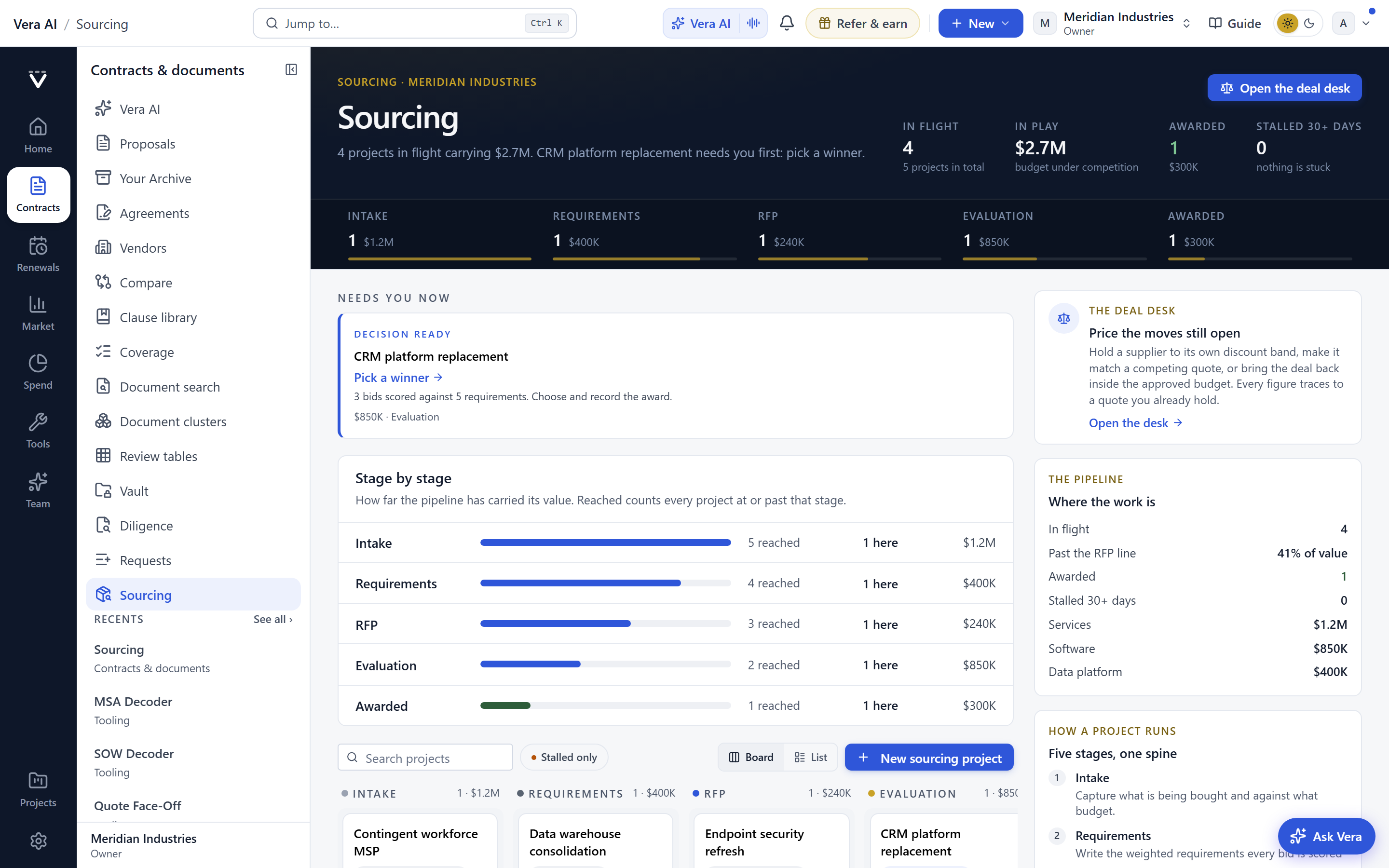
The approvals gate is only as good as the threshold and the trail you configure. It will hold an award at or above the line you set, and it will not invent a threshold you never defined. The nightly risk watch raises a flag from the ratings available to it. It is an alert, not a verdict, and it does not replace your own diligence on a supplier. Finally, the renewals calendar holds the term you awarded. It does not renegotiate it for you. It makes sure the date and the reasoning are waiting when you come back, which is the whole point. You can see the shape of the full run on the sourcing desk.
Fredrik has spent more than twenty years in enterprise software, with time at Oracle, IBM, SAP, and Salesforce before moving to the buy side. He structured and priced the kind of large agreements most buyers only see once or twice in a career, which taught him where the leverage sits and how far a vendor will actually move. He started VendorBenchmark to hand that knowledge to every sourcing team.