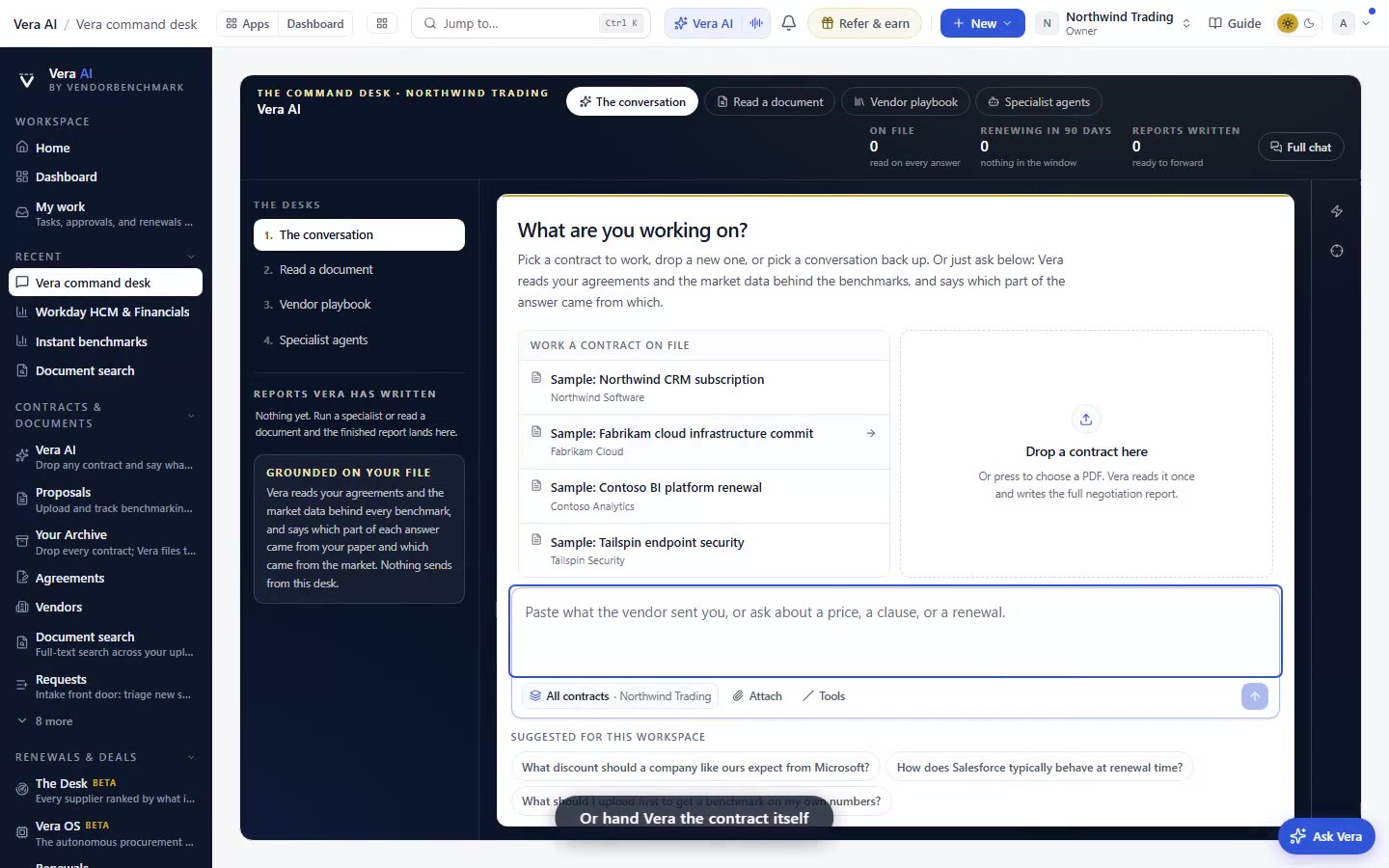
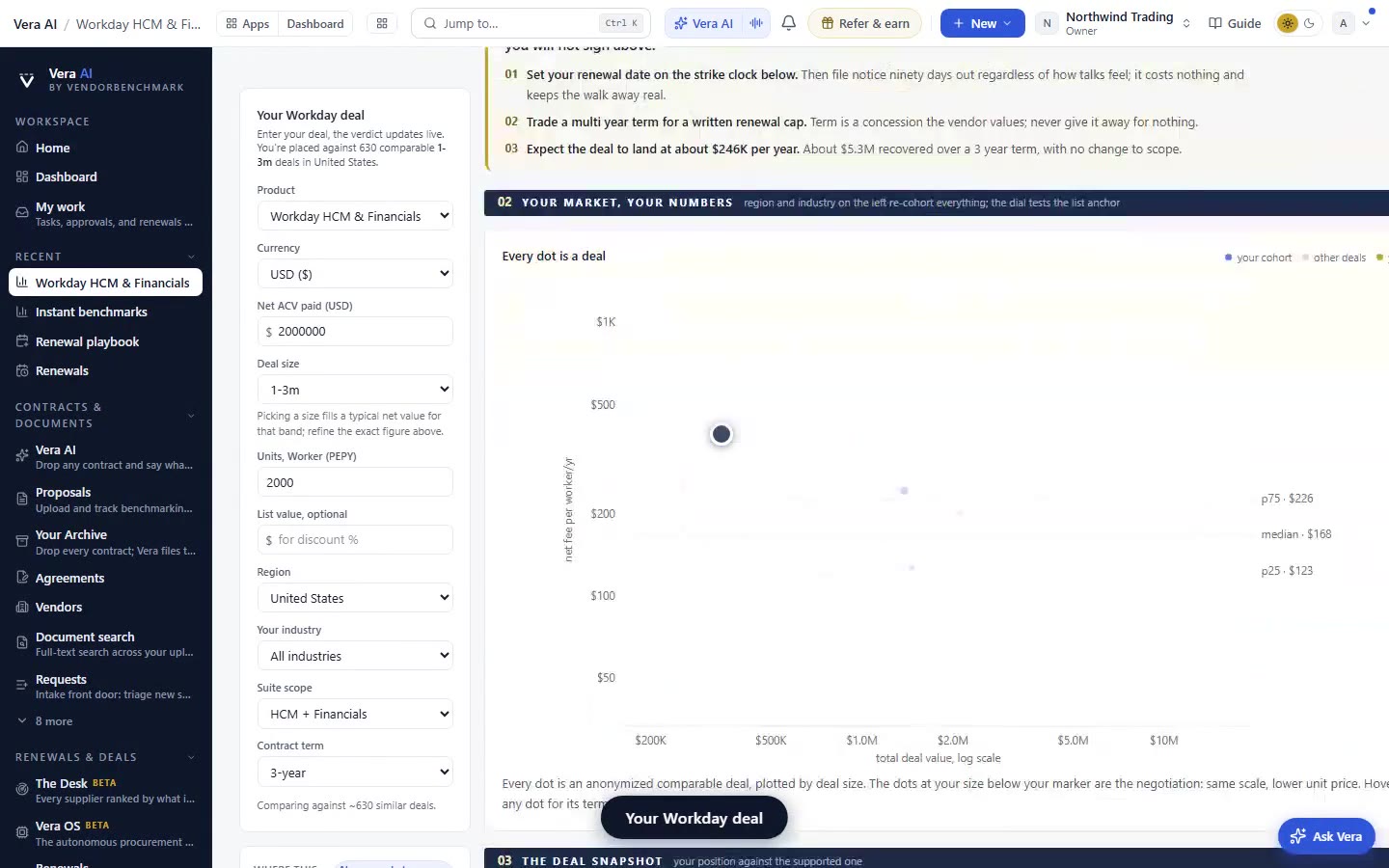
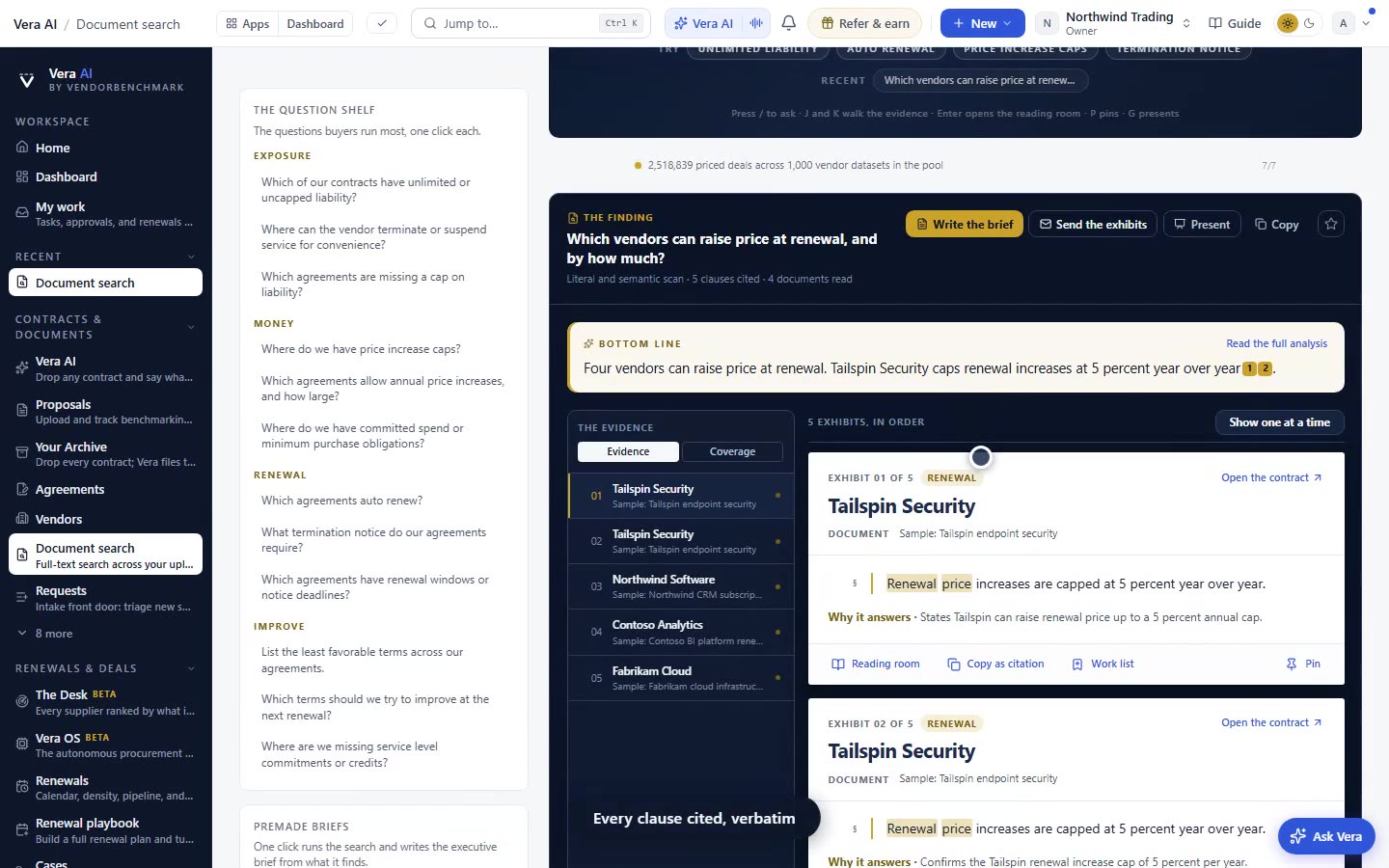
Every vendor benchmark now opens as the verdict reading
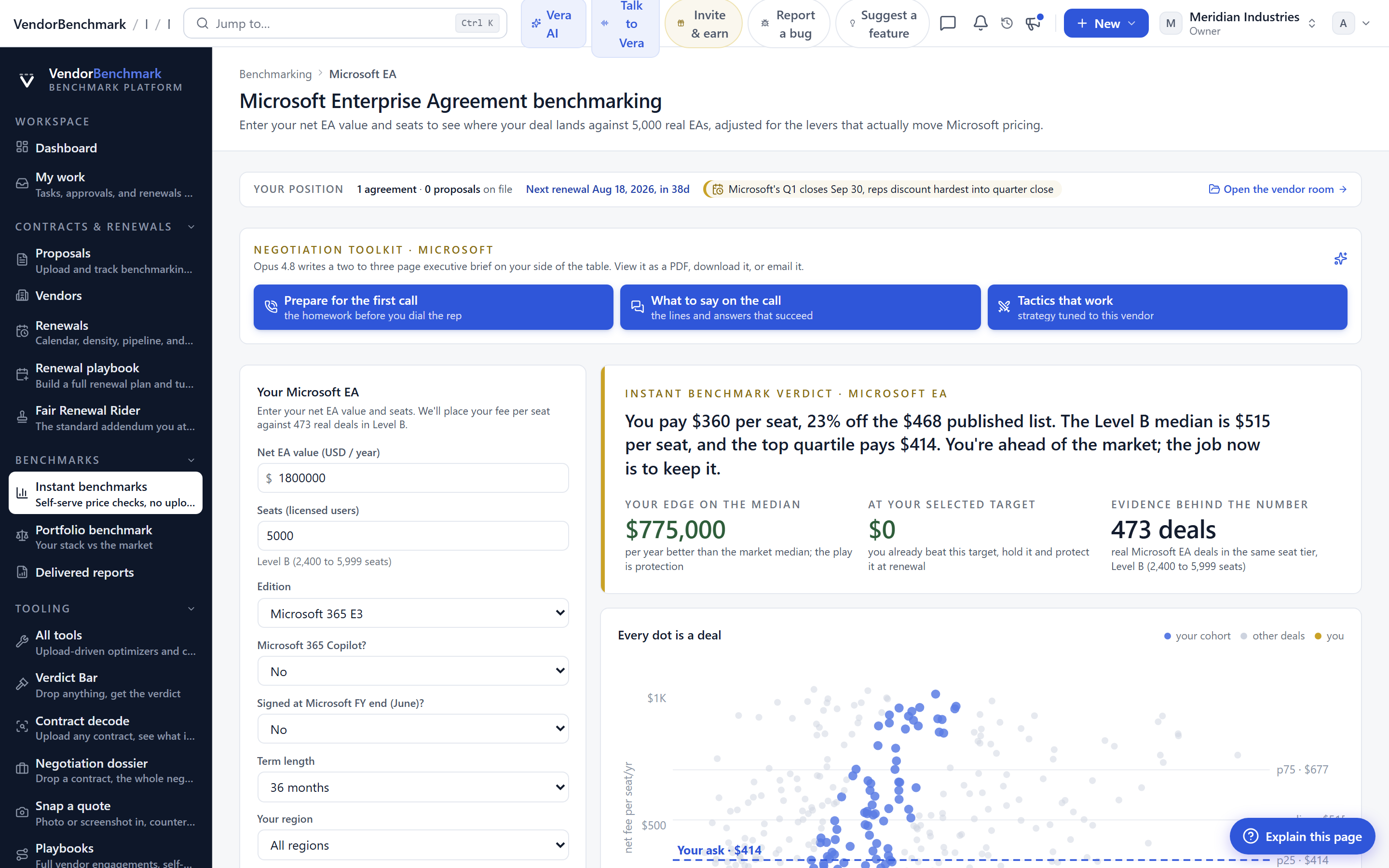
We reshaped roughly 1,347 per vendor benchmark pages so each one opens as a reading. The verdict is stated, the money on the table sits under the gold rule, and your deal is a dot you can drag.
A benchmark page has one job: tell a buyer whether the number in front of them is fair, and what to ask for if it is not. For a long time our pages did that job the way most software does it, with a grid of tiles and percentile bars that you had to assemble into a conclusion yourself. The conclusion was in there. It was just never said out loud. So we rebuilt the roughly 1,347 per vendor benchmark pages to open as a reading. The verdict is a sentence at the top. The money is under a gold rule. The curve is the hero, and your deal is a dot you can drag. This is the same change we made to research papers, applied to the benchmark itself.
The named problem: a dashboard makes you do the reading
Here is the failure mode we kept watching. A procurement lead opens a benchmark before a call. There is a percentile bar, a median figure, a spread. All correct, all present. But nowhere on the page does it say, in words, what the buyer should do. So the buyer squints at the bar, does the arithmetic in their head, guesses at an ask, and walks into the call carrying a number they are not confident in. The data was never the problem. The translation was. A dashboard hands you the ingredients and asks you to cook under time pressure. A verdict reading serves the plate.
This matters most at the moment of least attention, the ten minutes before a renewal call. That is exactly when nobody wants to reconstruct a conclusion from a chart. It is why we wrote about starting the work with an interview rather than a blank dashboard. The verdict reading takes the same posture into the benchmark: it starts with an answer.
The curve is the hero, and the dot is your deal
Below the figure band, the market curve carries three things at once. The median runs as a navy line, the price a prepared buyer holds runs as a dashed gold line, and your deal is a single navy dot. The gap between the navy line and the gold line is the distance between average and prepared, and it is usually the whole game. Your dot sitting to the right of the gold line is the plain visual statement that you are overpaying, said without a paragraph of text.
The dot is draggable, and that is the part that changes how the page behaves. Drag it to test a more aggressive ask, or drag it to model a bigger commitment, and the form follows the dot. The figure band updates, the supported ask updates, and the verdict sentence updates with it. The dot, the form, and the verdict are one state, not three views you have to keep in sync in your head. You are not reading a static picture of the market. You are moving through it and watching the recommendation change under your hand.
The moves and the research shelf sit inside the reading
A verdict with no next action is a diagnosis with no prescription. So the analyst chips and the forward moves sit directly under the recommendation. The chips are the qualifications, the conditions under which the number holds and the ones under which it moves. The forward moves are what to do next, whether that is opening the Negotiation Dossier or forwarding the vendor thread to the ghost writer for a counter in your voice. You do not leave the reading to find the action. The action is the closing paragraph.
The reading then closes with the vendor's live research shelf. That is the set of documents at /research and the analyst briefings sitting behind that vendor, so the benchmark and the supporting evidence are one continuous read rather than two tabs. If the market for that category moves under you, which happens fast in places like AI coding tools, the shelf is where the current view lives.
Where this sits in the workflow
The verdict reading is the front door. It is what you open when you want the answer before a call, and it hands you off to the deeper surfaces when you need them. Drag the dot to settle on an ask, read the chips to understand the conditions, then move to the Dossier to package the counter or to the call copilot for the conversation itself. The benchmark stops being a place you visit and interpret, and becomes the first line of a document that runs all the way to a sent counter. You can walk the whole path from the benchmarking library.
Honest limits
Be clear about what the reading does not do. The dot models where you could land, but it does not know your leverage, your switching cost, or how much the vendor wants this logo. Drag it to an aggressive ask and the verdict will tell you the market supports it, not that you will win it. Judgement stays yours.
The curve is built on comparable deals, and it is only as current as the data behind it. For fast repricing categories the shelf moves quickly, and a benchmark you read in March can be stale by the time you renew. That is what benchmark alerts exist to catch, and it is worth checking the freshness of the read before you lean on it. The verdict reading is a sharper way to hold the market view. It is not a substitute for reading the room, and it will not tell you the one thing only you know, which is how badly your side needs the deal to close this quarter.
Want to be updated when major licensing and pricing changes land? One analyst brief a week: the price rises, metric changes and audit campaigns that move software costs. Work email only.
Morten brings two decades of enterprise and software procurement, with stints across Oracle, IBM, SAP, and Salesforce shaping how he reads a deal. He has led sourcing through hundreds of renewals, from mid market order forms to nine figure global agreements, and learned that the buyers who win are the ones who walk in knowing the market. He built VendorBenchmark to make that pattern recognition repeatable.