The Entitlement Agent now works like an application
The entitlement office grew a menubar, keyboard navigation, tables that sort three ways and a sixth room that records who touched what and when. Here is how it fits the buyer workflow.
There is a specific friction that procurement teams learn to tolerate. The tool that holds your entitlements does the work, but it does not behave like the applications you use all day. You reach for a keyboard shortcut and nothing happens. You want to step back to the room you were just in and there is no back arrow. A table shows you rows but not in the order you need, and the vendor with no expiry date floats in the middle of the list where it distracts you. None of this is catastrophic. All of it is friction, and friction across a day of entitlement work adds up to lost minutes and small errors. This update removes that friction by making the Entitlement Agent window behave like an application rather than a web page. If you want the tour, the entitlement office is where these changes live.
The named problem: a room that forgot it was software
The complaint we heard most often was not about missing data. It was about muscle memory. A buyer who spends hours in an entitlement view expects the affordances of a desktop application: a menubar reachable by keyboard, navigation history, tables that sort on a click. When those are missing, every action costs a beat of hesitation. Multiply that by a procurement lead reviewing entitlements across dozens of vendors and you have a real tax on attention. The fix here is not a new capability so much as a set of doors to capabilities the window already had. That distinction matters, because it means nothing you already knew how to do has moved.
The menubar: File, Edit, Go, View, Paper, Window, Help
The window now carries a real menubar with seven headings: File, Edit, Go, View, Paper, Window and Help. Each is reachable by Alt and the underlined letter, so a buyer who prefers the keyboard never has to leave it. The important design choice is that every item is a second door to something the window already did, not a new place to hunt. If you knew how to file a paper before, the Paper menu simply gives you a labelled, discoverable path to the same action. This lowers the learning cost for a new team member and reduces the chance that a capability sits unused because nobody found the button. It is the same instinct behind treating research papers as styled pages rather than embedded files: make the familiar thing behave the way people already expect.
Navigation and tables that sort the way you think
Back and forward arrows now sit beside the room tabs and walk the rooms you have been in, on Alt and an arrow. This matters more than it sounds. Entitlement review is rarely linear. You jump from a vendor to a document to a term and back, and without history you lose your place. The arrows restore that thread. Tables are the other quiet upgrade. Every table sorts on any column: press once for the useful direction, again to reverse, a third time for the order the room meant. A vendor with no dated term sinks to the bottom whichever way you point it, so the rows you can actually act on stay in view. That undated-sinks-to-the-bottom rule removes a small but persistent source of confusion, because a missing date is no longer mistaken for an early or late one. If you run reviews across many contracts, this pairs naturally with the Explorer view of your contract estate.
The sixth room: a Log that records who touched what
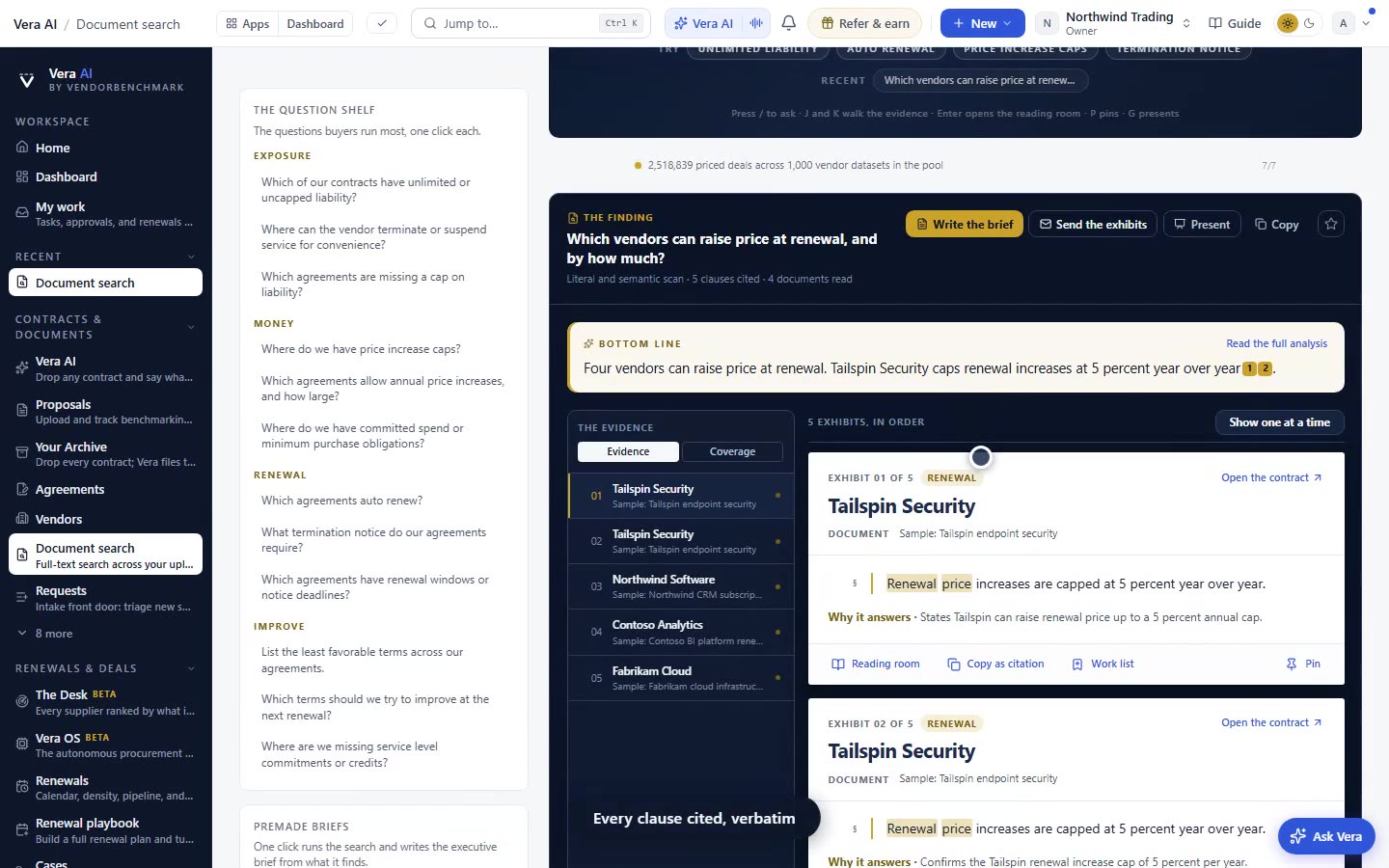
The most consequential addition is a new sixth room, the Log. It records every paper filed, every read and every document opened, with the person who did it and the minute it happened. It is filterable, sortable and exportable. For a procurement buyer this is the audit trail that used to live in email archaeology and best guesses. When a vendor disputes what was shared or when an internal reviewer asks who signed off on an entitlement change, the answer is now a filtered slice you can export rather than a memory you have to reconstruct. It also supports the kind of accountability that pairs well with the meeting record, so the paper trail and the conversation trail line up.
What changes for the buyer
Honest limits
Be clear about what this update is and is not. It is an interface upgrade. It makes the entitlement window behave like an application, and it adds a record of activity inside that window. It does not change the underlying entitlement data, and it does not make a decision for you. The Log records what happened inside the entitlement office; it does not capture actions taken in other systems, so it is one part of your audit picture, not the whole of it. Sorting surfaces the rows you can act on, but a missing expiry date is still a missing expiry date. The undated-sinks-to-the-bottom rule makes the gap visible rather than filling it, and closing that gap is still your work with the vendor. Finally, keyboard navigation and menus reduce friction; they do not replace the analytical judgement that turns an entitlement review into a negotiation position. For that, the review still leans on the market context that the platform brings, and the interface is simply the calmer surface you do it on.
Want to be updated when major licensing and pricing changes land? One analyst brief a week: the price rises, metric changes and audit campaigns that move software costs. Work email only.
Morten brings two decades of enterprise and software procurement, with stints across Oracle, IBM, SAP, and Salesforce shaping how he reads a deal. He has led sourcing through hundreds of renewals, from mid market order forms to nine figure global agreements, and learned that the buyers who win are the ones who walk in knowing the market. He built VendorBenchmark to make that pattern recognition repeatable.