The September editions of fifty six research notes are live
Fifty six research notes are replaced by their September 2026 editions, arguing from what moved this quarter and closing with the bottom line. The web page, the Word download and the reader PDF are all the new edition.
Here is a problem most procurement teams recognise and few name out loud. The research you rely on ages quietly. A Category Buying Guide you read in June still reads as authoritative in September, but the July price list changes have landed, the AI seats that were priced as seats have quietly become consumption, and a regulatory date you were tracking has moved inside the renewal window. Nothing on the page tells you the ground shifted. You negotiate from a snapshot that stopped being true, and the vendor knows it before you do. Today we are closing that gap. The September editions of fifty six research notes are live, and every one of them argues from what moved this quarter rather than from what was true when it was last written.
What actually shipped
Every Call Scripts brief, every Category Buying Guide, and the full toolkits for Cisco, Citrix, Celonis and Cloudflare have been replaced by their September 2026 editions. That covers the reports, the benchmarks, the runbooks and the cost studies attached to each of those four vendors. The Cisco Renewal Outlook has rolled forward to its Q4 2026 edition, which matters if you are inside a Cisco enterprise agreement with a calendar year anniversary. This is not a light refresh of a few headline numbers. Each note has been rewritten to open with the three things to know first, so a procurement lead skimming before a call gets the decision inputs in the first screen rather than in the appendix.
The structure is deliberate and consistent across all fifty six. Each note opens with the three things to know first. It then argues from what moved this quarter, meaning the July list changes, the AI seats that stopped being seats, the commitment pools and the regulatory dates. It closes with what changed since the last edition and the bottom line. That closing section is the part buyers have asked for most, because it lets you see the delta without rereading the whole document. If you want the mechanics of how a note tracks its own changes across editions, we wrote that up in Compare: what the vendor quietly changed since last year.
Why arguing from what moved this quarter matters
A research note that restates evergreen advice is comfortable and useless. The value is in the movement. This quarter the recurring themes are concrete. The July list changes reset published pricing for several categories, which changes your anchor. The AI seats that stopped being seats are the single most expensive misread we see right now, because a line item that looked like a fixed per user cost has been converted to consumption, and the same headcount now carries an uncapped meter. Commitment pools are being offered as a discount lever that quietly trades flexibility for a lower unit rate. And the regulatory dates matter because a compliance deadline inside your renewal window is leverage that expires.
Each September edition names which of these moved for its vendor and category, and what the move does to your position. That is the difference between a document you read and a document you negotiate from. The AI seat repricing in particular is worth reading closely if you hold a Citrix or Celonis agreement, because both toolkits were updated to reflect the shift. If you want to understand the mechanism behind consumption creep before it prices you, Vendor lock-in: measuring switching costs before the vendor prices them for you is the companion piece.
Every surface is the new edition
A common failure with research updates is that the web page changes but the download does not, so someone forwards a PDF that is a quarter stale and the whole team argues from it for another month. We closed that. The web page, the Word download and the PDF in the reader are all the September 2026 edition. There is no version that lags. If you download the Word file to paste a benchmark into a business case, or hand the PDF to a stakeholder who does not have a login, they get the same current edition you are reading. This sounds small. In practice it removes the most common source of stale numbers in a procurement team, which is the file that got shared before the update.
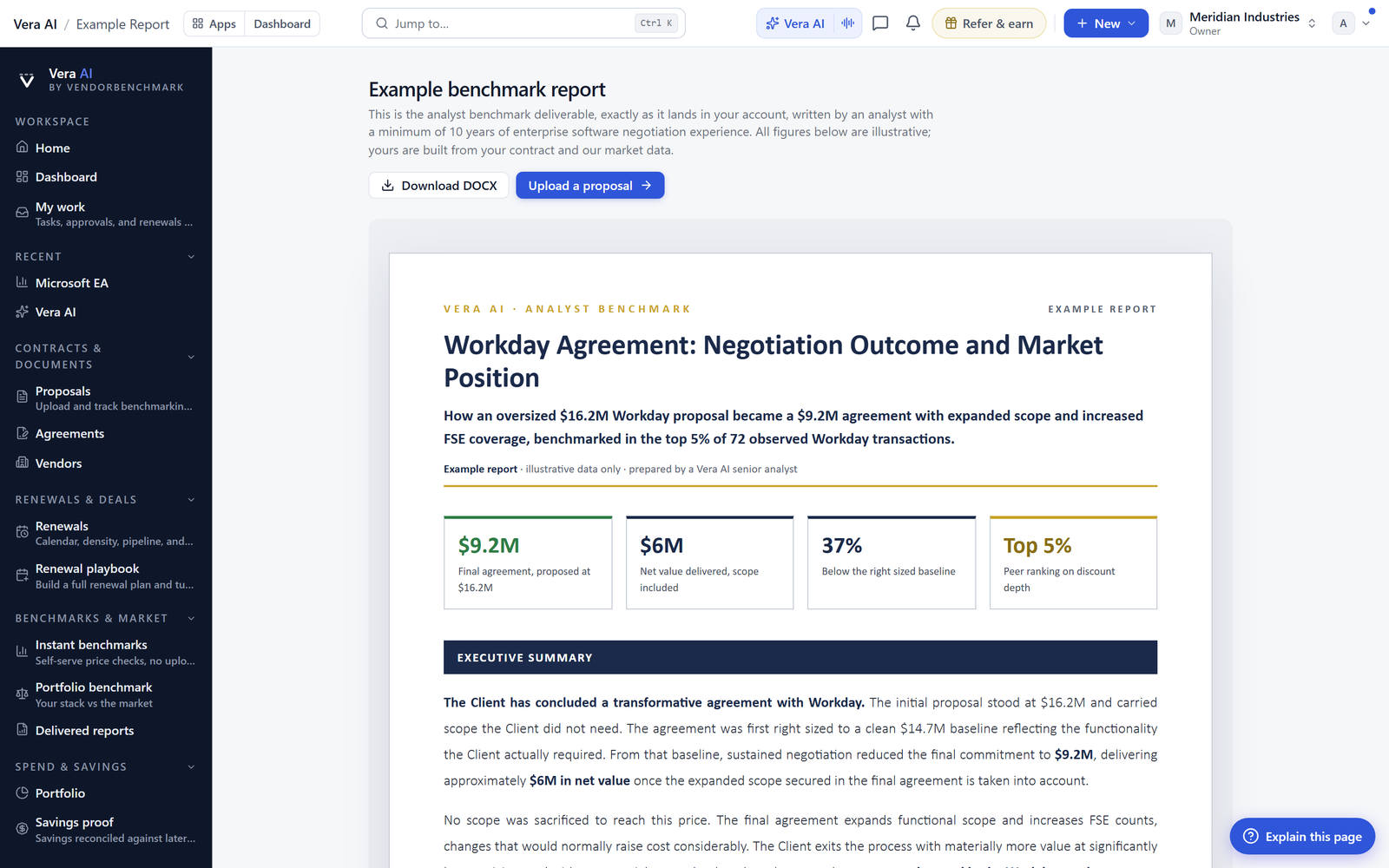
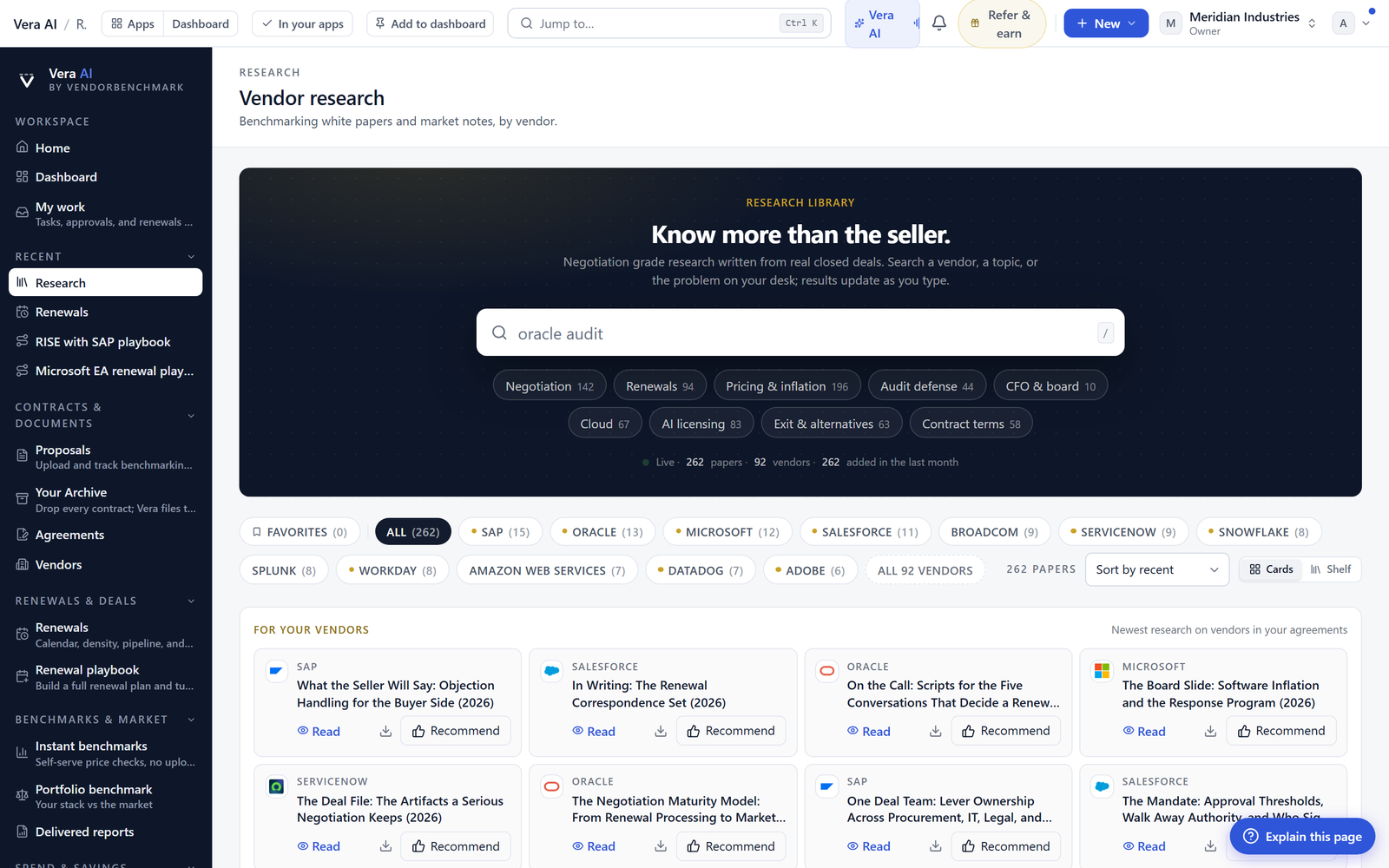
The reader renders each note as a styled page rather than an embedded file, which is what makes the three things to know first and the closing bottom line scannable at a glance. We covered that shift in detail when it landed, in Research papers now read as styled pages, not embedded files. The September editions inherit that treatment across all fifty six notes.
How it fits the buyer's workflow
The intended sequence is simple. When a renewal enters its window, open the relevant note, read the three things to know first, then read the what changed section to see the delta since you last looked. Carry the bottom line into your prep. If you run a call, the matching Call Scripts brief is now on the September edition too, so the questions you ask reflect the current commitment pool and pricing structure rather than last quarter's. The whole point is that you spend your attention on strategy, not on reconstructing what is current.
The honest limits
Be clear about what this update is and is not. It is a quarterly edition. It captures what moved through September 2026, which means a price list that changes in late October is not yet reflected until the next edition or until Terms Watch catches it live. If you need the week it happens rather than the quarter it happened, use Terms Watch alongside the notes, not instead of them. The two are designed to sit together, the edition for the considered read and the watch for the intraquarter alert.
Second, the deep vendor treatment covers Cisco, Citrix, Celonis and Cloudflare this cycle. The Call Scripts briefs and Category Buying Guides are broad, but the toolkit level depth, the runbooks and cost studies, is those four vendors. If your renewal is a vendor outside that set, you have the current category guidance and the benchmarks, but not a vendor specific runbook at the same depth. Third, a research note is an input, not a decision. It tells you where the market clears and what moved. It does not know your internal constraints, your incumbent switching cost, or the political weight behind a particular vendor in your organisation. Those you supply. Read the note, then decide. The whole set is on the research library now, on the September 2026 edition, on every surface.
Fredrik has spent more than twenty years in enterprise software, with time at Oracle, IBM, SAP, and Salesforce before moving to the buy side. He structured and priced the kind of large agreements most buyers only see once or twice in a career, which taught him where the leverage sits and how far a vendor will actually move. He started VendorBenchmark to hand that knowledge to every sourcing team.