Vera answers at the altitude you asked
Ask how an Oracle ULA exit works and you now get the mechanism explained, not a summary of your own contract. Answer length and format now follow the question.
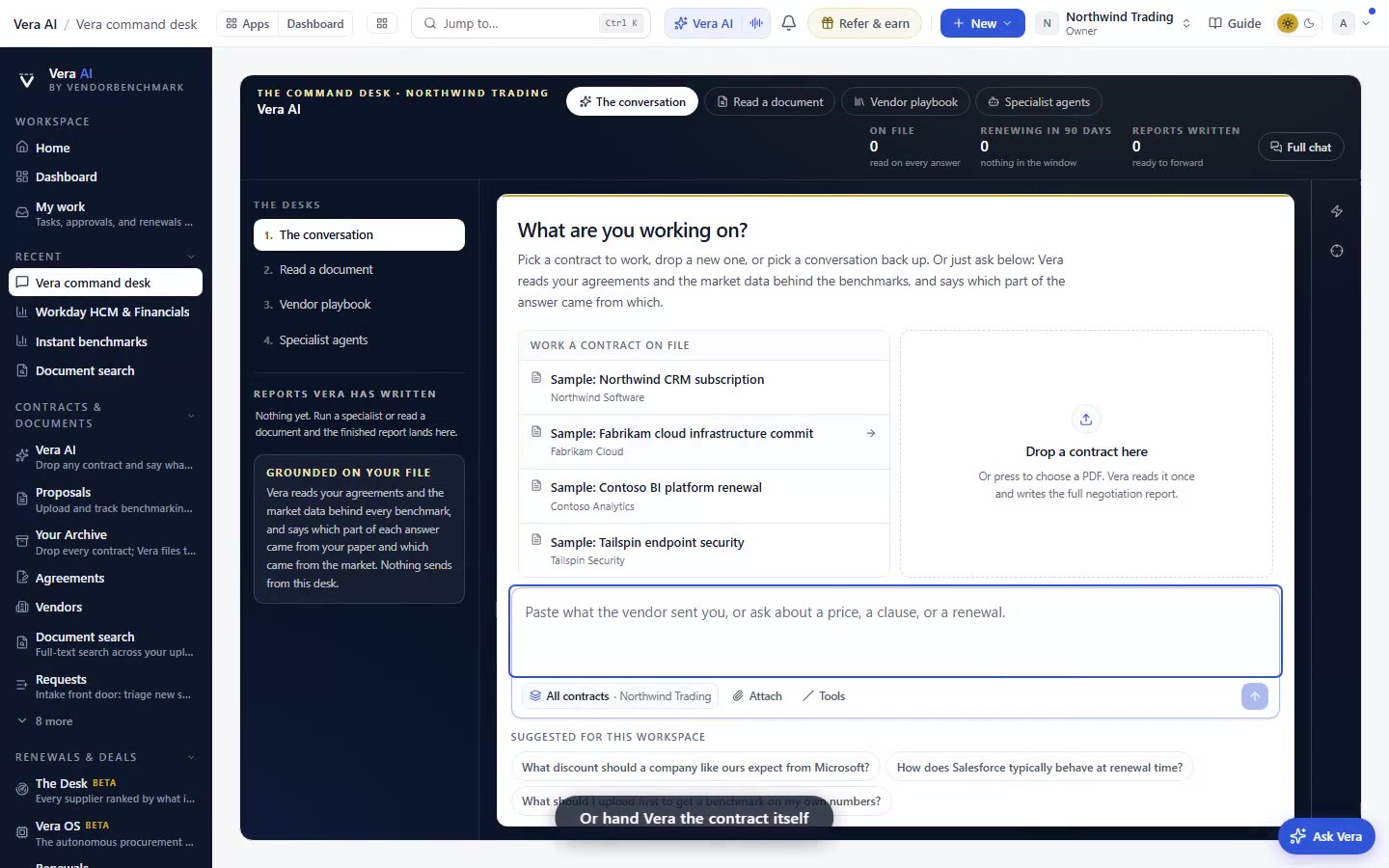
There is a specific frustration every procurement buyer knows from using an AI assistant. You ask a genuine how does this work question, something like how do I exit an Oracle ULA, and what comes back is not a lesson in the mechanism. It is a short paragraph framed around one of your own agreements, held to a length that was never chosen for the question. You wanted to understand the certification process, the timing windows, the leverage points. You got a summary of your contract instead. We have shipped a change to how Vera answers, and it addresses exactly this. Vera now takes the shape of the answer from the shape of the question. You can try it at the Ask Vera chat.
The problem was one shape for every question
Until now, every Vera answer was written to one template. It aimed at your own contracts, it stayed near 180 words, and it applied that template whether you asked a broad conceptual question or a narrow one about your position. That single shape works well when you ask about your position. It fails badly when you ask how a mechanism works, because a mechanism does not fit in 180 words and it should not be framed around your paper. A ULA exit is a process with steps, a certification, a deadline, and a set of choices. Compressing it into a contract summary teaches you nothing you can act on. This mattered because buyers use Vera as a first read before a call, and a first read that will not teach the mechanism sends you back to slower sources. Our own argument that reports beat answers for deliverables does not excuse a weak answer for the questions that stay in chat.
How Vera reads the altitude of your question
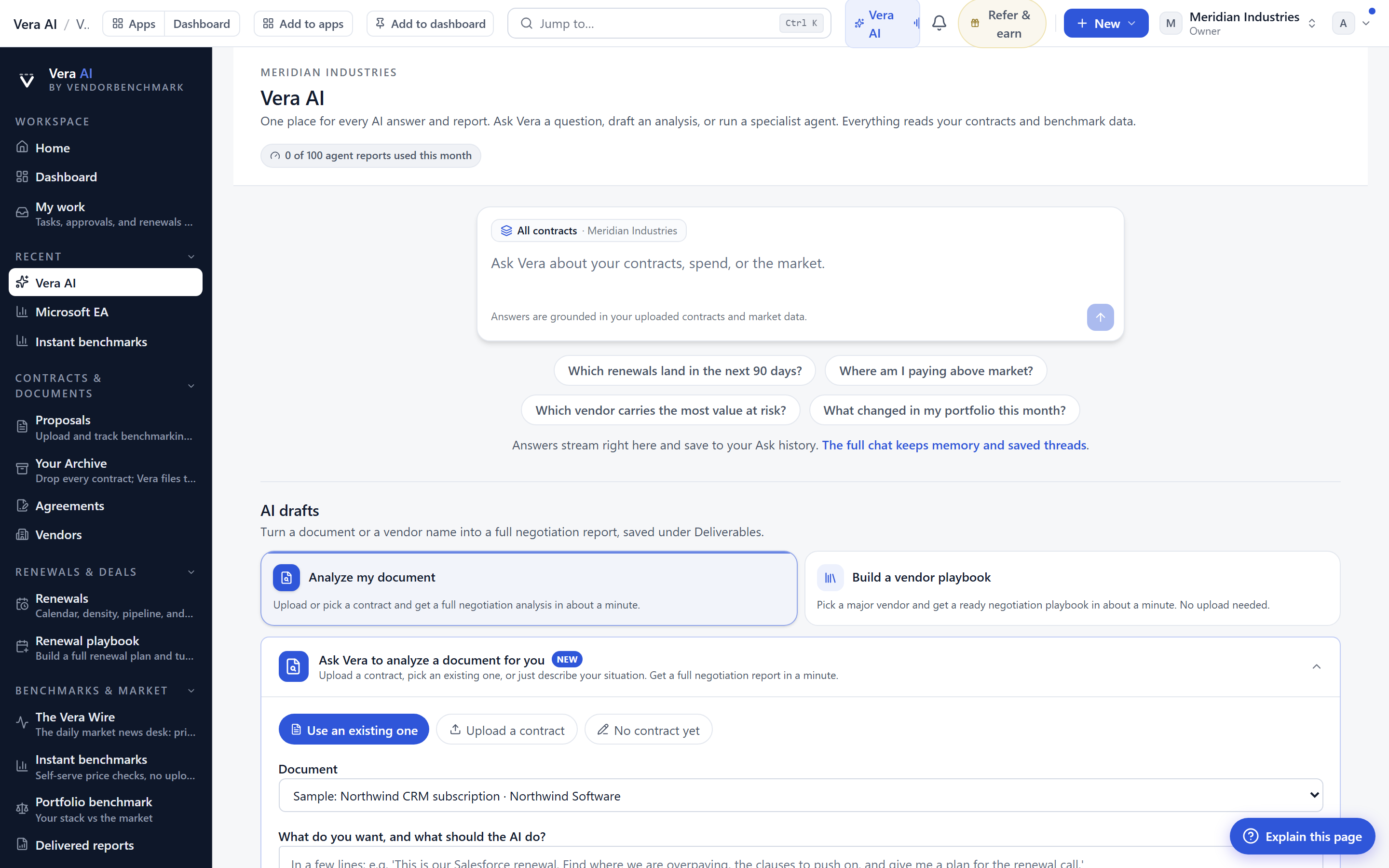
The change is that Vera now classifies what you are actually asking and formats accordingly. A how it works question is taught in headed sections at the length the subject genuinely needs, so a ULA exit gets the certification, the window, and the leverage explained in full rather than clipped. A question about your own position keeps the tight ranked findings you already rely on, because that is the right shape for it. A real choice between two or more options returns a comparison table, so you read the trade off rather than reconstruct it. A quick follow up stays a single sentence. And small talk stays small talk, without a wall of text attached. Crucially, your own agreements now arrive at the close of a general answer as context, not as the frame that distorts it. You learn the mechanism first, then see how your paper sits against it. This is the same instinct behind talking it through with Vera before the call, where you want the shape of the reasoning to match the question you brought.
Deep now writes deeper, not just thinks longer
There is a second, quieter change. The Deep depth setting used to spend more time reasoning but return an answer of roughly the same length, so you paid for the thinking without seeing more of it on the page. Deep now genuinely writes deeper. When the subject warrants it, a Deep answer runs longer, carries more of the reasoning, and shows the intermediate steps a thorough analysis actually produced. For a buyer preparing for a hard renewal, this is the difference between a summary and a working brief. If you set Deep on a question about a multi year commitment, you get the full treatment of the terms, the exit paths, and the market context drawn from fresh benchmark data. This matters most on exactly the questions where a shallow answer is dangerous, the ones described in the one line request that hides a five year commitment, where the length of the commitment is the thing nobody asked about.
Where it fits in the buyer workflow
For most buyers, chat is the first stop and the deliverable is the second. The altitude change makes the first stop far more useful without changing where it hands off. A how it works answer teaches you the mechanism before a negotiation. A position answer tells you where you stand. A comparison table frames the decision you need to take to an approver. When the answer needs to leave chat and become something a sign off chain can act on, it still becomes a dossier or a report, the pattern we describe in the deal sign off chain. The chat now reads and formats the way the rest of the app does, consistent with the point we made in Vera's chat reads like the rest of the app. Nothing about the underlying data changed. Answers still draw on benchmarks across 1,471 vendors. What changed is that the answer arrives in the shape that makes that data usable to you.
The honest limits
Be clear about what this does and does not do. Vera classifies the shape of your question, and classification is a judgement. A question that mixes a how it works part and a position part may get the shape of the dominant part, so if you want both treated fully, ask them as two questions. The altitude is inferred from the words you use, so a terse or ambiguous prompt may draw a shape you did not intend. Correcting it is one follow up, but it is a step. Longer Deep answers cost more reading time, and for a fast operational check that length is not a benefit, so match the depth to the moment. Finally, a well shaped chat answer is still a chat answer. When something needs to survive turnover, feed an approval chain, or stand as a record, it belongs in a deliverable or the org brain, not in a scrollback. The shape change makes the first read better. It does not replace the document.
Want to be updated when major licensing and pricing changes land? One analyst brief a week: the price rises, metric changes and audit campaigns that move software costs. Work email only.
Morten brings two decades of enterprise and software procurement, with stints across Oracle, IBM, SAP, and Salesforce shaping how he reads a deal. He has led sourcing through hundreds of renewals, from mid market order forms to nine figure global agreements, and learned that the buyers who win are the ones who walk in knowing the market. He built VendorBenchmark to make that pattern recognition repeatable.