Voice agents 2.0: she reads your screenshot, searches the open web, records the meeting, flags a wrong figure, and takes your call from the car
The voice line just got its second version. Here is what the analyst does on a live call now, where it fits your workflow, and where it still stops short.
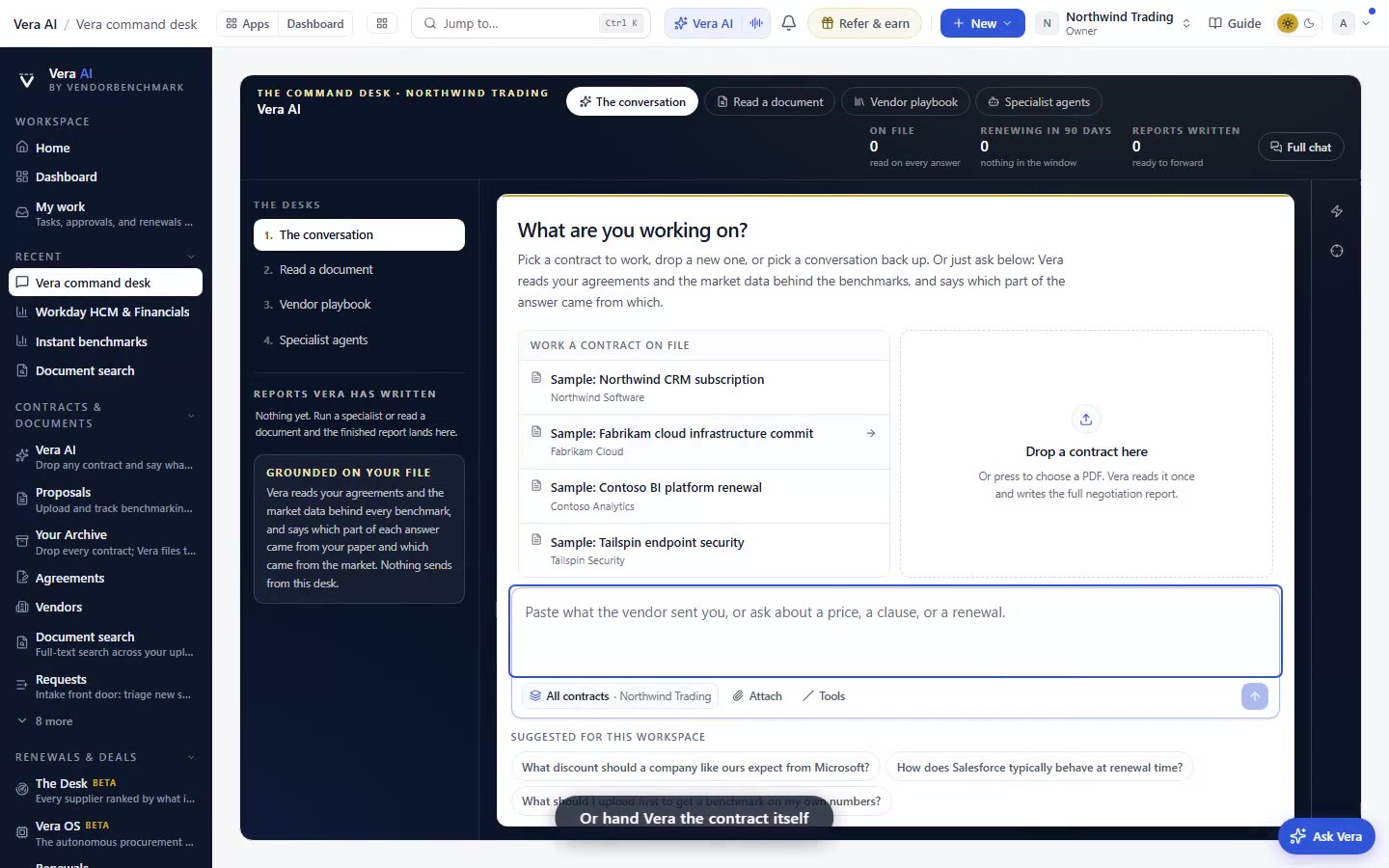
You know the moment. The rep says a number, fast, in passing, and it does not sound right. You do not have the benchmark open, you cannot read the screenshot they just pasted while they keep talking, and by the time you have found the figure that contradicts them the conversation has moved on. The claim stands because nobody caught it in the four seconds it was live. This release is aimed squarely at that gap. Voice agents 2.0 puts an analyst on the call who reads what is on the screen, checks what a vendor lists in public, and flags a figure that does not hold while you are still on the line. Thirty eight of the forty scenes on the voice roadmap are live on the new line.
The analyst reads the room, not just the transcript
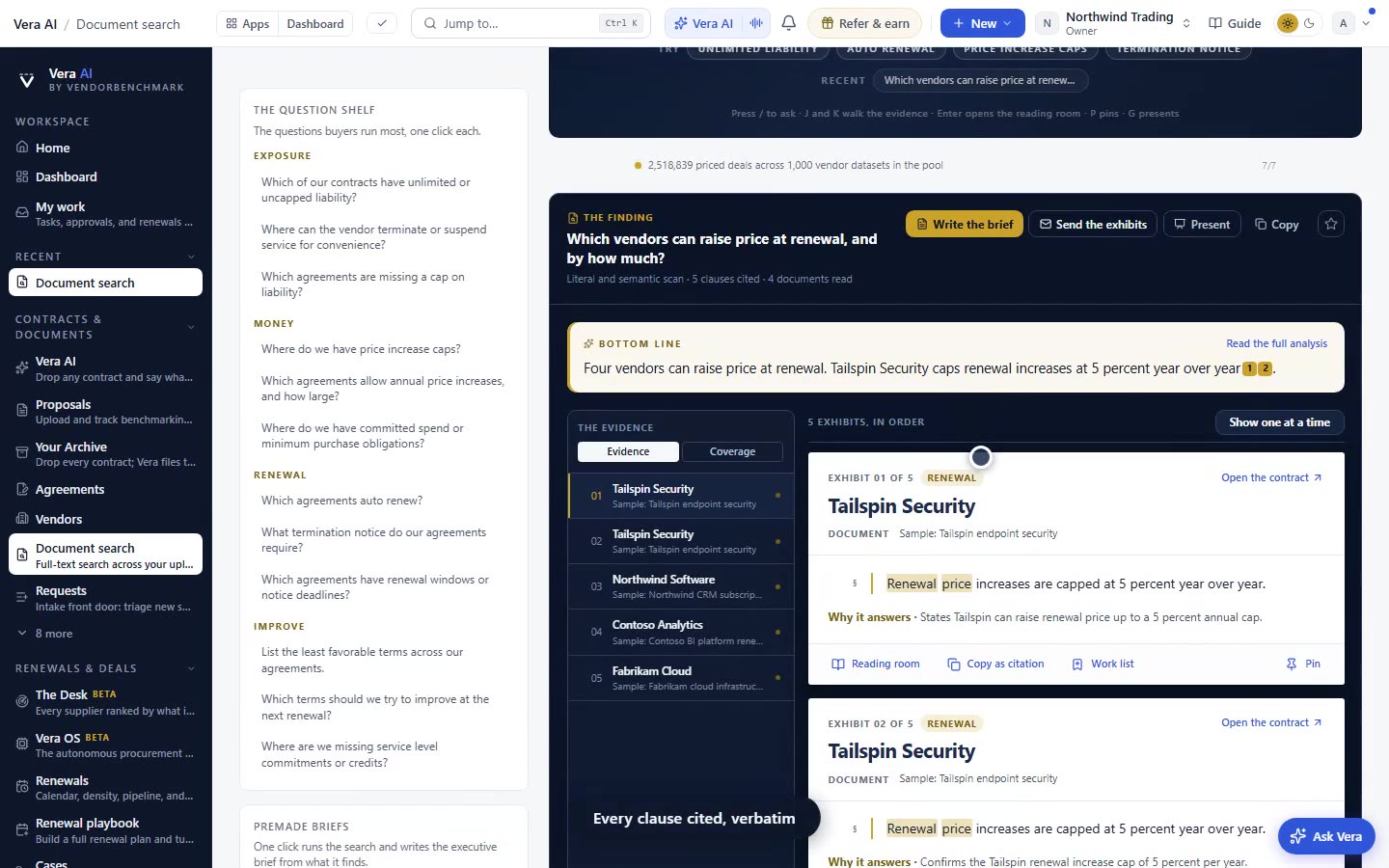
The old voice line listened to words. The new one takes in more of the call. Drop a screenshot on the call and the analyst reads it, so a pasted price sheet or a quote grid becomes something she can talk about rather than something you squint at alone. Ask what a vendor lists today and she searches the open web and tells you where it came from, which matters because a public list price is a fact you can put on the table and a remembered one is not. The meeting seat is recorded for real now, it runs past the hour when the call does, and it hears the room itself rather than depending on a single microphone. If you have followed how the meeting recorder reads up for you first, this is the same seat, listening harder.
Fast or Thorough, and the drill that changes hats
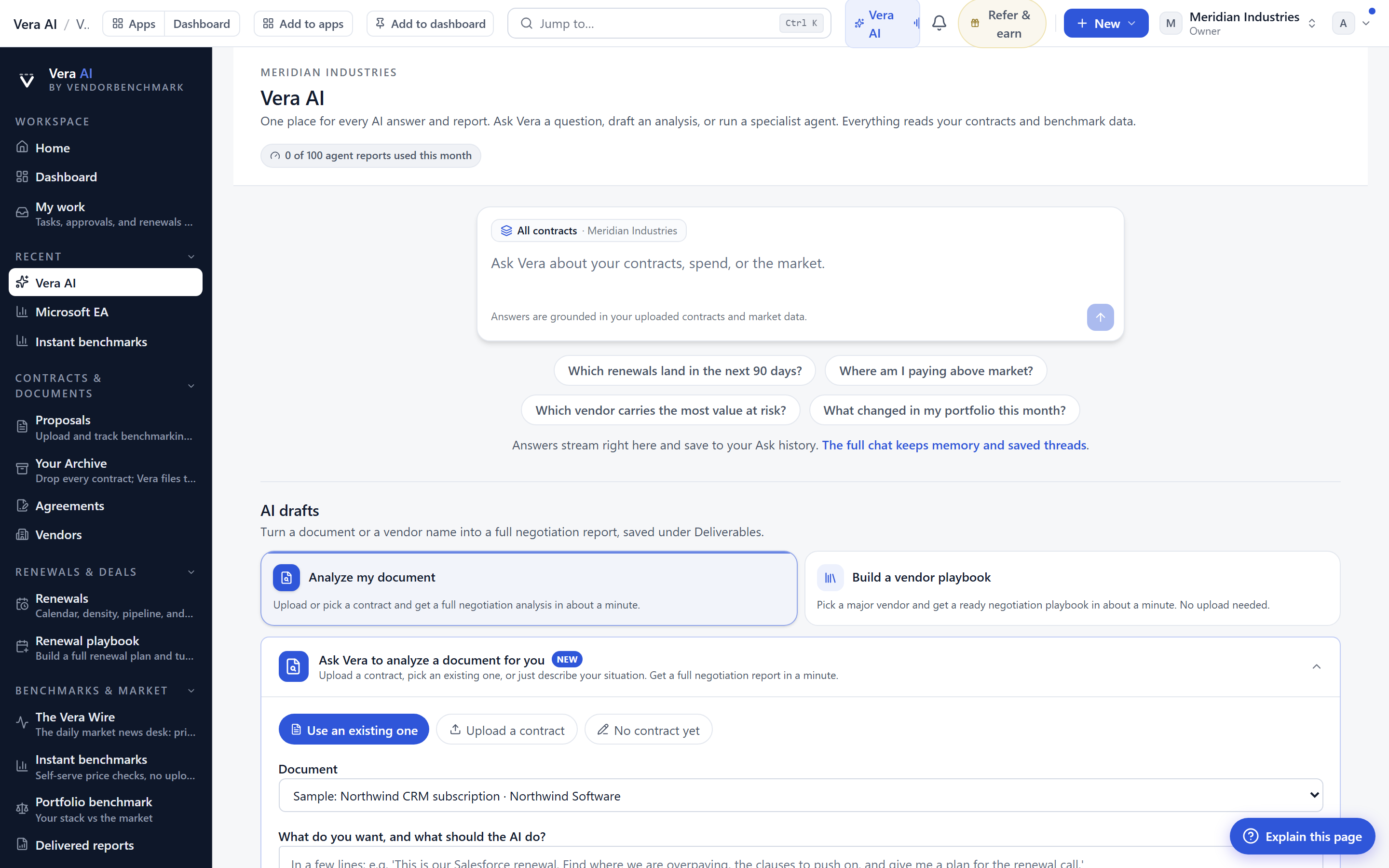
Not every call needs the same analyst. You can pick Fast or Thorough per call, and flip it mid call, so a quick check runs light and a pricing fight runs deep without you leaving the conversation. Say carry on and she picks up mid thought rather than restarting. The sparring drill got the same second version. When you say break, the drill changes hats, in a rep's voice modelled on the vendor you are about to face. That is the point of the voice sparring room: you rehearse the exact objection you expect, in the register you will hear it in, and you hear yourself answer it before it counts. Replay yesterday's call against her to see where the line went soft.
The meeting seat that flags a claim while it is still cheap to flag
The recorded seat does more than take minutes. It takes a gap when a rep's claim would cost you, meaning it pauses to surface the contradiction at the moment the number is live, not after the call has closed. It says goodbye properly rather than cutting off. And a figure she stated that the record did not support is a red line in the thread at once, so a wrong number is corrected in place and everyone in the thread sees it. This is the same discipline as checking whether the number is any good on a call, extended to the analyst's own figures. If she said something the record did not hold, that gets flagged too. The seat holds itself to the standard it holds the vendor to.
She takes your call from the car
The seat is not chained to a desk. Mute the phone seat mid sentence when you need the room to yourself, press 1 to release her from the call, and phone Vera from your own number when you want to talk it through on the drive home. When you hang up, the memo is on your desk. This is the call room reaching you where you actually are, in the car park after the meeting rather than only in front of the screen. One consistency note worth calling out: Vera on the website talks like Vera in the product, the roundtable sounds like the line, and the bench can be recast by ear. The voice you rehearse against is the voice you meet.
What this does not do yet, and where it stops
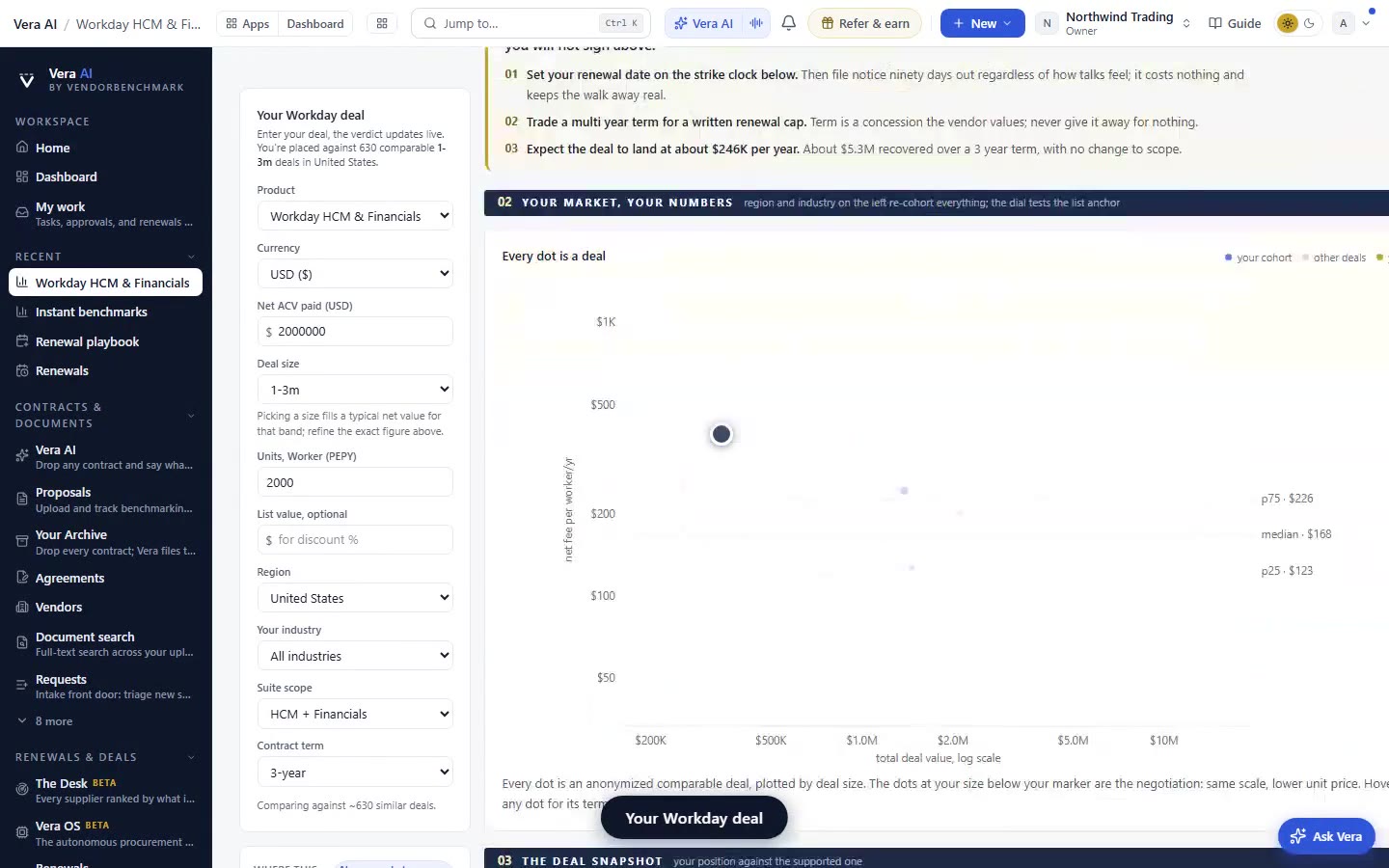
Honesty first. Thirty eight of forty scenes are live, not forty, so two are still in progress and you will meet the edges of them. The open web search returns what a vendor publishes in public, which is genuinely useful for list prices and posted terms but says nothing about the private discount another buyer negotiated. For that you still need the benchmark library, which covers 1,483 vendors, and the verified peer outcome cohorts, because a public page is a starting point and a percentile bar is the argument. Reading a screenshot is reading, not proof. If the image is low resolution or the figure is buried in a chart, she will tell you she is unsure rather than guess, and you should treat an unsure read as a prompt to ask the rep to send the source file. The flag on a figure that did not hold is a flag, not a verdict. It tells you the number and the record disagree, and it is still your call which one is right. And the released voice on the phone is an analyst seat, not a signatory. She flags, cites, drafts and remembers. She does not agree to a price on your behalf, and you would not want her to.
The point of this line is not to replace the buyer on the call. It is to make sure the buyer on the call is never the only one reading, checking and remembering. Six specialist agents and ten inbox agents already carry the work off the call. This release carries a real share of it onto the call itself, in a voice you can rehearse against and then meet. See it live at have Vera join any call now, and choose who walks in.
Want to be updated when major licensing and pricing changes land? One analyst brief a week: the price rises, metric changes and audit campaigns that move software costs. Work email only.
Morten brings two decades of enterprise and software procurement, with stints across Oracle, IBM, SAP, and Salesforce shaping how he reads a deal. He has led sourcing through hundreds of renewals, from mid market order forms to nine figure global agreements, and learned that the buyers who win are the ones who walk in knowing the market. He built VendorBenchmark to make that pattern recognition repeatable.