Codify your playbook once. Every AI review negotiates from it.
Your contract policy holds each term with your standard, the language a redline uses, the fallback and the walk away line, so the Contract Agent, the redlines and the deviation scan all argue your standard instead of generic advice. Plus the Fair Renewal Rider: a versioned addendum of the terms you always want, inserted into any renewal as tracked changes from the Deal Agent.
Every renewal re-litigates the same terms: the uplift cap, the audit conduct, the change-of-control. The knowledge of what your company will and will not accept lives in a few people’s heads, so it walks out the door when they do and gets re-argued from scratch each time. The contract policy makes it institutional.
Set the standard once, apply it everywhere.
The policy is the source of truth every engine and every rider draws from.
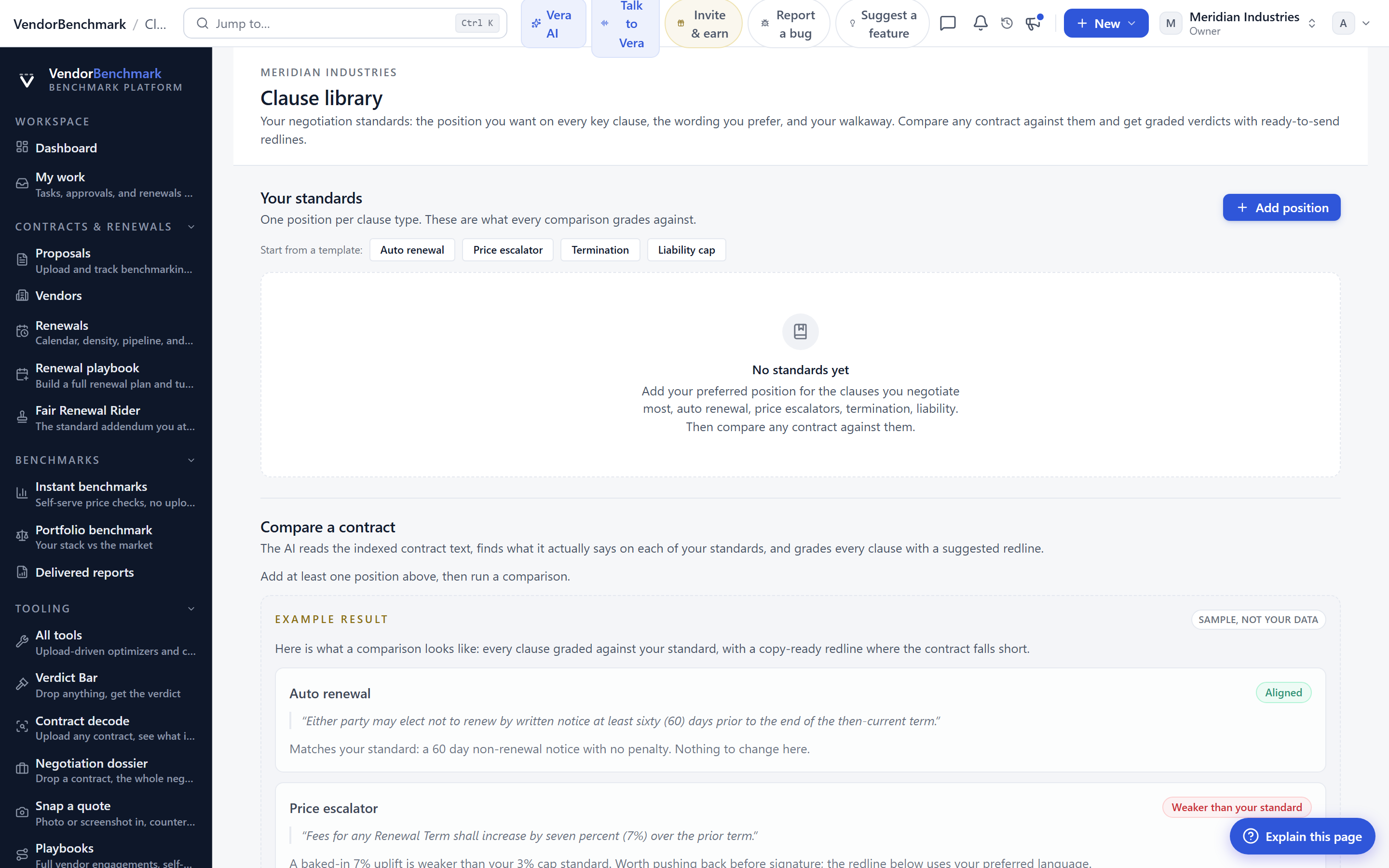
Set your standard, redline language, fallback, and walk away line per term. The Contract Agent’s check, the redline language, and every negotiation draft push toward your language, not a generic best practice.
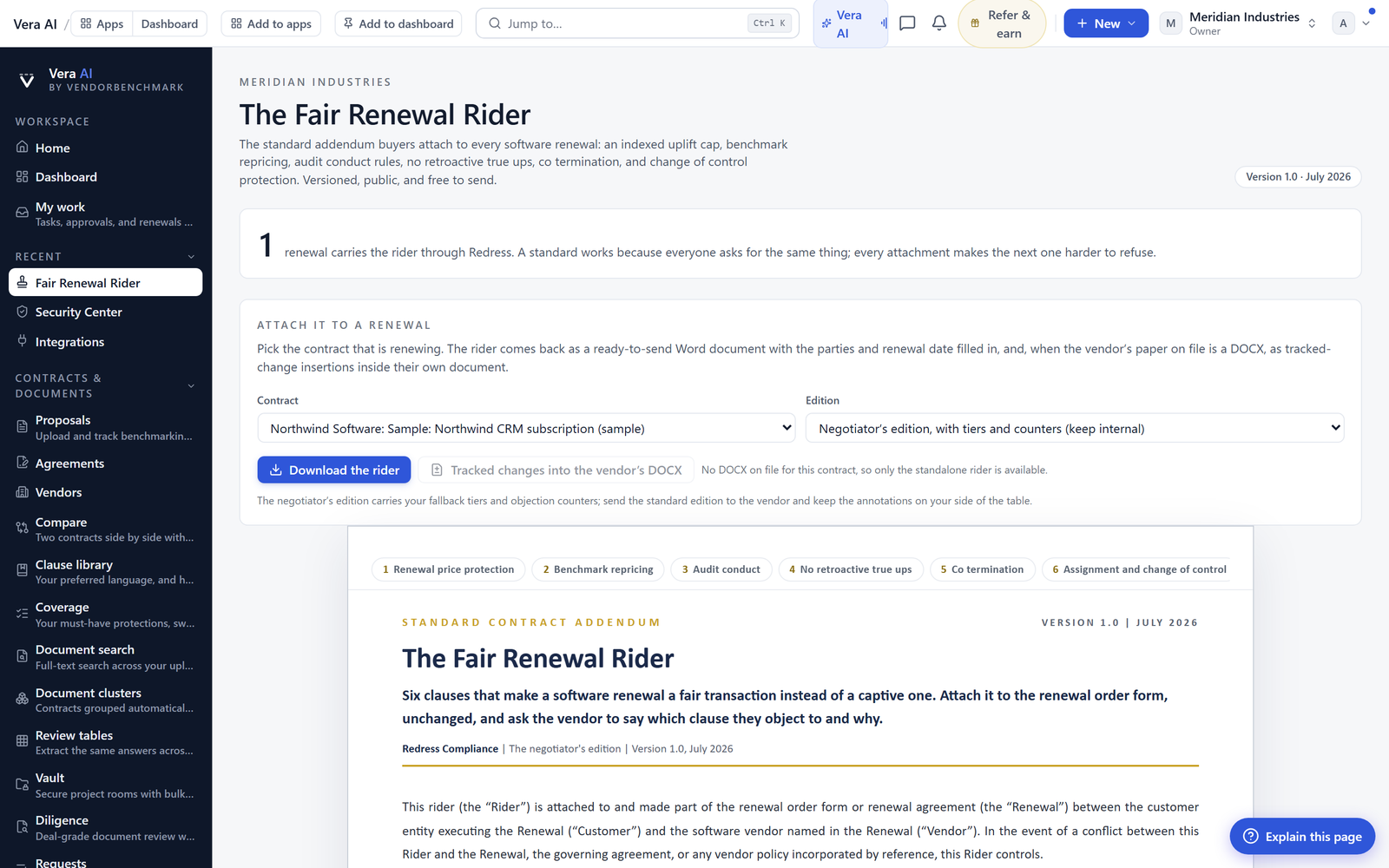
A versioned standard addendum, an uplift cap, benchmark repricing, audit conduct, and change of control, inserted into any renewal as tracked changes from the Deal Agent’s Terms step, so you attach the same fair terms every time.
Every agreement is scanned against the policy, term by term, in the background, so you see which fall short of a must have term, what they are worth a year, and when they renew.
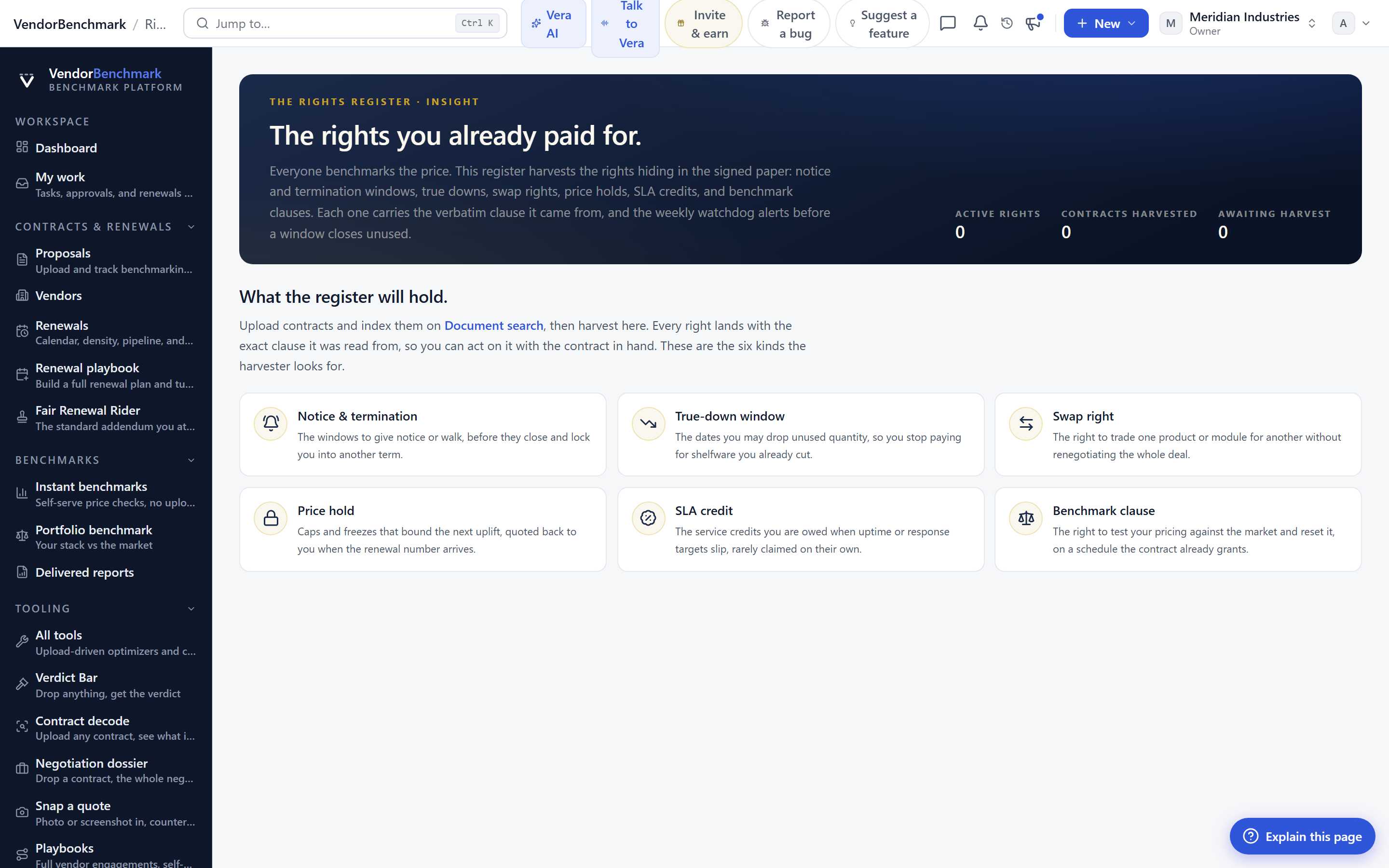
True-downs, swap windows, price holds, and SLA credits you already paid for, tracked with expiry alerts, so a right you forgot about gets used before it lapses.
The library is what makes the AI yours.
Generic AI gives generic advice. The contract policy is the layer that turns every engine on the platform into your negotiator: the Contract Agent, the redline language, the ghost-writer, and the rider all read your language and walk away line, so the output argues your standard, in your language.
Institutional memory, versioned and enforced.
The playbook stops living in people’s heads and starts living in the platform.
The policy feeds the Contract Agent, the redline language, the deviation scan, the negotiation ghost-writer, and the rider, so a change to your standard propagates to every AI surface at once.
The policy and the rider are both versioned, so you can update the standard and know exactly which version applied to which agreement.
Each term holds what the AI needs: what you want, the exact language, and the point past which you walk, so drafts are specific and bounded.
The deviation scan reads every agreement against the policy and a nightly re-check reads new and changed ones, so gaps are a glance, not a manual audit.
Riders and redlines export as tracked changes against the vendor’s paper, so legal reviews a markup, not a fresh document.
Stop re-arguing the same clauses every single renewal.
The uplift cap and the audit conduct do not need to be negotiated from first principles each time. Codify them once and the rider brings them to every renewal, drafted as tracked changes.
Estimate your own hours →The layer that makes the whole platform argue your case.
A clause bank or a template library is static text. This is a living standard that drives every AI engine.
A library of sample clauses sits there until someone remembers to use it. This standard is read automatically by every AI review and merged by the rider, so it applies itself.
A generic model argues a textbook position. Grounded in your contract policy, the AI argues the exact wording and walk away line your legal team approved.
When the playbook lives in a few experts’ memory, it is lost to turnover and re-argued each cycle. Codified, it is institutional and enforced.
Business value, and the operational value under it.
One line for the board paper, and the day to day the team actually feels.
- Institutional memory that survives turnover: the playbook is codified, not carried in a few heads.
- The same fair terms on every renewal, so protections stop being re-argued and occasionally lost.
- Coverage gaps visible across the estate, so no contract quietly lacks a cap or an exit.
- Rights you already paid for used before they lapse, recovering value already bought.
- Every AI engine drafting in your approved language, not a generic one.
- The rider merged into any renewal as tracked changes legal can review.
- A one glance deviation scan instead of a manual contract by contract audit.
- One update to the standard, propagated to every AI surface at once.
Make every review argue your standard.
Codify the playbook once. The platform carries it everywhere.