Understand a 40 page order form in the time it takes to read one.
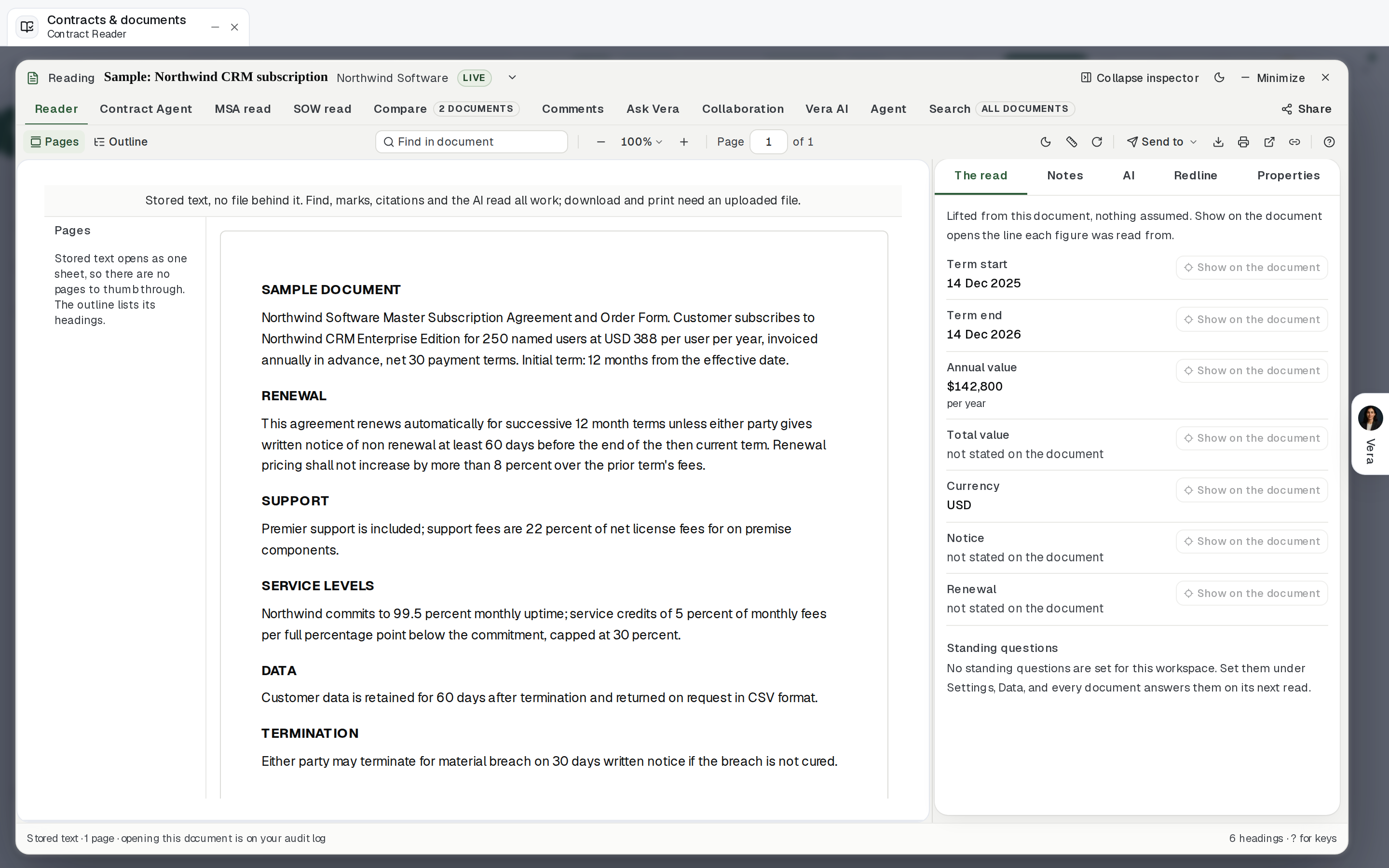
Upload any contract, master agreement or statement of work. It opens as pages with every change worth asking for marked where it sits, priced and explained, and the terms judged against the market. Approve a change into the redline, reword it, or set it aside, then take the redlined file and a clean copy out.
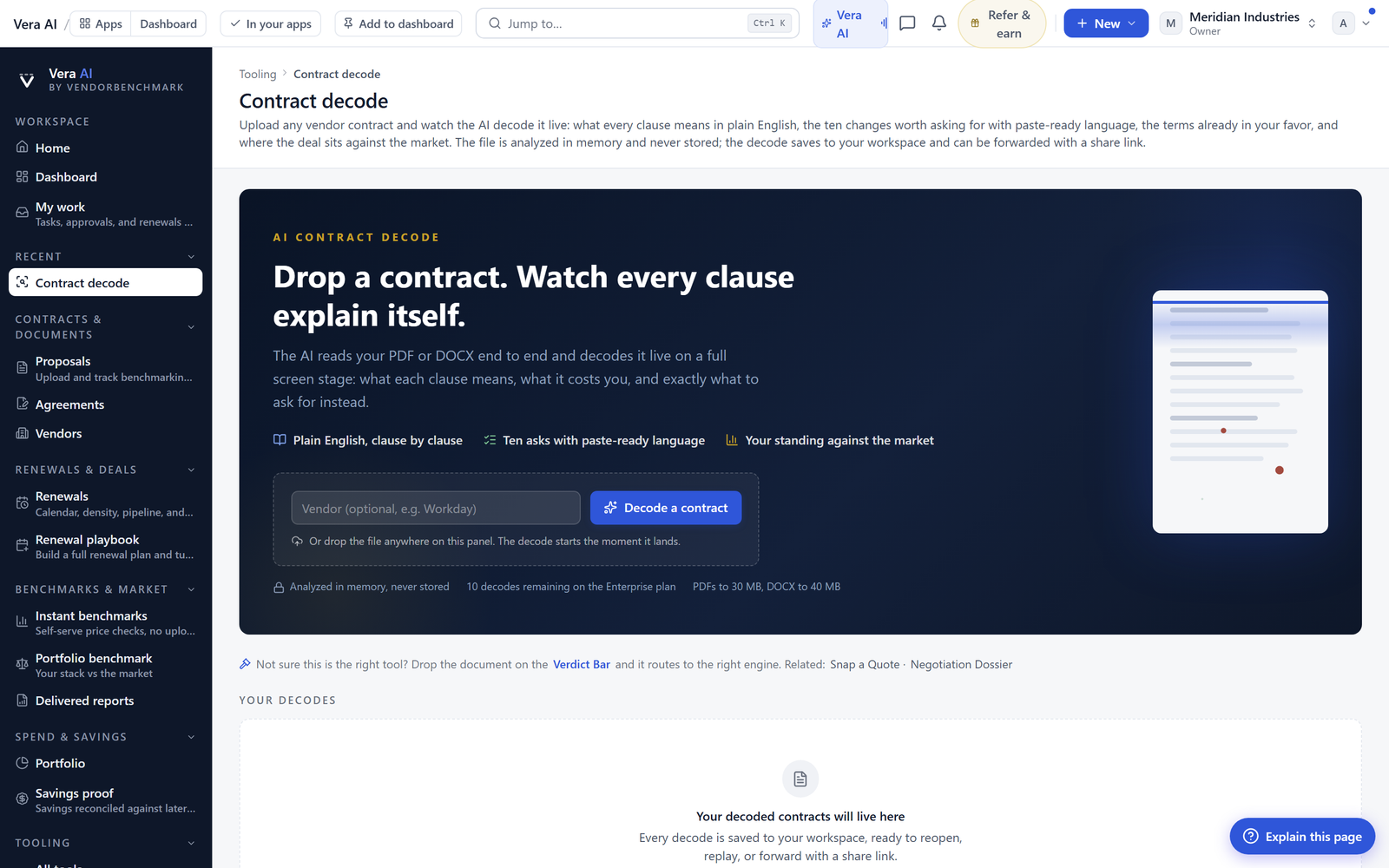
The leverage in an enterprise agreement hides in the clauses nobody has time to read: the deemed-acceptance window, the uncapped time-and-materials, the data-incident carve-out. The rep is counting on you signing before you find them. The Contract Agent finds them and drafts the pushback.
One upload. Every change marked. A redline out.
Drop the paper anywhere; the desk reads what it is and offers the engine built for it.
A quote, a contract, an invoice, a master agreement. Drop it on any screen: the desk offers the engines built for it, and the read lands in about a minute.
Each suggested change sits on the page it belongs to: the language to ask for, what the change is worth, and the term against the market. Approve it into the redline, reword it, or set it aside.
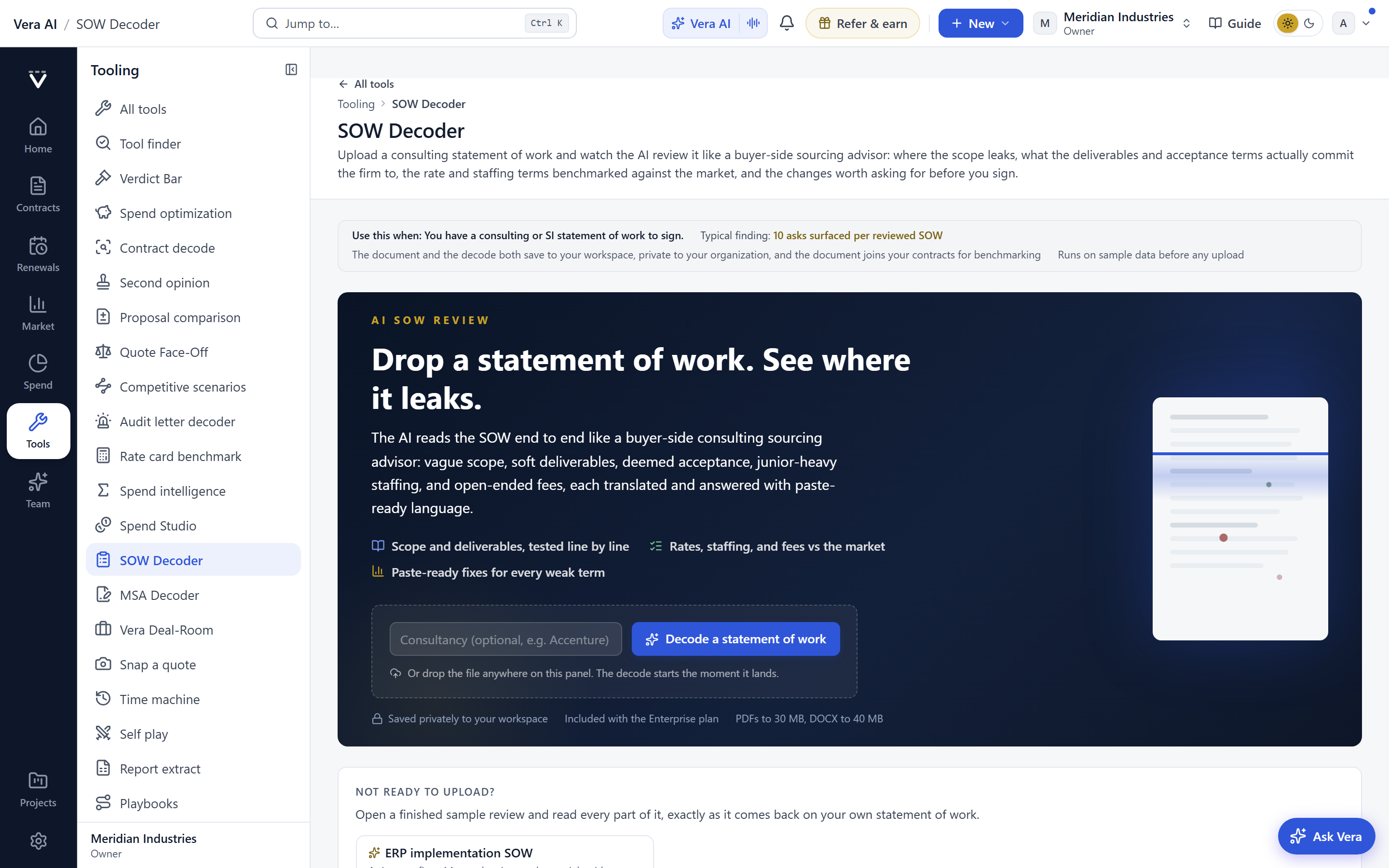
Buyer-side review of a consulting or SI statement of work: scope leaks, deemed acceptance, junior-heavy staffing, uncapped time and materials, each answered with paste-ready language.
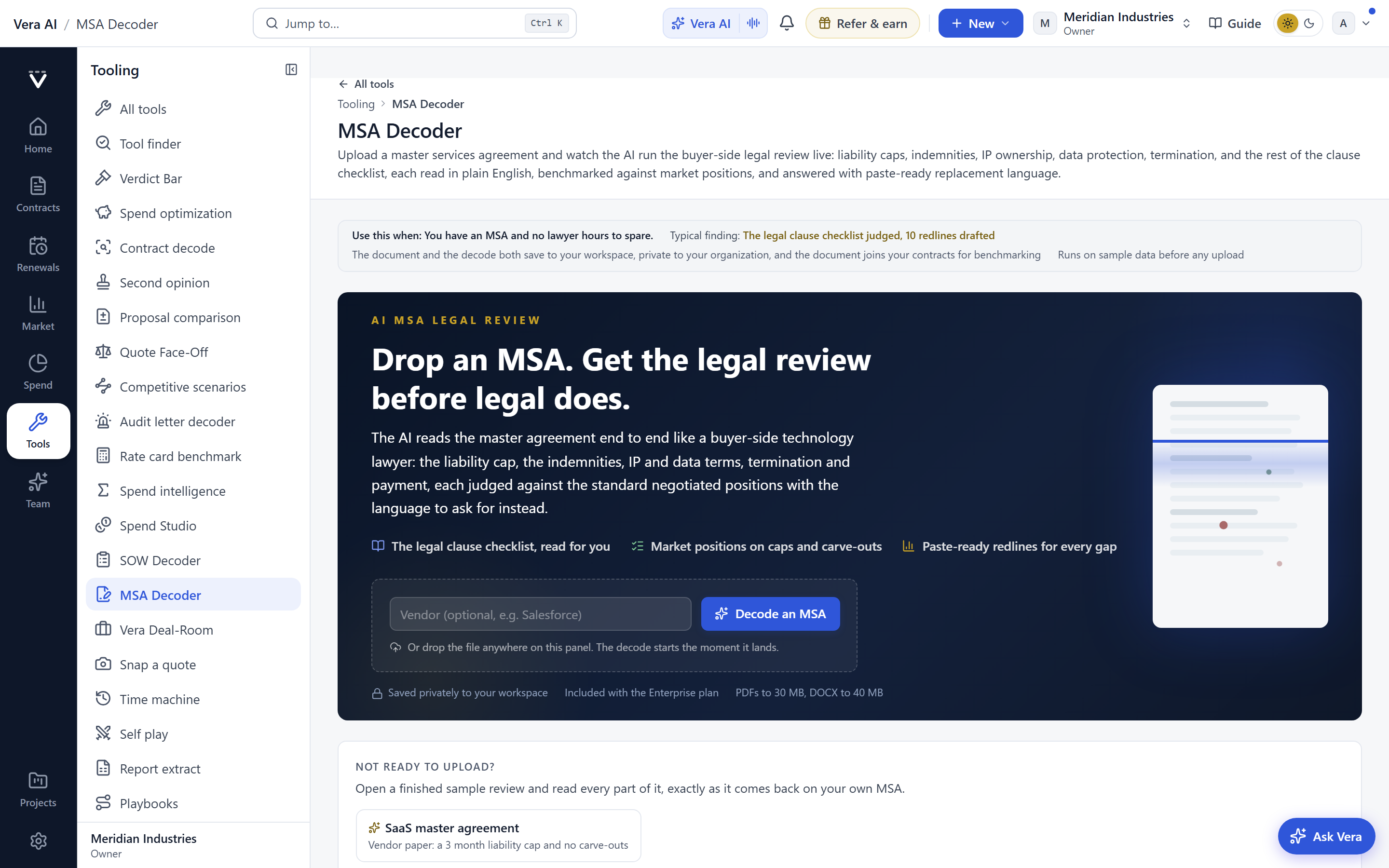
The buyer-side legal read of any master agreement: the liability cap and its carve-outs, the data-incident super-cap, IP indemnity, and termination, every deviation drafted as a redline against market positions.
One agent, three buyer-side lenses.
The Contract Agent runs one pipeline tuned by document kind, so a contract, an SOW, and an MSA each get a review tuned to how that document actually hurts a buyer. Every reading is grounded in stored benchmarks and your own contract policy, and every ask is paste-ready, not a vague suggestion.
Buyer-side by construction.
Everything about the Contract Agent is built to serve the buyer, from the prompt to the storage.
One pipeline handles contract, SOW, and MSA by document kind, each with its own system prompt and copy, so adding a document family is a configuration, not a rewrite, and the quality bar stays even across all three.
Asks and verdicts reference your contract policy’s language and the market benchmark, so the pushback argues your standard, not a textbook one.
Asks come ready to send, and the approved changes export as a redlined Word file beside a clean copy, so legal gets a markup of the vendor’s own paper, not a list of concerns.
Uploads land in private buckets with no public URLs, are checked on type, size, and signature, and are reachable only through short-lived signed links.
The public decode runs without an account behind a middleware allowlist, so a buyer can understand a contract before they ever sign up, then unlock the benchmarked depth with their own data.
Read the order form once, not the weekend.
A careful buyer-side read of a master agreement or a big SOW is a lawyer’s afternoon and a specialist’s knowledge of where the traps sit. The Contract Agent does the first pass and hands legal a drafted markup.
Estimate your own hours →A benchmarked, buyer-side read, not a generic summary.
Plenty of tools will summarize a contract. Almost none know what fair looks like or draft the pushback.
A generic model tells you what a clause says. The Contract Agent tells you whether it is favorable, caution, or risk against the market, and hands you the paste-ready ask to fix it.
A law firm read is thorough and expensive and slow. The Contract Agent does the first pass and gives counsel a drafted redline to sharpen, not a blank document.
The rep’s walkthrough serves the rep. A buyer-side engine, grounded in your contract policy, reads the same paper for you.
Business value, and the operational value under it.
One line for the board paper, and the day to day the team actually feels.
- Fewer surprises after signing: the deemed-acceptance windows and uncapped exposures are caught before the invoice, not after.
- Stronger legal outcomes because counsel starts from a benchmarked redline, not a cold read.
- A free front door that turns understanding into a qualified sign-up.
- Consistent buyer-side standards applied to every document, regardless of who reviews it.
- A one-minute first read on any document, with no decision about which tool to open.
- Paste-ready asks and a redlined file with a clean copy, so the output goes straight into the negotiation or to legal.
- One pipeline covering contracts, SOWs, and master agreements, learned once.
- A benchmarked verdict that tells the team where to spend the careful reading time.
Find the trap before you sign it.
Decode any contract free. Unlock the benchmark with your data.