A Negotiator's Guide on 128 vendors, and now in Research too
Ninety one new guides join the shelf, including nineteen suppliers that never had a benchmark page of their own, and each one now reads as a research paper that turns up in search and in an answer from Vera.
You know the moment. A renewal lands for a vendor you have not priced in two years, and the person who ran it last time has left. You open the benchmark sheet, you see the number, and then you have to reconstruct everything the number does not tell you: when this supplier's fiscal year closes, which quarter softens the discount, which clauses they always try to slip past you, and what the last three buyers actually did that worked. That reconstruction is the job, and until now it lived in your head or in nobody's head. A Negotiator's Guide was built to hold it. Last week it opened on 37 benchmark sheets. Today it opens on 128.
What the guide holds, and why the order matters
A benchmark tells you where the price should land. It does not tell you how to get there. A Negotiator's Guide answers the same nine questions for every vendor, in the same order, so you never have to remember what to look for. The three things that decide the outcome before the quote arrives. The six factors that set the number. The fiscal calendar and where the leverage sits inside it. The runway, week by week. The benchmarks, line by line. The five tactics that work against this specific supplier. The ten step playbook. What most buyers miss. And the clauses to check before you sign.
The fixed order is the point. When every guide follows the same spine, you stop re-learning the layout and start reading for the differences that matter. The fiscal calendar section for a networking hardware vendor reads nothing like the one for a professional services firm, but you find it in the same place both times. If you want the deeper mechanics of how the clause work fits together, we covered the standing view in Decode any contract in a minute.
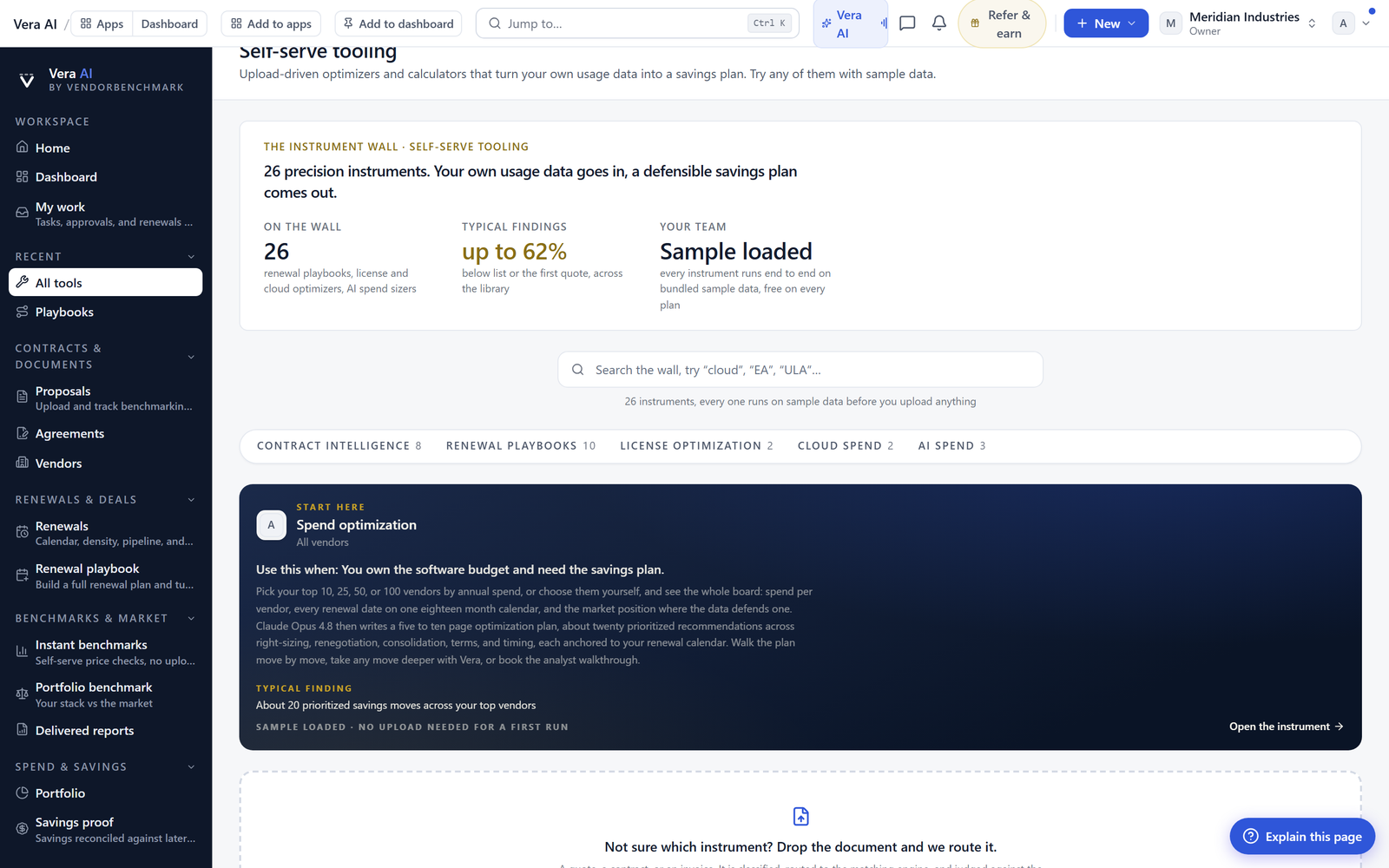
Ninety one guides join the shelf
Today's release adds ninety one guides. Some sit beside benchmark pages you already knew: Akamai, Anthropic, Asana, Amplitude, Alteryx, Ansys, Airtable, Arctic Wolf, Arista Networks, Amadeus and Anaplan. Others cover suppliers that never had a benchmark page of their own, which is the more interesting half of this. AlixPartners, Arup, Arcadis, Akkodis, Aramark, Aon, Amtrak, Air Canada and Alaska Air Group now have a guide where there was nothing before.
That second group matters because professional services, facilities, insurance broking and travel suppliers rarely fit a clean per-seat benchmark, yet they carry real spend and real renewal risk. A guide gives you the negotiable structure for a supplier whose price does not sit on a public list. You still get the fiscal calendar, the tactics and the clauses, even where a line-by-line benchmark is thinner.
Every guide is now a paper in Research
The second half of this release is where the guide goes. Each one is now filed in the research library as a paper, under the vendor, with the original document sitting in the reader. That single change means the guide stops being a page you have to remember to open. It turns up in search when you look for the vendor. It appears on the vendor record beside the prep brief. And it can be returned inside an answer from Vera when you ask a question the guide happens to answer.
We rebuilt how these papers render so they read as styled pages rather than embedded files, which we described in Research papers now read as styled pages. The guide inherits that treatment. It reads cleanly in the reader, it is searchable line by line, and it links back to the benchmark it was built from.
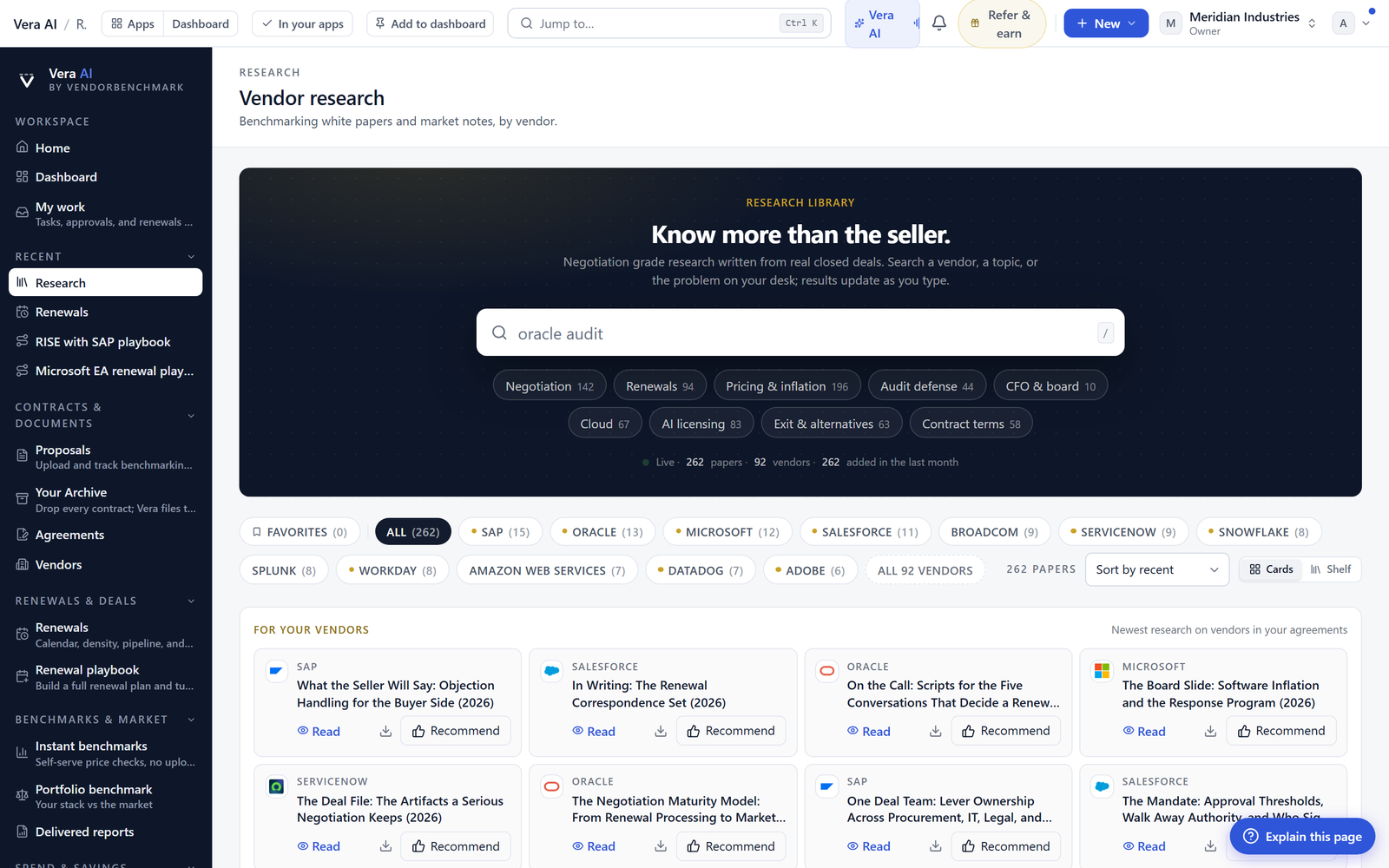
The practical effect is that context stops depending on you knowing where to look. If you search for a vendor to check a contract question, the guide is there in the same result set. If you ask Vera what softens this supplier's discount, the fiscal calendar section answers with the guide behind it. This is the same principle as every screen keeping your work: the material meets you where you already are.
What changes for the buyer
The honest limits
A guide is a starting position, not a script. The fiscal calendar tells you where leverage usually sits, but a supplier under revenue pressure will behave differently from the same supplier flush at year end. The five tactics work against most buyers most of the time, which is not the same as always. Read the tactics as a checklist of what has moved the number before, then test them against what you actually observe in your conversations.
The guides cover 128 vendors, which leaves most of the library with a benchmark and a coming soon label. If your supplier is in that set, you have the number and the percentile bars but not yet the nine-section guide. We are filling the shelf in order of how often buyers open each sheet, which is why the 37 became 128 in a week. The line-by-line benchmarks inside a guide are only as fresh as the underlying data, so treat a guide for a supplier you last priced years ago as a prompt to re-check the current market, not a settled figure.
Finally, a guide does not replace judgement about your own estate. It will not know that you are three months from a migration that changes your walk-away position, or that a sister business unit is negotiating the same supplier next quarter. That is the case for pooling context deliberately, which we made in Buying blocs. The guide gives you the market's shape. You still supply what only you know.
Open any of the 128 from the vendor record, or search the vendor in Research and read the guide there. If you would rather see where it sits against the number, start from the benchmarking library and open the guide beside the sheet it was built from.
Want to be updated when major licensing and pricing changes land? One analyst brief a week: the price rises, metric changes and audit campaigns that move software costs. Work email only.
Morten brings two decades of enterprise and software procurement, with stints across Oracle, IBM, SAP, and Salesforce shaping how he reads a deal. He has led sourcing through hundreds of renewals, from mid market order forms to nine figure global agreements, and learned that the buyers who win are the ones who walk in knowing the market. He built VendorBenchmark to make that pattern recognition repeatable.


