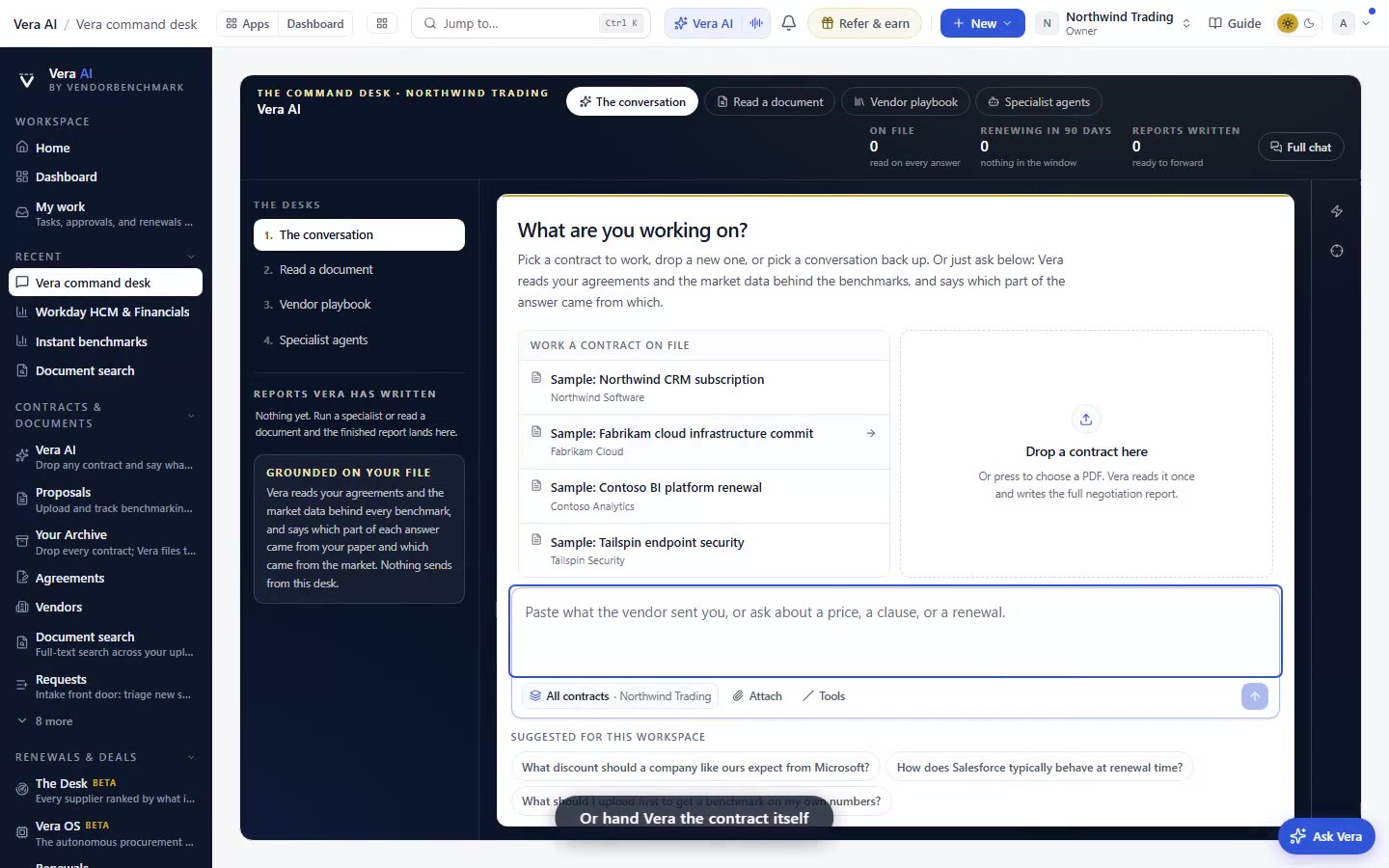
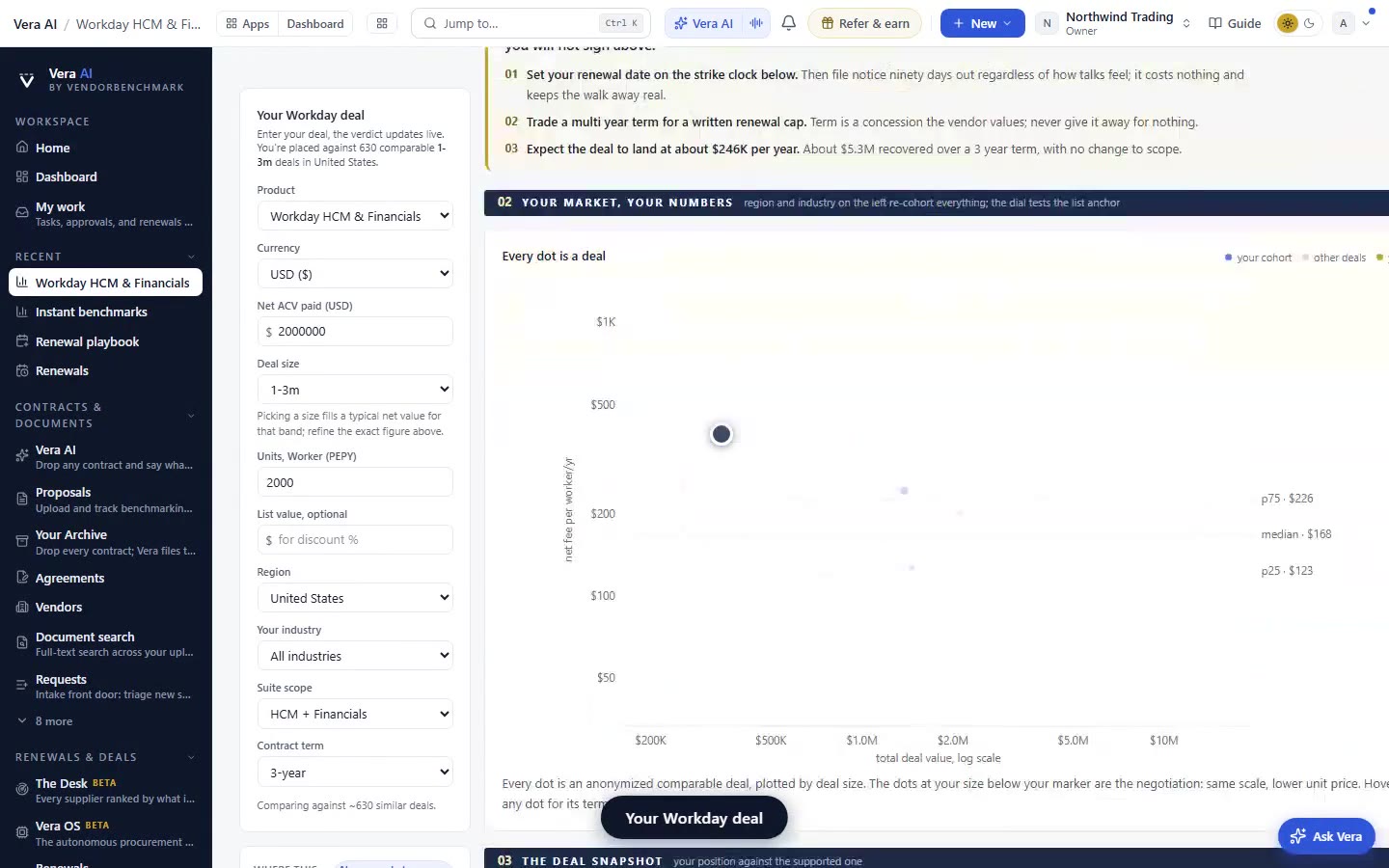
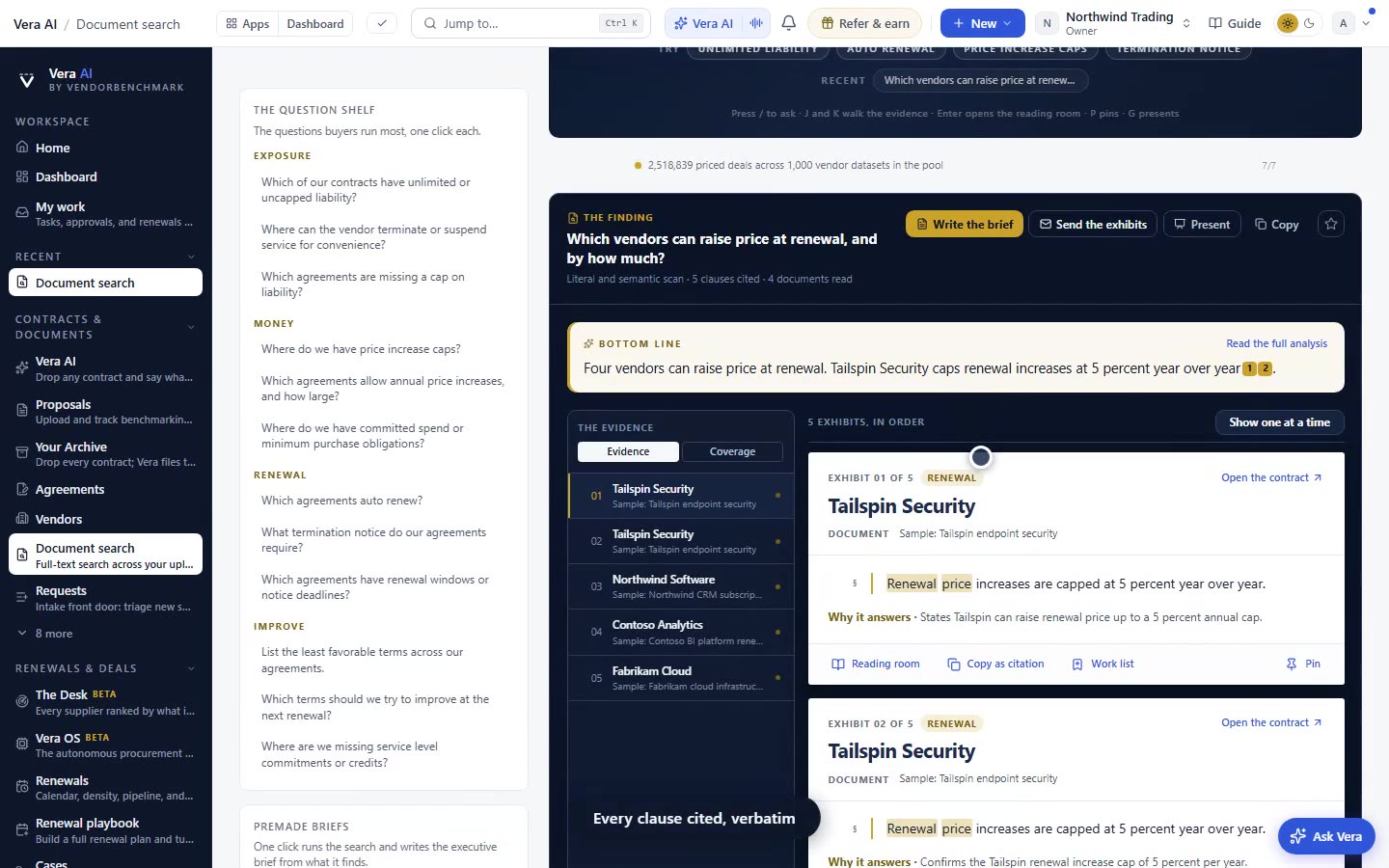
No more question on opening: your recent sessions live under File
The interruption on open is gone. The work returns exactly as you set it down, and setting a session aside no longer means losing it.
Here is a small friction that costs more than it looks. You open a tool that holds live work, a benchmark you were annotating, a renewal you were pricing, a playbook mid draft, and before you can touch anything the tool stops to ask a question. Continue? Resume? Start new? You answer, you wait, and only then does the work appear. Multiply that by every tool you open in a day and it adds up to a steady tax on attention. As of this release, that question is gone. This post explains what changed, how it fits a procurement buyer's workflow, and where the limits are.
The named problem: the interrogation on open
Call it the interrogation on open. The prompt exists for a good reason. Software wants to be sure it does not overwrite work you meant to keep. But it puts the decision in the wrong place, at the exact moment you want your hands on the task. A buyer switching between a benchmark window and a contract record does not want to be quizzed each time. The cognitive cost is real, and it is invisible because no single instance feels expensive. The fix is to remove the decision from the opening moment and put it somewhere calm and predictable instead.
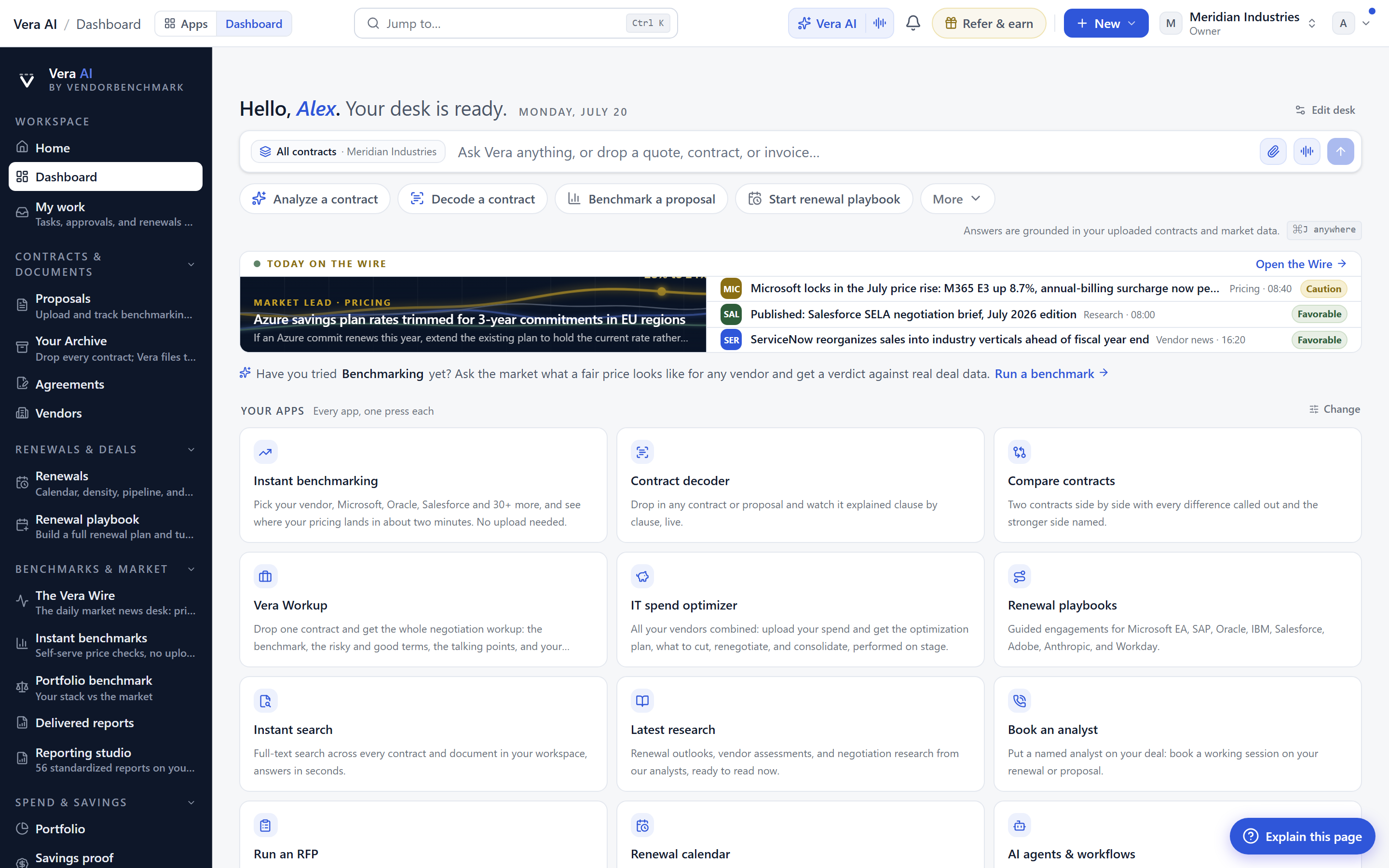
What actually shipped
When you open a tool or app that holds work, the work is back on the desk exactly as you left it. No question, no wait. The sessions you set aside are not gone either. The last five live in every window's menubar under File, Continue where you were. Beside that sits Start a new one, and this is the important part, it shelves the current session rather than deleting it. Starting fresh no longer means throwing away what you had. The few pages that have no menubar carry the same list as a small button next to their start new control, so the behaviour is consistent wherever you are.
How it fits the buyer's workflow
Procurement work is not linear. You are pricing a renewal, a colleague pings you about a different vendor, you swing over to the contract archive to check a clause, then back. Under the old model each of those hops risked an interrogation and, worse, an accidental discard. Now the five most recent sessions are a stable, short menu you can trust. It pairs naturally with the broader direction we described in every screen you work in now keeps your work: the tools hold state, and you move between them without ceremony. For a buyer running parallel threads across benchmarks, renewals, and playbooks, that continuity is the whole point.
What changes for you, in order
Honest limits
Be clear about the boundaries. The list holds the last five sessions per tool, not an unlimited history. A sixth shelved session pushes the oldest off the list, so this is not a substitute for saving or exporting deliverables you need to keep. It is a recency convenience, not an archive. Second, restore-on-open returns the state the tool held; it does not reconcile conflicting edits if the same work was changed elsewhere. Third, the pattern applies to tools and apps that hold work, not to every static page. If a screen has nothing to resume, there is nothing to list. Treat the five sessions as a fast lane back to recent context, and keep using deliverables and the archive for anything you must retain. If your prep lives in the calmer desk, this simply removes one more interruption from the path to it. See the same continuity across the negotiation tools in Deal Studio.
Want to be updated when major licensing and pricing changes land? One analyst brief a week: the price rises, metric changes and audit campaigns that move software costs. Work email only.
Morten brings two decades of enterprise and software procurement, with stints across Oracle, IBM, SAP, and Salesforce shaping how he reads a deal. He has led sourcing through hundreds of renewals, from mid market order forms to nine figure global agreements, and learned that the buyers who win are the ones who walk in knowing the market. He built VendorBenchmark to make that pattern recognition repeatable.