The Outcome Network: benchmarks with skin in the game.
Anyone can answer a pricing survey, and it costs nothing to answer it generously. The Outcome Network runs on the opposite rule: contribute one verified, anonymized deal outcome and unlock what peers on the same vendor actually paid. Give to get, never fewer than five peers in a cohort, and realized uplift instead of remembered discounts.
Every pricing benchmark faces the same economics problem: the people who have the data have no reason to share it accurately. A survey respondent pays nothing for rounding a discount up. A vendor rep quoting "what similar customers pay" is doing sales, not statistics. Even honest buyers sharing war stories at a conference are recalling headline numbers with the concessions filtered out. The market runs on secondhand memories, and the sellers are the only ones holding receipts.
The Outcome Network is our answer to that economics problem, and it works because it changes the incentives rather than the pleading. Nobody sees the network's numbers without putting a real one in.
Give to get, with verification in the middle
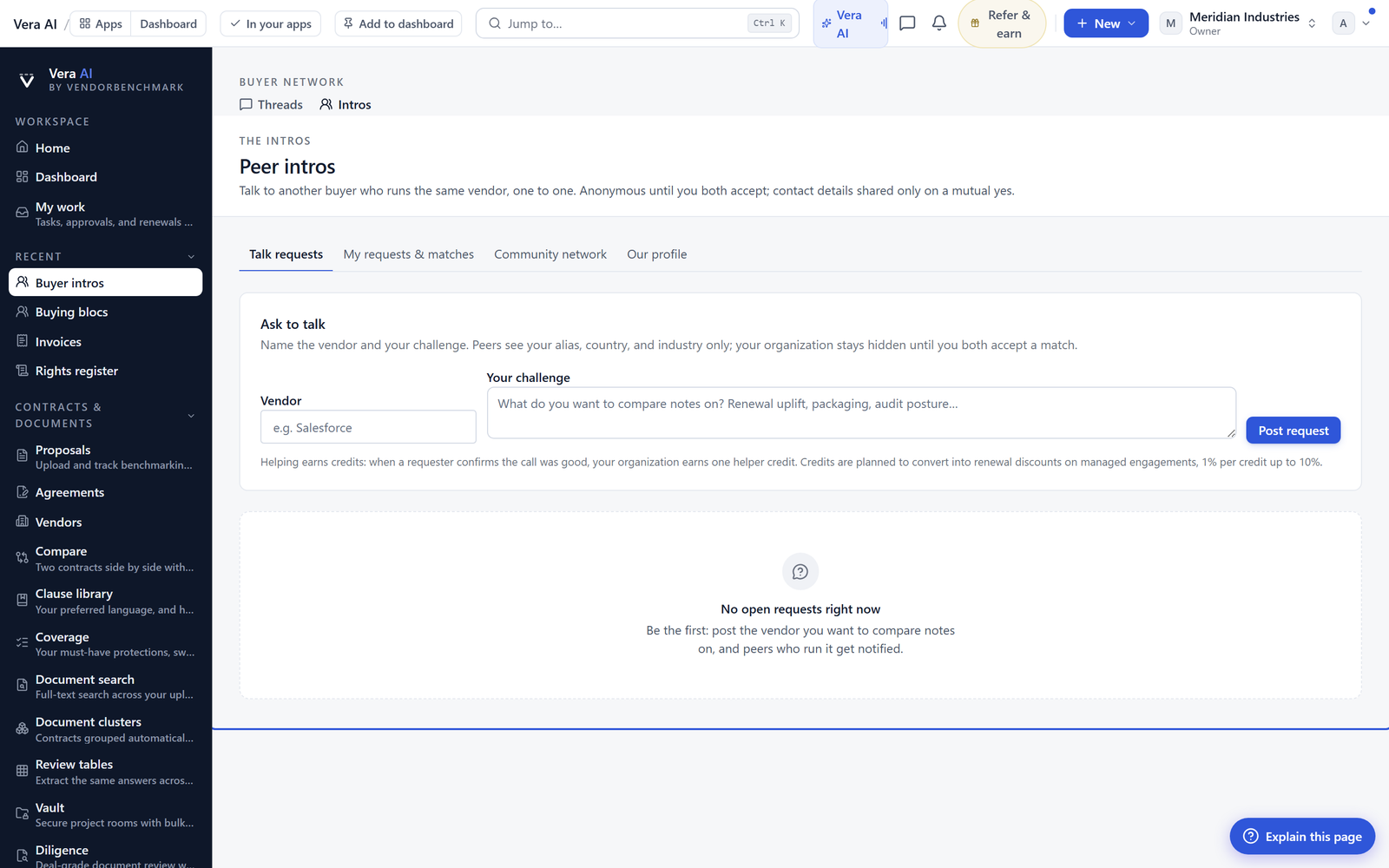
The mechanics are deliberately simple. You contribute one deal outcome, the vendor, what the renewal actually settled at, drawn from the contract and figures already in your workspace rather than from memory. The contribution is verified against that stored evidence, anonymized, and folded into the vendor's cohort. In exchange, you unlock the cohort view: what peer deals on that vendor actually closed at.
Three properties make the data worth trading for.
Verified, not asserted. Contributions come from documents, not questionnaires. The number that enters the cohort is the number that was signed, which removes the flattery bias that makes survey averages read better than any market anyone has negotiated in.
Anonymous with a hard floor. Outcomes are anonymized before aggregation, and no cohort is shown with fewer than five contributing peers. Below the floor, the network tells you the cohort is not ready rather than showing you a number that could be reverse-engineered to a company. Your contribution is protected by the same rule that protects everyone else's.
Realized uplift, not discount claims. The network's core metric is what happened to price at renewal, the realized uplift, because that is the number a discount narrative cannot fake. A deal can carry a 60 percent "discount" and still take a 9 percent uplift every year. Tracking the uplift is how the network measures what vendors actually do to loyal customers, rather than what their list-price theater implies.
Want to be updated when major licensing and pricing changes land? One analyst brief a week: the price rises, metric changes and audit campaigns that move software costs. Work email only.
What it changes at the table
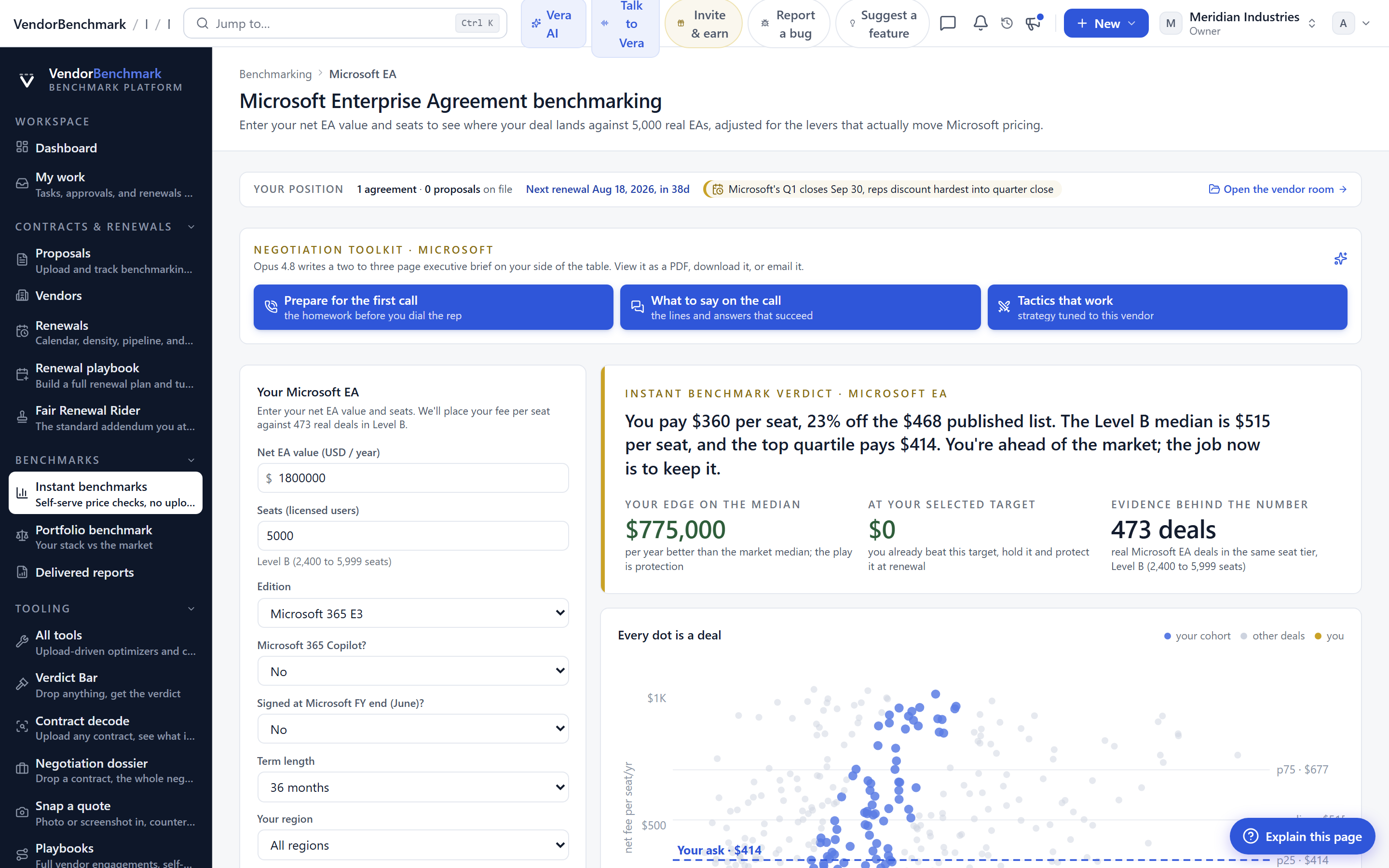
The network layers on top of the core benchmark library, the 1,471 vendors built on modelled deal cohorts, and sharpens the argument in a specific way. The library tells you where your price sits against the market. The network tells you what happened next to buyers who sat where you sit: what the renewal uplift actually was for peers on this vendor, this size, this cycle.
That is the exact number you need when the rep opens with "standard uplift this year is 8 percent." If the verified peer cohort settled at 3, you are no longer negotiating against a policy, you are negotiating against a precedent, and precedents move deals. It also compounds with the rest of the desk: the number flows into your negotiation brief, the dossier's benchmark section, and Vera's answers, all citation tagged back to the cohort so the figure survives scrutiny.
The honest edges of a give-to-get network
Vendors have pooled intelligence about buyers for as long as enterprise software has existed: shared deal desks, win-loss databases, telemetry. The Outcome Network is buyers, finally, returning the favor, with consent, with anonymity, and with verification standards the sell side has never offered. If you hold a signed renewal, you hold the price of admission.
Fredrik has spent more than twenty years in enterprise software, with time at Oracle, IBM, SAP, and Salesforce before moving to the buy side. He structured and priced the kind of large agreements most buyers only see once or twice in a career, which taught him where the leverage sits and how far a vendor will actually move. He started VendorBenchmark to hand that knowledge to every sourcing team.
The week in enterprise software buying, in one email.
What shipped on the platform, and the pricing and licensing moves worth knowing before your next renewal. One email a week, to your work address. Unsubscribe any time.