Sourcing grows its supplier layer
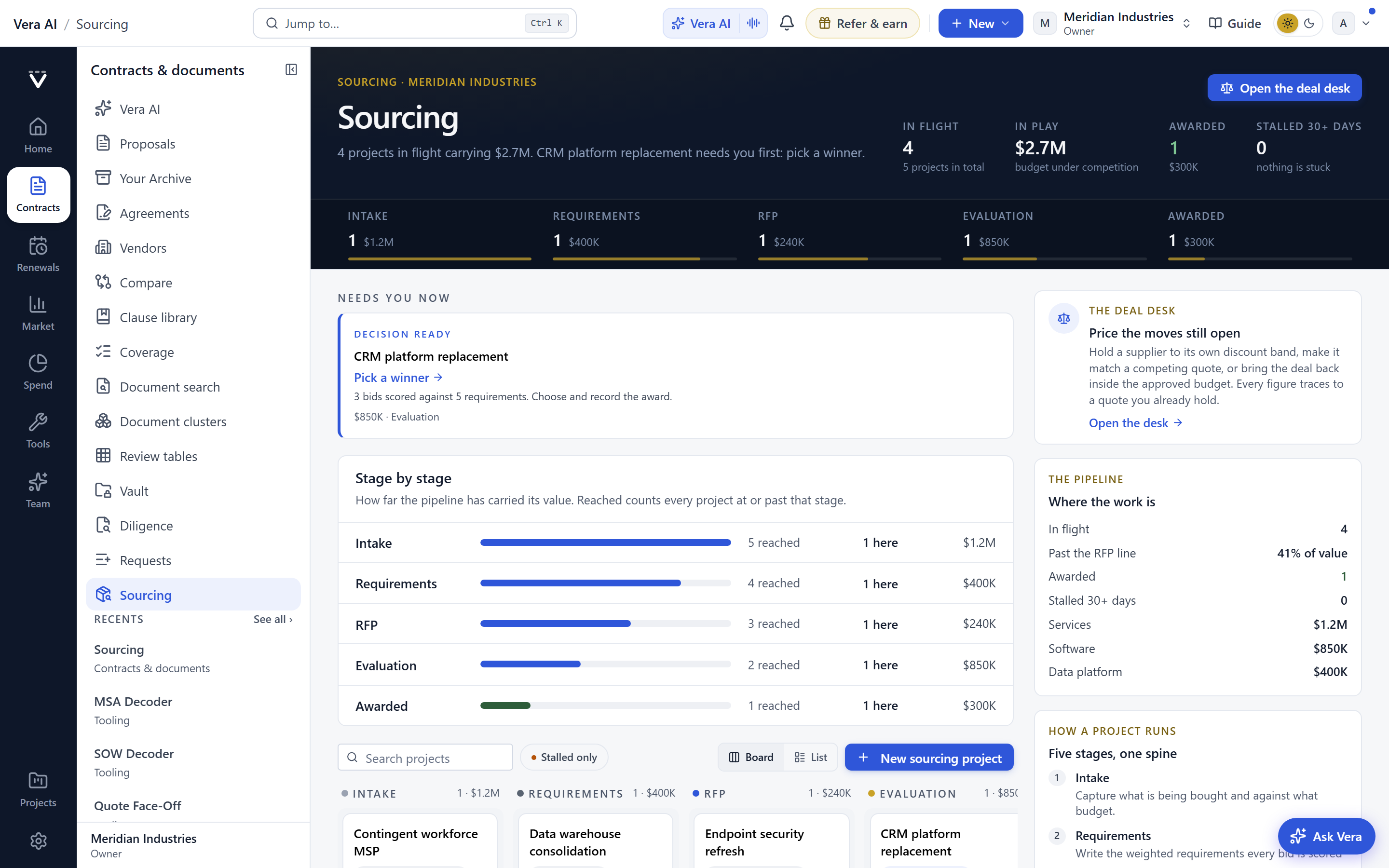
Events used to be islands. Now each supplier holds a standing record behind them, so qualification, documents, and compliance carry from one RFP to the next.
Here is the problem most sourcing teams have learned to live with. Every event starts from nothing. You reload the same supplier details, chase the same insurance certificates, and re-ask a vendor the same questionnaire you sent them nine months ago. The event closes, the savings get quoted in a slide, and the record of what actually happened scatters across email, a shared drive, and one person's memory. Nothing accumulates. The tenth time you go to market with a vendor looks exactly like the first, because the tool held the event and not the supplier.
This release changes the object model underneath sourcing. Every vendor you source from now has one org level record that sits behind the events, not inside them. The events still run the way you know, but they now draw from and write back to something permanent. This is the same principle we applied when every screen you work in started keeping your work, extended to the supplier itself.
The standing supplier record
Open a vendor and you now see how many times you have been to market with them. That count is not decoration. Ten prior events with a supplier is a negotiating fact, and it belongs next to their name where the next buyer can see it. Below the count sits the qualification questionnaire. The vendor answers it once in their own portal, and that answer stands for a year across every event you run. No more re-issuing the same twelve questions per RFP. If the year lapses, the record tells you, and the vendor refreshes it in the portal rather than in your inbox.
The third element is the document shelf. Every critical paper, insurance, tax status, certifications, carries an expiry date. When a critical document lapses, the platform blocks award to that supplier until it is renewed. This is a hard stop by design. It moves the compliance check from a manual box someone forgets to tick, to a gate the workflow cannot pass through. If you have ever discovered a lapsed certificate the week after signing, you understand why this one matters.
The event floor gets stricter and quieter
Inside an event, bidders now declare comply, partial, or no against every published requirement before anyone reads a single page. That declaration is a structured filter. You see where each bidder stands on your requirements before you sink hours into their attachments, which is the reverse of the usual order where you read first and discover the gaps last. It also creates an honest paper trail against the risk we described in the spec that already picked the winner, because a comply declaration is a claim on the record, not a paragraph you have to interpret.
RFP changes now ship as numbered addenda, and each bidder acknowledges each one on the record. No more wondering whether every bidder saw the scope change you emailed on a Friday. A published Q&A answer reaches every live bidder's inbox at the same moment, which closes the timing gap where one bidder got an answer three days before the others. Requesters, meanwhile, get a status link and an email at every turn of their request, so the internal stakeholder stops calling procurement to ask where things stand.
Award writes something forward
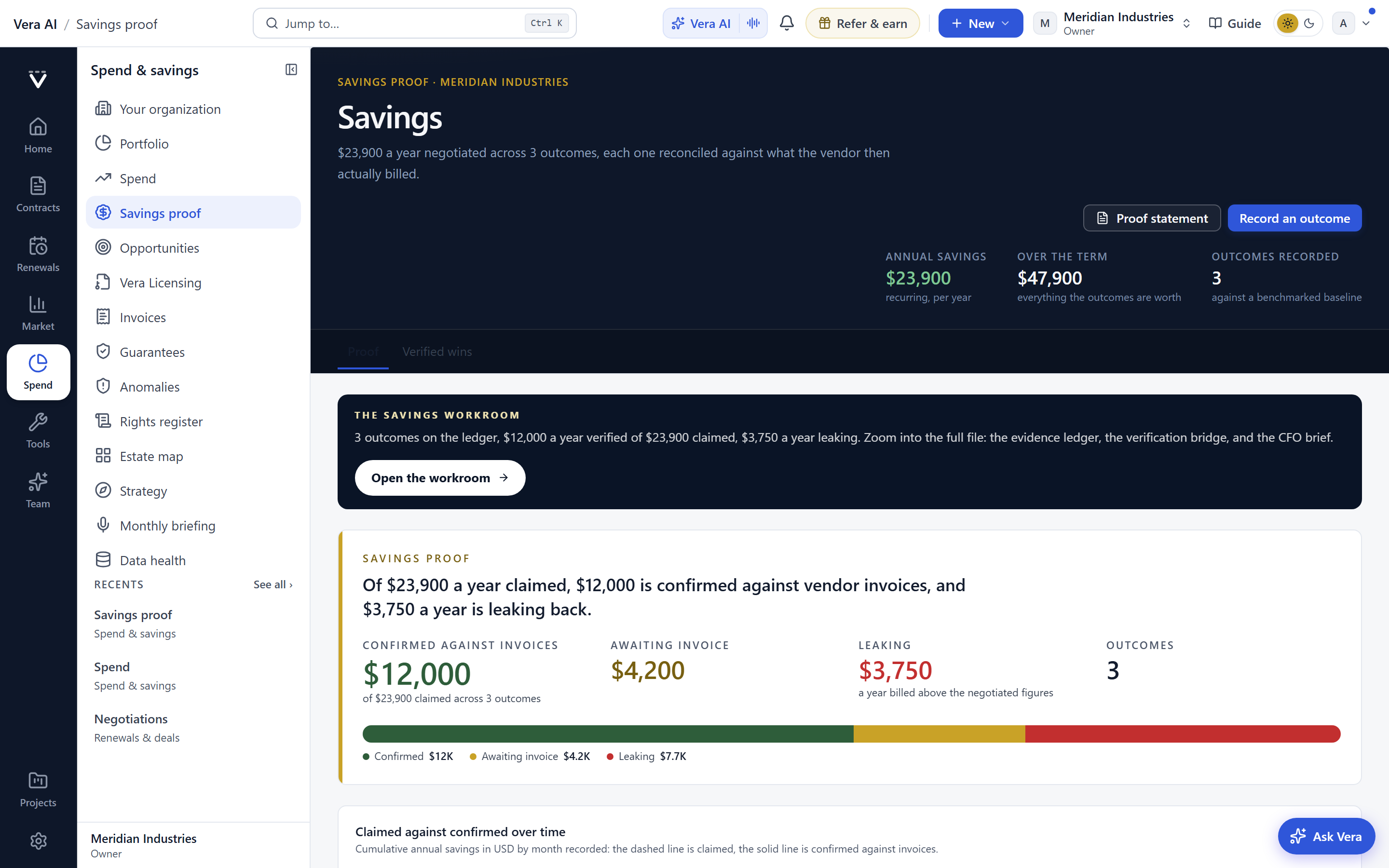
The most consequential change is what happens at award. Awards now sign their savings into the org ledger against a typed baseline. That means the saving is not a number in a slide, it is a figure the platform recorded against the baseline you actually entered, ready for finance to test rather than trust. It is the raw material the CFO wants when asking whether you are overpaying, answered in one page.
The award also seeds the entitlement register from the priced sheet. What you bought, at the quantities you priced, becomes the record of what you are entitled to, which is where true-downs and the rights you already paid for begin to be enforceable rather than forgotten. And the whole event can be saved as a category template, so the next event of that kind starts most of the way done. This is where the supplier layer compounds. Market history, a standing questionnaire, a live document shelf, and a template all mean the next event begins with structure instead of a blank form.
The floor watches itself
The sourcing floor now reads its own cycle time, so you can see how long events actually take rather than estimate it. The nightly watch is the quieter half of this. It flags slipped milestones, quiet projects that have gone dark, and supplier papers about to expire. This runs among the platform's 99 background jobs, alongside the thirteen inbox agents you can already ask by email. The point is not more alerts. The point is that the three failure modes of sourcing, events that stall, projects everyone forgot, and compliance that quietly lapsed, now surface before they cost you rather than after.
Where this stops, honestly
Be clear about the limits. The document gate is only as good as the list of documents you mark critical. If a certificate is not on the shelf, the platform cannot block on its absence, so the initial setup of what counts as critical still requires judgement from your team. The questionnaire standing for a year is a convenience, not a guarantee. A supplier's circumstances can change inside that year, and the annual cadence will not catch a mid-year event unless you refresh it manually.
The typed baseline is exactly that, typed. Savings signed into the ledger are as honest as the baseline you enter against them, and a soft baseline produces a soft number. The savings ledger records what you claimed, it does not independently verify that the baseline was the right one. That verification still belongs to you, and it is where a real market comparison earns its keep. The comply declarations are the bidder's claims, not audited facts. A supplier can declare comply and still fall short, so the declaration speeds triage but does not replace evaluation.
Finally, the category template is a strong start, not a finished event. It carries structure forward, requirements, weightings, and the shape of the last event, but every market moves, and a template applied without review will happily reproduce last year's assumptions. Use it to skip the blank page, not the thinking. Within those limits, the supplier layer does the thing that matters most. It makes the tenth event with a vendor look different from the first, because the platform finally remembers the other nine. You can see the full picture at /sourcing.
Fredrik has spent more than twenty years in enterprise software, with time at Oracle, IBM, SAP, and Salesforce before moving to the buy side. He structured and priced the kind of large agreements most buyers only see once or twice in a career, which taught him where the leverage sits and how far a vendor will actually move. He started VendorBenchmark to hand that knowledge to every sourcing team.