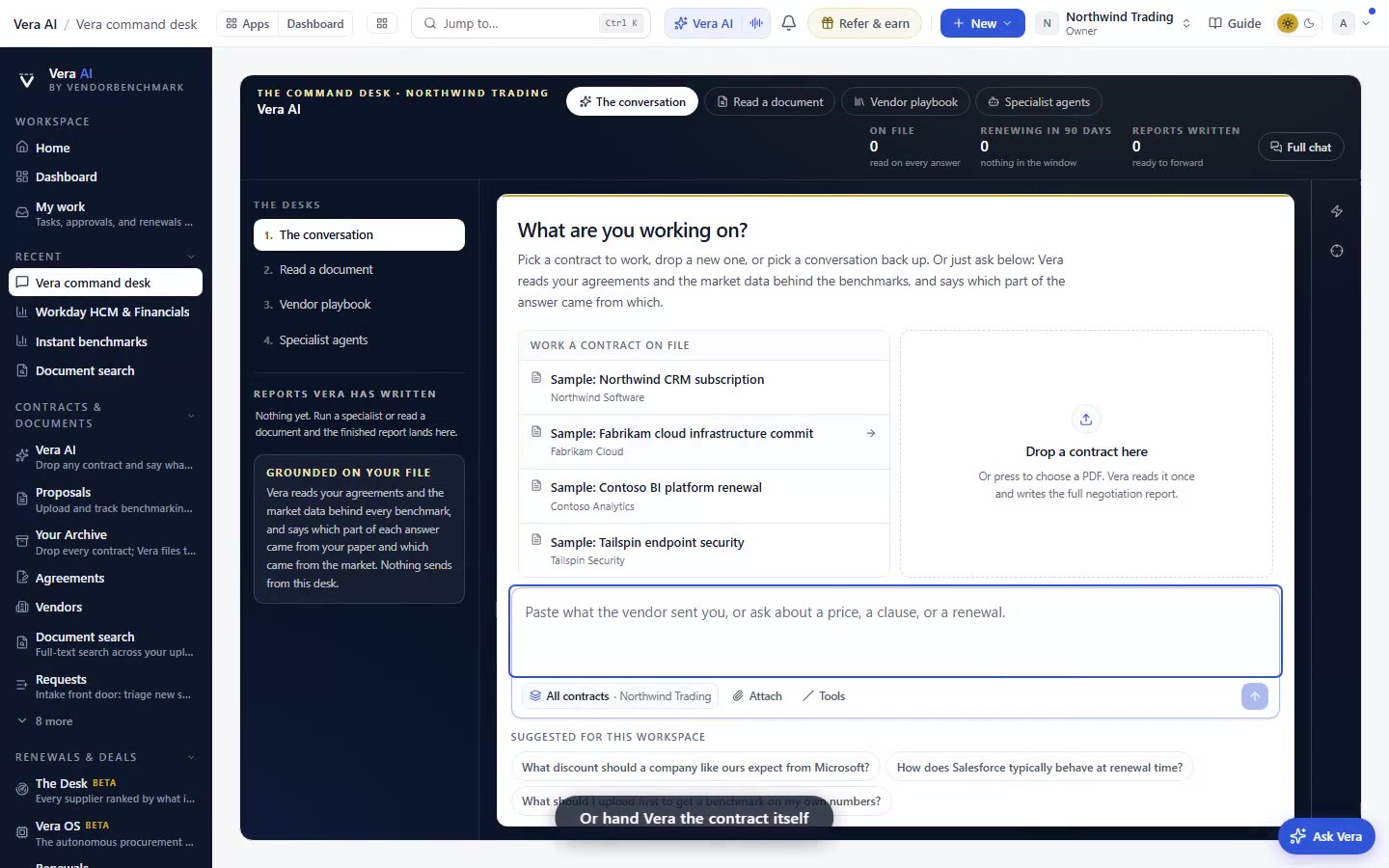
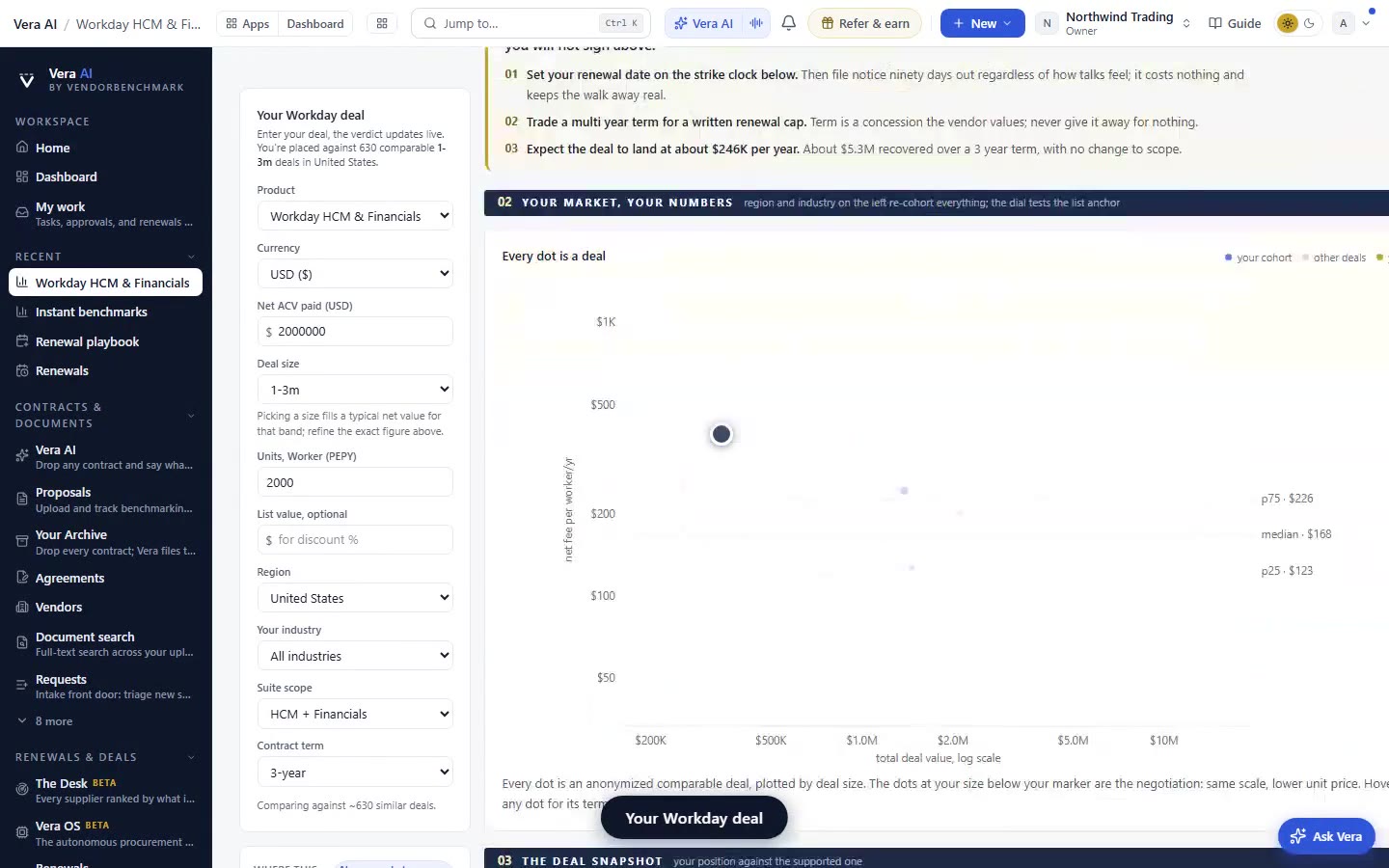
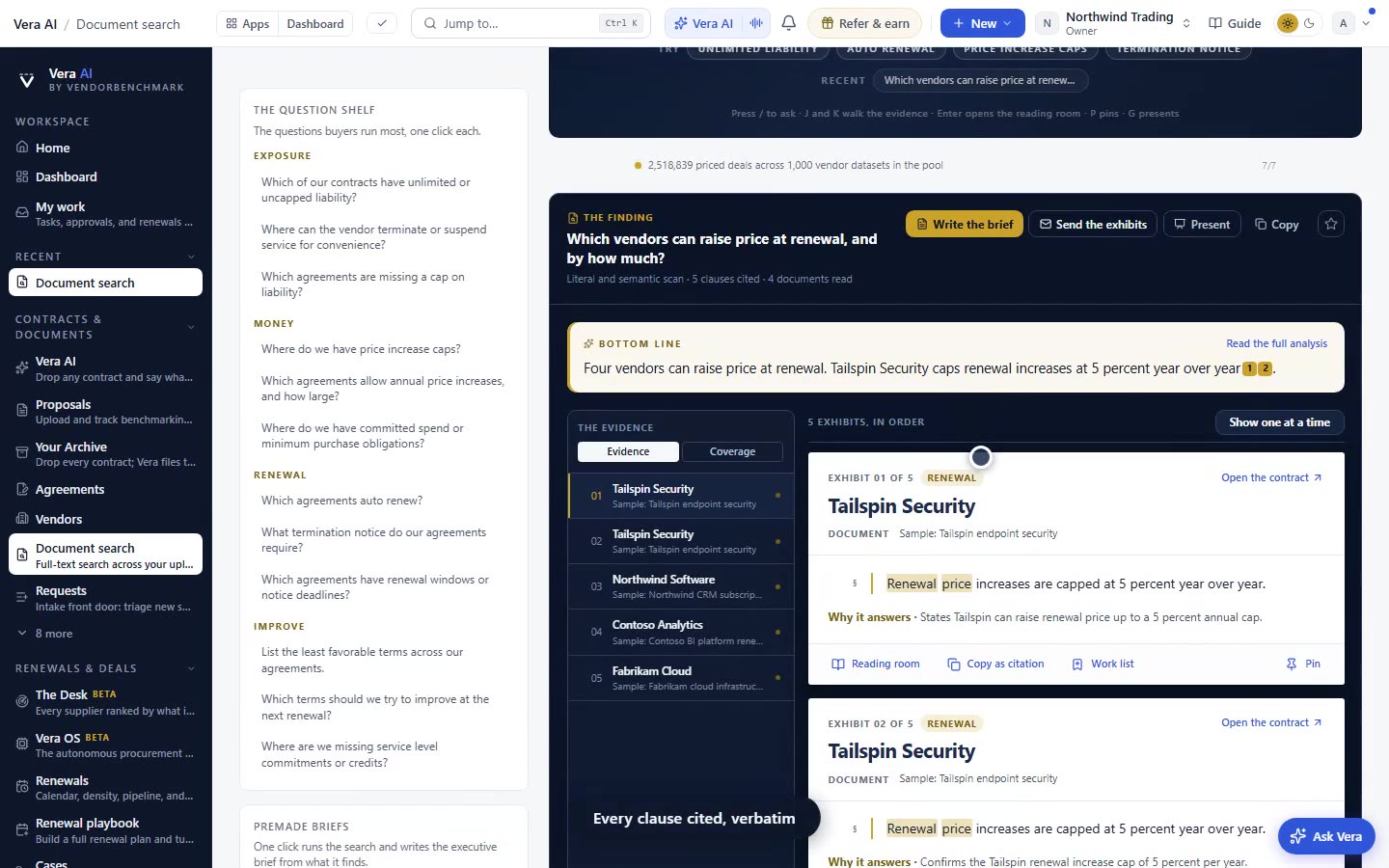
The Benchmark Agent now answers the moment you press, and takes it back for eight seconds
The desk now responds the instant you act and reverses on demand. Here is what that means for the way a buyer works through a queue.
Here is a problem every procurement buyer recognises. You are three quarters through a queue of benchmark reports, dismissing runs that do not apply, deleting duplicates, dropping a note on a comparison for the CFO, and the desk lags behind every click. You press delete and wait. You press dismiss and wait. Somewhere in that waiting you fat finger the wrong row, and there is no clean way back. The work is not hard. The friction is in the seam between your intent and the server confirming it, and in the fear that a single misclick costs you an hour. This update closes that seam. It is the same design principle we described in every screen you work in now keeps your work, applied to the write path itself.
The press is answered before the server catches up
A delete, a dismissal, and a comment now change the row the moment you press. The screen updates first and the server catches up behind it, so the queue moves at the speed of your hand rather than the speed of the round trip. If the server refuses a write, the row comes back with the reason attached, so you are never left guessing whether an action took. This is what practitioners call an optimistic write, and the honest version of it is that the interface tells you the truth in two states: it did the thing, or it could not and here is why.
Every write can be taken back
Optimistic writes are only safe if reversal is cheap, so every write can be taken back for eight seconds from the toast, or with Ctrl Z, forty steps deep. Each kind of action reverses in the way that actually restores the state you had. A delete restores the row. A dismissal brings the run back. A send is recalled together with its task. A comment is removed. A setting is set back to what it was. Forty deep means you can walk back a whole burst of triage, not just the last click, which matters when you realise five rows ago you were filtering the wrong room.
A pane fails alone, and nothing typed is lost
Each pane stands in its own boundary and fails alone. If the details pane hits an error, it shows Try again and the rest of the desk keeps working, rather than the whole screen going white. This is the same application discipline we brought to the Negotiation Agent as a Windows application, where a grid, a details pane, and a set of controls each survive on their own terms. Alongside that, nothing you typed is lost. A half written send note or comment, the room's filter and view, the details tab, the columns, and the levers all come back after a reload. The density, the text size, and the room you land in follow your account to every machine, so the desk you tuned at your desk is the desk you get on the laptop.
A ledger of a thousand that scrolls like fifty
The report ledger now arrives in pages counted in the database and draws only the rows on screen, so a thousand reports scroll like fifty. With 25+ report types across a library covering 1,483 vendors, a busy buyer's ledger gets long, and the old approach of loading everything at once made the list stall. Paged loading with on screen drawing keeps the scroll smooth no matter how deep the history. And when a background run lands while you were elsewhere, the Runs room badges until you look, so you do not have to keep checking whether the 30 background jobs finished.
The honest limits
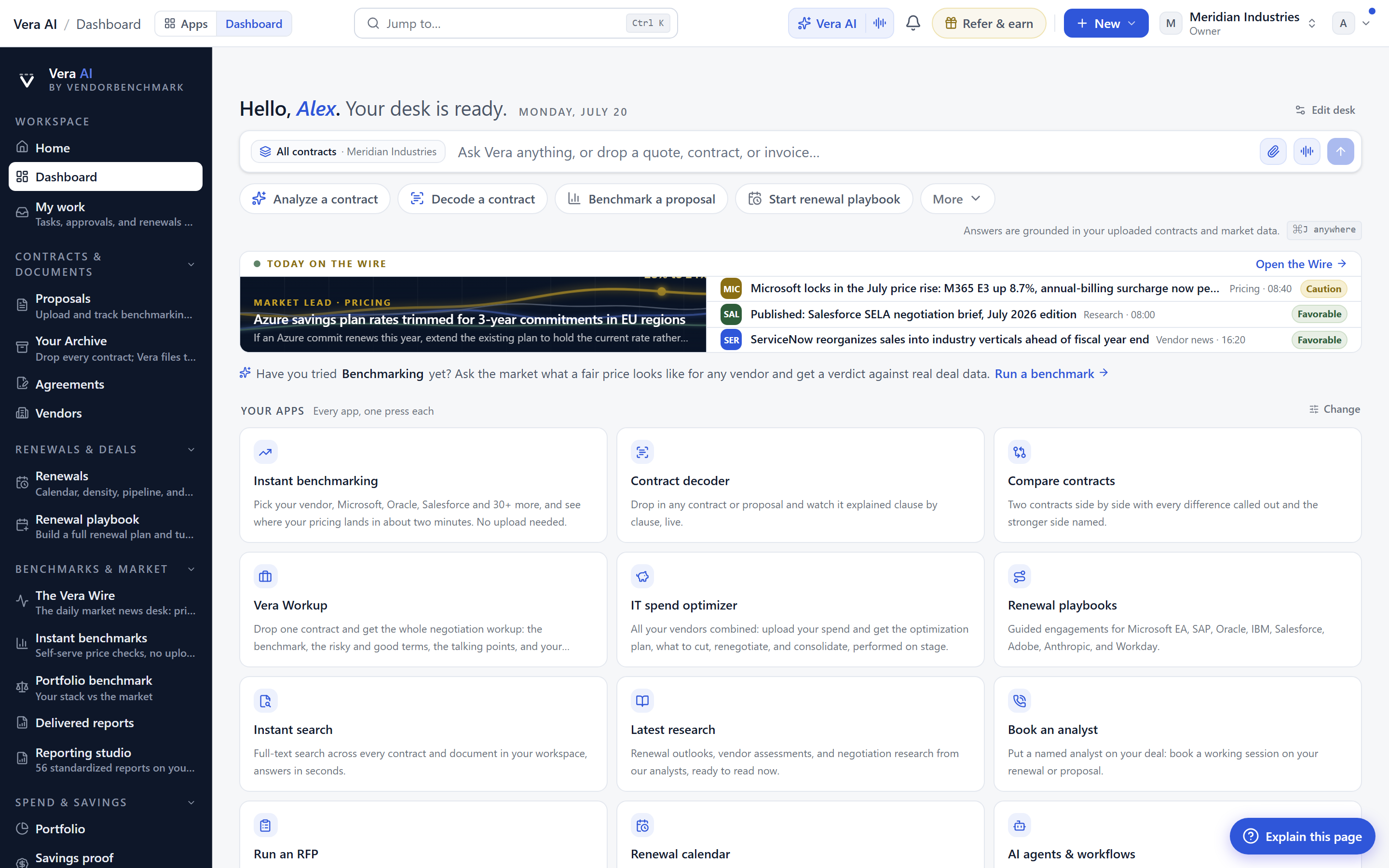
Be clear about what this does and does not do. Optimistic writes make the desk feel instant, but they do not change the underlying rule set. A write the server would have refused is still refused, only faster and with a reason, and the row returns to its prior state. The eight second undo window is a window, not a permanent recycle bin. Once it closes, a delete is a delete, and undo history resets when you close the tab, so it is not a substitute for the audit trail. The forty step depth is per session and per surface, not a global time machine across the whole account. Paged loading keeps scrolling smooth, but a very deep search still has to reach the database, so filters remain the fastest path to a specific report rather than scrolling to it. None of this touches tenant isolation or permissions. What you could not see or change before, you still cannot. If you want to see how the same responsiveness carries into a live report, read how the report is a workspace now, and then try the desk yourself at the benchmark tool.
Want to be updated when major licensing and pricing changes land? One analyst brief a week: the price rises, metric changes and audit campaigns that move software costs. Work email only.
Morten brings two decades of enterprise and software procurement, with stints across Oracle, IBM, SAP, and Salesforce shaping how he reads a deal. He has led sourcing through hundreds of renewals, from mid market order forms to nine figure global agreements, and learned that the buyers who win are the ones who walk in knowing the market. He built VendorBenchmark to make that pattern recognition repeatable.