The Compliance Checkbox That Nobody Defined
Intake records a certification need as a single checkbox, and vendors answer yes to a question you never actually asked. The cost lands in legal review, weeks later.
Look at the last intake form that crossed your desk. Somewhere in the security section there was a line that read SOC 2 compliant: Yes, or maybe Data residency requirement: Yes, with a tick beside it. Nobody wrote down which SOC 2 report. Nobody said Type I or Type II. Nobody named the trust criteria in scope, the reporting period, or what document would count as proof. The line was answered, so it looked finished. Two months later, in the middle of legal review, someone asked the vendor for the actual report and discovered it covered a sibling product, was eighteen months stale, and asserted availability but not confidentiality. The requirement you thought was closed was never really a requirement. It was a checkbox, and a checkbox is not evidence.
Part one: the checkbox is an ambiguity wearing a green tick
A compliance line survives as a yes or no because that is the cheapest thing to write and the fastest thing to answer. The intake author is usually not the person who will consume the evidence. They are a stakeholder trying to get a request moving, and to them the certification is a badge, not a scope. So they record the badge. The vendor, on the receiving end, reads the same badge and confirms it truthfully, against whatever version of the badge they happen to hold. Both parties acted in good faith. Neither party agreed on the same thing. That gap does not announce itself at intake. It sits quietly inside the specification until a reviewer who actually knows the standard opens the file.
This is the same failure mode we described in the post about requirements that were never in the intake. The difference here is subtle and more expensive. The requirement is present. It is just underspecified. An absent requirement is caught because someone notices the blank. A present but ambiguous requirement passes every completeness check and fails only under scrutiny, which by design happens late.
Part two: why the cost lands in legal review
Legal review is where the checkbox finally meets someone who is paid to read the fine print. The reviewer does not accept the badge. They ask for the report, and when the report arrives it either matches the scope or it does not. When it does not, the reviewer cannot simply proceed, because the whole specification was built on the assumption that this requirement was satisfied. Pricing was scoped against it. The shortlist was drawn against it. So the specification reopens, and everything downstream of that requirement reopens with it.
This is the same structural trap we described in the quote that answers the wrong spec perfectly. A vendor answered your question flawlessly. The problem is that your question was ambiguous, so a flawless answer still does not tell you what you needed to know. The reopen is not the vendor's fault and it is not legal's fault. It is the fault of a requirement that was never written to be testable.
Part three: the platform motion that removes it
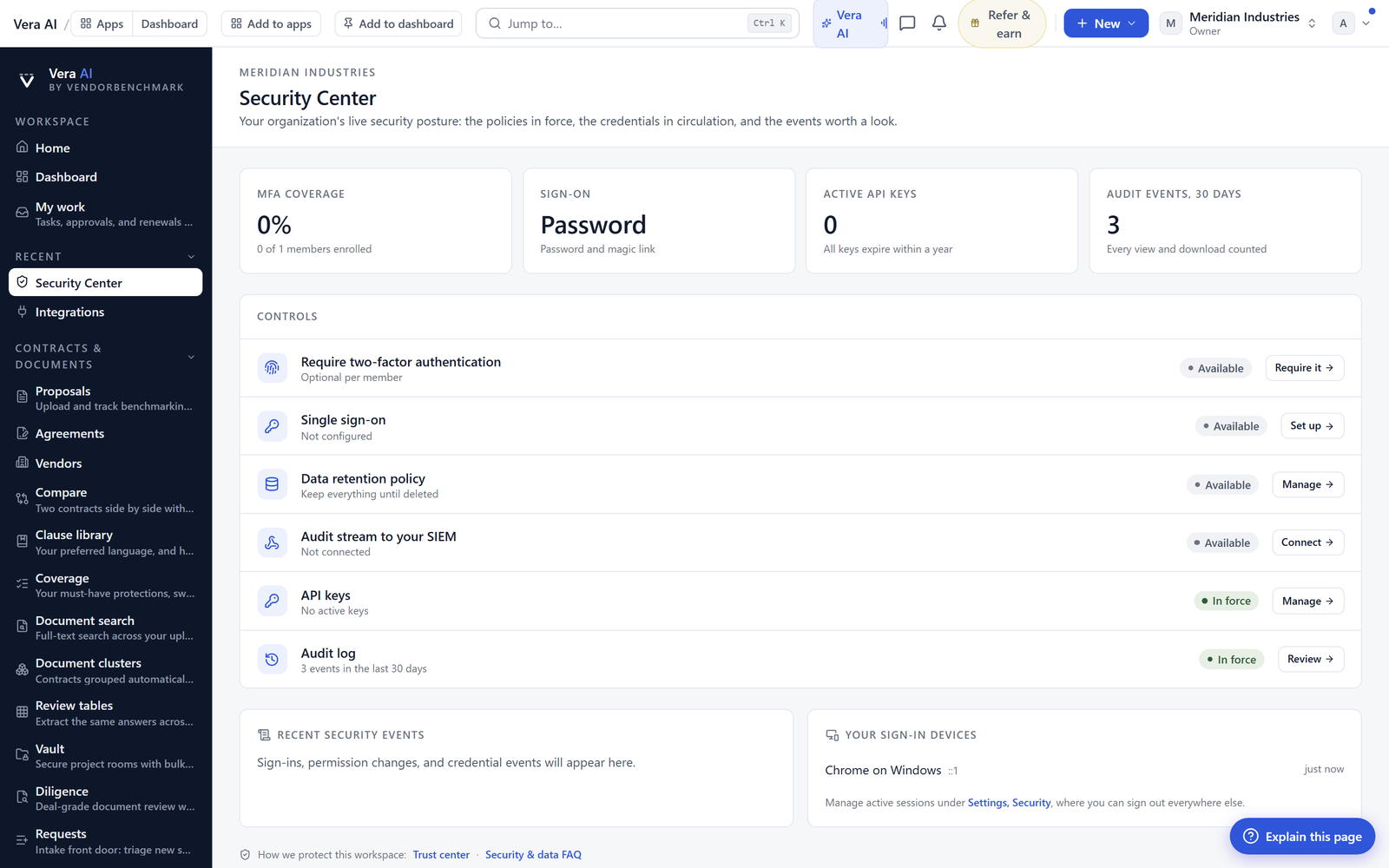
The fix is to refuse the checkbox at the moment it is written. Vera, one of the six specialist agents, takes the yes or no line and converts it into a specific evidence requirement. Not SOC 2 yes, but a named report type, the trust service criteria in scope, an acceptable reporting period, and the artefact that will count as proof. The requirement now has a shape that a vendor can be measured against, and a shape that a reviewer months later can confirm without reconstructing what the original author intended.
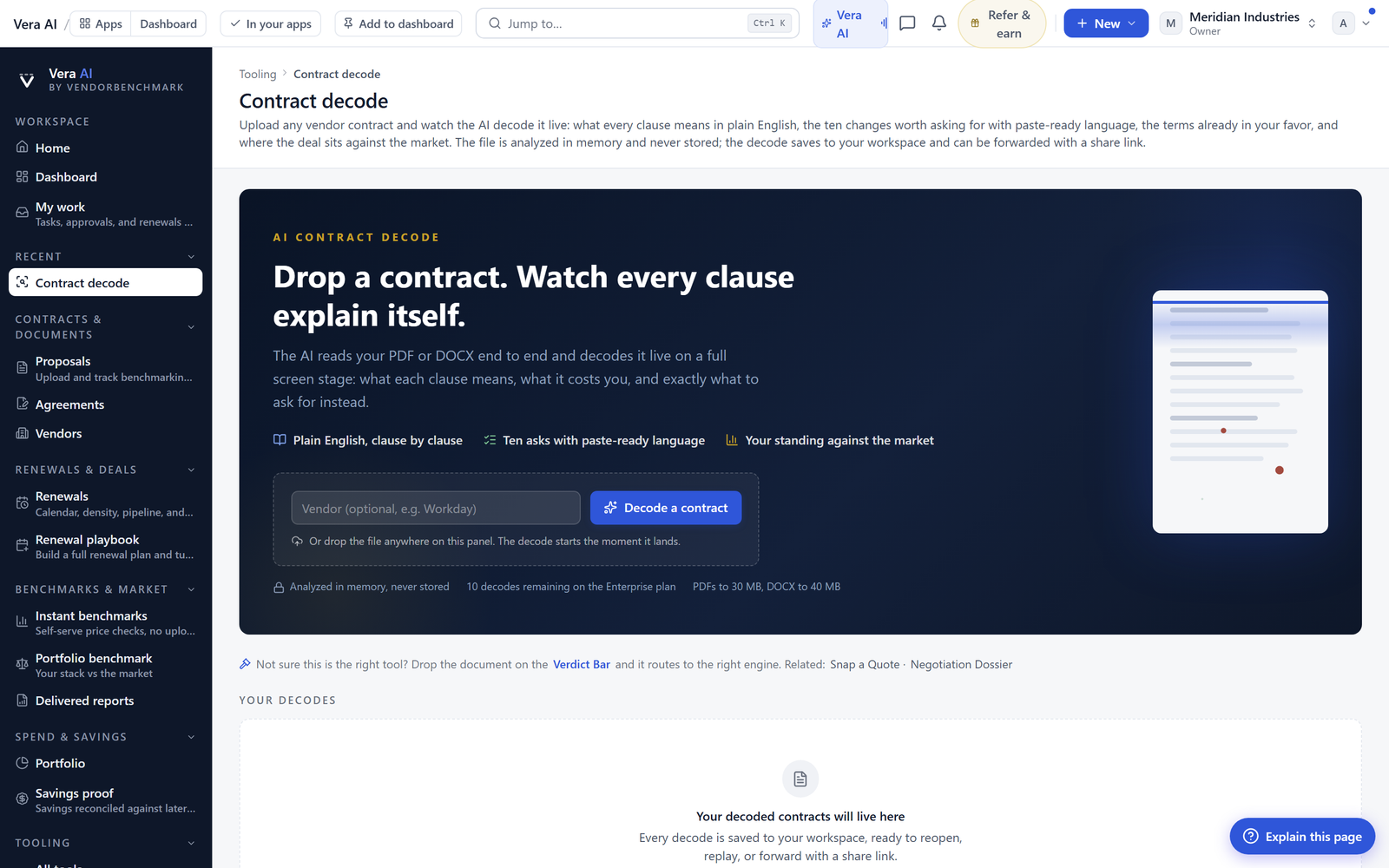
The second half of the motion is contract decoding. When the vendor's paperwork arrives, the platform reads the actual attestations and checks them against what the requirement demanded. It is not looking for the word yes. It is looking for whether the scope, the period, and the artefact line up. Where they do not, you get a flag with the specific gap named, rather than a green tick that hides one. This is the same discipline as grounded AI in negotiation, where a claim is only useful if it is traceable to a source. A compliance claim is only useful if it is traceable to an evidence artefact that matches the ask.
The result is that the argument that used to happen in legal review now happens at intake, in writing, with both sides answering the same question. The vendor is not being caught out. They are being asked something precise enough to answer precisely. That is better for them too, because a precise ask is faster to satisfy than a vague one that returns three rounds later as a surprise.
Part four: what this does not solve
Be honest about the boundary. Vera can convert a checkbox into a specific evidence requirement, but it cannot invent a scope that your organisation has never decided on. If nobody in your business has determined whether availability, confidentiality, or both matter for a given system, the platform will surface that the decision is missing. It will not make the decision for you. That is a policy question, and it belongs to your security and legal teams.
Contract decoding checks whether an attestation matches the requirement. It does not audit the vendor's control environment or verify that the report itself was honestly produced. It reads what the vendor asserts and tells you whether the assertion covers the ask. Independent assurance, penetration test validation, and auditor reputation remain human judgements. The platform narrows the field to the real questions. It does not answer the ones that were always going to need a person.
And it will not rescue a requirement that was wrong from the start. If the category itself was chosen before the problem was sized, as in the request that named a category before anyone sized the problem, then decoding a compliance attestation cleanly still leaves you compliant against the wrong purchase. The checkbox fix is precise, and precision only helps when it is pointed at the right thing. What it reliably removes is the specific, recurring, expensive event of a specification reopening in legal review because two parties said yes to different questions.
Want to be updated when major licensing and pricing changes land? One analyst brief a week: the price rises, metric changes and audit campaigns that move software costs. Work email only.
Morten brings two decades of enterprise and software procurement, with stints across Oracle, IBM, SAP, and Salesforce shaping how he reads a deal. He has led sourcing through hundreds of renewals, from mid market order forms to nine figure global agreements, and learned that the buyers who win are the ones who walk in knowing the market. He built VendorBenchmark to make that pattern recognition repeatable.


