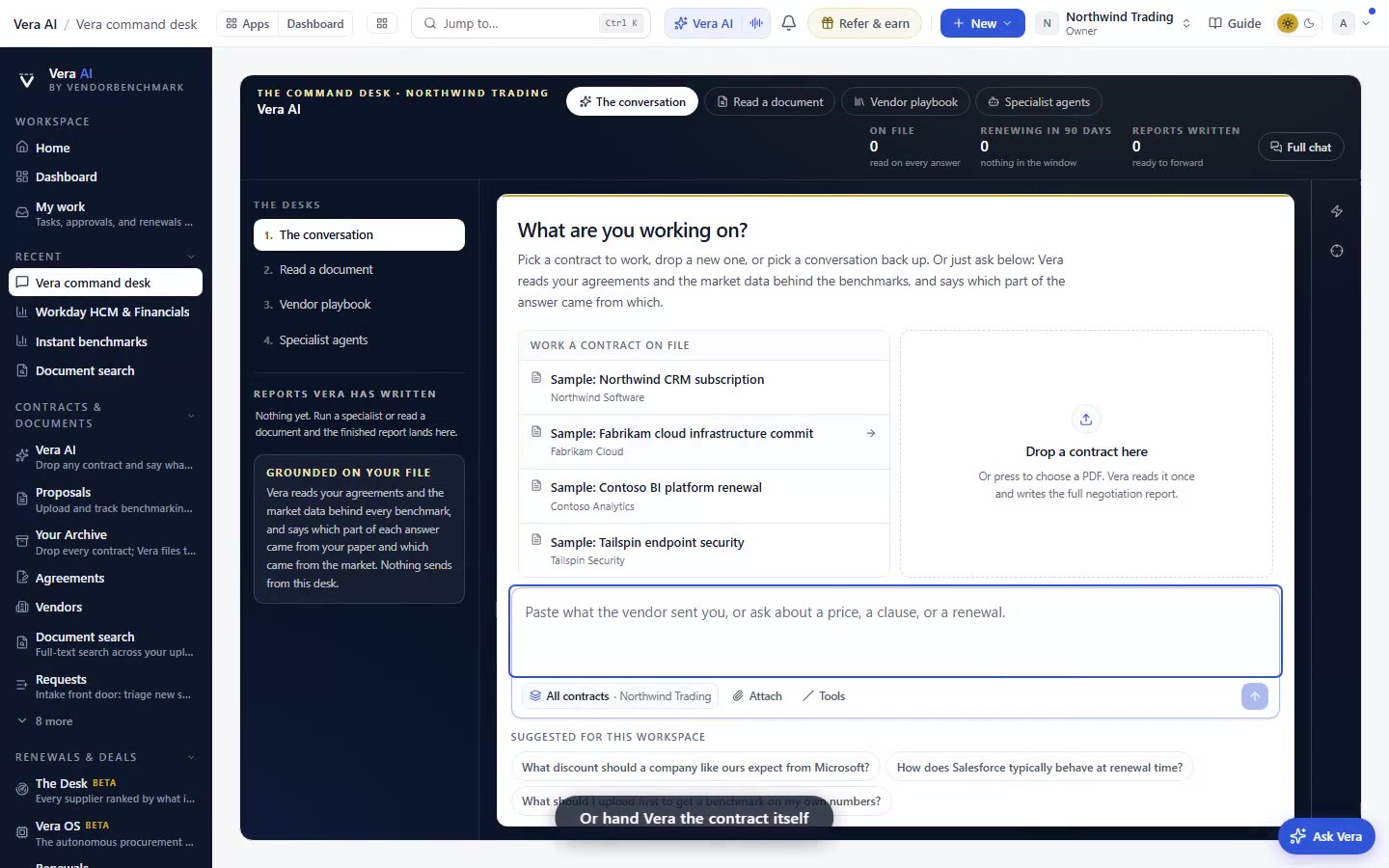
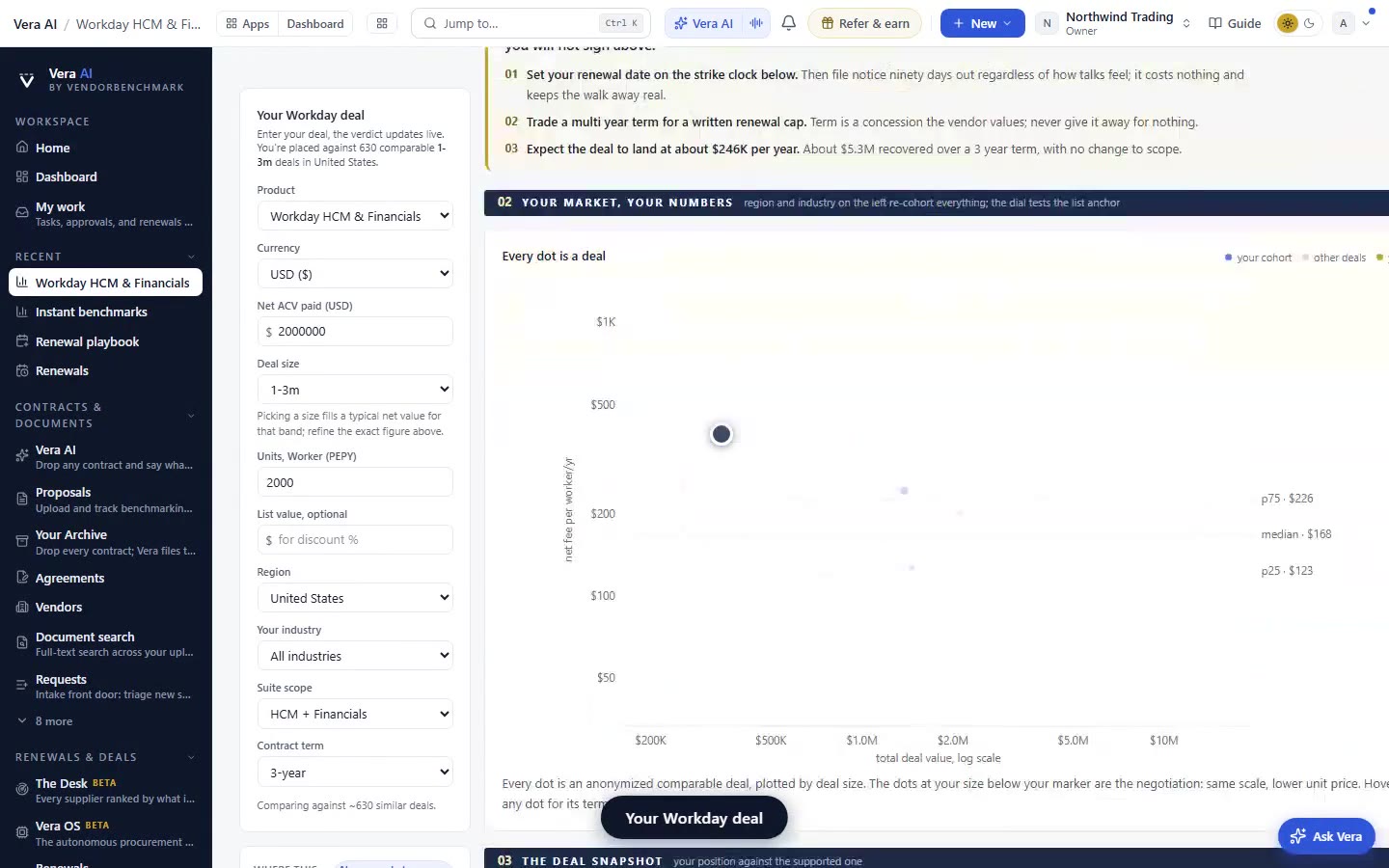
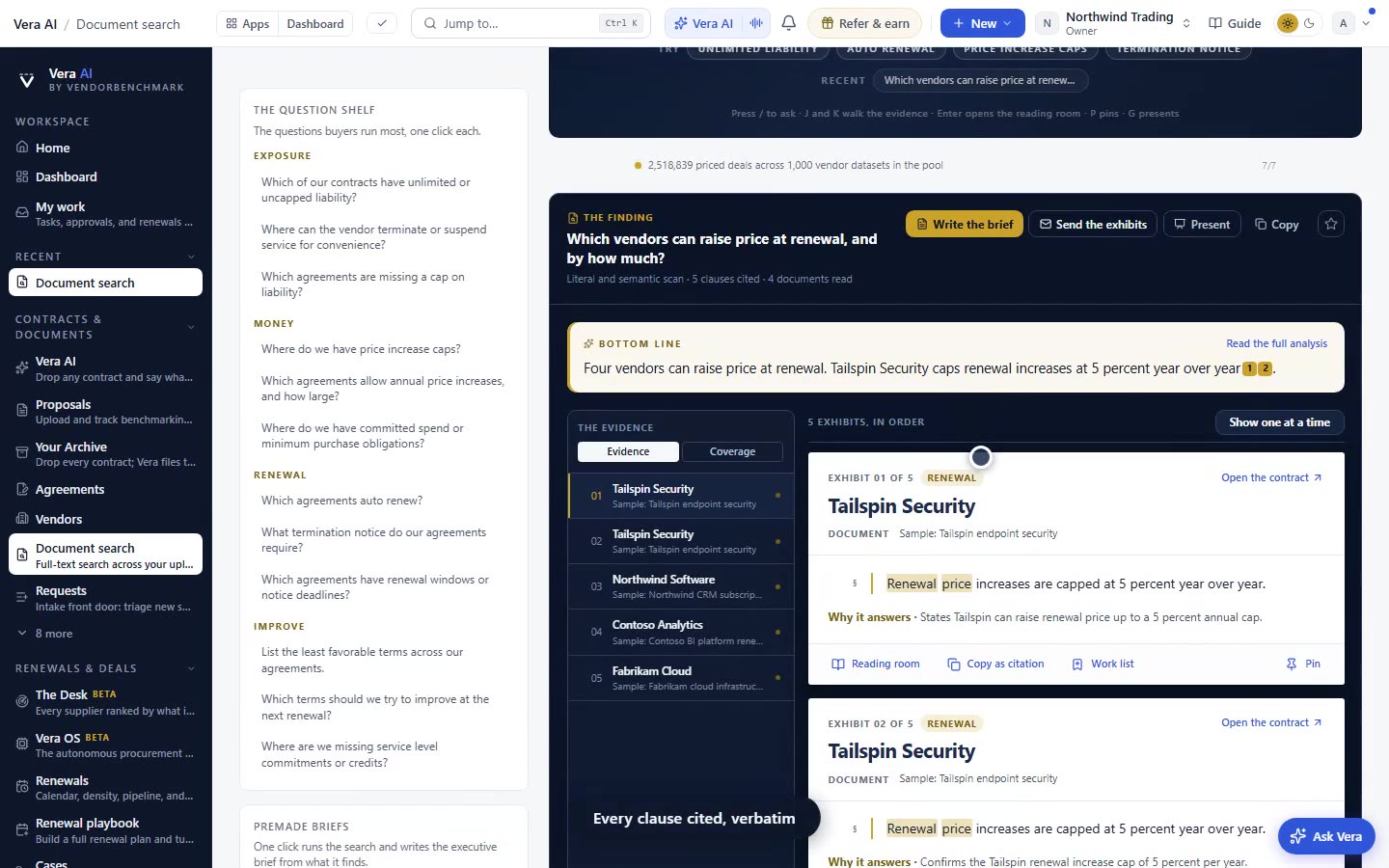
The decode window now works the deal, not just the paper
We shipped a decode window that reads as the deal you would sign. Positions, the reader, the room, a must-have sheet, and a rate ladder for statements of work.
Here is a problem most procurement teams recognise. You have a decode that flags twenty issues, and you still cannot walk into the call. The flags tell you what is wrong. They do not tell you what to ask for, what you will settle for, or when to stand up and leave. So the flags get copied into a spreadsheet, someone builds a position by hand, and the paper you read on Monday is not the paper you argue on Thursday. This update closes that gap. The decode window now works the deal itself, and the money follows every ask through its position.
Every ask is now argued at a position
A flag is not a negotiation. A position is. So every ask in the decode now carries three points on a line, the open ask, the fallback, and the walk-away, and the money follows it. When you drop your open ask, the figure moves. When you hit your fallback, the number settles. The hero of the window reads as the deal you would sign, not a list of complaints about the deal you were handed. That matters because the person reading the decode and the person on the call are often the same person under time pressure, and they need the paper to hold its own argument.
This sits alongside how we already read positions across a book of contracts. If you have used the must-have coverage grid, you know the value of asking one question across every paper at once. The decode now brings that discipline down to a single document, ask by ask, with the settlement math attached.
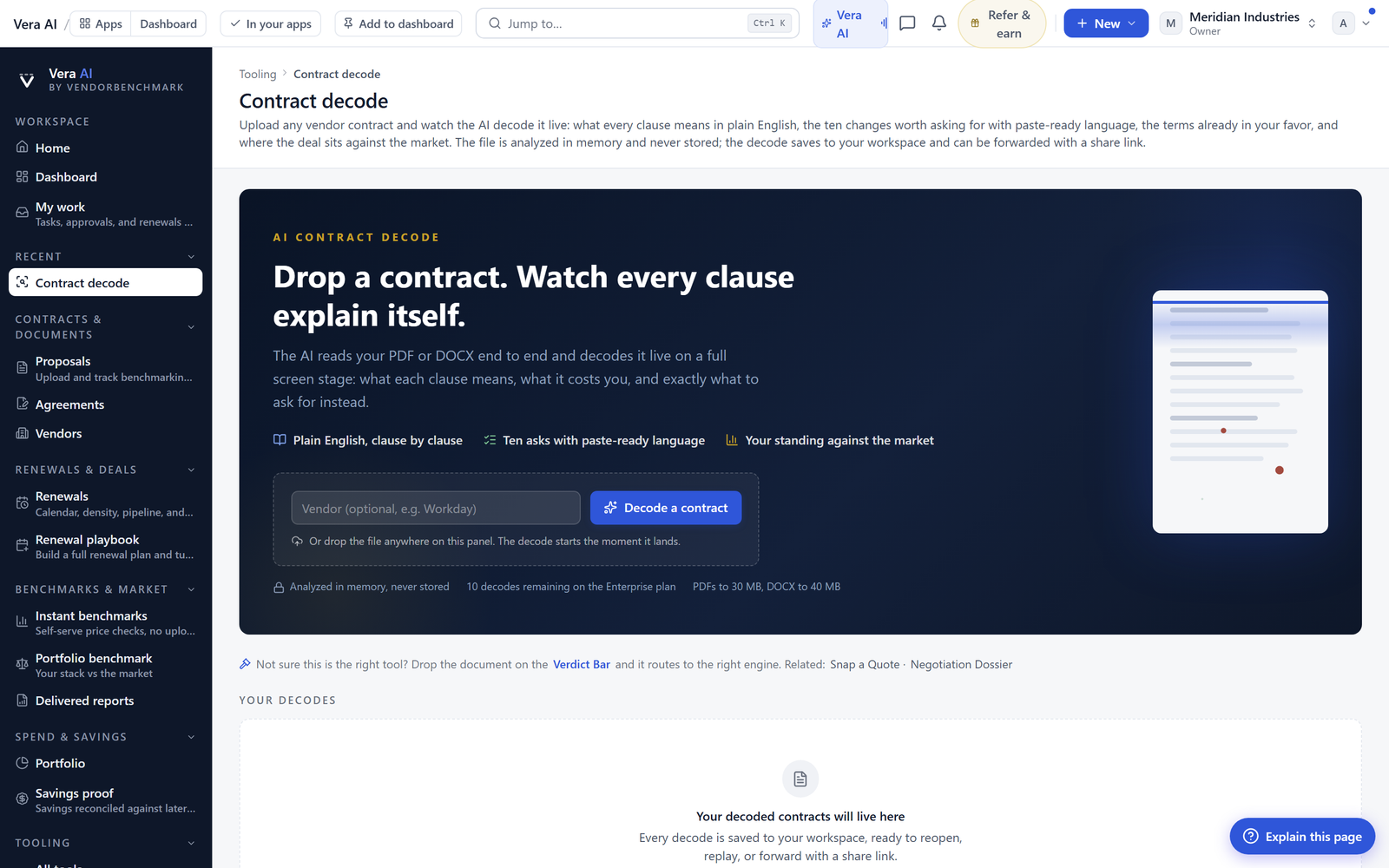
Press R for the reader
Press R and the paper opens at reading width, the way a document is meant to be read rather than crammed into a preview pane. Beside every suggestion sit two controls, Accept and Disregard, so you triage the machine's work without leaving the page. Your own notes and redlines attach to a selected passage, so a comment lives where the language lives. Ctrl S saves, and a three minute autosave protects the text you type between saves, because losing a paragraph of redline mid call is a small disaster that should not exist. This is the same reading-first principle we described when the decode moved onto the page with your next steps beside it, extended now to full editing.
The room shows who is actually here
Negotiation is a group act, and the decode now names the group. The room lists who is here, who holds which ask, every invitation with its chair and its permission, and the decode's own timeline. That last piece matters for accountability. When a term slips, you can see who owned it and when it moved. When a stakeholder claims they were never consulted, the invitation record answers plainly. If your negotiation lives in the verdict reading and your positions live here, the room is the connective tissue that keeps the two honest.
A fifth room for the must-haves, and a ladder for statements of work
There is now a fifth room called Must-haves. It holds your workspace's master sheet of required terms, editable and saved once for everyone, so a change your legal lead makes on Tuesday is the standard the whole team argues from on Wednesday. The room checks any paper against that sheet and returns two things buyers actually use, the evidence that a term is missing or weak, and the language to ask for it. No more guessing whether this contract carries your standard liability cap. The room tells you, and hands you the clause.
For statements of work, the market room now draws the rate card as a ladder against the services rate bands. The blended rate is taken apart, so you see which roles and which mix produced the number a vendor is quoting, and a cap lever operates on the paper's own figures rather than on an abstract model. That is how you catch a blended rate that hides two senior consultants where the work needs one. If you benchmark labour across a book of SOWs, pair this with portfolio benchmarking so a single rich SOW is read against the pattern, not in isolation.
What changes for a procurement buyer
What this does not do
Be clear about the edges. The positions the window proposes are drawn from comparable deals, and comparables are guidance, not a verdict on your specific leverage. A single vendor with no substitute and a hard deadline on your side will not fold to a benchmark, and the decode cannot manufacture leverage you do not have. The must-have room checks presence and strength of language, but it does not read intent, so a clause that technically clears the sheet can still be a bad clause in context, and a human still needs to read it. The SOW rate ladder is only as good as the bands behind it, which means unusual or bespoke roles may map imperfectly and deserve a manual look.
The autosave protects the text you type on a three minute cadence, which is a safety net, not a version history, so treat Ctrl S as the real save when a passage matters. And the room shows who holds an ask, not whether they have done the work behind it. Ownership is a record, not a guarantee. Used with that in mind, the decode window turns a list of problems into a deal you can actually sign, and it keeps the argument, the money, and the people in the same place from first read to final redline.
Want to be updated when major licensing and pricing changes land? One analyst brief a week: the price rises, metric changes and audit campaigns that move software costs. Work email only.
Morten brings two decades of enterprise and software procurement, with stints across Oracle, IBM, SAP, and Salesforce shaping how he reads a deal. He has led sourcing through hundreds of renewals, from mid market order forms to nine figure global agreements, and learned that the buyers who win are the ones who walk in knowing the market. He built VendorBenchmark to make that pattern recognition repeatable.