The intake picked hosted, private, or on premises before anyone priced the choice
When an intake describes needs in terms that assume a delivery model, it quietly commits you to a cost structure you never selected. Decode it, then decide it.
Read your last intake form again, the one you approved without much friction. Somewhere in the requirements it says fully hosted, or single-tenant private instance, or must run in our own environment. Nobody flagged it, because it reads like a requirement. It is not a requirement. It is a delivery model, and a delivery model is a decision about cost structure, liability, and exit. The business named it before anyone costed the alternatives, and now the specification treats a commercial choice as a technical fact.
This is the quiet cousin of the intake that names the vendor before anyone sized the need. Here the intake does not name a vendor. It names a hosting shape, and that shape carries its own price curve and its own contract obligations that the buyer never sat down and selected.
Why the assumption gets in and stays in
Delivery-model language enters the intake through the person who wrote it, and that person is usually solving a different problem than cost. A security lead writes private tenancy because isolation is their job. An infrastructure engineer writes on premises because they already own a datacentre and think in capacity. A business owner writes fully hosted because they never want to think about servers again. Each is reasonable inside its own frame. None of them priced the frame against the other two.
The assumption persists because procurement inherits it as settled. By the time the request reaches sourcing, the word hosted has been repeated in three meetings and one Slack thread. Challenging it feels like reopening a decision, when in truth the decision was never opened. The specification then goes to market asking vendors to quote one model, and the quotes come back scoped to that model, which makes the assumption look validated. It is the same trap as the quote that answers the wrong spec perfectly. A tidy quote for the wrong shape is still the wrong shape.
What the model quietly commits you to
Each delivery model sets a different cost structure and a different contract. Fully hosted multi-tenant tends toward per-seat or consumption pricing, vendor-managed uptime, and shared infrastructure clauses you cannot negotiate line by line. Private single-tenant adds an isolation premium, often a floor on committed capacity, and different data-processing terms. On premises shifts capital and operational cost onto you, changes the support and patching obligations, and rewrites the exit story entirely because the software now lives in your walls.
None of that is visible in the intake sentence. It surfaces in the contract, in the SLA credits, in the termination assistance clause, and in what you owe if you want to leave. An unexamined model does not just cost more or less. It hands the vendor a different set of levers, and it decides your switching cost before you have measured it, which is the exact thing we argue against in measuring lock-in before the vendor prices it for you.
Decoding shows the model's real price
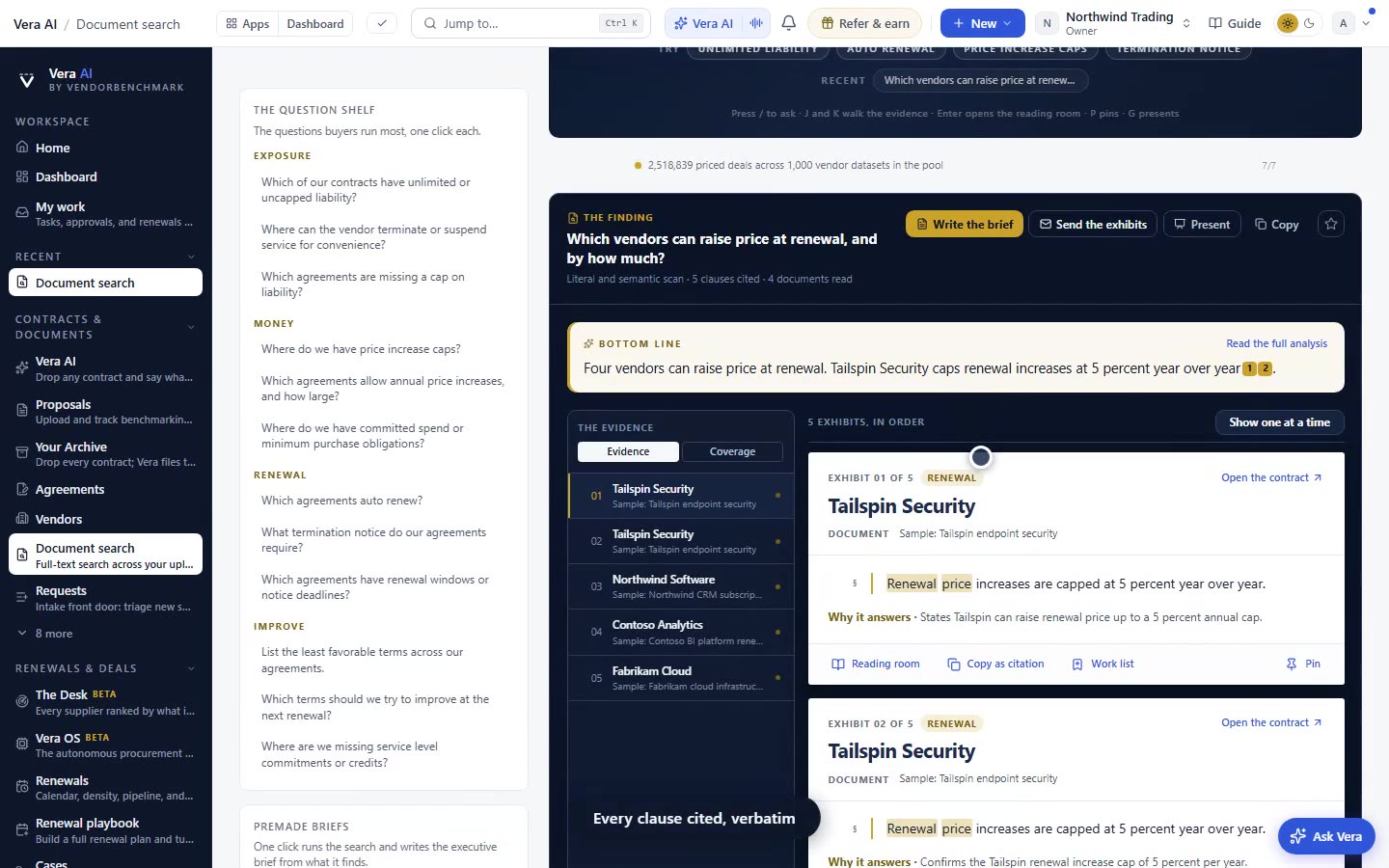
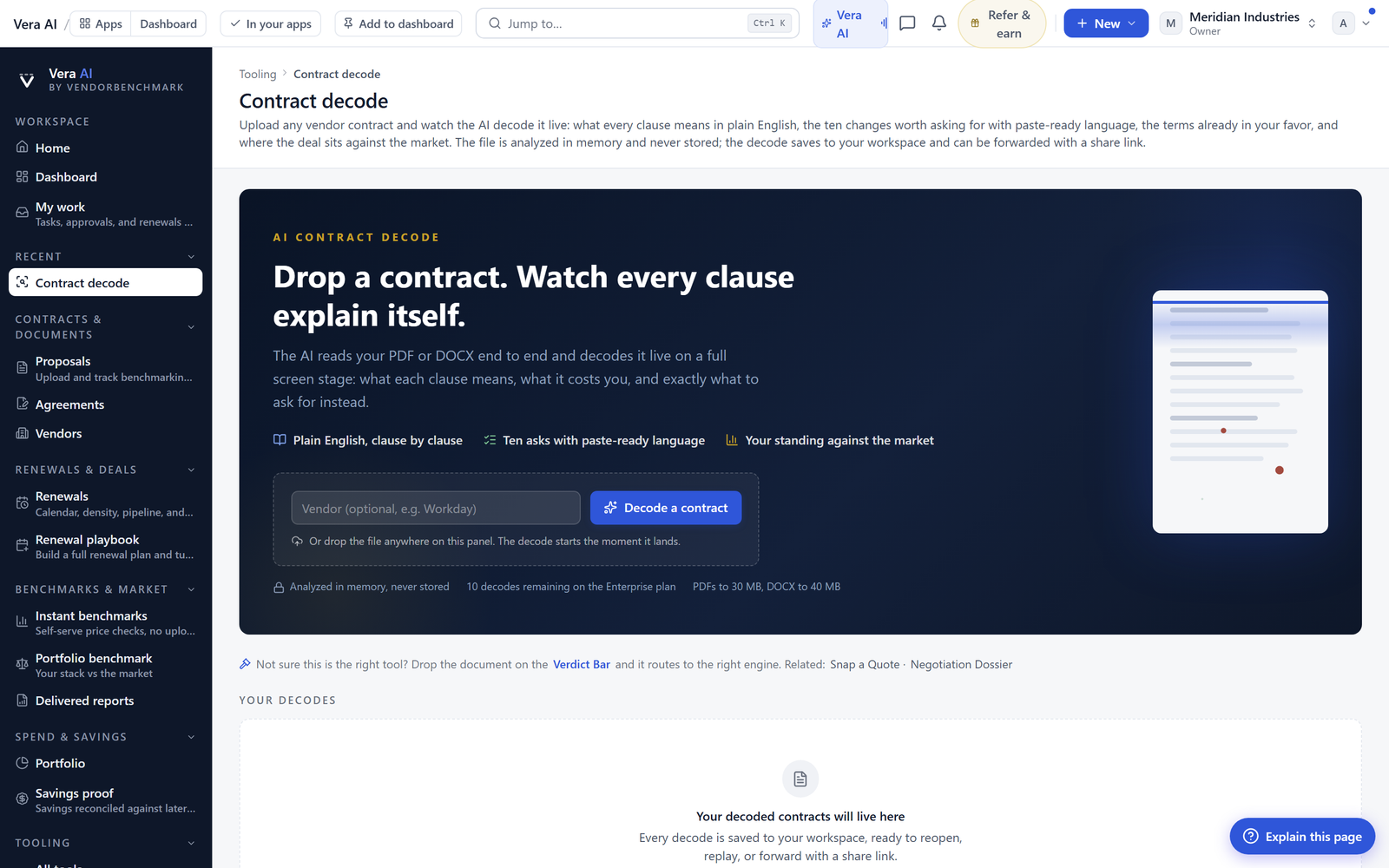
Contract and quote decoding does the work the intake skipped. Point it at the draft terms or the vendor's quote and it separates the clauses that exist because of the assumed model from the clauses that would exist regardless. You see, in plain terms, that the committed capacity floor, the tenant isolation warranty, and the specific termination assistance language all trace back to the private-tenancy assumption, not to your business need. If you want the mechanics of reading a contract this way, decode any contract in a minute covers what to look for first.
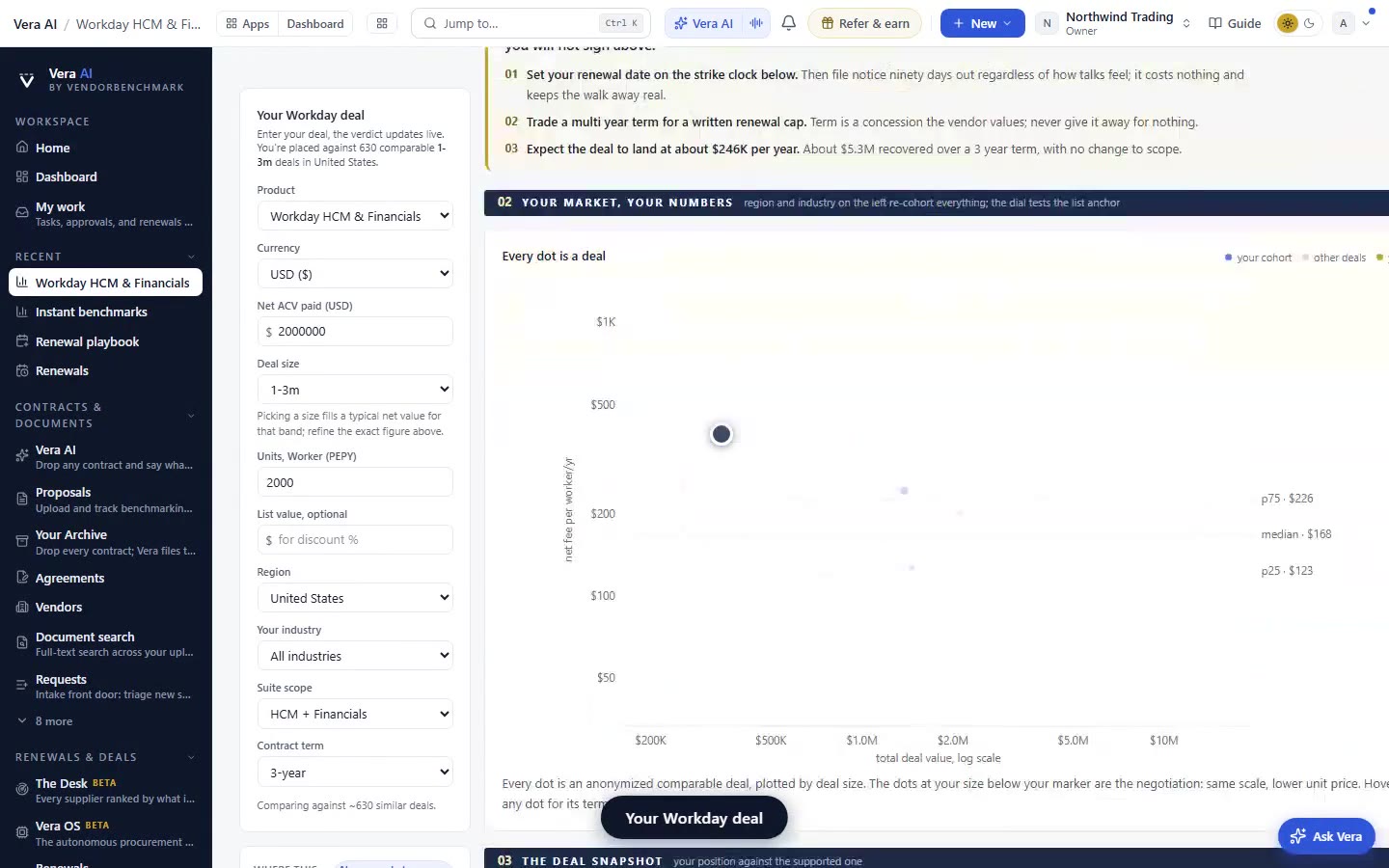
Once the model-dependent terms are isolated, the comparison stops being abstract. You can hold the same outcome against three delivery models and read how each one moves the commercial terms, drawing on benchmarks across 1,471 vendors so the numbers are anchored to what peers actually paid, not to a list price the vendor prefers you to accept.
Vera forces the choice before the spec closes
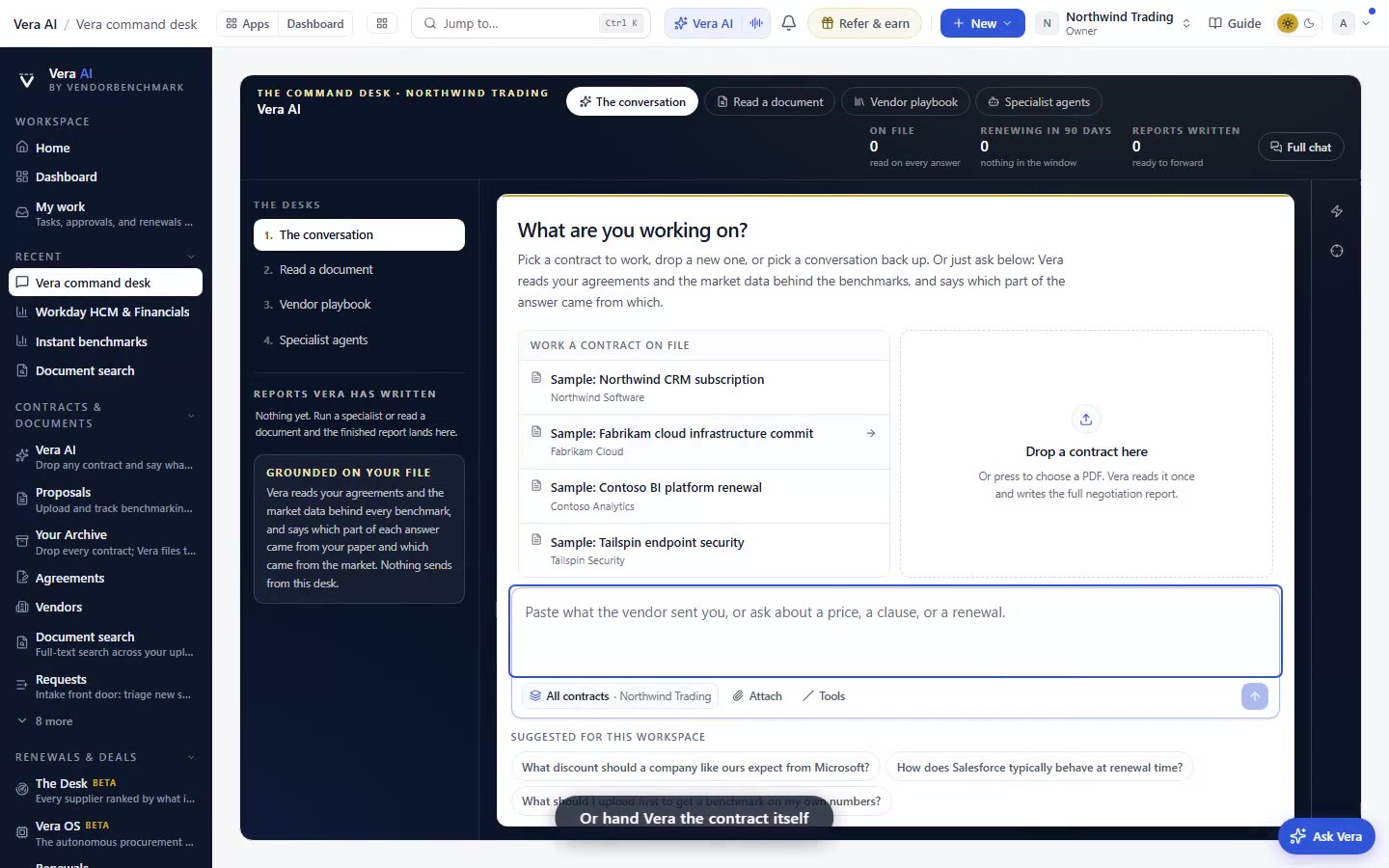
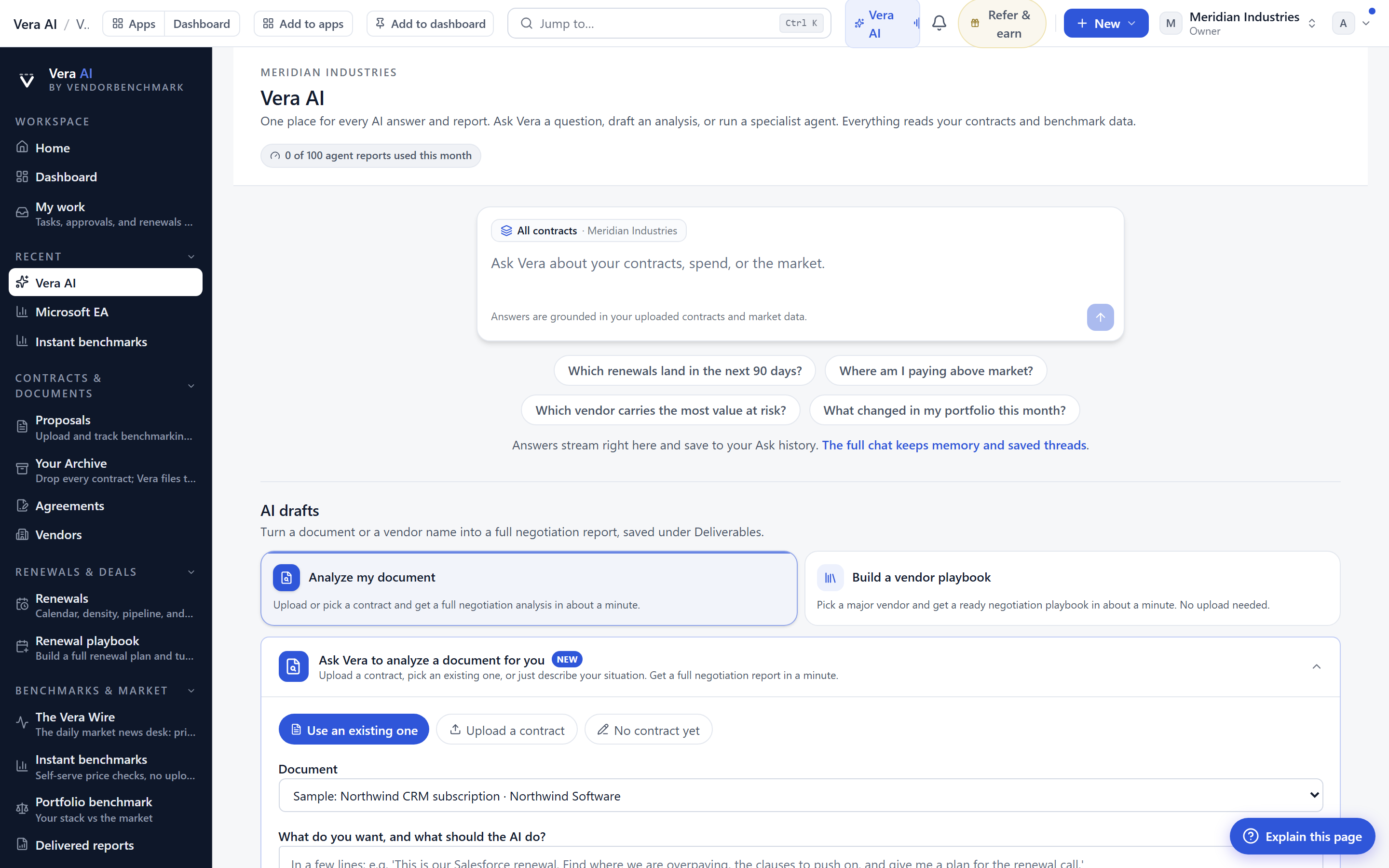
Decoding tells you what the assumption costs. Vera makes you decide before the specification is finalised. Ask her to walk the delivery-model decision and she will lay out the three shapes, the cost curve for each against your volume, and the contract obligations each one carries, then ask the question the intake avoided. Which model, and on what evidence. This is the same discipline as talking it through with Vera before the call, moved one step earlier, into the specification itself.
The point is not to talk anyone out of private tenancy or on premises. Sometimes isolation is the right answer, and sometimes your own datacentre genuinely is cheaper. The point is that the answer becomes deliberate. When the spec goes to market, it carries a model the business chose with its eyes open, and the vendor negotiates against a decision you own rather than one you drifted into.
What this does not solve
Decoding and Vera make the delivery-model choice explicit and priced. They do not make it for you. If your security posture genuinely mandates single-tenant isolation for regulatory reasons, the tool will show you the premium, not waive it. The decision still belongs to people who understand your risk appetite, and that is correct.
Nor does this fix an organisation that will not reopen a settled-feeling assumption. If the private-tenancy line has political weight because a senior stakeholder wrote it, the evidence will be clear and the conversation will still be hard. The platform gives you the costed comparison to have that conversation on facts. It does not give you the authority to force the choice, and it will not resolve stakeholders who disagree and never met. What it removes is the excuse that nobody knew what the assumption cost. After decoding, you know. The only remaining question is whether you decide the model, or let the contract decide it for you.
Want to be updated when major licensing and pricing changes land? One analyst brief a week: the price rises, metric changes and audit campaigns that move software costs. Work email only.
Morten brings two decades of enterprise and software procurement, with stints across Oracle, IBM, SAP, and Salesforce shaping how he reads a deal. He has led sourcing through hundreds of renewals, from mid market order forms to nine figure global agreements, and learned that the buyers who win are the ones who walk in knowing the market. He built VendorBenchmark to make that pattern recognition repeatable.