Workday renewals: the corridor, the worker count, and the SI bill.
Workday prices inside a famously narrow corridor: deals cluster tighter than almost any vendor we track, which means the money is rarely in heroic discounting. It is in knowing where the corridor's walls are, getting the worker count honest, and refusing to treat the implementation bill as weather. Here is the renewal, run on those three fronts.
Every vendor has a pricing personality, and Workday's is discipline. Where other enterprise vendors show wild deal-to-deal variance, Workday deals cluster in a tight band for a given size and module mix: the corridor. The company protects its pricing integrity the way other vendors protect their logos, reps have less discretion than their peers elsewhere, and dramatic discount stories are rare enough to be suspicious.
Buyers usually learn this the frustrating way, by pushing on rate and hitting a wall. The right conclusion is not that Workday renewals are unnegotiable. It is that the negotiation lives elsewhere: in where inside the corridor you land, in what gets counted, and in everything around the subscription, the ramps, the module attach, the renewal terms, and the services bill that often rivals the software itself.
Find the walls: net ACV per worker against modelled cohorts
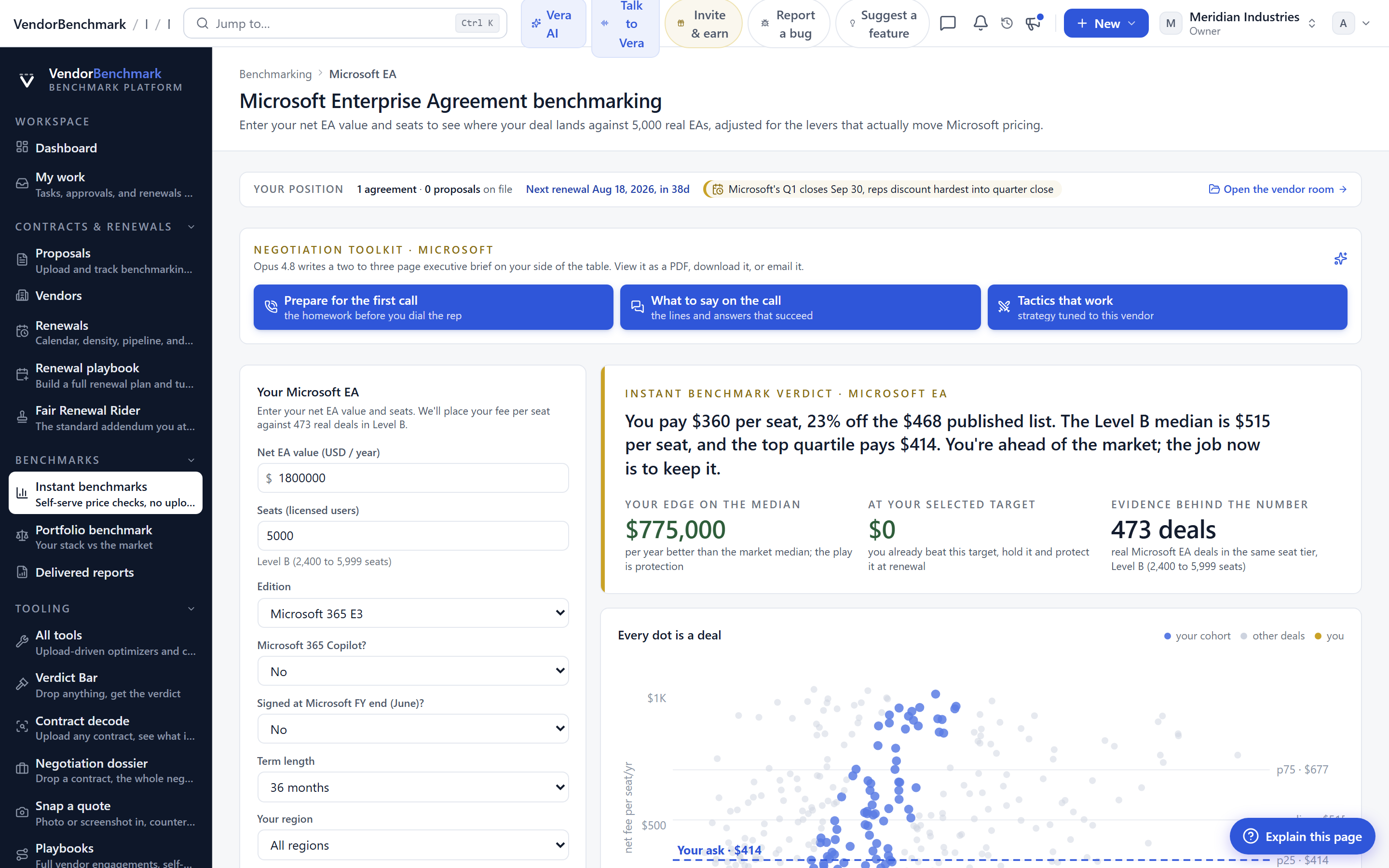
A narrow corridor cuts both ways. It caps the upside of aggressive negotiation, and it makes the benchmark unusually decisive, because in a tight distribution, knowing the walls tells you almost exactly what is achievable. The metric is net annual contract value per worker, and your position lands against comparable closed Workday deals, normalized for workforce size, module mix, and term.
The percentile that comes back answers the question that wastes the most time in Workday negotiations: is the quote actually out of line, or does it just feel expensive? If you sit near the corridor's costly wall, the gap to median is real money and the cohort is your evidence. If you already sit near the favorable wall, the benchmark has just saved you from burning a renewal cycle, and vendor goodwill, chasing a rate that no comparable deal has achieved, and redirected you to the fronts where Workday actually gives: terms, count, and services.
Module mix is the corridor's hidden variable. HCM, Financials, Payroll, and the growing add-on shelf each carry their own economics, and a blended per-worker rate can hide one overpriced module inside an average that looks fine. Benchmark the bundle and its parts, the same unbundling discipline that pays on every platform vendor.
Want to be updated when major licensing and pricing changes land? One analyst brief a week: the price rises, metric changes and audit campaigns that move software costs. Work email only.
The worker count: where a per-worker deal is really negotiated
When the rate barely moves, the count is the price. Three count questions decide more Workday money than any discount conversation.
Who is a worker? Contingent staff, seasonal populations, retirees in benefits scope, and acquired-entity employees all sit in definitional gray zones, and each thousand workers of definition is real annual money at your per-worker rate. The definition section of the contract deserves the line-by-line decode before the count conversation starts, not after it ends.
What happens when headcount falls? Workday's standard posture is that the committed count holds for the term, which converts every reduction in force into a subsidy of unused subscription. The renewal is your one moment to write a true-down corridor, a band within which the count can move down at renewal without repricing the whole deal, and to resist ramp schedules built on the account team's growth model rather than your workforce plan. Commit to the workforce you can see, price the growth as protected-rate options, and let expansion happen when it is real.
What did the invoice count? Per-worker billing meets payroll reality imperfectly, and the invoice reconciliation that checks billed workers against the contracted definition has a way of paying for itself around workforce changes, divestitures, and acquisition integrations.
The other contract: services cost more than software discipline saves
The quiet scandal of the Workday economy is that for many customers the systems integrator relationship, implementation, then the endless tail of AMS, enhancements, and the next module's deployment, costs as much over the term as the subscription, and receives a fraction of the negotiation. The SI's rate card was accepted during implementation urgency years ago and has renewed by inertia ever since.
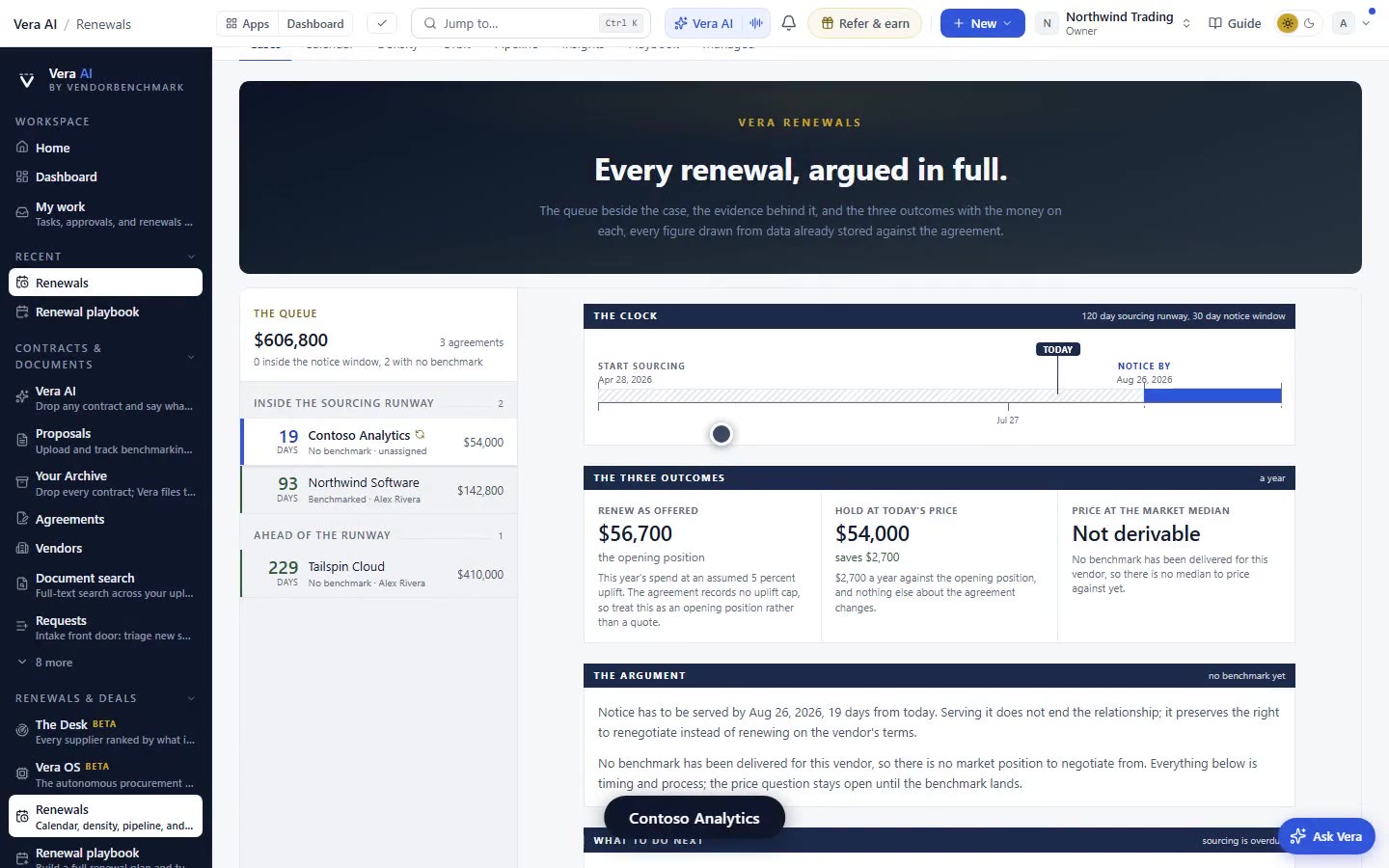
Treat it as the second contract it is. Benchmark the day rates against the market with the rate card benchmark, tender the AMS tail even if you keep the incumbent, because a re-tendered incumbent prices differently from an unchallenged one, and time services negotiations to the same cycle as the subscription renewal, when your attention and leverage are already assembled. The playbook desk runs both tracks together, with the war room holding one combined position, and the five moves land in the familiar rhythm:
The honest close: Workday's pricing discipline means this is not a vendor where preparation produces folk-tale discounts, and anyone promising you 40 percent off is describing a deal that did not close. What preparation reliably produces here is quieter and adds up to more: the right wall of the corridor, an honest count with a floor under it, terms that survive your next reorganization, and a services relationship priced like the eight figure commitment it actually is. On a contract this central, that is the difference between an HR system and a budget problem.
Morten brings two decades of enterprise and software procurement, with stints across Oracle, IBM, SAP, and Salesforce shaping how he reads a deal. He has led sourcing through hundreds of renewals, from mid market order forms to nine figure global agreements, and learned that the buyers who win are the ones who walk in knowing the market. He built VendorBenchmark to make that pattern recognition repeatable.
The week in enterprise software buying, in one email.
What shipped on the platform, and the pricing and licensing moves worth knowing before your next renewal. One email a week, to your work address. Unsubscribe any time.